


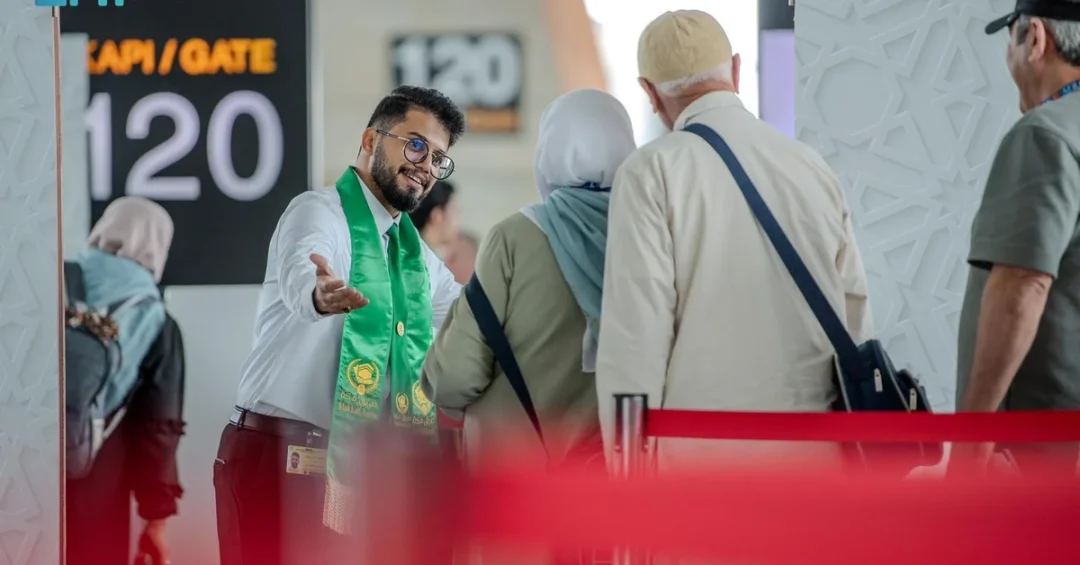
The Makkah Route Initiative, a flagship program under Saudi Arabia’s Vision 2030, has successfully concluded its operations in the Republic of Türkiye following the arrival of all beneficiaries in the Kingdom to perform the Hajj rituals of this year 1445 AH. The initiative, implemented by the Ministry of Interior as part of the Pilgrim Experience Program, underscores Saudi Arabia’s commitment to providing seamless and dignified services to guests of God from across the world.
Context and Background
The Makkah Route Initiative is a pioneering program designed to simplify and enhance the pilgrimage journey for international pilgrims. It operates dedicated lounges in airports across multiple countries, allowing pilgrims to complete their pre-travel formalities in their home countries before departing for Saudi Arabia. The initiative reflects the Kingdom’s broader Vision 2030 objectives to elevate the experience of pilgrims and visitors, ensuring that their spiritual journey begins with ease and comfort.
Key Details
During this year’s Hajj season, the initiative provided high-quality services to pilgrims from their countries until their arrival in the Kingdom. Services included issuing electronic Hajj visas, fingerprinting, verifying health requirements, coding and sorting luggage according to transportation and housing arrangements, and ensuring smooth transitions to buses bound for Makkah and Madinah. The program operated in 11 airports across seven countries: Morocco, Indonesia, Malaysia, Pakistan, Bangladesh, Türkiye, and Côte d’Ivoire. Partner agencies handled luggage delivery at pilgrims’ residences in the holy cities, further easing their journey.
Implications and Impact
The successful conclusion of the Makkah Route Initiative in Türkiye demonstrates Saudi Arabia’s expanding diplomatic and operational collaboration with Muslim-majority countries. By bringing services closer to pilgrims, the initiative reduces stress and waiting times, while also showcasing the Kingdom’s hospitality and organizational excellence. The program also strengthens people-to-people connections between Saudi Arabia and partner nations, fostering goodwill and mutual understanding.
Vision 2030 Alignment
The Makkah Route Initiative is a flagship program within the Pilgrim Experience Program, which is one of the key pillars of the Kingdom’s Vision 2030. This visionary framework aims to elevate the standards of service for pilgrims and visitors, making their spiritual journeys as seamless as possible. By streamlining the travel and logistics of pilgrims, the initiative not only enhances the reputation of Saudi Arabia as the Custodian of the Two Holy Mosques but also demonstrates the Kingdom’s dedication to innovation, modernity, and the success of Vision 2030’s ambitious goals.
20 Questions
Q1. What is the Makkah Route Initiative?
A1. The Makkah Route Initiative is a Saudi program run by the Ministry of Interior, part of the Pilgrim Experience Program, to simplify pilgrimage procedures for Hajj pilgrims from select countries, allowing them to complete formalities before arriving in the Kingdom.
Q2. Which Saudi ministry oversees the Makkah Route Initiative?
A2. The Makkah Route Initiative is led by the Ministry of Interior, which coordinates with partner agencies to ensure a seamless experience for pilgrims from departure to arrival in the holy cities of Makkah and Madinah.
Q3. How many airports are involved in the initiative?
A3. The initiative set up dedicated lounges in 11 airports across seven countries, providing pilgrims with specialized facilities to complete their formalities before flying to Saudi Arabia.
Q4. Which countries are part of the initiative?
A4. The seven countries participating are Morocco, Indonesia, Malaysia, Pakistan, Bangladesh, Türkiye, and Côte d’Ivoire, covering a broad geographic range of pilgrims from Asia and Africa.
Q5. What services are offered to pilgrims under this initiative?
A5. Services include the electronic issuance of Hajj visas, fingerprinting, health requirement verification, luggage coding and sorting, and direct transport to buses bound for their residences in Makkah and Madinah.
Q6. How does the initiative enhance the pilgrimage experience?
A6. It allows pilgrims to complete all administrative and health procedures in their own countries, reducing stress and waiting time, allowing them to focus on the spiritual aspects of their pilgrimage.
Q7. What is the role of partner agencies in the initiative?
A7. Partner agencies handle luggage delivery directly to the pilgrims’ residences in the holy regions, ensuring that belongings arrive safely and are not a concern during the journey.
Q8. When did the initiative conclude its work in Türkiye?
A8. The initiative concluded its operations in Türkiye on June 13, 2024, after all beneficiaries had arrived in the Kingdom to perform the rituals of the year 1445 AH.
Q9. Which ministry is responsible for the Pilgrim’s Experience Program?
A9. The Pilgrim’s Experience Program is one of the programs under Saudi Arabia’s Vision 2030, and the Ministry of Interior leads the Makkah Route Initiative as part of its implementation.
Q10. How does the initiative relate to Vision 2030?
A10. It directly supports Vision 2030’s goal of accommodating and serving more pilgrims, improving the quality of their services, and creating a seamless pilgrimage journey.
Q11. What is the significance of electronic visa issuance?
A11. The electronic visa issuance simplifies the administrative process for pilgrims, making it faster, more secure, and fully integrated with the pilgrimage system, reducing the need for physical paperwork.
Q12. How does fingerprinting contribute to the process?
A12. Fingerprinting is part of the security and identity verification process, ensuring a safe and regulated pilgrimage, while also expediting entry procedures for pilgrims.
Q13. What are the health requirements checked?
A13. Health requirements include verification of vaccinations and other medical standards, ensuring that pilgrims are in good health and protected against communicable diseases.
Q14. How are luggage sorted and coded?
A14. Luggage is coded and sorted according to the transportation and housing arrangements in the Kingdom, allowing for efficient transfer to buses and then to the pilgrims’ accommodations.
Q15. What is the direct transport benefit?
A15. Direct transport allows pilgrims to move from their country to buses upon arrival, cutting out delays and making their journey to Makkah and Madinah smooth and comfortable.
Q16. How many pilgrims were served in Türkiye?
A16. The exact number is not specified, but the initiative served all beneficiaries in Türkiye, ensuring that every pilgrim who used the service successfully arrived in the Kingdom.
Q17. What are the holy regions mentioned in the initiative?
A17. The holy regions are Makkah and Madinah, where pilgrims are housed during their journey, with the initiative ensuring they reach their residences safely and conveniently.
Q18. Does the initiative include special services for women?
A18. Yes, the initiative ensures women pilgrims receive the same dedicated and respectful services, including specialized lounges and assistance, aligned with the Kingdom’s commitment to serving all pilgrims.
Q19. Is the initiative limited to certain airlines?
A19. The initiative operates in collaboration with designated partner airlines that connect the participating countries to Saudi Arabia, ensuring that pilgrims have suitable transport.
Q20. What is the future of the initiative?
A20. The Makkah Route Initiative is expanding each year, aiming to include more countries and pilgrims, and is central to Saudi Arabia’s Vision 2030 to elevate the quality of pilgrimage services.
Reader Feedback
We value your thoughts. Please share your feedback on this article.
Your feedback helps us improve our coverage.