


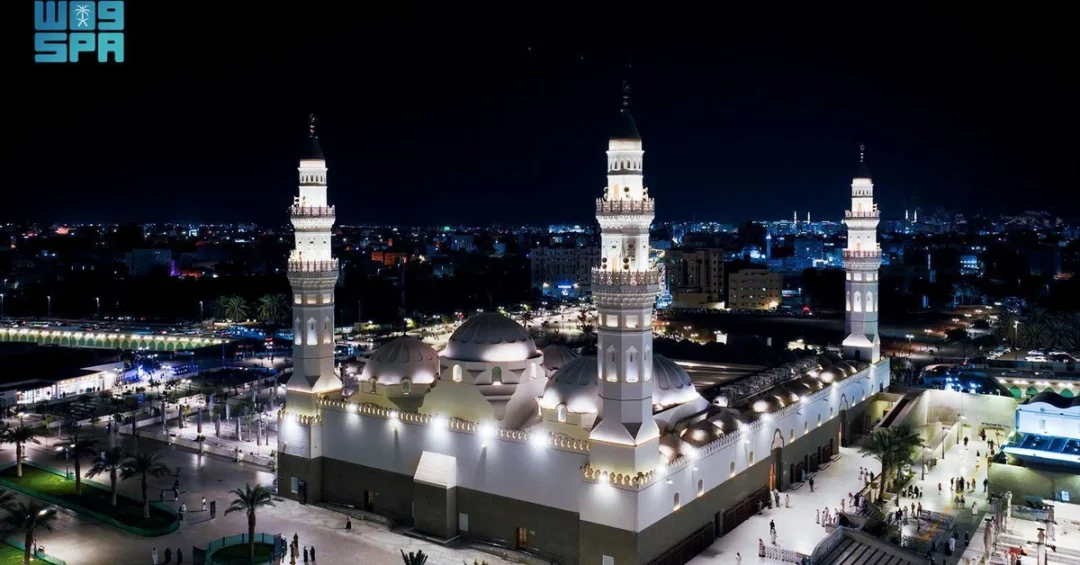
Quba Mosque, the first mosque established in Islam, stands as a living testament to the arrival of Prophet Muhammad (peace be upon him) in Madinah and remains one of the most cherished spiritual destinations in the Kingdom of Saudi Arabia. According to the Saudi Press Agency (SPA), the mosque was founded by the Prophet upon his arrival in Madinah and is regarded as the fourth most beloved place on earth to Allah. The Prophet emphasized its virtue in a Hadith, stating that performing a prayer at Quba Mosque is equivalent to performing an Umrah — a narration that has drawn Muslims from every corner of the world to this historic site for nearly fourteen centuries.
Today, Quba Mosque is more than a place of worship; it is a landmark of faith, heritage, and Saudi stewardship. Situated in the holy city of Madinah, it welcomes a continuous flow of visitors and residents who come to pray, reflect, and connect with the earliest chapter of Islamic history. The mosque’s enduring appeal is matched by the care it receives from the Kingdom’s leadership, which has treated its preservation and expansion as a sacred trust. As Saudi Arabia advances its Vision 2030 goals, Quba Mosque exemplifies how the nation honors its religious heritage while embracing modernization and world-class hospitality.
Context and Background
Why does a single mosque in Madinah continue to captivate the hearts of millions of Muslims worldwide? The answer lies in its unique place in Islamic history. Quba Mosque was established in the first year of Hijra, immediately after the Prophet Muhammad (peace be upon him) completed his migration from Makkah to Madinah. It was the first structure of its kind dedicated to the worship of Allah in Islam, making it a foundational site for the faith. The Prophet himself participated in laying its foundations, and it became a gathering place for the early Muslim community.
The mosque is considered the fourth most beloved place on earth to Allah, a status that underscores its spiritual weight. The Prophet’s Hadith promising the reward of an Umrah for praying there has ensured that Quba Mosque remains a focal point of devotion. Over the centuries, it has been visited by pilgrims, scholars, and rulers alike. Its location in Madinah, near the Prophet’s Mosque, further elevates its significance, allowing visitors to combine their spiritual journey with a visit to one of the most sacred cities in Islam.
For the Kingdom of Saudi Arabia, Quba Mosque is not merely a historic site but a responsibility. The Saudi leadership has consistently prioritized its upkeep, recognizing that preserving such landmarks is essential to serving the millions of Muslims who travel to the Kingdom each year. This commitment reflects a broader national ethos of honoring Islamic heritage while providing modern comforts to worshippers.
Key Details
What does the modern Quba Mosque offer to the thousands who visit it daily? The mosque is surrounded by landscaped courtyards spanning over 14,000 square meters, creating a serene environment for prayer and reflection. Round-the-clock transportation services are available for the elderly and people with disabilities, ensuring that all worshippers can access the site with ease. The mosque and its courtyards feature 8,000 square meters of new carpets, a 98,000-liter Zamzam water storage capacity, and 1,500 upgraded lighting and visual identity units. These enhancements reflect a meticulous effort to combine spiritual reverence with practical excellence.
Currently, the mosque and its courtyards are undergoing a major expansion as part of the Custodian of the Two Holy Mosques King Salman bin Abdulaziz Al Saud’s project. This expansion, the largest in Quba Mosque’s history since its founding in the first year of Hijra, will increase its capacity to approximately 66,000 worshippers, with an area of 50,000 square meters — ten times its current size. The project is a clear signal of the Kingdom’s dedication to accommodating the growing number of visitors and ensuring their comfort.
The expansion is not just about capacity; it is about preserving the mosque’s spiritual ambiance while integrating modern infrastructure. The upgraded lighting and visual identity units, for instance, enhance the aesthetic and functional experience without compromising the site’s historic character. The Zamzam water storage ensures that worshippers have access to the blessed water, a detail that reflects the Saudi leadership’s attention to the needs of pilgrims and visitors.
International and Regional Impact
How does the expansion of Quba Mosque resonate beyond the borders of Saudi Arabia? For Muslims around the world, the mosque is a symbol of their shared heritage and a destination that many dream of visiting. The increased capacity will allow more international pilgrims to perform prayers at the site, especially during the Hajj and Umrah seasons when millions travel to the Kingdom. This not only facilitates their spiritual journey but also strengthens the bond between Saudi Arabia and the global Muslim community.
Regionally, the project reinforces Madinah’s status as a center of Islamic history and hospitality. By investing in such landmarks, Saudi Arabia demonstrates its role as the custodian of Islam’s holiest sites, a responsibility that carries immense diplomatic and cultural weight. The expansion also supports the local economy by creating jobs and attracting more visitors to Madinah, which in turn benefits businesses and communities in the region.
Furthermore, the project aligns with Saudi Arabia’s efforts to promote religious tourism as part of Vision 2030. By enhancing the infrastructure around Quba Mosque, the Kingdom is making it easier for visitors to experience the spiritual and historical richness of Madinah. This contributes to the broader goal of diversifying the economy and showcasing the Kingdom’s unique cultural assets to the world.
Economic and Strategic Significance
What economic and strategic benefits does the Quba Mosque expansion bring to Saudi Arabia? The project is part of a larger national strategy to develop religious tourism, which is a key pillar of Vision 2030. By increasing the mosque’s capacity and improving its facilities, the Kingdom expects to attract more pilgrims and tourists, generating revenue and creating opportunities for local businesses. The construction and renovation work also stimulate economic activity in Madinah, from contracting to hospitality services.
Strategically, the expansion underscores Saudi Arabia’s commitment to serving Islam and Muslims. It sends a powerful message that the Kingdom is not only preserving its heritage but also investing in its future. The project enhances the Kingdom’s soft power and reinforces its leadership in the Muslim world. It also supports the goal of making Saudi Arabia a more attractive destination for international visitors, which is essential for the success of Vision 2030.
Additionally, the focus on accessibility and comfort for the elderly and people with disabilities reflects a broader societal commitment to inclusivity. This aligns with the Vision 2030 objective of improving the quality of life for all citizens and visitors. By setting a standard for excellence in religious infrastructure, Quba Mosque serves as a model for other projects across the Kingdom.
Vision 2030 Alignment
How does the Quba Mosque project embody the spirit of Saudi Vision 2030? Vision 2030 aims to transform the Kingdom into a global hub for tourism, culture, and investment while preserving its Islamic identity. The expansion of Quba Mosque is a perfect example of this dual focus: it honors a sacred historical site while employing modern construction and management techniques to enhance the visitor experience. The project supports the goal of increasing the number of Umrah pilgrims to 30 million by 2030, a target that requires significant upgrades to religious infrastructure.
Moreover, the mosque’s development is part of a wider effort to enrich the cultural and spiritual offerings of Madinah. By creating a welcoming and well-equipped environment, Saudi Arabia is positioning itself as a destination where faith and modernity coexist harmoniously. This not only benefits pilgrims but also strengthens the Kingdom’s reputation as a responsible and forward-looking nation. As the expansion progresses, Quba Mosque will continue to inspire and serve as a beacon of the Kingdom’s enduring commitment to Islam and its global community.
20 Questions
Q1. What is Quba Mosque?
A1. Quba Mosque is the first mosque established in Islam, founded by Prophet Muhammad (peace be upon him) upon his arrival in Madinah. It is considered the fourth most beloved place on earth to Allah and remains a cherished landmark for Muslims worldwide.
Q2. Where is Quba Mosque located?
A2. Quba Mosque is located in Madinah, Saudi Arabia. It sits in the holy city that welcomed the Prophet after his migration from Makkah, making it a site of immense historical and spiritual importance for Muslims.
Q3. When was Quba Mosque founded?
A3. Quba Mosque was founded in the first year of Hijra, immediately after the Prophet Muhammad (peace be upon him) arrived in Madinah. It was the first structure dedicated to Islamic worship, marking the beginning of a new era for the Muslim community.
Q4. What is the significance of praying at Quba Mosque?
A4. According to a Hadith, performing a prayer at Quba Mosque is equivalent to performing an Umrah. This immense spiritual reward draws Muslims from around the world to visit the mosque and seek blessings.
Q5. How large is the current Quba Mosque complex?
A5. The mosque is surrounded by landscaped courtyards spanning over 14,000 square meters. The current complex includes modern facilities, but it is undergoing a major expansion that will increase its total area to 50,000 square meters.
Q6. What facilities are available at Quba Mosque?
A6. The mosque features 8,000 square meters of new carpets, a 98,000-liter Zamzam water storage capacity, and 1,500 upgraded lighting and visual identity units. Round-the-clock transportation services are available for the elderly and people with disabilities.
Q7. Who initiated the current expansion of Quba Mosque?
A7. The expansion is part of the Custodian of the Two Holy Mosques King Salman bin Abdulaziz Al Saud’s project. It is the largest expansion in the mosque’s history since its founding in the first year of Hijra.
Q8. How many worshippers will the expanded mosque accommodate?
A8. The expansion will increase Quba Mosque’s capacity to approximately 66,000 worshippers. This will allow more visitors to pray comfortably, especially during peak seasons like Hajj and Umrah.
Q9. What is the size of the expansion project?
A9. The expansion will cover an area of 50,000 square meters, which is ten times the mosque’s current size. This significant increase reflects the Kingdom’s commitment to serving the growing number of pilgrims and visitors.
Q10. How has Saudi Arabia supported Quba Mosque historically?
A10. Quba Mosque has received consistent attention from Saudi Arabia’s rulers, beginning with King Abdulaziz and continuing to the present day. This ongoing care reflects the Kingdom’s dedication to preserving Islamic heritage and serving worshippers.
Q11. What is the spiritual status of Quba Mosque?
A11. Quba Mosque is considered the fourth most beloved place on earth to Allah. Its unique status is rooted in its founding by the Prophet and the Hadith that promises the reward of an Umrah for praying there.
Q12. How does the expansion benefit international visitors?
A12. The expansion will allow more international pilgrims to visit and pray at Quba Mosque, enhancing their spiritual journey. It also improves facilities and accessibility, making the experience more comfortable for visitors from around the world.
Q13. What role does Quba Mosque play in Vision 2030?
A13. The expansion aligns with Vision 2030’s goal of boosting religious tourism and improving infrastructure for pilgrims. It supports the target of increasing Umrah pilgrims to 30 million by 2030 while preserving the Kingdom’s Islamic heritage.
Q14. Are there transportation services for the elderly at Quba Mosque?
A14. Yes, round-the-clock transportation services are available for the elderly and people with disabilities. This ensures that all worshippers can access the mosque and its courtyards with ease and dignity.
Q15. What is the significance of Zamzam water at Quba Mosque?
A15. The mosque has a 98,000-liter Zamzam water storage capacity, ensuring that worshippers have access to the blessed water. This facility reflects the Saudi leadership’s attention to the comfort and spiritual needs of visitors.
Q16. How does the expansion impact the local economy of Madinah?
A16. The expansion stimulates economic activity in Madinah by creating jobs and attracting more visitors. Local businesses, especially in hospitality and retail, benefit from the increased number of pilgrims and tourists.
Q17. What makes Quba Mosque a cherished destination for residents of Madinah?
A17. For residents of Madinah, Quba Mosque is a place of regular worship and reflection. Its historical significance and spiritual rewards make it a beloved site for both personal devotion and community gatherings.
Q18. How does the Saudi leadership ensure the preservation of Quba Mosque’s heritage?
A18. The Saudi leadership has consistently invested in the mosque’s upkeep and expansion, balancing modern upgrades with respect for its historic character. This approach ensures that the mosque remains a faithful representation of its original spiritual purpose.
Q19. What is the expected completion timeline for the expansion?
A19. The expansion is currently underway as part of King Salman’s project. While specific completion dates are managed by the relevant authorities, the project is progressing to meet the growing needs of worshippers and visitors.
Q20. Why is Quba Mosque important to Muslims worldwide?
A20. Quba Mosque represents the earliest chapter of Islamic history and the legacy of Prophet Muhammad (peace be upon him). Its spiritual rewards and historical significance make it a destination of deep reverence for Muslims around the globe.
Reader Feedback
We value your thoughts. Please share your feedback on this article.
Your feedback helps us improve our coverage.
Related articles
 Sharaan Reserve: AlUla’s Natural Wonder and Wildlife Haven
 Taif’s Historic Squares: A Ramadan Retreat for Families
 Prophet’s Mosque Ramadan Services Announced by Saudi Authority
 Uhud Martyrs Square: Madinah’s Historical Landmark
 Makkah Hospitality Licenses Grow 80% Under Tourism Ministry
 Fog and Rain Enhance Ramadan Ambiance in Al-Baha