


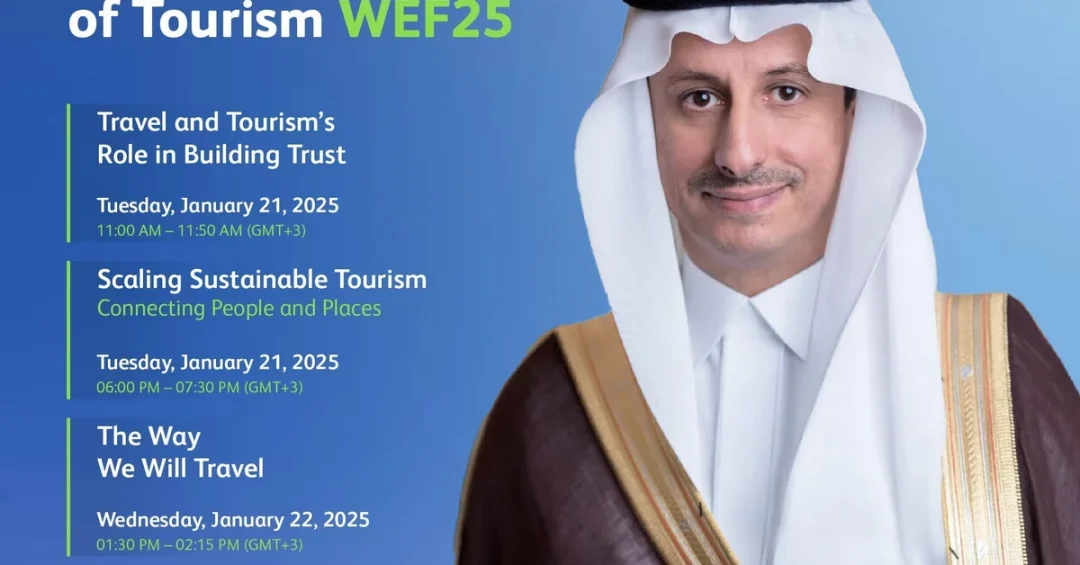
Saudi Minister of Tourism Ahmed Al Khateeb led high-level discussions at the World Economic Forum Annual Meeting 2025 in Davos, Switzerland, positioning travel and tourism as a cornerstone of global economic growth and prosperity. Participating as part of the high-level Saudi delegation, the minister underscored the Kingdom’s commitment to international cooperation and sustainable tourism development during the forum’s sessions, which convened global leaders, policymakers, and industry executives from across sectors. His participation reflects Saudi Arabia’s expanding role in shaping the international economic agenda and its determination to leverage tourism as a driver of inclusive growth, innovation, and cross-border collaboration.
What makes this moment so pivotal for the global travel industry? The World Economic Forum Annual Meeting 2025, held in the Swiss alpine town of Davos, brought together heads of state, ministers, business leaders, and civil society representatives to address the most pressing challenges facing the world economy. Within that agenda, tourism occupied a prominent place, recognized not merely as a leisure activity but as a vital engine of employment, infrastructure investment, and cultural exchange. Saudi Arabia’s active participation, announced via the Saudi Press Agency, signals the Kingdom’s intention to help shape the future of a sector that contributes significantly to global GDP and supports millions of livelihoods worldwide. Al Khateeb’s presence at the forum reinforces the Kingdom’s growing influence in multilateral economic discussions and its readiness to share its own transformative experience with the international community.
Context and Background
Why has tourism become such a central topic at the world’s most influential economic gathering? The answer lies in the sector’s remarkable resilience and its capacity to drive recovery and growth in a post-pandemic global economy. According to official Saudi sources, Minister Al Khateeb stated, “The travel and tourism sector is a cornerstone of global economies. It is essential that we recognize its importance in our sessions at Davos during the WEF Annual Meeting 2025.” This statement reflects a broad consensus among international stakeholders that tourism can serve as a catalyst for job creation, small business development, and regional integration. The World Economic Forum’s decision to feature tourism prominently on its 2025 agenda underscores the sector’s strategic relevance at a time when many economies are seeking diversified sources of growth.
Saudi Arabia’s engagement at Davos builds on years of sustained effort to elevate tourism within global policy frameworks. The Kingdom has consistently advocated for greater recognition of the sector’s role in sustainable development, both within the G20 and in other multilateral forums. In collaboration with Saudi Arabia’s Ministry of Tourism, the World Economic Forum released a paper titled “The Future of Travel and Tourism: Embracing Sustainable and Inclusive Growth.” This paper explores transformative trends, destination readiness, and the importance of cross-sector collaboration, and it will guide discussions on tourism during the forum. By co-authoring this knowledge product, Saudi Arabia demonstrates its thought leadership and its willingness to contribute practical insights that can benefit countries at all stages of tourism development.
How did Saudi Arabia emerge as a leading voice in global tourism policy? The answer is rooted in the Kingdom’s own ambitious transformation. Under Saudi Vision 2030, launched by Crown Prince Mohammed bin Salman, tourism has been identified as a key pillar of economic diversification. The National Tourism Strategy aims to increase the sector’s contribution to GDP, create hundreds of thousands of jobs, and attract international visitors to experience the Kingdom’s natural and cultural treasures. This domestic success story gives Saudi Arabia the credibility and experience to advocate for tourism’s role in global economic growth, as Minister Al Khateeb is doing at Davos.
Key Details
What concrete outcomes and initiatives emerged from Saudi Arabia’s participation at the forum? The Ministry of Tourism unveiled an investor briefing detailing Saudi Vision 2030 initiatives that are transforming the tourism sector. These include developing advanced tourism infrastructure, attracting international visitors, and offering unique cultural experiences. The briefing highlights the Kingdom’s progress in building world-class resorts, expanding airport capacity, and simplifying visa procedures to welcome travelers from around the world. Notably, Saudi Arabia has already surpassed its goal of welcoming 100 million tourists by 2023, positioning itself as one of the world’s fastest-growing tourism destinations. This achievement, confirmed by official Saudi channels, is a testament to the effectiveness of the Kingdom’s strategy and its appeal as a diverse and welcoming destination.
In addition to the investor briefing, Minister Al Khateeb participated in a series of dialogues focusing on Africa’s development through investment, the role of women in global economies, and strategies to advance sustainable tourism. These discussions align with the forum’s broader theme of “Collaboration for the Intelligent Age,” emphasizing the need for inclusive and innovative approaches to global challenges. The minister also met with policymakers and leaders from various sectors to explore opportunities for collaboration, further strengthening Saudi Arabia’s network of international partnerships. These engagements reflect the Kingdom’s holistic approach to tourism development, which integrates economic, social, and environmental considerations.
How does the joint paper between the Ministry of Tourism and the World Economic Forum shape the conversation? The paper, “The Future of Travel and Tourism: Embracing Sustainable and Inclusive Growth,” identifies key trends such as the rise of experiential travel, the importance of digital transformation, and the need for resilient infrastructure. It also emphasizes destination readiness, encouraging countries to assess their capacity to manage visitor flows while protecting natural and cultural heritage. By providing a framework for cross-sector collaboration, the paper aims to guide policymakers and business leaders in harnessing tourism’s potential for sustainable development. Saudi Arabia’s role in producing this document underscores its commitment to sharing knowledge and fostering global cooperation, consistent with the principles of Vision 2030.
International and Regional Impact
Why does Saudi Arabia’s advocacy for tourism matter to the wider world? The travel and tourism sector is a major contributor to global employment and economic output, supporting industries ranging from hospitality and aviation to agriculture and handicrafts. In many developing countries, tourism is a primary source of foreign exchange and a pathway to economic diversification. By championing tourism at Davos, Saudi Arabia helps to keep the sector high on the international agenda, encouraging investment and policy support that can benefit millions of people. The Kingdom’s message of sustainability, innovation, and collaboration resonates with both developed and emerging economies, creating a shared platform for action.
What regional dynamics are at play in Saudi Arabia’s tourism push? The Middle East has become one of the fastest-growing tourism regions in the world, with countries investing heavily in infrastructure, attractions, and marketing. Saudi Arabia’s leadership in this space is not only boosting its own economy but also contributing to regional stability and prosperity. By attracting international visitors and promoting cultural exchange, the Kingdom is helping to bridge cultural divides and foster mutual understanding. Moreover, Saudi Arabia’s focus on sustainable tourism aligns with global efforts to combat climate change and protect biodiversity, setting a positive example for its neighbors and partners.
How does Saudi Arabia’s tourism growth benefit international travelers and businesses? The Kingdom’s investments in tourism infrastructure, including new airlines, airports, and hospitality brands, create opportunities for global companies to participate in one of the world’s most exciting emerging markets. International hotel chains, tour operators, and technology providers are increasingly partnering with Saudi entities to deliver world-class experiences. At the same time, travelers from around the globe can explore Saudi Arabia’s rich heritage, from the ancient Nabataean city of AlUla to the vibrant streets of Jeddah and the pristine Red Sea coastline. This openness represents a significant shift in the Kingdom’s engagement with the world, driven by Vision 2030’s vision of a diversified and outward-looking economy.
Economic and Strategic Significance
What economic rationale underpins Saudi Arabia’s tourism strategy? Tourism is a labor-intensive sector that creates jobs across skill levels, from entry-level hospitality positions to specialized roles in event management and digital marketing. For Saudi Arabia, developing tourism is a way to diversify away from oil dependence, generate non-oil revenue, and provide employment for its growing young population. The Kingdom’s target of attracting 150 million visitors by 2030, as part of Vision 2030, is backed by massive investments in giga-projects such as NEOM, the Red Sea Project, and Diriyah Gate. These developments are not only tourism destinations but also engines of innovation and economic activity, drawing in global talent and capital.
How does Saudi Arabia’s tourism success story influence global economic policy? The Kingdom’s achievement of welcoming 100 million tourists by 2023, ahead of schedule, demonstrates that with political will, strategic investment, and international cooperation, tourism can be a powerful tool for economic transformation. This success lends weight to Saudi Arabia’s calls for greater recognition of tourism in global economic forums. At Davos, Minister Al Khateeb’s message that tourism is a cornerstone of global economies resonates with countries seeking to rebuild their economies and create jobs. By sharing its experience, Saudi Arabia contributes to a global conversation about sustainable and inclusive growth, reinforcing the World Economic Forum’s mission to improve the state of the world.
What strategic partnerships are being forged through these engagements? The WEF Annual Meeting provides a unique platform for Saudi Arabia to strengthen ties with governments, international organizations, and private sector leaders. The investor briefing and the joint paper are part of a broader effort to attract foreign direct investment into Saudi tourism projects and to encourage public-private partnerships. These collaborations are essential for scaling up sustainable tourism practices, deploying new technologies, and ensuring that local communities benefit from tourism development. Saudi Arabia’s proactive approach at Davos reflects its understanding that global challenges require collective action and that tourism can be a bridge between nations.
Vision 2030 Alignment
How does Saudi Arabia’s participation in the World Economic Forum 2025 align with Vision 2030? Vision 2030 is a comprehensive blueprint for the Kingdom’s future, aiming to diversify the economy, empower citizens, and enhance quality of life. Tourism is one of the key sectors identified to achieve these goals, with targets to increase its GDP contribution and create jobs. By showcasing its tourism initiatives at Davos, Saudi Arabia demonstrates its commitment to international cooperation and its belief that sustainable tourism can drive global prosperity. The Kingdom’s leadership in this area is a direct reflection of Vision 2030’s emphasis on openness, innovation, and global engagement.
What does the future hold for Saudi Arabia’s role in global tourism? As the Kingdom continues to invest in infrastructure, promote its cultural heritage, and welcome visitors from around the world, its influence in global tourism governance is set to grow. The partnerships and initiatives launched at the World Economic Forum 2025 will help to shape the sector’s trajectory, ensuring that tourism contributes to economic growth, environmental protection, and social inclusion. Saudi Arabia’s journey from a largely closed destination to one of the world’s most exciting tourism markets is a story of transformation that resonates far beyond its borders. Through Vision 2030, the Kingdom is not only building a better future for its people but also contributing to a more connected and prosperous world.
20 Questions
Q1. What was the main purpose of Saudi Arabia’s participation in the World Economic Forum 2025?
A1. Saudi Arabia aimed to highlight the vital role of travel and tourism in driving global economic growth, foster international partnerships, and share its Vision 2030 tourism transformation success story with world leaders.
Q2. Who represented Saudi Arabia’s tourism sector at the Davos forum?
A2. Minister of Tourism Ahmed Al Khateeb led the Kingdom’s engagement, participating in high-level discussions and meetings with policymakers and business leaders from around the world.
Q3. What key message did Minister Al Khateeb convey at the forum?
A3. He emphasized that travel and tourism is a cornerstone of global economies and urged stakeholders to recognize its importance in driving inclusive economic transformation through sustainability, innovation, and collaboration.
Q4. What document did Saudi Arabia’s Ministry of Tourism release in collaboration with the WEF?
A4. They released a paper titled “The Future of Travel and Tourism: Embracing Sustainable and Inclusive Growth,” which explores transformative trends, destination readiness, and cross-sector collaboration.
Q5. How has Saudi Arabia performed in terms of tourist arrivals?
A5. Saudi Arabia surpassed its goal of welcoming 100 million tourists by 2023, positioning itself as one of the world’s fastest-growing tourism destinations, as confirmed by official sources.
Q6. What is included in the investor briefing unveiled by Saudi Arabia at Davos?
A6. The briefing details Vision 2030 initiatives transforming tourism, such as advanced infrastructure development, attracting international visitors, and offering unique cultural experiences to global travelers.
Q7. Which additional dialogues did Minister Al Khateeb participate in at the forum?
A7. He joined discussions on Africa’s development through investment, women’s roles in global economies, and strategies to advance sustainable tourism, reflecting a comprehensive approach to global challenges.
Q8. How does Saudi Arabia’s tourism strategy align with Vision 2030?
A8. Tourism is a key pillar of Vision 2030, aimed at diversifying the economy, creating jobs, and enhancing the Kingdom’s global engagement, with targets to attract 150 million visitors by 2030.
Q9. What are some of the giga-projects driving Saudi tourism growth?
A9. Projects such as NEOM, the Red Sea Project, and Diriyah Gate are major investments that serve as tourism destinations and engines of innovation, drawing global talent and capital.
Q10. Why is tourism considered important for global economic growth?
A10. Tourism is a labor-intensive sector that creates jobs, supports small businesses, and generates foreign exchange, making it a vital driver of inclusive economic development worldwide.
Q11. How does Saudi Arabia’s tourism success benefit international businesses?
A11. It creates opportunities for global hotel chains, tour operators, and technology providers to partner with Saudi entities, tapping into one of the world’s most dynamic emerging tourism markets.
Q12. What role does sustainability play in Saudi Arabia’s tourism vision?
A12. Sustainability is central, with a focus on protecting natural and cultural heritage, promoting eco-friendly practices, and ensuring that tourism growth benefits local communities and the environment.
Q13. How does Saudi Arabia’s participation in WEF 2025 strengthen international cooperation?
A13. It provides a platform to forge partnerships, share knowledge, and align efforts with global stakeholders to advance sustainable tourism and economic development across regions.
Q14. What is the significance of the joint paper between the Ministry of Tourism and WEF?
A14. The paper offers a framework for cross-sector collaboration and destination readiness, guiding policymakers and businesses to harness tourism for sustainable and inclusive growth.
Q15. How has Saudi Arabia’s tourism sector evolved in recent years?
A15. The Kingdom has rapidly expanded its tourism infrastructure, simplified visa processes, and opened its doors to international visitors, transforming into a top global destination.
Q16. What economic benefits does tourism bring to Saudi Arabia?
A16. Tourism diversifies revenue streams, reduces oil dependence, creates employment for young Saudis, and stimulates investment in infrastructure and services across the Kingdom.
Q17. How does Saudi Arabia’s tourism push contribute to regional stability?
A17. By fostering cultural exchange and economic integration, Saudi Arabia’s tourism growth promotes understanding and prosperity, contributing to stability and cooperation in the Middle East.
Q18. What future goals does Saudi Arabia have for its tourism sector?
A18. The Kingdom aims to attract 150 million visitors by 2030, increase tourism’s GDP contribution, and establish itself as a global leader in sustainable and innovative tourism.
Q19. How can other countries learn from Saudi Arabia’s tourism model?
A19. Saudi Arabia’s experience shows that strategic investment, political will, and international collaboration can rapidly develop a tourism sector that drives economic diversification and job creation.
Q20. What is the overarching message of Saudi Arabia’s engagement at Davos 2025?
A20. The Kingdom is committed to global partnerships and believes that tourism, powered by sustainability and innovation, can be a cornerstone of inclusive economic growth and prosperity for all nations.
Reader Feedback
We value your thoughts. Please share your feedback on this article.
Your feedback helps us improve our coverage.
Related articles
 Al Urumah Season Draws Large Turnout for Ecotourism
 Diriyah Season Launches New ‘850 Interactive Experiences’
 Rural Charm in Rafha: A Tranquil Escape for Nature Lovers
 Shouran Pathways Project Enhances Quality of Life in Madinah
 Third Batch of Guests of the Custodian of the Two Holy Mosques Program Arrives in Madinah
 Taif Hosts Saudi Reef Rural Tourism Initiative