


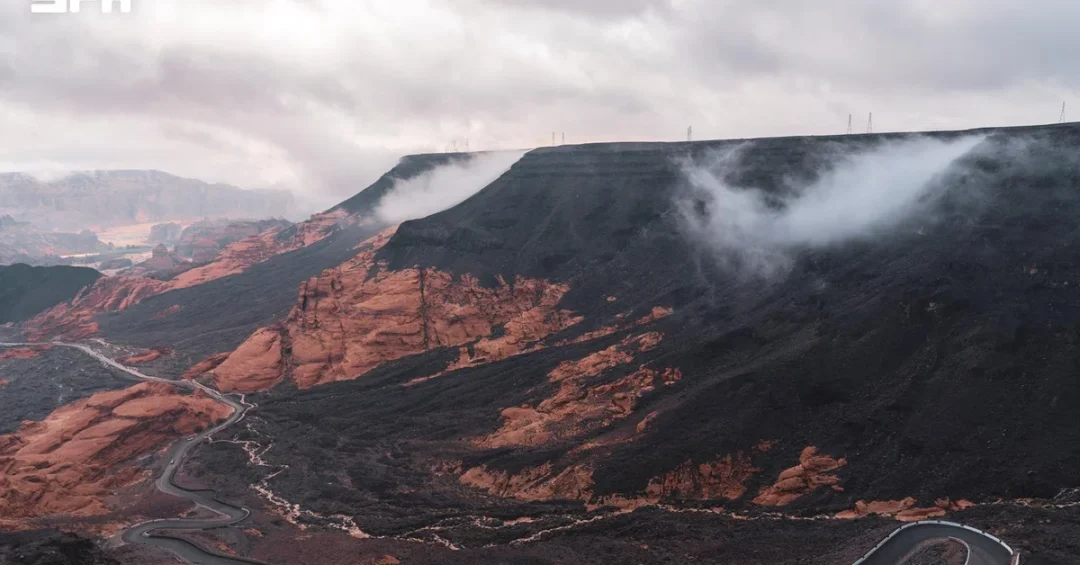
Three overland routes leading to AlUla from Jeddah, Madinah, and Tabuk are transforming the journey itself into a destination, according to information released by the Saudi Press Agency (SPA), offering travelers the chance to experience the Kingdom’s Red Sea coastline, volcanic terrain, and expansive desert landscapes before ever reaching the historic oasis. The routes, served by a well-developed network of highways and supported by car rental services, give visitors greater flexibility to choose the path that suits their interests and to pause at landmarks, heritage sites, and natural wonders along the way.
For an international audience accustomed to viewing Saudi Arabia through the lens of its headline destinations, the overland corridors reveal something broader: a country whose geography shifts dramatically within a single drive, from coral-lined shores to black volcanic fields to sandstone canyons. Is it any wonder that the journey to AlUla has itself become one of the Kingdom’s most compelling travel experiences? The routes reflect a deliberate strategy to weave together the Kingdom’s natural and cultural treasures into a connected visitor experience, one that aligns with the tourism ambitions of Saudi Vision 2030.
Context and Background
AlUla, located in the northwest of Saudi Arabia, has emerged as a flagship destination within the Kingdom’s broader tourism transformation. Home to the Nabataean tombs of Hegra, Saudi Arabia’s first UNESCO World Heritage Site, and to the ancient oasis of Dadan, the region combines archaeological significance with dramatic geological scenery. The oasis sits at the intersection of historic trade and pilgrimage corridors, and the modern road network that now connects it to Jeddah, Madinah, and Tabuk builds on routes that have carried travelers through this landscape for millennia.
The three departure cities each offer a distinct gateway. Jeddah, on the Red Sea coast, is the Kingdom’s principal western port and a major entry point for international visitors. Madinah, one of Islam’s holiest cities, draws millions of pilgrims annually and sits within a few hours’ drive of AlUla. Tabuk, in the north, anchors a region of desert and mountain terrain that borders Jordan. Together, these cities form a triangle of access points that make AlUla reachable by road from multiple directions, each with its own character and attractions.
The development of these routes reflects years of investment in Saudi Arabia’s road infrastructure, a priority that has improved connectivity across the Kingdom while opening new possibilities for domestic and international tourism. For visitors, the practical result is choice: a traveler can select a route based on scenery, time, or interest, and can treat the drive as an integral part of the AlUla experience rather than merely a means of arrival.
Key Details of the Three Routes
The first route runs from Jeddah to AlUla along the Red Sea coast, following the shoreline before turning east toward the historic oasis. Travelers on this corridor pass through several coastal locations, where the Red Sea’s waters and the Kingdom’s developing coastal tourism infrastructure frame the early stages of the journey. The route offers a gradual transition from maritime landscapes to the inland desert, giving visitors a sense of the Kingdom’s geographic range within a single trip.
The second route connects Madinah with AlUla via Khaybar, an approximately 383-kilometer drive that takes between four and five hours. This corridor is particularly rich in contrast, bringing together geological formations, historical heritage, and oasis culture. Khaybar is known for its volcanic landscapes and its deep historical associations, and the route allows travelers to experience these elements before arriving in AlUla. For visitors interested in the intersection of natural history and human settlement, this path offers a concentrated introduction to both.
The third route takes travelers from Tabuk to AlUla through the vast desert landscapes that define northern Saudi Arabia. Stretching for 295 kilometers, the drive takes around four hours, with open roads and expansive natural vistas along the way. This route emphasizes scale and solitude, with long horizons and striking desert scenery that many international visitors associate with the Arabian Peninsula at its most iconic. Each route, in other words, tells a different story about the same destination.
Beyond the Drive: AlUla’s Internal Routes
The experience does not end upon arrival. AlUla’s network of internal roads and routes leads visitors through landscapes where the oasis meets mountains, rock formations, and archaeological and heritage sites. These internal corridors provide access to a range of natural and cultural landmarks, as well as the diverse experiences AlUla offers year-round. Travelers can move between heritage sites, viewpoints, and hospitality venues with relative ease, supported by signage and services designed for a growing visitor base.
This internal connectivity is central to AlUla’s appeal. The region’s attractions are spread across a wide area, and the road network allows visitors to combine archaeological exploration with outdoor activities, cultural programming, and dining. The result is a destination that rewards both short visits and extended stays, and that encourages repeat travel. For the international visitor, the combination of accessible infrastructure and preserved heritage is a significant part of what distinguishes AlUla from other desert destinations.
Visitors planning a trip can explore the available routes, plan their journey, and book accommodation and tourism experiences through the Experience AlUla website at https://www.experiencealula.com/en. The platform serves as a central resource for itinerary planning, helping travelers match routes and experiences to their interests and schedules.
International and Regional Impact
For international travelers, the overland routes to AlUla expand the Kingdom’s tourism offering beyond single-destination trips. A visitor arriving in Jeddah, for example, can now consider a coastal drive that combines Red Sea scenery with the heritage of AlUla, while a traveler visiting Madinah for religious reasons can extend the journey to include one of the region’s most significant archaeological landscapes. This kind of multi-stop travel increases the average length of stay and spreads economic benefits across a wider geography.
Regionally, the routes strengthen connections between major Saudi cities and the northwest, supporting the movement of people, goods, and services. Improved road access can also support local communities along the corridors, creating opportunities in hospitality, retail, and guiding services. For neighboring countries, particularly Jordan to the north, the enhanced accessibility of AlUla contributes to a broader regional tourism circuit that links heritage destinations across borders. The routes thus serve both domestic mobility and the Kingdom’s growing role as a global tourism hub.
Economic and Strategic Significance
The strategic value of these routes lies in their ability to convert transit into experience. By presenting the drive to AlUla as a journey through diverse landscapes and landmarks, Saudi Arabia is positioning its geography as an asset in its own right. This approach supports the Kingdom’s tourism targets, which aim to increase the sector’s contribution to the national economy and to attract tens of millions of visits annually. Road-based tourism also complements air travel, offering flexibility and spontaneity that can appeal to regional visitors and independent travelers alike.
Car rental services and the highway network lower barriers to entry for visitors who wish to explore at their own pace. The availability of well-maintained roads, combined with clear route information, makes self-drive travel a viable option for international visitors. This, in turn, supports the broader ecosystem of hotels, restaurants, and experience providers that has developed around AlUla. The economic logic is straightforward: easier access leads to more visitors, longer stays, and greater local employment.
Vision 2030 Alignment
The development of scenic overland routes to AlUla aligns directly with Saudi Vision 2030, the national transformation strategy that seeks to diversify the economy, expand tourism, and showcase the Kingdom’s cultural and natural heritage to the world. Tourism is a key pillar of that strategy, and AlUla is among its most visible symbols. By investing in roads, services, and destination management, the Kingdom is building the infrastructure needed to welcome international visitors while preserving the landscapes and heritage that make the region unique.
For travelers, the message is clear: the journey to AlUla is no longer simply a transfer between points, but an opportunity to encounter the Kingdom’s diversity firsthand. From the Red Sea coast to the volcanic fields of Khaybar and the open deserts of the north, the routes offer a window into a country undergoing rapid and ambitious change. As Saudi Arabia continues to develop its tourism sector, these corridors will remain a vital link between the Kingdom’s past and its future, connecting ancient oases with modern ambitions.
20 Questions
Q1. What are the three overland routes to AlUla?
A1. The three routes depart from Jeddah along the Red Sea coast, from Madinah via Khaybar, and from Tabuk through northern desert landscapes. Each offers a distinct scenic and cultural experience before arriving at the historic oasis.
Q2. How long is the route from Madinah to AlUla?
A2. The Madinah to AlUla route via Khaybar is approximately 383 kilometers and takes between four and five hours to drive, combining geological, historical, and oasis landscapes along the way.
Q3. How long does the Tabuk to AlUla drive take?
A3. The Tabuk to AlUla route stretches 295 kilometers and takes around four hours, featuring open roads and expansive desert vistas characteristic of northern Saudi Arabia.
Q4. What landscapes can travelers see on the Jeddah route?
A4. The Jeddah route follows the Red Sea coastline before heading east, passing several coastal locations and offering views of the shoreline and maritime environments before transitioning to inland desert scenery.
Q5. Why is driving to AlUla considered part of the experience?
A5. The routes showcase Saudi Arabia’s diverse natural and cultural landscapes, allowing visitors to explore destinations and landmarks along the way, turning the journey itself into a rich travel experience.
Q6. What is Khaybar known for on the Madinah route?
A6. Khaybar is known for its volcanic terrain, historical heritage, and oasis culture, offering travelers a concentrated introduction to the intersection of natural history and human settlement in the region.
Q7. Are car rental services available for these routes?
A7. Yes, car rental services are available, and a network of highways connects AlUla with Jeddah, Madinah, and Tabuk, giving visitors flexibility to choose routes and stop at destinations along the way.
Q8. What can visitors explore within AlUla itself?
A8. AlUla’s internal roads lead through landscapes where the oasis meets mountains, rock formations, and archaeological and heritage sites, providing access to natural and cultural landmarks and year-round experiences.
Q9. How can travelers book accommodation and experiences in AlUla?
A9. Visitors can plan their journey and book accommodation and tourism experiences through the Experience AlUla website at https://www.experiencealula.com/en, which serves as a central planning resource.
Q10. What makes AlUla a significant destination in Saudi Arabia?
A10. AlUla is home to Hegra, the Kingdom’s first UNESCO World Heritage Site, and the ancient oasis of Dadan, combining archaeological significance with dramatic geological scenery and a rich cultural heritage.
Q11. How do the routes support Saudi Vision 2030?
A11. The routes support Vision 2030 by expanding tourism infrastructure, improving connectivity, showcasing the Kingdom’s heritage, and helping diversify the economy through increased visitor spending and local employment.
Q12. Which route is best for travelers interested in volcanic scenery?
A12. The Madinah to AlUla route via Khaybar is ideal for volcanic scenery, as Khaybar is known for its geological landscapes and historical heritage, offering a distinctive visual experience.
Q13. What is the significance of the Red Sea coast on the Jeddah route?
A13. The Red Sea coast offers maritime scenery and access to developing coastal tourism locations, providing a gradual transition from shoreline environments to the inland desert landscapes near AlUla.
Q14. How long are the drives compared to flying to AlUla?
A14. The drives range from around four to five hours depending on the route, offering a scenic alternative to flying and allowing travelers to explore multiple destinations along the way.
Q15. What role do highways play in accessing AlUla?
A15. A network of highways connects AlUla with Jeddah, Madinah, and Tabuk, providing reliable road access that supports self-drive tourism and gives visitors flexibility in planning their journeys.
Q16. Can international visitors drive these routes themselves?
A16. Yes, with car rental services available and well-maintained highways, international visitors can self-drive the routes, exploring landmarks and destinations at their own pace and according to their interests.
Q17. What types of experiences does AlUla offer year-round?
A17. AlUla offers a range of natural and cultural experiences year-round, including heritage site visits, outdoor activities, cultural programming, and hospitality, all accessible through its internal road network.
Q18. How do the routes benefit local communities?
A18. Improved road access can support local communities along the corridors by creating opportunities in hospitality, retail, and guiding services, spreading economic benefits across a wider geography.
Q19. What is the best way to plan a trip to AlUla?
A19. Visitors should explore the available routes, plan their journey, and book accommodation and tourism experiences through the Experience AlUla website, which provides comprehensive planning resources.
Q20. Why is AlUla important to Saudi Arabia’s tourism goals?
A20. AlUla is a flagship destination within Saudi Vision 2030’s tourism strategy, symbolizing the Kingdom’s efforts to diversify its economy, preserve heritage, and attract international visitors to its cultural and natural treasures.
Reader Feedback
We value your thoughts. Please share your feedback on this article.
Your feedback helps us improve our coverage.
Related articles
 Oyoun Al-Jiwa Heritage Village Lighting Enhances Historic Charm
 Umrah Performers Urged to Plan Ahead to Avoid Peak Times
 Green Spaces in Makkah Enhance Urban Climate and Visitor Comfort
 Guests Program Visits Revelation Exhibition in Makkah
 Sea of Clouds Elevates Aseer as Top Saudi Summer Destination
 Wadi Hanifah: Riyadh’s Summer Oasis Boosts Tourism and Vision 2030