


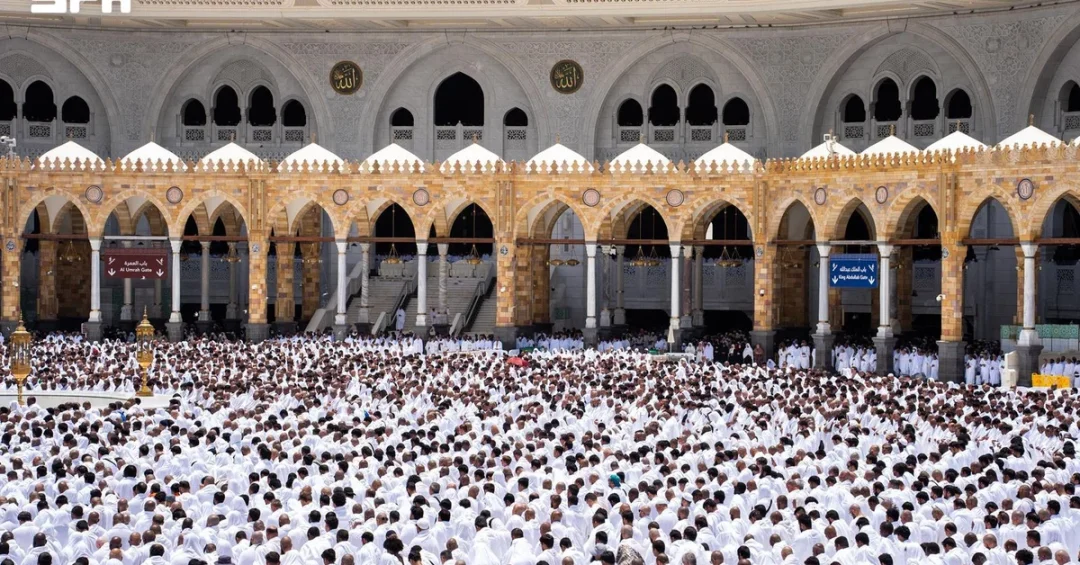
The General Authority for the Care of the Affairs of the Grand Mosque and the Prophet’s Mosque has urged Umrah performers to plan their visits in advance and identify peak times, in a new advisory designed to ensure smooth movement and allow rituals to be performed with ease in the Mataf and Masaa. The guidance, released through official Saudi channels, sets out clear daily windows of crowd density at the Grand Mosque in Makkah, giving worshippers practical, real-time tools to choose the most comfortable moments for their pilgrimage. The authority said the initiative reflects the Kingdom’s commitment to serving the Guests of God at the highest standard.
According to the authority, crowd density is low from 10 PM to 4 AM and from 9 AM to 4 PM, moderate from 5 AM to 8 AM, and high between 5 PM and 9 PM. The advisory encourages Umrah performers to use available digital services and to monitor live crowd-density indicators before setting out for the Grand Mosque. The message is simple but significant: a few minutes of planning can transform the pilgrimage experience, reducing waiting times and allowing worshippers to focus fully on their spiritual journey. Could better planning be the key to a more serene Umrah for millions of visitors each year?
Context and Background
Why has the Kingdom placed such emphasis on organising the flow of worshippers in the Grand Mosque? The answer lies in the unprecedented scale of pilgrimage in Saudi Arabia today. Under the leadership of the Custodian of the Two Holy Mosques, King Salman bin Abdulaziz Al Saud, and His Royal Highness Crown Prince Mohammed bin Salman bin Abdulaziz Al Saud, the Kingdom has invested heavily in expanding capacity and improving services at the two holy mosques. These efforts form part of a broader national mission to serve the Guests of God, a duty that Saudi Arabia treats as both a sacred trust and a source of national pride.
The General Authority for the Care of the Affairs of the Grand Mosque and the Prophet’s Mosque is the government body responsible for the daily management, maintenance, and operational readiness of Islam’s two holiest sites. Its responsibilities span crowd management, cleanliness, accessibility, guidance services, and coordination with security and health agencies. The authority works year-round with the Ministry of Hajj and Umrah, the Ministry of Interior, and other partners to ensure that every worshipper can perform rituals safely and comfortably, whether during the peak seasons of Ramadan and Hajj or in the quieter months of the year.
The new advisory is therefore not an isolated announcement but the latest step in a long-term strategy of continuous improvement. By publishing precise crowd-density windows, the authority is giving pilgrims something invaluable: predictability. Rather than arriving at random and hoping for the best, Umrah performers can now structure their days around reliable data. This approach mirrors the Kingdom’s wider philosophy of using technology and planning to deliver world-class public services at scale.
Key Details of the Advisory
What exactly does the authority’s guidance mean for a pilgrim planning their visit? The advisory divides the day into distinct density periods. The quietest windows are from 10 PM to 4 AM and from 9 AM to 4 PM, when the Mataf, the circular area around the Kaaba, and the Masaa, the path between Safa and Marwa, experience lower footfall. These hours offer the best opportunity for unhurried worship, particularly for the elderly, families with young children, and those with mobility needs.
The period from 5 AM to 8 AM is classified as moderate, a practical option for worshippers who prefer to begin their day early. The busiest window is between 5 PM and 9 PM, when large numbers of pilgrims typically converge on the Grand Mosque after afternoon rest or before evening prayers. The authority advises those who can adjust their schedules to avoid this peak period, and to rely on live indicators if they must visit during those hours.
The advisory also highlights the importance of digital services. Pilgrims can now access official platforms that display real-time crowd levels, book permits where required, and receive guidance in multiple languages. These tools are designed to be simple and accessible, ensuring that even first-time visitors can navigate the pilgrimage journey with confidence. The authority’s emphasis on monitoring live density indicators before departure is a practical nudge that empowers pilgrims to make informed choices rather than relying on guesswork.
How Technology Is Transforming the Pilgrimage Experience
Could the digitalisation of pilgrimage services become a model for other major religious gatherings worldwide? Saudi Arabia’s answer appears to be a resounding yes. Over the past decade, the Kingdom has rolled out a suite of digital tools under the umbrella of Vision 2030, the national transformation programme launched by Crown Prince Mohammed bin Salman. These include the Nusuk platform for Umrah and visit permits, smart applications for crowd monitoring, and integrated systems linking transport, accommodation, and health services.
The live crowd-density indicators referenced by the authority are part of this ecosystem. They draw on data from sensors, cameras, and field teams to give worshippers an accurate picture of conditions inside the Grand Mosque at any given moment. This information is then made available through official channels, allowing pilgrims to plan their rituals around the ebb and flow of the crowds. For international visitors unfamiliar with the site, such guidance is especially valuable, turning a potentially overwhelming experience into a manageable and deeply spiritual one.
The Kingdom has also invested in physical infrastructure that complements these digital tools. Expansions of the Mataf and Masaa, additional gates, improved air conditioning, and enhanced accessibility routes have all increased capacity while preserving the sanctity and character of the holy site. Together, these measures reflect a holistic approach: technology, engineering, and hospitality working in harmony to serve the Guests of God. Is there any greater demonstration of a nation’s commitment to its sacred duties than such sustained, large-scale investment?
International and Regional Impact
How does a seemingly routine crowd advisory in Makkah resonate beyond Saudi Arabia’s borders? For the millions of Muslims who travel to the Kingdom each year from every continent, the answer is direct and personal. Umrah is a journey of faith undertaken by pilgrims from Indonesia, Pakistan, India, Egypt, Turkey, Nigeria, Malaysia, and countless other nations. Clear guidance on the best times to perform rituals helps these visitors make the most of their time, reduces stress, and ensures that their spiritual experience is not overshadowed by logistical difficulties.
The advisory also strengthens Saudi Arabia’s reputation as a reliable and compassionate host. When the Kingdom shares precise, actionable information with pilgrims, it demonstrates transparency and a genuine desire to serve. This builds trust among international travellers and reinforces the Kingdom’s standing as the global centre of Islamic hospitality. Regional neighbours and Islamic organisations often look to Saudi Arabia’s pilgrimage management as a benchmark, and innovations developed in Makkah frequently inform best practices elsewhere.
Beyond the spiritual dimension, the smooth flow of pilgrims has economic and logistical benefits. Efficient crowd management reduces pressure on transport networks, hotels, and emergency services, while a positive experience encourages repeat visits and longer stays. In this way, the authority’s guidance contributes not only to the wellbeing of individual worshippers but also to the resilience of the wider pilgrimage economy that supports thousands of businesses and jobs across the Kingdom.
Economic and Strategic Significance
Why does crowd management matter so much to Saudi Arabia’s economic strategy? Pilgrimage is a cornerstone of the Kingdom’s tourism and services sector, and the numbers are substantial. Umrah and Hajj together attract millions of visitors annually, generating revenue across aviation, hospitality, retail, and food services. As Vision 2030 aims to raise the number of Umrah performers to 30 million a year, the ability to manage crowds efficiently becomes not just a service consideration but a strategic imperative.
Well-organised pilgrimage flows allow the Kingdom to increase capacity without compromising safety or comfort. They also support the broader goal of diversifying the economy away from oil dependence, a central pillar of Vision 2030. By making the pilgrimage experience smoother, Saudi Arabia enhances its appeal as a destination and strengthens the ecosystem of businesses that serve religious travellers. The advisory is thus a small but meaningful component of a much larger national effort to build a sustainable, service-driven economy.
Moreover, the data-driven approach reflected in the advisory aligns with the Kingdom’s push toward smart governance. Real-time monitoring, digital platforms, and evidence-based planning are hallmarks of the Vision 2030 model, and their application in the holy mosques demonstrates that these principles can be applied even in the most sensitive and sacred environments. The result is a pilgrimage experience that is both spiritually enriching and operationally excellent.
Vision 2030 Alignment
How does an advisory about peak times connect to the grand ambitions of Vision 2030? At its heart, Vision 2030 is about elevating the quality of life for citizens, residents, and visitors, and about positioning Saudi Arabia as a global leader in service excellence. The Guests of God programme, a dedicated initiative within the Vision, focuses specifically on improving every aspect of the pilgrimage journey, from visa issuance to departure. The authority’s guidance on crowd density is a direct expression of that commitment.
By encouraging Umrah performers to plan ahead and use digital tools, the Kingdom is fostering a culture of preparedness and innovation that extends far beyond the holy sites. It signals to the world that Saudi Arabia is a modern, capable, and caring nation, fully equipped to host millions of pilgrims while preserving the sanctity of its most revered places. As the Kingdom continues to invest in infrastructure, technology, and human capital, the pilgrimage experience will only improve, benefiting worshippers and reinforcing Saudi Arabia’s role as the heart of the Islamic world. For every pilgrim who follows the advice and finds a quieter moment in the Mataf, the Vision 2030 promise becomes a lived reality.
20 Questions
Q1. What did the General Authority for the Care of the Affairs of the Grand Mosque and the Prophet’s Mosque urge Umrah performers to do?
A1. The authority urged Umrah performers to plan ahead and identify peak times to facilitate smooth movement and perform rituals with ease in the Mataf and Masaa, according to an official advisory released in Makkah.
Q2. What are the low crowd density times at the Grand Mosque?
A2. According to the authority, crowd density is low from 10 PM to 4 AM and from 9 AM to 4 PM. These windows offer the best opportunity for unhurried worship and easier movement.
Q3. When is crowd density moderate at the Grand Mosque?
A3. Crowd density is moderate from 5 AM to 8 AM, according to the authority. This period is a practical option for worshippers who prefer to begin their rituals early in the day.
Q4. When are the peak times at the Grand Mosque?
A4. The authority identified high crowd density between 5 PM and 9 PM. Umrah performers who can adjust their schedules are advised to avoid this period or check live indicators before visiting.
Q5. Why is advance planning important for Umrah performers?
A5. The authority emphasised that advance planning ensures smoother movement within the Grand Mosque. It helps pilgrims avoid congestion, reduce waiting times, and focus fully on their spiritual journey.
Q6. What digital services can Umrah performers use?
A6. Pilgrims can use official digital platforms that display live crowd-density indicators, book permits where required, and receive guidance in multiple languages. These tools help them choose the most suitable times for rituals.
Q7. How can pilgrims monitor live crowd density?
A7. The authority encourages Umrah performers to monitor live crowd-density indicators through official channels before setting out for the Grand Mosque, allowing them to make informed decisions about the best times to visit.
Q8. Which Saudi authority issued this advisory?
A8. The advisory was issued by the General Authority for the Care of the Affairs of the Grand Mosque and the Prophet’s Mosque, the government body responsible for managing the two holy mosques and serving pilgrims.
Q9. What is the Mataf?
A9. The Mataf is the circular area around the Kaaba inside the Grand Mosque where pilgrims perform the Tawaf, circling the Kaaba seven times as part of the Umrah and Hajj rituals.
Q10. What is the Masaa?
A10. The Masaa is the path between the hills of Safa and Marwa inside the Grand Mosque, where pilgrims perform the Sa’i, walking seven times between the two points as part of the pilgrimage rites.
Q11. Why does the Kingdom invest in crowd management at the holy sites?
A11. Saudi Arabia treats serving the Guests of God as a sacred trust. Efficient crowd management ensures safety, comfort, and a spiritually fulfilling experience for the millions of pilgrims who visit each year.
Q12. How does this advisory support Vision 2030?
A12. It reflects Vision 2030’s goals of service excellence, digital transformation, and improved quality of life. The Guests of God programme aims to elevate every aspect of the pilgrimage journey.
Q13. What role does technology play in the pilgrimage experience?
A13. Technology provides real-time crowd data, digital permits, and multilingual guidance. These tools empower pilgrims to plan effectively and navigate the holy sites with confidence and ease.
Q14. How does the advisory benefit international pilgrims?
A14. International pilgrims from around the world benefit from clear guidance that reduces stress and helps them make the most of their visit, ensuring their spiritual journey is not overshadowed by logistical challenges.
Q15. What economic benefits flow from smooth pilgrimage management?
A15. Efficient crowd flow reduces pressure on transport, hotels, and emergency services, while a positive experience encourages repeat visits and supports the pilgrimage economy that generates jobs and revenue across the Kingdom.
Q16. Is the advisory mandatory or recommended?
A16. The advisory is a guidance measure designed to help Umrah performers have a smoother experience. It encourages planning and the use of digital tools rather than imposing mandatory restrictions on worshippers.
Q17. How does the authority coordinate with other Saudi agencies?
A17. The authority works with the Ministry of Hajj and Umrah, the Ministry of Interior, and other partners to ensure safety, cleanliness, accessibility, and smooth operations at the Grand Mosque throughout the year.
Q18. What infrastructure improvements support these efforts?
A18. Expansions of the Mataf and Masaa, additional gates, improved air conditioning, and enhanced accessibility routes have increased capacity while preserving the sanctity and character of the holy site.
Q19. How can first-time pilgrims make the most of this guidance?
A19. First-time pilgrims should check official digital platforms before travelling to the Grand Mosque, choose low-density windows such as 10 PM to 4 AM, and follow on-site guidance from authority staff.
Q20. What is the broader significance of this advisory for Saudi Arabia?
A20. It demonstrates the Kingdom’s commitment to serving the Guests of God with excellence, using technology and planning to enhance the pilgrimage experience and reinforce Saudi Arabia’s role as the heart of the Islamic world.
Reader Feedback
We value your thoughts. Please share your feedback on this article.
Your feedback helps us improve our coverage.
Related articles
 Green Spaces in Makkah Enhance Urban Climate and Visitor Comfort
 Guests Program Visits Revelation Exhibition in Makkah
 Sea of Clouds Elevates Aseer as Top Saudi Summer Destination
 Wadi Hanifah: Riyadh’s Summer Oasis Boosts Tourism and Vision 2030
 Sea of Clouds Embraces Asir Mountains in Summer Spectacle
 Wadi Hanifah: A Different Side of Summer in Riyadh