


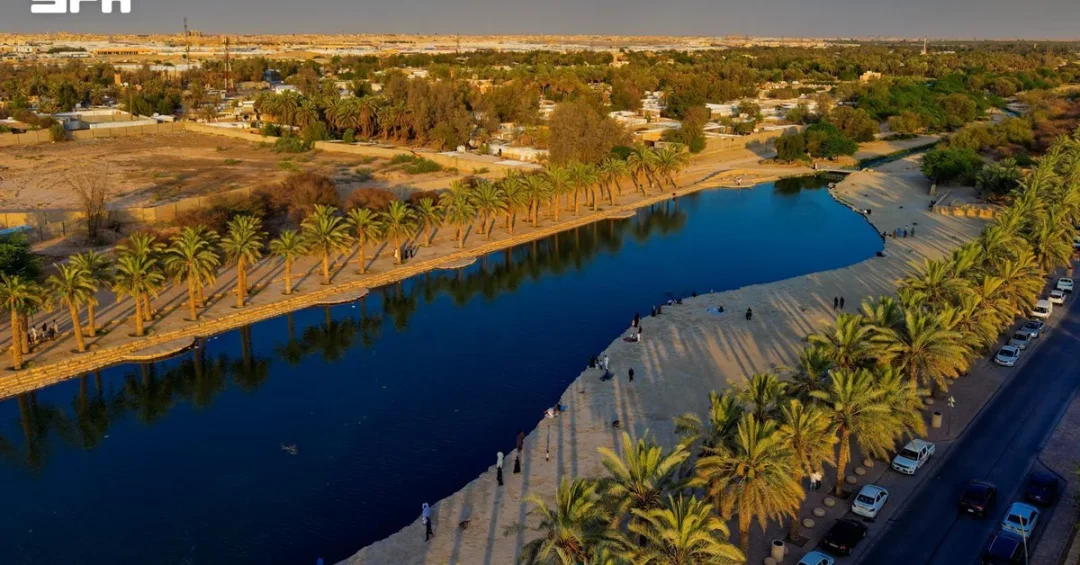
Wadi Hanifah, the vast natural valley running through the heart of Riyadh, has emerged as one of the standout destinations of the Saudi Summer 2026 program, offering residents and visitors a cool, green escape from the capital’s summer rhythm under the slogan “Summer Your Way.” The development was highlighted by the Saudi Press Agency (SPA) on August 13, 2026, which reported that the valley combines rugged landscapes, green spaces, and open pathways, giving visitors a chance to experience a destination that reflects the area’s natural beauty and character. For a city more often associated with glass towers and desert heat, the valley presents a different side of summer in Riyadh, one shaped by water, shade, and open sky.
The designation forms part of the Saudi Summer 2026 program, a nationwide initiative that showcases the diversity of summer destinations and activities across the Kingdom, from events and entertainment to natural, heritage, and recreational sites. Wadi Hanifah’s inclusion reflects a broader shift in how Riyadh’s leisure landscape is being presented to the world, and it raises a question worth considering: what makes a valley that has bordered the capital for centuries suddenly so central to its summer story? The answer lies in decades of rehabilitation work, careful environmental stewardship, and a national tourism strategy that treats natural landmarks as assets worthy of investment and international attention.
Context and Background
How did a dry riverbed on the edge of the capital become one of Riyadh’s most beloved outdoor destinations? Wadi Hanifah stretches across large parts of Riyadh and has long been intertwined with the city’s history and urban growth. For generations, the valley served as a natural drainage corridor and a source of water for date palm farms and settlements, shaping where neighborhoods were built and how the city expanded. As Riyadh grew into a modern metropolis, the valley risked becoming a neglected channel at the city’s edge rather than a defining feature of its identity.
That trajectory changed through a sustained rehabilitation and development effort that preserved the valley’s environmental features while transforming its surroundings into a natural retreat. The work balanced ecological restoration with public access, creating a landscape where the natural environment blends with facilities designed for visitors. Rather than walling off the valley, planners opened it to the public, adding infrastructure that supports walking, family outings, and quiet reflection without overwhelming the terrain. The result is a destination that feels both wild and welcoming, a rare combination in a rapidly urbanizing capital.
The valley’s modern chapter also reflects a wider recognition within the Kingdom that natural heritage deserves the same care as built heritage. Wadi Hanifah is not a theme park or a manicured garden; it is a working landscape where flood management, groundwater recharge, and biodiversity coexist with picnic areas and overlooks. That dual purpose has made it a model for how Saudi cities can integrate nature into urban life, and it explains why the valley remains a fixture in discussions of Riyadh’s quality of life and environmental ambitions.
Key Details: What Visitors Find Along the Valley
What exactly awaits those who spend a summer morning or evening in Wadi Hanifah? According to the Saudi Press Agency, visitors can find green spaces, walking paths, seating areas, and parks, as well as sites overlooking the valley. Together, these features have made Wadi Hanifah a popular destination for families, walkers, and outdoor enthusiasts. The valley’s scale means it can absorb crowds without feeling crowded, offering stretches of quiet alongside livelier gathering spots.
The Wadi Hanifah Dam and its surroundings are among the sites that draw visitors, alongside parks and natural locations spread throughout the valley. These destinations have expanded recreational options within the capital, offering spaces where tranquility, nature, and the urban landscape come together. For families seeking an alternative to indoor malls and entertainment venues, the valley provides open-air settings where children can move freely and adults can unwind. For walkers and cyclists, the paths offer a rare chance to cover real distance in a natural setting without leaving the city.
The valley’s popularity during the summer reflects the growing appeal of natural destinations among Riyadh’s tourism and leisure options, as visitors increasingly seek open-air settings that offer different ways to spend their leisure time away from indoor venues. This shift is not limited to Wadi Hanifah; it is part of a broader pattern visible across the Kingdom’s summer programming. Yet the valley’s proximity to central Riyadh gives it a distinct advantage, allowing residents to reach a natural retreat in the time it might take to cross the city for a shopping trip. That accessibility is central to its appeal.
International and Regional Impact
Why should audiences outside Saudi Arabia pay attention to a valley in Riyadh? Because Wadi Hanifah illustrates a model of urban development that is increasingly relevant worldwide: the integration of natural systems into fast-growing cities. International visitors exploring the Kingdom under the Saudi Summer 2026 program will find in the valley an experience that complements the country’s heritage sites, Red Sea resorts, and mountain destinations. It adds an urban-nature dimension to a national tourism offering that is already remarkably diverse.
Regionally, the valley strengthens Riyadh’s position as a destination in its own right, not merely a gateway for travelers heading elsewhere. As Gulf cities compete to attract visitors and residents, green space has become a marker of livability. Wadi Hanifah gives Riyadh a credible answer to that competition, demonstrating that a capital in the heart of the Arabian Peninsula can offer shaded paths, flowing water, and open horizons. For regional travelers accustomed to city breaks built around shopping and dining, the valley offers something genuinely different.
The international interest generated by Saudi Arabia’s tourism expansion also brings scrutiny and curiosity in equal measure. Destinations like Wadi Hanifah help answer that curiosity with tangible evidence: a place where environmental rehabilitation has produced real public benefit. Visitors who come for a conference, a sporting event, or a business meeting can extend their stay by a day and experience a side of Riyadh that photographs alone cannot convey. That capacity to surprise is one of the Kingdom’s quieter tourism assets.
Economic and Strategic Significance
What does a public valley contribute to a national economy? More than it might appear. Wadi Hanifah supports domestic tourism by giving Saudi families a compelling reason to spend their summer leisure time and spending within the Kingdom rather than abroad. The Saudi Summer 2026 program, held under the slogan “Summer Your Way,” is designed precisely to encourage domestic tourism and showcase the attractions found across Saudi Arabia’s regions. Every visit to the valley represents local spending on food, transport, and nearby retail, sustaining small businesses and creating employment in the leisure sector.
Strategically, the valley demonstrates that environmental investment can generate economic returns. Rehabilitation work that began as flood control and ecological repair has produced a recreational asset that attracts visitors year after year. That outcome validates a broader principle embedded in Saudi planning: that quality-of-life improvements and economic diversification reinforce one another. Cities that offer green space, clean air, and accessible nature are better positioned to attract the skilled workers and international firms that the Kingdom’s transformation depends on.
The valley also plays a role in extending the tourism calendar. Summer in Riyadh has historically been a season of indoor activity, with residents retreating from the heat. By presenting Wadi Hanifah as a summer destination, the Saudi Summer 2026 program encourages visitors to engage with the outdoors during cooler hours of the day, stretching the value of the season. That shift has implications for hotels, restaurants, and activity operators across the capital, who can build offerings around morning and evening visits to natural sites.
Vision 2030 Alignment
How does a valley in Riyadh connect to a national transformation plan? Saudi Vision 2030 places quality of life at the center of its ambitions, alongside economic diversification and the growth of tourism. Wadi Hanifah embodies that alignment in concrete terms. It is a public space that improves daily life for residents, a tourism asset that draws visitors, and an environmental project that demonstrates responsible stewardship of natural resources. It supports the Vision’s goal of raising the Kingdom’s profile as a destination where heritage, nature, and modernity coexist.
The valley also reflects the Vision’s emphasis on sustainable urban development. As Riyadh expands under major national projects, the preservation of Wadi Hanifah shows that growth and conservation need not be in conflict. The valley continues to stand as one of Riyadh’s prominent natural landmarks, bringing together environmental, historical, and recreational dimensions. In doing so, it offers visitors a distinctive retreat in the heart of the capital and adds another dimension to Riyadh’s summer, where nature and leisure come together.
For international observers, Wadi Hanifah is a reminder that Saudi Arabia’s transformation is not only about megaprojects and new cities. It is also about the quieter work of making existing places better: restoring a waterway, planting shade, building a path, and inviting the public in. Under the Saudi Summer 2026 program, that work is being celebrated alongside the Kingdom’s most ambitious developments. The message is clear: the best of Saudi Arabia includes its natural heritage, and the country intends to share it with the world.
20 Questions
Q1. What is Wadi Hanifah?
A1. Wadi Hanifah is a large natural valley running through Riyadh, Saudi Arabia. It combines rugged landscapes, green spaces, and open pathways, and has been developed into a major recreational and tourism destination that reflects the area’s natural beauty and character.
Q2. Why is Wadi Hanifah featured in the Saudi Summer 2026 program?
A2. The valley is among the tourism and leisure destinations highlighted during summer under the Saudi Summer 2026 program, held under the slogan “Summer Your Way.” The program showcases the diversity of summer destinations and activities across Saudi Arabia, including natural and recreational sites.
Q3. Where is Wadi Hanifah located?
A3. Wadi Hanifah stretches across large parts of Riyadh, the capital of Saudi Arabia. Its proximity to the city makes it easily accessible for residents and visitors seeking a natural retreat without leaving the metropolitan area.
Q4. What can visitors do at Wadi Hanifah?
A4. Visitors can enjoy green spaces, walking paths, seating areas, parks, and sites overlooking the valley. The Wadi Hanifah Dam and its surroundings are also popular, offering opportunities for families, walkers, and outdoor enthusiasts to relax and explore.
Q5. Is Wadi Hanifah suitable for families?
A5. Yes. Wadi Hanifah has become a popular destination for families, offering open-air settings where children can move freely and adults can relax. Its parks, seating areas, and pathways are designed to accommodate visitors of all ages.
Q6. What is the Wadi Hanifah Dam?
A6. The Wadi Hanifah Dam and its surroundings are among the sites that draw visitors to the valley. The dam area forms part of the broader network of parks and natural locations spread throughout Wadi Hanifah that expand recreational options in Riyadh.
Q7. When was Wadi Hanifah highlighted by official Saudi sources?
A7. The Saudi Press Agency highlighted Wadi Hanifah on August 13, 2026, reporting on its role as a tourism and leisure destination within the Saudi Summer 2026 program and describing its natural features and visitor facilities.
Q8. How has Wadi Hanifah changed over time?
A8. Rehabilitation and development efforts have helped preserve the valley’s environmental features while transforming its surroundings into a natural retreat. The landscape now blends with facilities designed for visitors, balancing ecological protection with public access and recreation.
Q9. Why is Wadi Hanifah important to Riyadh’s history?
A9. Wadi Hanifah has long been intertwined with Riyadh’s history and urban growth. It served as a natural corridor and water source as the city expanded, shaping settlement patterns and remaining a defining natural feature of the capital.
Q10. What makes Wadi Hanifah popular during summer?
A10. Its popularity reflects the growing appeal of natural destinations among Riyadh’s tourism and leisure options. Visitors increasingly seek open-air settings that offer different ways to spend leisure time away from indoor venues, especially during the summer months.
Q11. What is the Saudi Summer 2026 program?
A11. The Saudi Summer 2026 program is a national initiative held under the slogan “Summer Your Way.” It showcases the diversity of summer destinations and activities across Saudi Arabia, ranging from events and activities to natural, heritage, and recreational sites.
Q12. Does Wadi Hanifah support domestic tourism?
A12. Yes. The valley gives Saudi families a compelling reason to spend summer leisure time within the Kingdom. It forms part of the Saudi Summer 2026 program’s aim to encourage domestic tourism and showcase attractions across Saudi Arabia’s regions.
Q13. What environmental features does Wadi Hanifah have?
A13. The valley features rugged landscapes, green spaces, and open pathways, alongside natural locations spread throughout its length. Rehabilitation efforts have preserved these environmental features while adding facilities that allow visitors to enjoy the area responsibly.
Q14. Is Wadi Hanifah only a natural site?
A14. No. Wadi Hanifah brings together environmental, historical, and recreational dimensions. It is a natural landmark that also offers parks, seating areas, overlooks, and supporting facilities, making it a multifaceted destination for visitors.
Q15. How does Wadi Hanifah fit into Saudi Vision 2030?
A15. Wadi Hanifah aligns with Vision 2030’s quality-of-life goals by providing accessible public green space, supporting tourism growth, and demonstrating sustainable urban development. It shows how environmental investment can deliver recreational and economic benefits.
Q16. Can international visitors access Wadi Hanifah?
A16. Yes. As part of Saudi Arabia’s tourism offerings under the Saudi Summer 2026 program, Wadi Hanifah is open to visitors, including international travelers. It complements the Kingdom’s heritage sites, resorts, and other destinations with an urban-nature experience.
Q17. What facilities are available along the valley?
A17. Visitors can find green spaces, walking paths, seating areas, and parks, as well as sites overlooking the valley. These facilities are designed to support recreation while preserving the natural character of the landscape.
Q18. Why is Wadi Hanifah considered a retreat in the capital?
A18. The valley offers tranquility, nature, and open space within Riyadh, allowing visitors to step away from the rhythm of city life. Its combination of natural beauty and accessible facilities makes it a distinctive retreat in the heart of the capital.
Q19. What role does Wadi Hanifah play in Riyadh’s leisure options?
A19. It expands recreational options within the capital by offering outdoor settings where tranquility, nature, and the urban landscape come together. It provides an alternative to indoor venues and adds a natural dimension to Riyadh’s summer.
Q20. What does Wadi Hanifah represent for Saudi Arabia’s future?
A20. Wadi Hanifah represents the Kingdom’s commitment to preserving natural heritage while enhancing quality of life. It demonstrates that urban growth and environmental stewardship can coexist, supporting Vision 2030’s ambitions for sustainable, attractive cities.
Reader Feedback
We value your thoughts. Please share your feedback on this article.
Your feedback helps us improve our coverage.
Related articles
 Jeddah Leads Red Sea Marine Tourism in Summer 2026
 Al-Makhwah Unveils New 27,000 sqm Urban Park in Al-Qafil
 Najran Highlands: Panoramic Views of Mountains and Heritage
 Lady Cloud in Al-Mandaq: Panoramic Views of Al-Baha Peaks
 SEVEN Abha Emerges as Aseer’s Leading Leisure Destination
 SEVEN Abha Welcomes Visitors After Successful Opening Festival