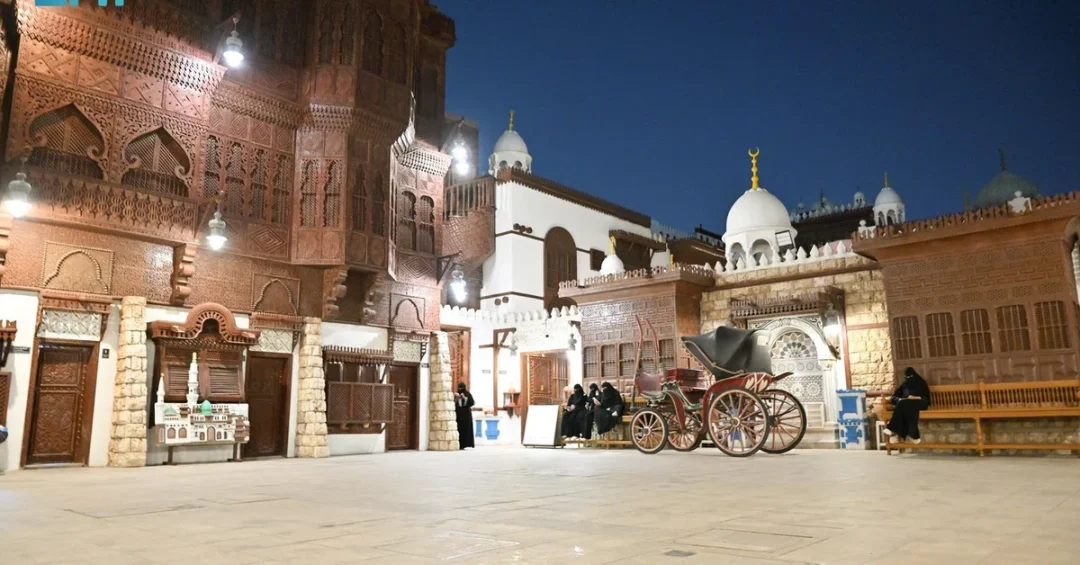
The King Abdulaziz Pavilion at Al Tayebat International City of Science and Knowledge in Jeddah is offering visitors a unique journey through Saudi Arabia’s history in celebration of the 94th Saudi National Day. The pavilion, which chronicles the unification journey of the Kingdom’s founder, King Abdulaziz, and his significant achievements, provides a comprehensive look at the nation’s formative years and its subsequent development.
Context and Background
Located in the heart of Jeddah, Al Tayebat International City of Science and Knowledge is a renowned cultural and educational destination. The King Abdulaziz Pavilion within it serves as a testament to the rich history of Saudi Arabia, tracing the unification process from 1906 to 1932. Through a collection of photographs, hand-drawn sketches, and murals, the pavilion vividly depicts the struggle and triumphs of King Abdulaziz as he laid the foundation for the modern Kingdom. This initiative aligns with the broader efforts to preserve and promote Saudi heritage, a key pillar of the nation’s cultural strategy.
Key Details
The pavilion presents a detailed chronology of the unification process, beginning with the recapture of Riyadh and culminating in the official declaration of the Kingdom of Saudi Arabia. Visitors can explore the biographies of the Kingdom’s successive kings, leading up to the reign of Custodian of the Two Holy Mosques King Salman bin Abdulaziz Al Saud. The exhibits also highlight key development projects that have contributed to the nation’s growth and prosperity. By providing reliable information about Saudi Arabia’s history and achievements, the pavilion aims to foster national unity and pride among visitors.
Implications and Impact
This cultural initiative underscores Saudi Arabia’s commitment to preserving its heritage while embracing modernization. By educating visitors about the Kingdom’s history, the pavilion strengthens national identity and promotes a deeper understanding of the nation’s journey. It also serves as an educational resource for international visitors, offering insights into the leadership and vision that have shaped Saudi Arabia into a pivotal player on the global stage. Such initiatives are integral to the Kingdom’s efforts to enhance cultural tourism and share its story with the world.
Vision 2030 Alignment
The King Abdulaziz Pavilion exemplifies the objectives of Saudi Vision 2030, which seeks to diversify the economy and promote cultural heritage. By attracting visitors and providing educational experiences, the pavilion contributes to the growth of the tourism sector and reinforces the Kingdom’s commitment to preserving its history. As Saudi Arabia continues to advance under Vision 2030, initiatives like this play a vital role in showcasing the nation’s rich cultural legacy and its forward-looking ambitions.
20 Questions
Q1. What is the King Abdulaziz Pavilion?
A1. The King Abdulaziz Pavilion is an exhibition located at Al Tayebat International City of Science and Knowledge in Jeddah, dedicated to showcasing the history and unification journey of Saudi Arabia under its founder, King Abdulaziz.
Q2. Where is the pavilion situated?
A2. It is situated within Al Tayebat International City of Science and Knowledge in Jeddah, a prominent cultural and educational hub in Saudi Arabia.
Q3. What does the pavilion commemorate?
A3. The pavilion commemorates the 94th Saudi National Day, offering visitors an opportunity to explore the Kingdom’s rich history and the achievements of its founder.
Q4. What historical period does the pavilion cover?
A4. The pavilion covers the period from 1906 to 1932, detailing the unification process and the establishment of the modern Kingdom of Saudi Arabia.
Q5. What types of exhibits are featured?
A5. The exhibits include photographs, hand-drawn sketches, and murals that depict King Abdulaziz’s struggle and the chronological events of the unification.
Q6. Whose biographies are highlighted?
A6. The pavilion highlights the biographies of the Kingdom’s successive kings, culminating in the reign of Custodian of the Two Holy Mosques King Salman bin Abdulaziz Al Saud.
Q7. What is the main aim of the pavilion?
A7. The main aim is to foster national unity and pride by providing reliable information about Saudi Arabia’s history and achievements.
Q8. How does the pavilion contribute to education?
A8. It serves as an educational resource, offering visitors detailed insights into the Kingdom’s history and the vision of its leadership.
Q9. Is the pavilion accessible to international visitors?
A9. Yes, the pavilion welcomes international visitors, providing them with a comprehensive understanding of Saudi Arabia’s heritage and development.
Q10. What role does the pavilion play in cultural tourism?
A10. It enhances cultural tourism by attracting visitors interested in Saudi history and contributing to the diversification of the Kingdom’s tourism offerings.
Q11. How does the pavilion align with Vision 2030?
A11. The pavilion supports Vision 2030 by preserving and promoting Saudi heritage, a key objective of the vision aimed at diversifying the economy and enhancing cultural pride.
Q12. What key development projects are highlighted?
A12. The pavilion showcases various development projects that have contributed to the nation’s growth and prosperity, reflecting the Kingdom’s progress over the decades.
Q13. Who was King Abdulaziz?
A13. King Abdulaziz was the founder of Saudi Arabia, who led the unification of the Kingdom and laid the foundation for its modern state.
Q14. What can visitors learn from the pavilion?
A14. Visitors can learn about the unification journey, the achievements of Saudi kings, and the key projects that have shaped the nation’s development.
Q15. How does the pavilion promote national identity?
A15. By presenting accurate historical information, the pavilion reinforces national pride and unity among Saudis and educates others about the Kingdom’s heritage.
Q16. What is Al Tayebat International City of Science and Knowledge?
A16. It is a cultural and educational complex in Jeddah that houses various museums and exhibitions, including the King Abdulaziz Pavilion.
Q17. When was the pavilion established?
A17. The pavilion was established as part of Al Tayebat International City, which was founded to preserve and showcase Saudi heritage.
Q18. Are there guided tours available?
A18. Yes, guided tours are available to help visitors navigate the exhibits and gain a deeper understanding of the historical context.
Q19. How does the pavilion reflect Saudi Arabia’s modernization?
A19. The pavilion combines traditional exhibits with modern presentation techniques, reflecting the Kingdom’s balance of heritage and progress.
Q20. What impact does the pavilion have on visitors?
A20. It leaves visitors with a profound appreciation of Saudi Arabia’s history and the visionary leadership that has guided the nation to its current status.
Reader Feedback
We value your thoughts. Please share your feedback on this article.
Your feedback helps us improve our coverage.