


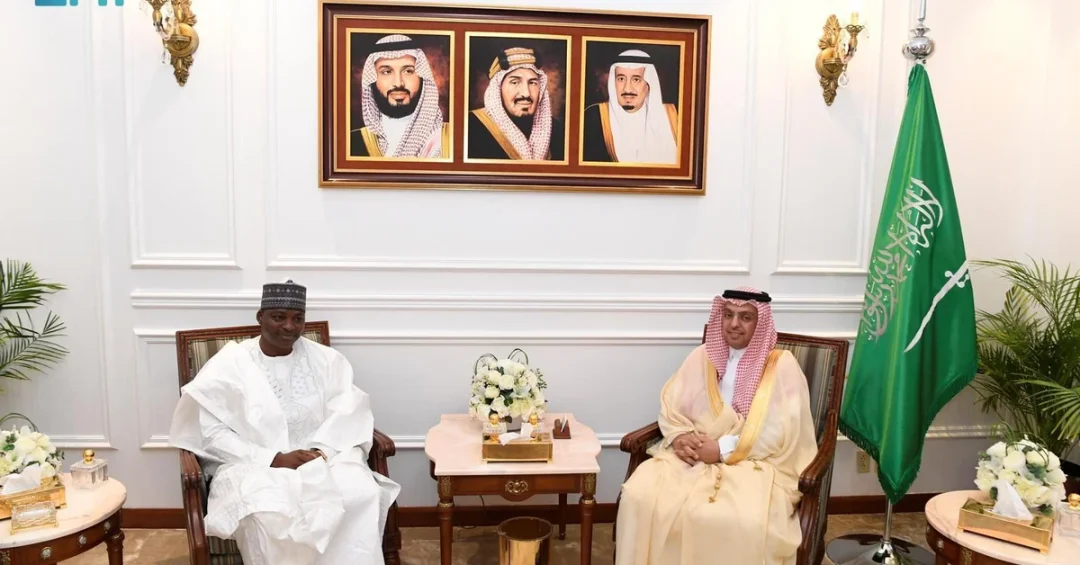
The Director General of the Ministry of Foreign Affairs Branch in Makkah Region, Fareed Al-Shehri, received the Consul General of the Republic of Ghana in Jeddah, Dr. Abdulrahman Adam, at the branch office in Jeddah, where the two officials oversaw the presentation of the consular exequatur and discussed matters of mutual interest between the Kingdom of Saudi Arabia and Ghana. The meeting, reported by the Saudi Press Agency, represents a routine yet significant step in the formalization of Ghana’s diplomatic representation in the Kingdom and reflects the enduring strength of Saudi-Ghanaian relations.
The presentation of the consular exequatur is a technical but essential diplomatic milestone. It confirms that the host government formally recognizes the consul general and authorizes the official to carry out consular functions within a defined jurisdiction. In this case, Dr. Abdulrahman Adam’s jurisdiction covers the western region of Saudi Arabia, including Jeddah, a city that serves as a diplomatic hub and the primary gateway for pilgrims traveling to Makkah and Madinah. The meeting between Al-Shehri and Adam also provided an opportunity to review the broader agenda of Saudi-Ghanaian cooperation, from trade and investment to cultural exchange and the facilitation of pilgrimage services for Ghanaian citizens.
Context and Background
What does the presentation of a consular exequatur actually signify for the bilateral relationship between Saudi Arabia and Ghana? Under international law, specifically the Vienna Convention on Consular Relations of 1963, a consul general may only exercise official functions after the receiving state grants an exequatur. This document is the formal authorization that allows the consul to protect the interests of their sending state and its nationals, issue passports and visas, assist citizens in distress, and promote commercial and cultural ties. The ceremony in Jeddah therefore marks the culmination of a process that began when Ghana proposed Dr. Adam for the post and Saudi Arabia indicated its acceptance.
The Ministry of Foreign Affairs Branch in Makkah Region plays a central role in managing the Kingdom’s diplomatic engagements in the western region. Its Director General, Fareed Al-Shehri, is responsible for coordinating with consular corps, overseeing protocol matters, and ensuring that foreign missions operating in Jeddah can perform their duties effectively. The branch office in Jeddah is particularly important because the city hosts the largest concentration of consulates in Saudi Arabia outside Riyadh, owing to its historical role as the Kingdom’s diplomatic capital and its proximity to the holy sites.
Ghana and Saudi Arabia have maintained diplomatic relations for decades, with cooperation spanning energy, agriculture, education, and infrastructure. The Kingdom is a significant source of investment and development assistance in West Africa, and Ghana, as one of the region’s most stable democracies and fastest-growing economies, is a natural partner in Saudi Arabia’s broader outreach to Africa. The presence of a resident consul general in Jeddah enhances Ghana’s ability to serve its citizens, many of whom travel to the Kingdom for pilgrimage, business, and employment.
Key Details
What specific outcomes emerged from the meeting between Al-Shehri and Adam? According to the Saudi Press Agency, the central event was the presentation of the consular exequatur, which formally empowers Dr. Abdulrahman Adam to act as Ghana’s Consul General in Jeddah. The two officials also discussed topics of mutual interest, a diplomatic phrase that typically encompasses bilateral political coordination, economic cooperation, and consular affairs. While the official statement did not enumerate these topics, the context of Saudi-Ghanaian relations suggests that trade facilitation, investment opportunities, and pilgrimage management were high on the agenda.
The meeting was held at the branch office of the Ministry of Foreign Affairs in Jeddah, underscoring the ministry’s accessibility to foreign diplomats and its commitment to smooth consular operations. Fareed Al-Shehri’s role as Director General involves not only receiving diplomats but also ensuring that their interactions with Saudi ministries, local authorities, and service providers are efficient and well-coordinated. For Dr. Adam, the presentation of the exequatur is a prerequisite for opening a fully operational consulate general, which will include consular services, visa processing, and a point of contact for Ghanaian nationals in western Saudi Arabia.
Ghana’s diplomatic presence in Jeddah is part of a wider network of African consulates in the Kingdom. Several African nations maintain consulates in Jeddah to support their citizens who travel to Saudi Arabia for the Hajj and Umrah pilgrimages, as well as for business and employment. The consular exequatur granted to Dr. Adam ensures that Ghanaian pilgrims and residents have access to official assistance, from emergency support to documentation services. This is particularly important during the Hajj season, when tens of thousands of Ghanaian pilgrims arrive in the Kingdom and require coordination with Saudi authorities.
International and Regional Impact
How does a consular ceremony in Jeddah resonate beyond the immediate bilateral relationship? Saudi Arabia’s engagement with African nations has grown steadily as part of the Kingdom’s broader foreign policy strategy, which emphasizes South-South cooperation, investment in emerging markets, and diplomatic outreach beyond traditional Western partners. Ghana, with its strategic location in West Africa, its membership in the African Union and ECOWAS, and its reputation for political stability, is a key interlocutor for Saudi Arabia on the continent. The formalization of Ghana’s consular presence in Jeddah signals that both countries are investing in the long-term institutional framework of their relationship.
At the regional level, the meeting reflects the Kingdom’s commitment to maintaining robust diplomatic and consular services in the western region, which hosts millions of pilgrims and foreign residents. By facilitating the work of foreign consulates, Saudi Arabia demonstrates its adherence to international norms and its willingness to support the needs of the international community within its borders. This approach enhances the Kingdom’s standing as a reliable and hospitable host for diplomatic missions and reinforces its role as a bridge between Africa, Asia, and the broader Muslim world.
Economic and Strategic Significance
What economic opportunities does the Saudi-Ghanaian relationship hold, and why does this meeting matter for trade and investment? Ghana is one of Africa’s leading producers of gold, cocoa, and oil, and it has attracted increasing attention from Gulf investors seeking diversified portfolios. Saudi Arabia, through its sovereign wealth fund and private sector, has expressed interest in African infrastructure, agriculture, and energy projects. A fully operational Ghanaian consulate in Jeddah can facilitate business-to-business contacts, support trade missions, and provide market intelligence to Ghanaian exporters seeking to enter the Saudi market.
For Saudi Arabia, deeper ties with Ghana align with the Kingdom’s economic diversification agenda, which seeks to expand non-oil trade and investment partnerships. Ghana offers a gateway to the West African market of over 400 million consumers, and Saudi companies in sectors such as construction, renewable energy, and logistics may find opportunities there. The consular channel is often the first point of contact for such commercial diplomacy, and the meeting between Al-Shehri and Adam helps to keep that channel open and active. Moreover, Ghanaian pilgrims contribute to the Saudi economy through spending on travel, accommodation, and religious services, making consular efficiency a matter of mutual economic interest.
Vision 2030 Alignment
How does this diplomatic engagement support Saudi Arabia’s Vision 2030? Vision 2030 aims to transform the Kingdom into a global investment powerhouse and a hub connecting three continents: Asia, Europe, and Africa. Strengthening relations with African nations like Ghana is integral to that vision, as it opens new avenues for trade, investment, and cultural exchange. The Ministry of Foreign Affairs, through its regional branches, plays a vital role in implementing this vision by ensuring that foreign missions in the Kingdom can operate effectively and by fostering an environment conducive to international partnerships.
The meeting between Fareed Al-Shehri and Dr. Abdulrahman Adam is a small but meaningful example of how Saudi Arabia’s diplomatic infrastructure supports Vision 2030’s goals. By facilitating Ghana’s consular presence in Jeddah, the Kingdom enhances its reputation as a reliable partner and a welcoming host for international diplomats. As Saudi Arabia continues to expand its global engagement, such interactions will remain essential to building the trust and cooperation needed to achieve the ambitious objectives of Vision 2030 and to cement the Kingdom’s role as a leader in the region and beyond.
20 Questions
Q1. Who received the Consul General of Ghana in Jeddah?
A1. Fareed Al-Shehri, Director General of the Ministry of Foreign Affairs Branch in Makkah Region, received Dr. Abdulrahman Adam, Consul General of Ghana, at the branch office in Jeddah.
Q2. What was the main purpose of the meeting?
A2. The main purpose was the presentation of the consular exequatur, which formally authorizes the Consul General to perform consular functions in Saudi Arabia, along with discussions on topics of mutual interest.
Q3. What is a consular exequatur?
A3. A consular exequatur is an official document issued by the host government that authorizes a consul general to exercise consular functions within a specified jurisdiction, in accordance with international law.
Q4. When did the meeting take place?
A4. The meeting took place on March 23, 2025, as reported by the Saudi Press Agency, at the Ministry of Foreign Affairs branch office in Jeddah.
Q5. Where is the Ministry of Foreign Affairs Branch in Makkah Region located?
A5. The branch office is located in Jeddah, which serves as a key diplomatic hub in the western region of Saudi Arabia and hosts many consulates.
Q6. Who is Fareed Al-Shehri?
A6. Fareed Al-Shehri is the Director General of the Ministry of Foreign Affairs Branch in Makkah Region, responsible for coordinating diplomatic and consular affairs in the western region of Saudi Arabia.
Q7. Who is Dr. Abdulrahman Adam?
A7. Dr. Abdulrahman Adam is the Consul General of the Republic of Ghana in Jeddah, responsible for representing Ghanaian interests and assisting Ghanaian citizens in western Saudi Arabia.
Q8. What topics were discussed at the meeting?
A8. The officials discussed topics of mutual interest, which likely included bilateral cooperation, consular services, trade, investment, and pilgrimage facilitation, though specific details were not disclosed.
Q9. Why is Jeddah an important location for consulates?
A9. Jeddah is important because it is a major diplomatic hub, hosts many foreign consulates, and is the primary gateway for pilgrims traveling to Makkah and Madinah.
Q10. How does this meeting benefit Ghanaian citizens in Saudi Arabia?
A10. It ensures that Ghana has a fully authorized consulate in Jeddah, enabling the provision of consular services such as passport issuance, emergency assistance, and support for pilgrims and residents.
Q11. What is the significance of the consular exequatur presentation?
A11. The presentation formalizes the Consul General’s legal authority to operate, marking a key step in establishing a fully functional consulate and strengthening bilateral diplomatic relations.
Q12. How does this meeting reflect Saudi Arabia’s foreign policy?
A12. It reflects Saudi Arabia’s commitment to engaging with African nations, supporting diplomatic missions, and fostering international cooperation in line with Vision 2030.
Q13. What is the state of Saudi-Ghanaian relations?
A13. Saudi Arabia and Ghana maintain friendly diplomatic relations with cooperation in energy, agriculture, education, and pilgrimage services, and this meeting further strengthens those ties.
Q14. Will the consulate provide services for Hajj and Umrah pilgrims from Ghana?
A14. Yes, the consulate will assist Ghanaian pilgrims with documentation, emergency support, and coordination with Saudi authorities during Hajj and Umrah seasons.
Q15. What economic opportunities might arise from this meeting?
A15. The meeting could facilitate trade and investment ties, helping Ghanaian exporters access Saudi markets and opening opportunities for Saudi investment in Ghana’s key sectors.
Q16. How does this event align with Vision 2030?
A16. It supports Vision 2030 by enhancing Saudi Arabia’s global engagement, promoting international partnerships, and reinforcing its role as a hub connecting Africa, Asia, and Europe.
Q17. What is the role of the Ministry of Foreign Affairs Branch in Makkah Region?
A17. The branch oversees diplomatic and consular affairs in the western region, coordinates with foreign missions, and ensures they can operate effectively in Saudi Arabia.
Q18. Are there other African consulates in Jeddah?
A18. Yes, several African nations maintain consulates in Jeddah to support their citizens, particularly for pilgrimage, business, and employment purposes.
Q19. What message does this meeting send to the international community?
A19. It demonstrates Saudi Arabia’s adherence to international diplomatic norms, its openness to foreign missions, and its commitment to building strong bilateral relationships.
Q20. What are the next steps after the exequatur presentation?
A20. The consulate can now fully operate, providing services to Ghanaian citizens and facilitating bilateral cooperation, while both countries continue to explore areas of mutual interest.
Reader Feedback
We value your thoughts. Please share your feedback on this article.
Your feedback helps us improve our coverage.
Related articles
 Adhan’s 1,400-Year Legacy at the Prophet’s Mosque
 Saudi Arabia’s $12 Billion Commitment to Yemen’s Development
 Saudi Presidency Launches AI Surah Al-Fatihah E-Learning Project
 Crown Prince Congratulates Pakistan on National Day
 Khibrah Platform Registers 7,500+ Experts for Saudi Courts
 King Salman Congratulates Pakistan on National Day