


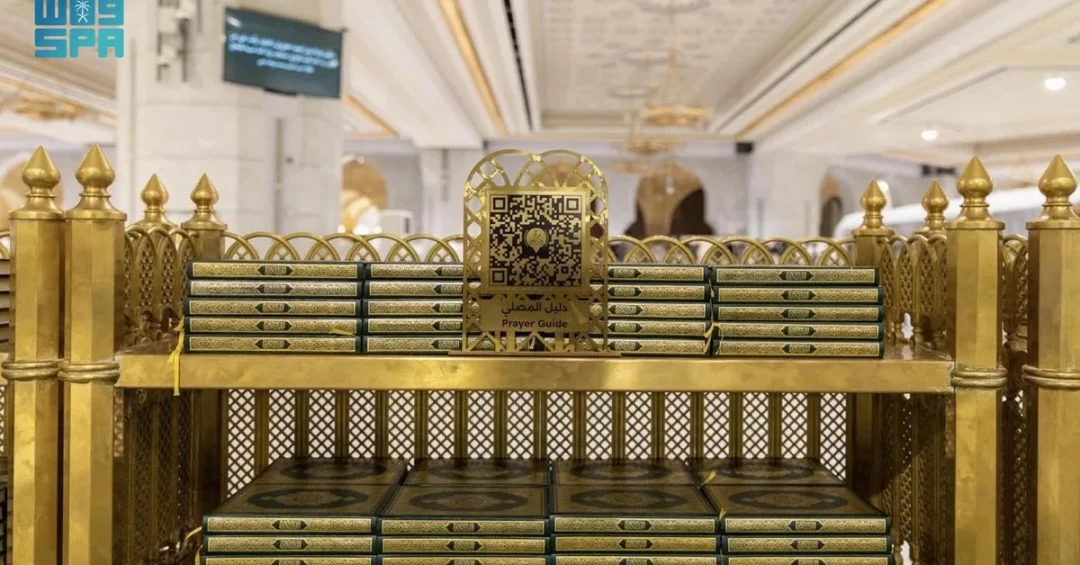
The General Authority for the Care of the Affairs of the Grand Mosque and the Prophet’s Mosque has launched the “Worshipper’s Guide” digital initiative at the Grand Mosque in Makkah, delivering accessible Islamic content in five languages to enrich the experience of pilgrims and worshippers. Announced via the Saudi Press Agency, the platform is accessible through QR codes placed in prayer areas across the Grand Mosque, offering a searchable electronic Quran, live and recorded sermons, religious lessons from the two holy mosques, supplications, step-by-step guides on ablution and prayer, and a dedicated Itikaf guide. The initiative also incorporates the Digital Mutawwif platform, which provides textual and audio supplications alongside Tawaf and Sa’i counters to assist Umrah performers.
Have you ever considered how technology can bring the timeless rituals of the Grand Mosque closer to millions of worshippers? By making guidance available in Arabic, Urdu, English, Turkish, and French, the authority is ensuring that language is no longer a barrier to spiritual fulfillment. The launch reflects Saudi Arabia’s broader commitment to serving the Guests of God with innovation and care, aligning with the Kingdom’s Vision 2030 goal of elevating the pilgrimage experience. This digital tool is not merely a convenience; it is a bridge between ancient tradition and modern accessibility, enabling every visitor to navigate their worship with confidence and ease.
Context and Background
Why does the Grand Mosque, a site of profound historical and spiritual significance, require a digital guide in the modern era? The answer lies in the sheer scale of visitors it receives. Each year, millions of Muslims from every corner of the globe converge on Makkah to perform Hajj and Umrah, many of whom speak languages other than Arabic and may be unfamiliar with the specific rituals and etiquettes of the holy site. The General Authority for the Care of the Affairs of the Grand Mosque and the Prophet’s Mosque, established to oversee the maintenance, services, and spiritual atmosphere of Islam’s two holiest mosques, has consistently introduced initiatives to meet these evolving needs. The Worshipper’s Guide is the latest in a series of digital transformations aimed at enhancing the worshipper’s journey.
Historically, guidance at the Grand Mosque relied on physical signage, printed pamphlets, and the presence of trained staff. While these methods remain valuable, they cannot always reach every individual in a crowd of millions, especially during peak seasons. The digital approach leverages the ubiquity of smartphones and QR code technology to deliver personalized, on-demand information directly to the user’s device. This shift mirrors global trends in smart tourism and digital heritage, where institutions use technology to provide context and direction without intruding on the spiritual experience. The authority’s decision to offer the guide in five languages—Arabic, Urdu, English, Turkish, and French—demonstrates a thoughtful understanding of the demographic diversity among pilgrims, particularly from South Asia, Europe, and the Middle East.
Furthermore, the initiative builds on previous efforts to digitize religious content, such as the electronic Quran and online sermon archives. By integrating these resources into a single, easily accessible platform, the authority simplifies the user experience. Worshippers no longer need to search multiple sources; a simple scan of a QR code opens a world of guidance. This consolidation is especially beneficial for first-time visitors, who may feel overwhelmed by the scale and rituals of the Grand Mosque. The Worshipper’s Guide thus serves as a virtual companion, offering reassurance and clarity at every step.
Key Details and Features
What exactly does the Worshipper’s Guide offer to enhance the spiritual journey? At its core, the platform provides a searchable electronic Quran, allowing users to quickly locate verses and read them in their preferred language. This feature is particularly useful for non-Arabic speakers who wish to understand the meanings of the Quranic text. Complementing this are live and recorded sermons from the two holy mosques, enabling worshippers to listen to Friday khutbahs and other religious lectures even if they cannot be physically present in the mosque at the time of delivery. The inclusion of religious lessons from the Grand Mosque and the Prophet’s Mosque further enriches the educational aspect, offering insights into Islamic teachings and practices.
For those performing the rites of Umrah, the guide includes a dedicated Itikaf guide, which outlines the rules and etiquettes of spiritual retreat. Additionally, the Digital Mutawwif platform offers textual and audio supplications, guiding users through the specific prayers and invocations associated with Tawaf and Sa’i. The Tawaf and Sa’i counters are a practical tool, helping worshippers keep track of the seven circuits around the Kaaba and the seven trips between Safa and Marwa. These counters are especially helpful for those who may lose count due to the crowd or distraction. Step-by-step guides on ablution and prayer ensure that even those new to the rituals can perform them correctly, fostering a sense of confidence and devotion.
Accessibility is a key pillar of the initiative. The guide is available in five languages: Arabic, Urdu, English, Turkish, and French. This selection covers a significant portion of the global Muslim population, particularly from regions with high numbers of pilgrims. Urdu caters to the large South Asian community, while English and French serve international travelers from Africa, Europe, and beyond. Turkish addresses the many pilgrims from Turkey and Central Asia. By providing content in these languages, the authority ensures that the guide is truly inclusive, breaking down linguistic barriers that might otherwise hinder worship. The QR codes are strategically placed in prayer areas, making them easy to find and use without disrupting the spiritual atmosphere.
International and Regional Impact
How does a digital guide at the Grand Mosque resonate beyond the borders of Saudi Arabia? The initiative sends a powerful message of inclusivity and technological advancement to the global Muslim community. Pilgrims from diverse backgrounds will return home with a positive experience, sharing stories of how Saudi Arabia facilitated their worship through modern tools. This enhances the Kingdom’s reputation as a gracious host and a leader in innovative religious services. Regionally, the Worshipper’s Guide sets a benchmark for other Islamic institutions seeking to improve visitor experiences. It demonstrates that tradition and technology can coexist harmoniously, enriching spiritual practices without compromising their sanctity.
Moreover, the guide supports the broader goals of Saudi Vision 2030 by promoting religious tourism and enhancing the quality of services for Umrah and Hajj performers. The Kingdom has invested heavily in infrastructure and digital solutions to accommodate increasing numbers of pilgrims, and this initiative is a testament to those efforts. International observers may view this as part of Saudi Arabia’s soft power strategy, using technology to project an image of a modern, forward-looking nation that honors its religious heritage. For pilgrims, the impact is immediate and personal: a smoother, more informed spiritual journey that allows them to focus on devotion rather than logistical challenges.
Economic and Strategic Significance
What economic and strategic benefits does the Worshipper’s Guide bring to Saudi Arabia? While the platform itself is a service, it contributes to the broader economic ecosystem surrounding religious tourism. By improving the pilgrim experience, it encourages repeat visits and positive word-of-mouth, which can lead to increased numbers of Umrah and Hajj performers. This, in turn, boosts sectors such as hospitality, transportation, retail, and food services in Makkah and beyond. The digital nature of the guide also reduces the need for printed materials, aligning with sustainability goals and cost-efficiency. Strategically, the initiative reinforces Saudi Arabia’s role as the custodian of the Two Holy Mosques, a responsibility that carries immense religious and political weight.
Furthermore, the guide’s multilingual capabilities support the Kingdom’s efforts to attract a diverse international audience. By catering to Urdu, Turkish, and French speakers, Saudi Arabia signals its openness to pilgrims from non-Arabic speaking countries, potentially increasing visitation from those regions. This aligns with Vision 2030’s objective to diversify the economy and increase non-oil revenues, with religious tourism being a key pillar. The use of QR codes and digital platforms also positions Saudi Arabia as a tech-savvy nation, capable of integrating advanced solutions into traditional settings. This can attract partnerships and investments in smart city technologies, particularly in the Makkah region, which is undergoing significant development.
Vision 2030 Alignment
How does the Worshipper’s Guide embody the spirit of Saudi Vision 2030? Vision 2030 is a comprehensive plan to transform Saudi Arabia into a global hub for tourism, business, and innovation while preserving its cultural and religious identity. The guide directly supports the Vision’s goal of enhancing the pilgrimage experience, which is a central component of the Kingdom’s religious tourism strategy. By leveraging digital tools, the authority demonstrates a commitment to modernization and efficiency, two core themes of the Vision. It also reflects the Vision’s emphasis on improving the quality of life for citizens and visitors alike, ensuring that every worshipper can perform their rituals with dignity and ease.
In conclusion, the Worshipper’s Guide is more than a technological tool; it is a manifestation of Saudi Arabia’s dedication to serving Islam’s holiest sites with excellence and innovation. As the Kingdom continues to welcome millions of pilgrims each year, initiatives like this will play a vital role in shaping a seamless and spiritually enriching experience. The guide not only honors the past by facilitating ancient rituals but also embraces the future by making them accessible to a global audience. Through such efforts, Saudi Arabia reaffirms its position as a leader in both religious stewardship and technological advancement, paving the way for a future where faith and innovation walk hand in hand.
20 Questions
Q1. What is the Worshipper’s Guide?
A1. The Worshipper’s Guide is a digital initiative launched by the General Authority for the Care of the Affairs of the Grand Mosque and the Prophet’s Mosque. It provides accessible Islamic content via QR codes in prayer areas, enhancing the experience of worshippers at the Grand Mosque.
Q2. Which authority launched the Worshipper’s Guide?
A2. The General Authority for the Care of the Affairs of the Grand Mosque and the Prophet’s Mosque launched the initiative. This Saudi government body oversees services and spiritual affairs at Islam’s two holiest mosques in Makkah and Madinah.
Q3. In how many languages is the guide available?
A3. The guide is available in five languages: Arabic, Urdu, English, Turkish, and French. This selection ensures broad accessibility for the diverse international community of pilgrims visiting the Grand Mosque.
Q4. How can worshippers access the Worshipper’s Guide?
A4. Worshippers can access the guide by scanning QR codes placed in prayer areas throughout the Grand Mosque. The codes link directly to the digital platform, making it easy to use without disrupting the spiritual atmosphere.
Q5. What features does the electronic Quran offer?
A5. The electronic Quran is searchable, allowing users to quickly locate verses. It is part of the guide’s resources, providing easy access to the holy text for reading and reflection during visits to the Grand Mosque.
Q6. Are sermons available on the platform?
A6. Yes, the guide includes live and recorded sermons from the two holy mosques. This feature allows worshippers to listen to Friday khutbahs and other religious lectures, even if they cannot attend in person.
Q7. What is the Digital Mutawwif platform?
A7. The Digital Mutawwif platform is part of the guide, offering textual and audio supplications. It assists worshippers with the specific prayers and invocations associated with Tawaf and Sa’i during Umrah and Hajj.
Q8. How do the Tawaf and Sa’i counters work?
A8. The counters help worshippers keep track of the seven circuits around the Kaaba during Tawaf and the seven trips between Safa and Marwa during Sa’i. They are especially useful in crowded conditions.
Q9. What is the Itikaf guide?
A9. The Itikaf guide is a dedicated resource outlining the rules and etiquettes of spiritual retreat. It provides step-by-step instructions for those wishing to perform Itikaf at the Grand Mosque during Ramadan and other times.
Q10. Does the guide include instructions for ablution and prayer?
A10. Yes, the guide features step-by-step guides on ablution (wudu) and prayer (salah). These are designed to help worshippers, especially new Muslims or first-time visitors, perform rituals correctly and with confidence.
Q11. Why is the guide offered in multiple languages?
A11. The multilingual approach ensures that pilgrims from different regions can understand the content. Urdu, English, Turkish, and French cover major pilgrim demographics, breaking down language barriers and enhancing the spiritual experience for all.
Q12. Where are the QR codes located?
A12. The QR codes are placed in prayer areas within the Grand Mosque. This strategic placement allows worshippers to easily find and scan them without having to search extensively or interrupt their worship.
Q13. What are the religious lessons mentioned?
A13. The guide offers religious lessons from the Grand Mosque and the Prophet’s Mosque. These lessons provide educational content on Islamic teachings, practices, and history, enriching the worshipper’s understanding of their faith.
Q14. How does the guide enhance the Umrah experience?
A14. The guide enhances Umrah by providing Digital Mutawwif supplications, Tawaf and Sa’i counters, and step-by-step ritual instructions. These tools help performers focus on devotion rather than logistical concerns during their pilgrimage.
Q15. Is the Worshipper’s Guide free to use?
A15. Yes, the Worshipper’s Guide is a free digital service provided by the Saudi authority. There is no cost to access the platform; worshippers simply scan the QR codes and use the resources available.
Q16. Does the guide support Vision 2030?
A16. Yes, the guide aligns with Vision 2030 by enhancing religious tourism and improving pilgrim services. It reflects the Kingdom’s commitment to modernization and innovation while preserving its religious heritage and hospitality.
Q17. Can the guide be used outside the Grand Mosque?
A17. The guide is designed for use within the Grand Mosque, accessed via QR codes in prayer areas. However, some digital content, like recorded sermons and the electronic Quran, may be accessible remotely once users have the link.
Q18. Who benefits most from the Worshipper’s Guide?
A18. International pilgrims, especially those who do not speak Arabic, benefit greatly. First-time visitors, Umrah performers, and those unfamiliar with the rituals also find the step-by-step guides and multilingual content particularly helpful.
Q19. How does this initiative reflect Saudi Arabia’s leadership?
A19. It demonstrates Saudi Arabia’s dedication to serving the Guests of God with cutting-edge solutions. By combining technology with religious care, the Kingdom reinforces its role as a global leader in pilgrimage management and innovation.
Q20. What is the significance of the five languages chosen?
A20. Arabic, Urdu, English, Turkish, and French represent major languages spoken by pilgrims worldwide. This choice ensures that a vast majority of visitors can access guidance in their native tongue, promoting inclusivity and understanding.
Reader Feedback
We value your thoughts. Please share your feedback on this article.
Your feedback helps us improve our coverage.
Related articles
 Ramadan in Jazan: Iftars Amidst Fog-Draped Highlands
 Saudi Smart Gates Ease Umrah Entry at Jeddah Airport
 Eastern Region Waterfronts: Ramadan Destinations with Spiritual Ambience
 Grand Mosque Welcomes 3 Million Worshippers on 22nd Ramadan
 Al-Shona: Historic Jeddah Landmark Welcomes Ramadan Visitors
 Abha Named Saudi Arabia’s City with Purest Air in 2024