


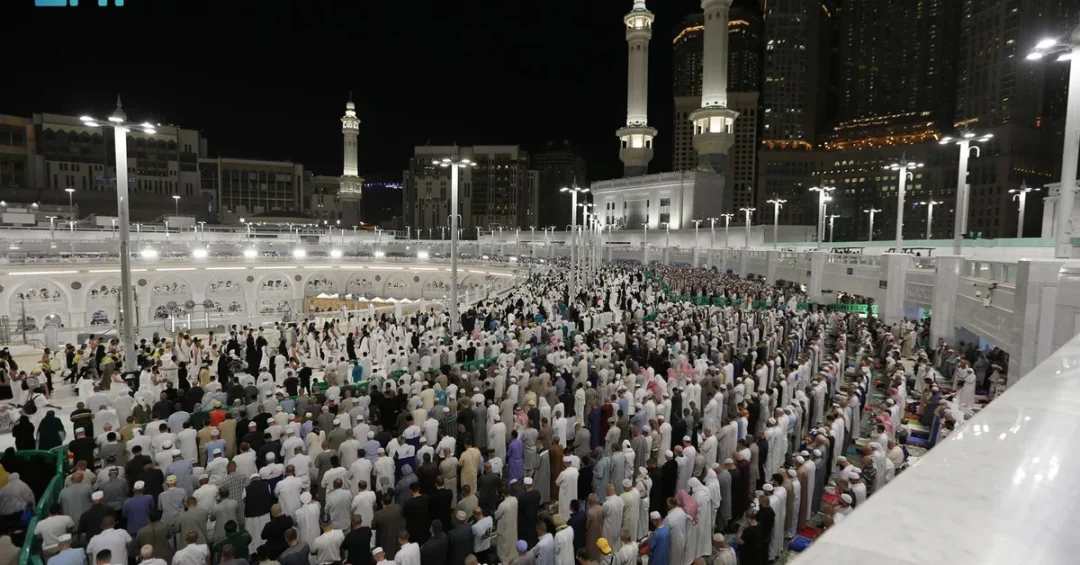
More than 3,000,000 worshippers and Umrah performers gathered at the Grand Mosque in Makkah on the 22nd day of Ramadan, according to the General Presidency for the Care of the Grand Mosque and the Prophet’s Mosque, which recorded a total of 3,101,140 visitors on that day. The extraordinary turnout reflects the spiritual significance of the final ten nights of the holy month, when Muslims worldwide intensify their worship in search of the blessings of Laylat Al-Qadr, the Night of Decree. The Presidency reported that Fajr prayer alone drew 592,103 worshippers, while Dhuhr welcomed 518,090, Asr 547,695, Maghrib 710,524, and Isha and Taraweeh combined 732,728. These figures underscore the enduring centrality of the Grand Mosque to the global Muslim community and the Kingdom’s unmatched capacity to host millions of pilgrims safely and efficiently.
The scale of this year’s observance is a testament to the comprehensive preparations undertaken by Saudi authorities, who have invested heavily in infrastructure, crowd management, and digital services to ensure a seamless experience for visitors. As the holiest site in Islam, the Grand Mosque in Makkah welcomes Muslims from every corner of the world, particularly during Ramadan, when Umrah holds special spiritual merit. The numbers released by the Presidency — a government body tasked with the care and administration of the Two Holy Mosques — provide a clear picture of the operational demands and the Kingdom’s readiness to meet them. The Kingdom’s leadership has consistently emphasized the importance of serving pilgrims as a sacred duty and a source of national pride.
Context and Background
Why does the 22nd day of Ramadan hold such profound significance for Muslims around the world? The answer lies in the Islamic tradition that the final ten nights of Ramadan, beginning on the 21st, include Laylat Al-Qadr, a night described in the Quran as better than a thousand months. While the exact night is not specified, many believers seek it on the odd-numbered nights, including the 21st, 23rd, 25th, 27th, and 29th. The 22nd day, therefore, falls within this sacred period, and the influx of worshippers reflects a collective spiritual urgency to maximize rewards during these blessed hours. The General Presidency for the Care of the Grand Mosque and the Prophet’s Mosque, a Saudi government agency, meticulously tracks attendance to coordinate services and ensure the well-being of all visitors.
Historically, the Grand Mosque has witnessed ever-growing numbers of pilgrims during Ramadan, driven by the Kingdom’s expanding capacity and the increasing accessibility of travel to Saudi Arabia. The introduction of the Umrah-plus-tourism visa, the expansion of the Haramain High Speed Railway, and the ongoing third Saudi expansion of the Grand Mosque have all contributed to making the journey easier and more comfortable. The Presidency’s detailed statistics — from prayer attendance to gate entries — are part of a transparent reporting system that allows authorities to allocate resources effectively. These figures also serve as a barometer of the success of Vision 2030 initiatives aimed at enhancing the pilgrim experience and showcasing Saudi Arabia’s logistical excellence.
In the broader context of global Islamic practice, Ramadan is a time of heightened devotion, charity, and community. The Grand Mosque, home to the Kaaba, is the focal point of this devotion. Millions of Muslims who cannot physically travel participate through prayer and reflection, but those who are able to make the journey consider it a lifetime privilege. The Kingdom’s role as custodian of the Two Holy Mosques, a title held by the Saudi leadership, carries immense responsibility. The smooth handling of over three million visitors in a single day demonstrates the effectiveness of the integrated security, health, and logistical plans implemented by various Saudi ministries and agencies.
Key Details
What do the specific attendance figures tell us about the patterns of worship at the Grand Mosque? The Presidency’s data reveals that 662,507 Umrah performers entered through the main gates, with King Abdulaziz Gate (1) recording the highest number at 235,810. This was followed by King Fahd Gate (79) with 172,771, Al-Umrah Gate (40) with 111,421, Al-Hudaibiyah Gate (33) with 69,596, and Al-Salam Gate (17) with 32,369. These numbers indicate not only the volume of pilgrims but also the strategic distribution of entrances to manage flow. The gate-specific statistics help authorities optimize staffing and reduce congestion, ensuring that worshippers can move freely and perform their rituals without undue hardship.
Prayer attendance followed a predictable yet remarkable pattern. Fajr, the dawn prayer, saw 592,103 worshippers, a testament to the devotion of those who spend the entire night in the mosque. As the day progressed, the numbers swelled, peaking at Isha and Taraweeh with 732,728. The Maghrib prayer, which marks the breaking of the fast, drew 710,524, reflecting the communal iftar gatherings that are a hallmark of Ramadan. The Presidency also reported that 40,540 individuals benefited from vehicle services, a crucial support for the elderly and those with mobility challenges, allowing them to access the mosque with ease. These services are part of a wider accessibility program that aligns with Saudi Arabia’s commitment to inclusive worship.
Behind these numbers lies a vast operational apparatus. Thousands of workers, security personnel, and volunteers work around the clock to maintain cleanliness, provide drinking water, offer medical assistance, and guide pilgrims. The Presidency has deployed smart systems for crowd management, including real-time monitoring and digital signage, to prevent overcrowding. The integration of technology with traditional hospitality reflects the Kingdom’s forward-looking approach to managing the Hajj and Umrah seasons. The successful handling of such massive crowds is a source of pride for Saudi Arabia and a model for large-scale event management globally.
International and Regional Impact
How does the Grand Mosque’s capacity to host millions impact the wider region and the international community? The annual Ramadan influx is a powerful symbol of Saudi Arabia’s leadership in the Islamic world and its ability to facilitate one of the largest recurring gatherings on Earth. For neighboring Gulf countries, the smooth operation of the pilgrimage season contributes to regional stability and economic vitality, as many pilgrims transit through their airports and benefit from shared transportation networks. The Kingdom’s coordination with international airlines, travel agencies, and health authorities ensures that pilgrims from Africa, Asia, Europe, and the Americas can fulfill their religious obligations with dignity.
The global Muslim community watches the developments in Makkah with deep interest, and the positive reports emanating from the Grand Mosque reinforce the Kingdom’s standing as a trusted custodian. International media often highlight the logistical marvel of managing such crowds, further enhancing Saudi Arabia’s soft power. Moreover, the pilgrimage experience serves as a diplomatic bridge, as Muslims from diverse nations interact and share their cultures. The Saudi leadership’s unwavering support for the Two Holy Mosques is a cornerstone of its foreign policy and a unifying factor for the Ummah.
Economic and Strategic Significance
What economic benefits flow from the successful management of Ramadan’s peak days? The pilgrimage sector is a vital component of Saudi Arabia’s non-oil economy, contributing billions of riyals annually through hospitality, retail, transportation, and telecommunications. The presence of over three million visitors in a single day stimulates local businesses, from hotels and restaurants to souvenir shops and currency exchanges. The government’s investment in infrastructure, such as the expansion of the Grand Mosque and the development of modern transportation links, has created jobs and fostered entrepreneurship. These efforts are directly aligned with Vision 2030’s goal of diversifying revenue streams and increasing the private sector’s role.
Strategically, the Kingdom’s ability to host large-scale religious events reinforces its position as a global leader in event management and security. The expertise gained from managing the Hajj and Umrah is increasingly exported as a service, with Saudi companies offering consultancy for major international gatherings. Furthermore, the digital solutions developed for pilgrim services, such as the Nusuk platform, have streamlined visa issuance, accommodation booking, and health registration, enhancing the overall experience. These innovations not only improve efficiency but also generate valuable data that can inform future planning and investment.
Vision 2030 Alignment
How does the Grand Mosque’s Ramadan success story connect to Saudi Vision 2030? The Vision, launched by Crown Prince Mohammed bin Salman, aims to transform the Kingdom into a global hub for tourism, business, and culture while preserving its Islamic heritage. The pilgrimage sector is a key pillar of this transformation, with targets to increase Umrah capacity to 30 million pilgrims annually by 2030. The seamless handling of over three million worshippers on a single day demonstrates the Kingdom’s progress toward that goal. The Presidency’s use of advanced technology, focus on accessibility, and commitment to visitor satisfaction are all hallmarks of the Vision’s emphasis on excellence and innovation.
Moreover, the positive image projected by the successful Ramadan season supports the Vision’s objective of attracting international visitors and investors. By showcasing its ability to manage massive crowds with efficiency and care, Saudi Arabia signals its readiness to host world-class events, from Expo 2030 to the FIFA World Cup 2034. The spiritual experience of pilgrims is enhanced by modern amenities, reflecting the Vision’s balanced approach to tradition and modernity. As the Kingdom continues to invest in the Two Holy Mosques, it reaffirms its dedication to serving Islam and Muslims worldwide, a mission that lies at the heart of its national identity and its future aspirations.
20 Questions
Q1. How many worshippers visited the Grand Mosque on the 22nd day of Ramadan?
A1. The General Presidency for the Care of the Grand Mosque and the Prophet’s Mosque reported a total of 3,101,140 visitors and Umrah performers on the 22nd day of Ramadan, reflecting the immense spiritual draw of the final ten nights.
Q2. What was the attendance for Fajr prayer on that day?
A2. Fajr prayer was attended by 592,103 worshippers, demonstrating the devotion of those who spend the night in worship at the Grand Mosque during the blessed month.
Q3. How many people attended the Isha and Taraweeh prayers?
A3. The Isha and Taraweeh prayers combined drew 732,728 worshippers, the highest attendance among the five daily prayers, as Muslims gather for extended night prayers during Ramadan.
Q4. Which gate recorded the highest number of Umrah performers?
A4. King Abdulaziz Gate (1) recorded the highest number of Umrah performers, with 235,810 entries, followed by King Fahd Gate (79) with 172,771 entries.
Q5. How many Umrah performers entered through Al-Umrah Gate?
A5. Al-Umrah Gate (40) welcomed 111,421 Umrah performers, contributing to the smooth flow of pilgrims entering the Grand Mosque for their rituals.
Q6. What vehicle services were provided at the Grand Mosque?
A6. The Presidency reported that 40,540 individuals benefited from vehicle services designed to facilitate movement within the mosque, assisting the elderly and those with mobility challenges.
Q7. Why are the last ten nights of Ramadan so important?
A7. The last ten nights include Laylat Al-Qadr, the Night of Decree, which is better than a thousand months according to Islamic tradition, prompting Muslims to intensify worship and seek its blessings.
Q8. What is the role of the General Presidency for the Care of the Grand Mosque and the Prophet’s Mosque?
A8. This Saudi government agency is responsible for the administration, maintenance, and service provision at the Two Holy Mosques, ensuring a safe and spiritually fulfilling experience for all visitors.
Q9. How does Saudi Arabia manage such large crowds?
A9. Through integrated planning involving security, health, and logistical agencies, the Kingdom uses advanced technology, trained personnel, and extensive infrastructure to ensure crowd safety and smooth movement.
Q10. What is the significance of the Grand Mosque in Islam?
A10. The Grand Mosque in Makkah houses the Kaaba, the holiest site in Islam, toward which Muslims around the world face in prayer, making it the spiritual heart of the Islamic faith.
Q11. How does the pilgrimage sector contribute to Saudi Arabia’s economy?
A11. The pilgrimage sector generates billions of riyals annually through hospitality, retail, transportation, and other services, supporting job creation and economic diversification under Vision 2030.
Q12. What is Vision 2030’s goal for Umrah pilgrims?
A12. Vision 2030 aims to increase the capacity to host 30 million Umrah pilgrims annually by 2030, enhancing infrastructure and services to accommodate growing numbers.
Q13. How does the Kingdom ensure accessibility for all worshippers?
A13. Saudi authorities provide vehicle services, wheelchair access, and specialized assistance, along with trained staff, to ensure that elderly and disabled worshippers can perform their rituals comfortably.
Q14. What technological tools are used at the Grand Mosque?
A14. The Presidency employs smart crowd management systems, digital signage, and the Nusuk platform for visa and accommodation services, enhancing efficiency and the overall pilgrim experience.
Q15. How many worshippers attended Dhuhr and Asr prayers?
A15. Dhuhr prayer was attended by 518,090 worshippers, while Asr prayer drew 547,695, showing consistent high attendance throughout the day.
Q16. What was the attendance for Maghrib prayer?
A16. Maghrib prayer, which coincides with the breaking of the fast, was attended by 710,524 worshippers, reflecting the communal spirit of Ramadan iftars.
Q17. How does the successful Ramadan season enhance Saudi Arabia’s global image?
A17. It showcases the Kingdom’s logistical capabilities, hospitality, and commitment to serving Islam, reinforcing its reputation as a reliable and capable custodian of the Two Holy Mosques.
Q18. What other gates are mentioned in the report?
A18. Besides King Abdulaziz and King Fahd gates, the report mentions Al-Umrah Gate (40) with 111,421 entries, Al-Hudaibiyah Gate (33) with 69,596, and Al-Salam Gate (17) with 32,369.
Q19. How does the Kingdom support pilgrims during Ramadan?
A19. Saudi Arabia provides comprehensive services including security, health care, water distribution, cleanliness, and guidance, all coordinated by the Presidency and other agencies to ensure a safe and spiritual experience.
Q20. What does the 22nd day of Ramadan represent in the Islamic calendar?
A20. The 22nd day falls within the last ten nights of Ramadan, a period of heightened devotion when Muslims seek the blessings of Laylat Al-Qadr through prayer, reflection, and charitable acts.
Reader Feedback
We value your thoughts. Please share your feedback on this article.
Your feedback helps us improve our coverage.
Related articles
 Al-Shona: Historic Jeddah Landmark Welcomes Ramadan Visitors
 Abha Named Saudi Arabia’s City with Purest Air in 2024
 Modern Pedestrian Crossings Redefine Access to the Prophet’s Mosque
 Aseer’s Ramadan Nights: Heritage Villages Come Alive
 Madinah’s Rural Farms Offer Unique Ramadan Experience
 Five Sites in Prophet’s Mosque Enrich Visitors’ Experience