


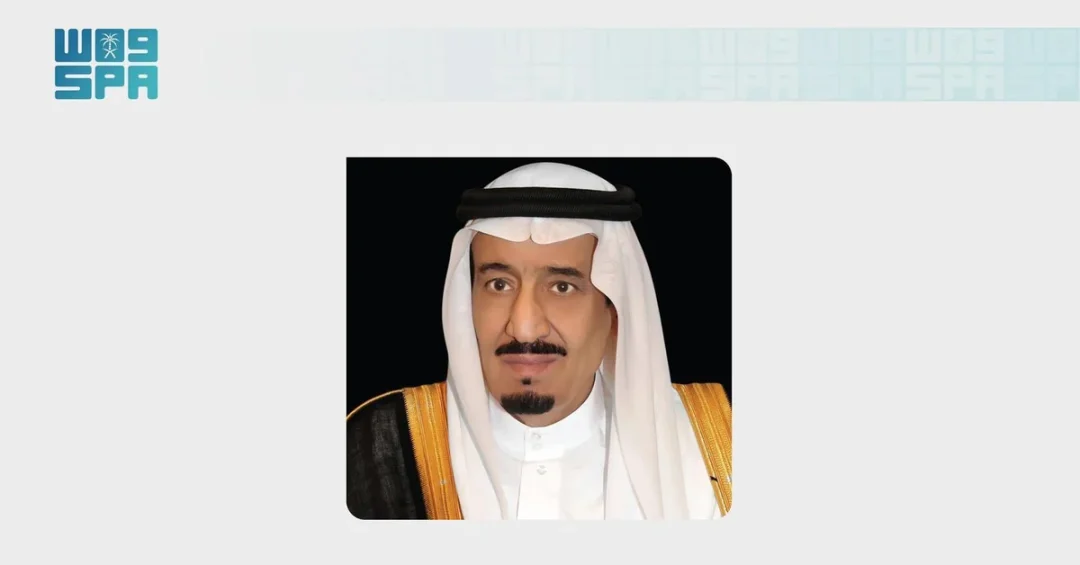
Under the patronage of Custodian of the Two Holy Mosques King Salman bin Abdulaziz Al Saud, the second edition of the Global CSR Forum opens tomorrow, Monday, October 5, 2026, in Riyadh, bringing together more than 3,000 participants and over 100 speakers from around the world. Organized by the Ministry of Human Resources and Social Development, the two-day forum runs October 5–6 at the Sofitel Riyadh Hotel and Convention Center under the theme “From Commitment to Impact.” The gathering convenes senior government officials, business leaders, regulatory bodies, investors, experts, and specialists across more than 40 panel discussions, positioning the Saudi capital once again as a global platform for dialogue on corporate social responsibility and sustainable development.
The forum’s return for a second edition reflects the Kingdom’s steady expansion of social responsibility from a voluntary corporate gesture into a structured national priority. Saudi Vision 2030 has firmly established the private sector as a partner in development, and enhancing companies’ commitment to social responsibility is now a national objective tied directly to greater developmental impact. As the world looks for credible models that connect corporate commitments with measurable outcomes, Riyadh’s hosting of this forum signals that Saudi Arabia intends to help shape that global conversation — not merely participate in it.
Context and Background
What does it take to move an entire economy from good intentions to verified results? Saudi Arabia has spent years building the institutional architecture needed to answer that question. The establishment of the National Committee for Social Responsibility created a coordinating body to align efforts across sectors. The designation of March 23 as Social Responsibility Day in the Kingdom gave the national effort an annual focal point. The launch of the National Social Responsibility Platform provided companies with tools to plan, report, and benchmark their contributions, while the Social Responsibility Award introduced recognition for organizations that deliver demonstrable impact.
Minister of Human Resources and Social Development Ahmed Al-Rajhi affirmed that the Kingdom’s hosting of the second edition of the forum reflects the leadership’s strong commitment to advancing social responsibility and reinforcing its role in development. He noted that Saudi Vision 2030 has made enhancing companies’ commitment to social responsibility a national objective, contributing to greater developmental impact and stronger contributions to society. Al-Rajhi stressed the importance of moving from commitment to impact, leveraging global best practices, and strengthening partnerships at both the national and international levels — a message that frames the entire forum program.
The first edition of the Global CSR Forum established Riyadh as a convening point for this agenda. The second edition builds on that foundation, adding scale and sharper focus. With more than 40 panel discussions and three dedicated platforms, the 2026 program is designed less as a ceremonial gathering and more as a working session on measurement, standards, and implementation. That emphasis on impact rather than aspiration explains why the forum has attracted participants from across the public, private, and non-profit sectors, and why its outcomes are likely to be watched closely by international observers.
Key Details and Forum Program
How will the forum translate discussion into durable practice? The program is organized around three main platforms: the Global CSR Forum Plenary Session, the Corporate Social Responsibility Impact Platform, and the Corporate Social Responsibility Standards Platform. Together, these platforms will explore global experiences, shared challenges, and best practices across six strategic themes: strategy and integration; climate, nature, and just transition; workforce, talent management, and social impact; responsible innovation; digital transformation and corporate social responsibility; and governance, trust, and standards.
The plenary session sets the strategic direction, gathering senior officials and business leaders to frame the global state of social responsibility. The Impact Platform concentrates on what works — case studies, measurement methodologies, and evidence of results. The Standards Platform addresses the frameworks, disclosure practices, and governance mechanisms that make corporate responsibility credible and comparable. This three-part structure allows participants to move from high-level vision to technical detail within a single event, a design that mirrors the forum’s theme of converting commitment into measurable impact.
The forum will also host the Corporate Social Responsibility Award ceremony, recognizing companies that have successfully translated their commitments into proven, measurable results across the Kingdom. The ceremony reinforces the importance of impact measurement and highlights effective institutional practices within the private sector. By rewarding verified outcomes rather than stated intentions, the award sends a clear signal to the market: in Saudi Arabia, social responsibility is increasingly judged by what it delivers for communities, employees, and the environment.
International and Regional Impact
Why does a forum held in Riyadh matter to audiences far beyond the Gulf region? Because the questions it addresses are global. Companies everywhere face rising expectations from investors, regulators, and consumers to demonstrate that their social and environmental commitments produce real change. Multinational firms operating across multiple jurisdictions must navigate differing standards, reporting requirements, and cultural contexts. A forum that convenes more than 100 speakers from around the world to compare approaches offers a rare opportunity to identify common ground and reduce fragmentation.
The presence of regulatory bodies, investors, and experts alongside government officials reflects the reality that social responsibility is no longer a peripheral communications function. It sits at the intersection of capital allocation, risk management, talent strategy, and long-term license to operate. For regional economies pursuing diversification, the forum’s emphasis on workforce development, responsible innovation, and digital transformation speaks directly to the skills and systems needed to compete in a changing global economy. Saudi Arabia’s convening role strengthens its position as a bridge between international best practice and regional implementation.
Economic and Strategic Significance
What makes social responsibility an economic issue rather than a purely philanthropic one? The forum’s six strategic themes make the connection explicit. Strategy and integration address how companies embed responsibility into core business planning. Climate, nature, and just transition speak to the energy and industrial transformations reshaping global markets. Workforce and talent management connect social impact to productivity and competitiveness. Responsible innovation and digital transformation link ethical practice to the technologies driving future growth. Governance, trust, and standards underpin the credibility that investors and partners require.
For Saudi Arabia, this agenda aligns with the broader economic transformation underway under Vision 2030. A private sector that invests in human capital, adopts transparent governance, and measures its social contributions is better positioned to attract international partners and to sustain growth. The National Social Responsibility Platform and the Social Responsibility Award give companies practical incentives and tools to participate. The forum adds an international dimension, allowing Saudi firms to benchmark against global peers and allowing global firms to understand the Kingdom’s evolving expectations. The result is a market environment where responsible practice and commercial success reinforce each other.
Vision 2030 Alignment
How does a two-day forum connect to a national transformation program spanning an entire decade? The organization of the second edition of the Global CSR Forum builds on the Kingdom’s efforts to advance social responsibility and expand its developmental impact in support of the goals of Saudi Vision 2030. It reinforces the Kingdom’s position as a global platform for dialogue, knowledge exchange, and partnership building in the fields of social responsibility and sustainable development. Each platform, theme, and award category reflects a deliberate effort to institutionalize what was once discretionary.
As the forum opens tomorrow, the measure of its success will be whether the conversations in Riyadh produce commitments that can be tracked, verified, and scaled. The theme “From Commitment to Impact” sets a high bar, and the Kingdom’s track record — from the National Committee for Social Responsibility to the Social Responsibility Award — suggests the ambition is backed by infrastructure. For international participants, the forum offers both a window into Saudi Arabia’s approach and a partner in shaping global norms. Under the patronage of King Salman bin Abdulaziz Al Saud, and with the private sector mobilized as a development partner, Riyadh is positioning social responsibility as a lasting pillar of Vision 2030 and of the Kingdom’s growing global role.
20 Questions
Q1. What is the Global CSR Forum 2026?
A1. It is the second edition of an international corporate social responsibility forum organized by Saudi Arabia’s Ministry of Human Resources and Social Development, held in Riyadh on October 5–6, 2026, under the theme “From Commitment to Impact.”
Q2. Who is patronizing the forum?
A2. Custodian of the Two Holy Mosques King Salman bin Abdulaziz Al Saud is patronizing the event, reflecting the leadership’s strong commitment to advancing social responsibility and reinforcing its role in national development.
Q3. Where is the forum being held?
A3. The forum takes place at the Sofitel Riyadh Hotel and Convention Center in Riyadh, Saudi Arabia, providing a central venue for more than 3,000 participants and over 100 speakers.
Q4. How many participants and speakers are expected?
A4. More than 3,000 participants and over 100 speakers from around the world are expected, representing government, business, regulatory bodies, investors, experts, and specialists across sectors.
Q5. What are the forum’s three main platforms?
A5. The Global CSR Forum Plenary Session, the Corporate Social Responsibility Impact Platform, and the Corporate Social Responsibility Standards Platform, each designed to explore experiences, challenges, and best practices.
Q6. What are the six strategic themes?
A6. Strategy and integration; climate, nature, and just transition; workforce, talent management, and social impact; responsible innovation; digital transformation and corporate social responsibility; and governance, trust, and standards.
Q7. What is the forum’s theme and what does it mean?
A7. “From Commitment to Impact” emphasizes moving beyond stated intentions toward proven, measurable results, encouraging companies to demonstrate how their social responsibility efforts create tangible developmental change.
Q8. Who is Ahmed Al-Rajhi?
A8. Ahmed Al-Rajhi is Saudi Arabia’s Minister of Human Resources and Social Development. He affirmed that hosting the forum reflects the leadership’s commitment to social responsibility and Vision 2030 objectives.
Q9. What national initiatives support social responsibility in Saudi Arabia?
A9. Key initiatives include the National Committee for Social Responsibility, the designation of March 23 as Social Responsibility Day, the National Social Responsibility Platform, and the Social Responsibility Award.
Q10. What is the National Social Responsibility Platform?
A10. It is a national platform launched to help companies plan, report, and benchmark their social responsibility contributions, supporting greater developmental impact and stronger contributions to society.
Q11. What is the Social Responsibility Award?
A11. It is a national award recognizing organizations that demonstrate effective social responsibility practices, with a focus on verified impact and institutional excellence within the private sector.
Q12. What is the Corporate Social Responsibility Award ceremony?
A12. Held during the forum, it recognizes companies that have translated commitments into proven, measurable results across the Kingdom, reinforcing the importance of impact measurement and effective institutional practices.
Q13. Why is March 23 significant?
A13. March 23 has been designated as Social Responsibility Day in the Kingdom, providing an annual focal point that raises awareness and encourages companies and institutions to strengthen their social contributions.
Q14. How does the forum support Saudi Vision 2030?
A14. It advances social responsibility as a national objective, strengthens public-private-nonprofit collaboration, and reinforces the Kingdom’s position as a global platform for dialogue and partnership in sustainable development.
Q15. Who attends the forum?
A15. Senior government officials, business leaders, regulatory bodies, investors, experts, and specialists from Saudi Arabia and around the world attend to discuss global trends and exchange experiences.
Q16. How many panel discussions are planned?
A16. More than 40 panel discussions are planned across the forum’s platforms and themes, covering strategy, climate, workforce, innovation, digital transformation, and governance.
Q17. What is the role of the private sector in the forum?
A17. Vision 2030 established the private sector as a development partner. The forum engages companies in adopting responsible practices, measuring impact, and contributing to national development goals.
Q18. What does “just transition” mean in the forum context?
A18. It refers to managing the shift toward sustainable economies in a way that is fair to workers and communities, balancing environmental goals with social and economic stability.
Q19. How does the forum address digital transformation?
A19. One strategic theme focuses on digital transformation and corporate social responsibility, exploring how technology can expand access, improve transparency, and enable more effective social impact measurement.
Q20. What is the expected outcome of the forum?
A20. The forum aims to strengthen partnerships, share best practices, and promote measurable impact, reinforcing Saudi Arabia’s role as a global hub for social responsibility and sustainable development dialogue.
Reader Feedback
We value your thoughts. Please share your feedback on this article.
Your feedback helps us improve our coverage.
Related articles
 Serbian Ambassador Visits Saudi Falcons and Hunting Exhibition
 Vice Foreign Minister Receives Danish Ambassador
 Saudi Vice Foreign Minister Meets Japanese Ambassador
 Jeddah Governor Meets Guinean Consul General
 Saudi Ministry Updates Ice Cream Shop Regulations
 PMU Ranks Among World’s Top 450 Universities in THE 2027