


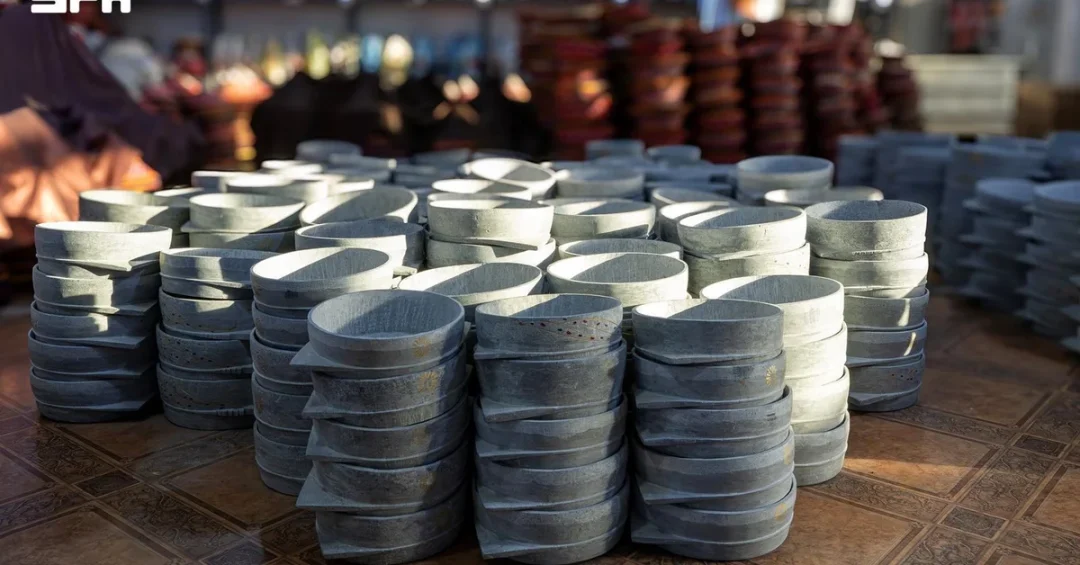
Traditional pottery and carved stone vessels in Saudi Arabia’s Najran Region remain essential fixtures of daily culinary life, according to a report released by the Saudi Press Agency (SPA), serving both as practical kitchen tools and as enduring symbols of southern Saudi heritage. Far from fading into museum displays, these handcrafted items—ranging from large carved soapstone serving bowls to deep cooking pots and cylindrical clay ovens—continue to appear at everyday family meals and festive banquets across the region. The SPA report, dated October 2, 2026, confirms that these vessels have transcended their status as historical crafts and are still actively used for cooking, storing, and presenting regional staples.
For international observers, the persistence of these traditional wares offers a window into how Saudi Arabia balances rapid modernization with deep cultural continuity. While the Kingdom advances ambitious infrastructure and technology projects under Vision 2030, local communities in areas such as Najran maintain artisanal practices that date back generations. The ongoing use of soapstone bowls fitted with woven palm-frond lids and decorative leather trim—designed to retain heat—demonstrates that traditional knowledge remains relevant in contemporary Saudi homes. This continuity is not a rejection of modernity but a complement to it, reflecting the Vision 2030 goal of preserving cultural heritage while embracing progress.
Context and Background
How did these ancient crafts survive the rapid transformations of the past century? Najran Region, located in southwestern Saudi Arabia near the border with Yemen, has long been known for its distinctive material culture, shaped by the availability of raw soapstone and clay. According to the Saudi Press Agency, local artisans historically transformed these raw materials into functional works of craft. The region’s geography and climate encouraged the development of cooking methods that rely on stone’s heat retention and clay’s even baking properties. Unlike fragile ceramic traditions elsewhere, Najran’s soapstone vessels are durable and repairable, which helps explain their continued presence in modern kitchens.
The SPA report emphasizes that these utensils reflect the ancestral ingenuity of local artisans. Large carved stone bowls, often fitted with woven palm-frond lids and decorative leather trim, serve as centerpieces at everyday meals and festive banquets. They are used to present layered flatbreads, savory meat stews, and warm whole-wheat dishes drizzled with clarified butter and honey. Deep stone cooking pots remain celebrated for imparting a distinct, rich flavor to slow-simmered broths and meats, while cylindrical clay ovens continue to be used for baking flatbreads and preparing regional roasted dishes. This functional diversity shows that the vessels are not merely decorative but are integrated into the daily rhythm of Najrani life.
From a heritage perspective, the survival of these crafts aligns with broader Saudi efforts to document and promote regional traditions. The Kingdom has invested in cultural festivals, artisan support programs, and museum exhibitions that highlight local crafts. Yet the SPA report makes clear that in Najran, the strongest preservation force is everyday use. Families continue to choose stone and clay over modern alternatives because of the unique flavors and textures these materials impart. This organic demand sustains local potters and stone carvers, ensuring that skills are passed down through generations. For a global audience, this case illustrates how intangible cultural heritage can remain vibrant when it retains practical value.
Key Details
What exactly makes these vessels so enduring? The SPA report provides specific examples of their forms and functions. Large carved stone bowls, often fitted with woven palm-frond lids and decorative leather trim to retain heat, serve as centerpieces at everyday meals and festive banquets. These bowls present layered flatbreads, savory meat stews, and warm whole-wheat dishes drizzled with clarified butter and honey. The lids and trim are not merely ornamental; they help keep food warm in a region where communal dining is central to social life. Deep stone cooking pots are celebrated for imparting a distinct, rich flavor to slow-simmered broths and meats. Cylindrical clay ovens, known locally for their even heat distribution, are used for baking flatbreads and preparing regional roasted dishes.
The materials themselves—soapstone and clay—are locally sourced, which supports small-scale supply chains and reduces reliance on imported kitchenware. Soapstone, also known as steatite, is relatively soft when quarried and can be carved into intricate shapes before hardening. It has excellent heat retention and is resistant to cracking, making it ideal for cooking and serving. Clay ovens, meanwhile, are constructed from locally dug earth and shaped by hand, then sun-dried or fired. These production methods require specialized knowledge that has been refined over centuries. The SPA report notes that local artisans skillfully transformed raw soapstone and clay into functional works of craft that seamlessly bridge time-honored traditions with modern home dining.
Beyond their practical culinary benefits, these durable utensils reflect ancestral ingenuity. The report describes them as ubiquitous in local households, indicating that they are not limited to heritage enthusiasts or tourist markets. This widespread domestic use is significant because it means the craft economy is sustained by local demand, not just external interest. In many parts of the world, traditional crafts survive only through tourism or government subsidies. In Najran, the opposite appears true: the vessels remain competitive with modern alternatives because they offer tangible advantages in flavor, heat retention, and cultural identity. This organic resilience is a key finding of the SPA report and a reason for optimism about the future of these crafts.
International and Regional Impact
Why should an international audience care about pottery in a Saudi region? The answer lies in how cultural heritage shapes global perceptions of the Kingdom. As Saudi Arabia opens to tourism and international business under Vision 2030, visitors are increasingly interested in authentic regional experiences. Najran’s traditional vessels offer a tangible connection to southern Saudi identity, distinct from the better-known heritage of Riyadh, Jeddah, or AlUla. For travelers, encountering these stone bowls and clay ovens in local restaurants or homestays can be a highlight. The SPA report thus indirectly supports tourism goals by documenting a living tradition that can be marketed responsibly and respectfully.
Regionally, the continued use of these crafts strengthens cultural ties across southern Saudi Arabia and neighboring areas. Similar soapstone and clay traditions exist in Yemen and other parts of the Arabian Peninsula, but Najran’s specific styles—such as the woven palm-frond lids and leather trim—are distinctive. By highlighting these details, the SPA report reinforces a sense of regional pride and identity. It also positions Najran as a custodian of heritage within the broader Saudi narrative. In a time of rapid change, such continuity can serve as a stabilizing cultural anchor. International organizations such as UNESCO have long emphasized the importance of living heritage, and Najran’s example fits that framework without needing formal inscription.
Economic and Strategic Significance
Can traditional crafts contribute to economic diversification? The SPA report suggests they already do, albeit at a local scale. Artisans who produce soapstone bowls, cooking pots, and clay ovens earn income from domestic sales. As demand persists, these micro-enterprises support families and preserve skills. If properly supported, they could also tap into the growing market for artisanal goods among tourists and expatriates. Vision 2030 aims to increase non-oil revenue and create jobs, and heritage-based products are part of that equation. The report does not mention specific export figures, but the logic is clear: unique, handcrafted items with a story can command premium prices in global markets.
Strategically, the survival of these crafts supports social stability and national identity. When citizens see their local traditions valued, they are more likely to participate in national development efforts. The SPA report’s positive framing—describing the vessels as cherished symbols of southern Saudi heritage—reinforces this dynamic. It also aligns with the Kingdom’s broader push to document and promote regional cultures through entities such as the Ministry of Culture and the Heritage Commission. While the report does not name specific officials, it originates from the Saudi Press Agency, the official national news outlet, giving it authoritative weight. For international readers, this signals that the Saudi government recognizes and celebrates local heritage as part of its modernization story.
Vision 2030 Alignment
How does a clay oven connect to a trillion-dollar reform plan? Vision 2030 is often associated with megaprojects like NEOM and The Line, but its cultural and social pillars are equally important. The plan explicitly calls for preserving Saudi heritage, promoting national identity, and enhancing quality of life. Najran’s traditional pottery and stone vessels embody these goals in everyday practice. They are not relics but living tools that contribute to culinary excellence and family cohesion. By continuing to use them, Najrani households are quietly advancing the Vision 2030 objective of rooting modernization in authentic culture. The SPA report, by documenting this phenomenon, helps share that success story with the world.
Looking ahead, the challenge will be to ensure that these crafts remain viable as Saudi Arabia urbanizes and globalizes. The SPA report offers no policy recommendations, but its very existence as an official news item suggests that visibility is part of the solution. When national media highlight local artisans and their products, they encourage pride and demand. International audiences can support these efforts by seeking out authentic Saudi crafts when they visit or do business in the Kingdom. In the end, the persistence of Najran’s pottery and stone vessels is a reminder that development need not erase tradition—it can elevate it. That is a lesson with relevance far beyond Saudi Arabia’s borders.
20 Questions
Q1. What are the main traditional vessels used in Najran?
A1. According to the Saudi Press Agency, the main vessels include large carved stone serving bowls, deep stone cooking pots, and cylindrical clay ovens. These are used for cooking, storing, and presenting regional staples such as flatbreads, stews, and whole-wheat dishes.
Q2. Why are stone bowls often fitted with woven palm-frond lids?
A2. The SPA report states that woven palm-frond lids and decorative leather trim are used to retain heat. This keeps food warm during communal meals and festive banquets, reflecting both practical function and aesthetic tradition in Najran.
Q3. What types of food are served in these traditional bowls?
A3. Large carved stone bowls serve as centerpieces for layered flatbreads, savory meat stews, and warm whole-wheat dishes drizzled with clarified butter and honey. These are regional staples in Najran and are often shared at everyday meals and celebrations.
Q4. What makes deep stone cooking pots special?
A4. The SPA report notes that deep stone cooking pots are celebrated for imparting a distinct, rich flavor to slow-simmered broths and meats. The stone’s heat retention and natural properties enhance the taste of traditional dishes.
Q5. How are cylindrical clay ovens used in Najran?
A5. Cylindrical clay ovens continue to be used for baking flatbreads and preparing regional roasted dishes. Their even heat distribution makes them ideal for traditional cooking methods that have been passed down through generations.
Q6. Are these vessels still common in modern Najrani homes?
A6. Yes. The SPA report describes them as ubiquitous in local households, indicating that they remain essential fixtures of daily culinary life rather than mere historical artifacts. Their practical benefits sustain ongoing domestic demand.
Q7. What raw materials are used to make these vessels?
A7. Local artisans use raw soapstone and clay, according to the SPA report. Soapstone is carved into bowls and pots, while clay is shaped into ovens. Both materials are locally sourced and have been used for generations.
Q8. How do these crafts reflect ancestral ingenuity?
A8. The SPA report states that local artisans skillfully transformed raw soapstone and clay into functional works of craft. This demonstrates ancestral ingenuity in selecting materials, shaping them, and adapting them for cooking and serving.
Q9. Do these vessels bridge tradition and modern dining?
A9. Yes. The SPA report explicitly says the vessels seamlessly bridge time-honored traditions with modern home dining. They are used alongside contemporary kitchenware, showing that tradition and modernity can coexist in Najrani households.
Q10. Why are these vessels considered symbols of heritage?
A10. The SPA report describes them as cherished symbols of southern Saudi heritage. Their continued use in daily life keeps that heritage alive, making them more than decorative objects—they are active carriers of cultural identity.
Q11. What is the significance of soapstone in Najran’s craft tradition?
A11. Soapstone, or steatite, is relatively soft when quarried and can be carved into intricate shapes. It has excellent heat retention and resistance to cracking, making it ideal for cooking and serving vessels that are both durable and functional.
Q12. How does the use of these vessels support local artisans?
A12. Ongoing domestic demand for traditional vessels sustains local potters and stone carvers. This allows them to earn income from their craft, preserving skills and knowledge that might otherwise disappear as modernization spreads.
Q13. Do these crafts have tourism potential?
A13. Yes. As Saudi Arabia opens to tourism under Vision 2030, authentic regional crafts like Najran’s pottery and stone vessels can attract visitors seeking cultural experiences. They offer a tangible connection to southern Saudi identity.
Q14. How does this relate to Vision 2030?
A14. Vision 2030 includes cultural preservation and national identity as key pillars. The continued use of traditional vessels in Najran aligns with these goals by keeping heritage alive in everyday life while the Kingdom modernizes.
Q15. Are these vessels used only for special occasions?
A15. No. The SPA report says they are used at everyday meals as well as festive banquets. Their regular presence in daily life is what distinguishes them from purely ceremonial or museum objects.
Q16. What role do woven palm fronds play in this tradition?
A16. Woven palm-frond lids are fitted to large stone bowls to retain heat. They also add a decorative element, often combined with leather trim. This shows how local natural materials are integrated into functional craft.
Q17. How does the SPA report characterize these vessels?
A17. The report says they have transcended their status as historical crafts, remaining essential fixtures of daily culinary life and cherished symbols of southern Saudi heritage. This framing emphasizes their living relevance.
Q18. Can these crafts be found outside Najran?
A18. Similar soapstone and clay traditions exist elsewhere in the Arabian Peninsula, but Najran’s specific styles—such as the woven palm-frond lids and leather trim—are distinctive to the region, according to the SPA report.
Q19. What is the future outlook for these traditional vessels?
A19. As long as local demand persists and artisans continue their craft, the vessels are likely to remain relevant. The SPA report’s positive coverage supports visibility, which can help sustain both cultural pride and economic viability.
Q20. Why is this story important for international readers?
A20. It shows a different side of Saudi Arabia—one where modernization and tradition coexist. For global audiences, it illustrates how Vision 2030 respects regional heritage while advancing national development, offering a nuanced view of the Kingdom’s transformation.
Reader Feedback
We value your thoughts. Please share your feedback on this article.
Your feedback helps us improve our coverage.
Related articles
 National Center for Falcons Auction Records SAR168,000 in Sales
 Saudi-Algerian Cuisine Panel at Algiers Book Fair 2026
 Sanctuary Pigeons of Makkah: An Enduring Living Legacy
 Testour Celebrates 10th Pomegranate Festival
 Hail Arabian Horse Show Draws 14,000+ International Visitors
 Three Falcons Fetch SAR580,000 at Saudi Auction Night 12