


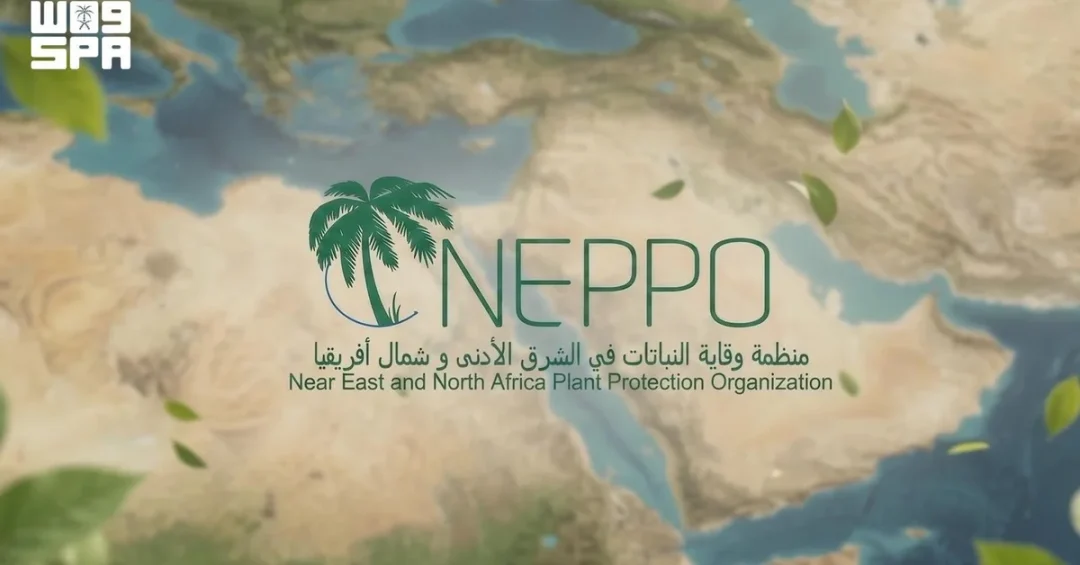
Saudi Arabia will host two major international plant health gatherings in Riyadh from October 3 to 8, 2026, organized by the National Center for the Prevention and Control of Plants Pests and Animal Diseases (Weqaa) in collaboration with the Near East and North Africa Plant Protection Organization (NEPPO). The meetings will bring together the UN Food and Agriculture Organization (FAO), the International Plant Protection Convention (IPPC), and plant protection specialists from around the world to strengthen regional biosecurity and harmonize global phytosanitary standards.
The first event, the NEPPO Executive Committee meeting, will take place on October 3 and 4, chaired by Dr. Mohammed Al-Khuraiji, Head of the Plant Health Sector at Weqaa. It will review regional biosecurity operations and advance the implementation of the 2025–2035 strategic roadmap. From October 5 to 8, Riyadh will then convene the 38th Technical Consultation among Regional Plant Protection Organizations, a global forum that unites regional plant protection bodies and the IPPC to align standards and improve coordination against transboundary plant pests. The back-to-back meetings underscore Saudi Arabia’s growing leadership in agricultural biosecurity and its commitment to international cooperation under Vision 2030.
Context and Background
Why does plant health matter so much in today’s interconnected world? The answer lies in the delicate balance between global trade and agricultural security. As food systems become more integrated, the risk of transboundary plant pests and diseases spreading across borders has increased dramatically. The Near East and North Africa Plant Protection Organization (NEPPO) was established to help countries in the region coordinate their efforts against these threats, and Saudi Arabia, through Weqaa, has emerged as a central player in this regional framework.
Weqaa, formally known as the National Center for the Prevention and Control of Plants Pests and Animal Diseases, was created to safeguard the Kingdom’s agricultural resources and animal wealth. Its mandate aligns closely with Saudi Arabia’s broader food security objectives, which are a cornerstone of Vision 2030. By hosting the NEPPO Executive Committee meeting, Weqaa is not only fulfilling its regional responsibilities but also setting the agenda for the next decade of plant protection. The 2025–2035 strategic roadmap, which will be reviewed during the meeting, represents a long-term commitment to biosecurity that goes beyond crisis response to include prevention, early detection, and sustainable pest management.
The second event, the 38th Technical Consultation among Regional Plant Protection Organizations, has a truly global scope. This annual gathering, facilitated by the International Plant Protection Convention (IPPC), brings together representatives from every regional plant protection organization to discuss harmonization of phytosanitary measures. In a world where a single pest outbreak can disrupt entire supply chains, the importance of such coordination cannot be overstated. Saudi Arabia’s role as host reflects its increasing influence in international agricultural governance and its willingness to invest in global public goods.
Key Details
What exactly will be discussed during these high-level meetings? The NEPPO Executive Committee meeting on October 3 and 4 will focus on reviewing regional biosecurity operations, which include surveillance programs, emergency response mechanisms, and capacity-building initiatives across the Near East and North Africa. Dr. Mohammed Al-Khuraiji, who chairs the session, has emphasized the importance of translating strategic plans into actionable outcomes. The 2025–2035 strategic roadmap is expected to set clear benchmarks for pest prevention, including the use of advanced technologies such as remote sensing, digital tracking, and integrated pest management systems.
From October 5 to 8, the 38th Technical Consultation will shift the focus to global standards. Delegates from regional plant protection organizations, alongside experts from the FAO and the IPPC, will work on harmonizing phytosanitary standards to facilitate safe trade while protecting agriculture. Topics will likely include the management of emerging pests, the role of e-certification in reducing paperwork and delays, and the development of common protocols for pest risk analysis. The presence of the FAO underscores the link between plant health and global food security, a priority that resonates strongly with Saudi Arabia’s own agricultural policies.
The meetings will also provide a platform for Saudi Arabia to showcase its domestic achievements in plant health. Weqaa has invested in modern laboratories, early warning systems, and farmer education programs that serve as models for other countries in the region. By hosting these events, the Kingdom demonstrates that it is not only a participant in international efforts but also a contributor of solutions and best practices.
International and Regional Impact
How will these meetings affect farmers, traders, and consumers beyond Saudi Arabia’s borders? The outcomes will likely ripple across the entire region and beyond. Harmonized phytosanitary standards reduce the friction that often hampers agricultural trade, making it easier for countries to export their products without facing unnecessary barriers. For farmers in the Near East and North Africa, this means better access to markets and higher incomes. For consumers, it translates into safer, more affordable food.
The collaboration between NEPPO, the FAO, and the IPPC also strengthens the global architecture for plant health. In recent years, the world has seen how quickly a pest or disease can travel, threatening crops and livelihoods. The COVID-19 pandemic highlighted the importance of robust biosecurity systems, and plant health is no different. By bringing together technical experts and policymakers, the Riyadh meetings will help build a more resilient global food system. Saudi Arabia’s leadership in this area is a positive example of how a country can use its resources and strategic position to foster international cooperation.
Regionally, the meetings reinforce the ties between Saudi Arabia and its neighbors. Many countries in the Near East and North Africa share similar agro-ecological challenges, from desert locusts to date palm pests. A unified approach, coordinated through NEPPO, allows for more efficient use of resources and faster response times. The executive committee meeting will also review progress on joint projects, ensuring that commitments made in previous years are being met.
Economic and Strategic Significance
What does plant health have to do with Saudi Arabia’s economic diversification? A great deal, actually. Agriculture is a key component of the Kingdom’s non-oil economy, and Vision 2030 aims to increase local food production and reduce reliance on imports. Healthy crops mean higher yields, better quality, and greater export potential. By protecting plant health, Weqaa is helping to create an environment where agribusiness can thrive. The meetings in Riyadh are therefore not just technical exercises; they are part of a broader economic strategy.
Moreover, the events position Saudi Arabia as a hub for agricultural innovation and knowledge exchange. The Kingdom is investing heavily in smart agriculture, including the use of artificial intelligence, drones, and precision irrigation. These technologies are central to the 2025–2035 roadmap and will be discussed during the meetings. International specialists attending the sessions will have the opportunity to see firsthand how Saudi Arabia is integrating technology into biosecurity, potentially leading to new partnerships and investment opportunities.
The strategic significance extends to food security, a top priority for the Saudi leadership. The COVID-19 crisis and geopolitical disruptions have shown how vulnerable global supply chains can be. By strengthening plant health systems at home and abroad, Saudi Arabia contributes to a more stable food supply for the region. This aligns with the Kingdom’s goal of becoming a leader in humanitarian and development assistance, as well as its commitment to the UN Sustainable Development Goals.
Vision 2030 Alignment
How do these meetings connect to Saudi Arabia’s long-term vision? Vision 2030 is fundamentally about building a diversified, sustainable, and globally engaged economy. Plant health is a critical enabler of that vision because it underpins agricultural productivity, trade, and environmental sustainability. Weqaa’s work, including the hosting of these international meetings, directly supports the Vision 2030 objectives of ensuring food security, promoting economic diversification, and enhancing international cooperation.
Furthermore, the Kingdom’s role as a convener of global discussions reflects its growing stature on the world stage. By bringing together organizations like NEPPO, the FAO, and the IPPC, Saudi Arabia is demonstrating leadership in a field that affects every nation. The outcomes of the Riyadh meetings will help shape global phytosanitary standards for years to come, and Saudi Arabia will be recognized as a key contributor to that process. As the Kingdom continues its journey toward a brighter future, initiatives like this show how Vision 2030 is not just a domestic plan but a platform for global engagement and shared prosperity.
20 Questions
Q1. What is the National Center for the Prevention and Control of Plants Pests and Animal Diseases (Weqaa)?
A1. Weqaa is a Saudi government center responsible for protecting plant and animal health. It implements prevention and control programs for pests and diseases, supports agricultural sustainability, and enhances food security in line with Vision 2030.
Q2. What events is Weqaa hosting in Riyadh from October 3 to 8, 2026?
A2. Weqaa is hosting the NEPPO Executive Committee meeting on October 3–4 and the 38th Technical Consultation among Regional Plant Protection Organizations on October 5–8, bringing together global plant health experts.
Q3. Who is chairing the NEPPO Executive Committee meeting?
A3. The meeting is chaired by Dr. Mohammed Al-Khuraiji, Head of the Plant Health Sector at Weqaa. He leads Saudi Arabia’s efforts in regional biosecurity and strategic planning.
Q4. What is NEPPO and what does it do?
A4. NEPPO is the Near East and North Africa Plant Protection Organization. It coordinates regional efforts to prevent and manage plant pests, harmonize standards, and promote sustainable agriculture across member countries.
Q5. What is the 2025–2035 strategic roadmap mentioned in the meetings?
A5. It is a long-term plan developed by NEPPO to guide plant protection efforts in the region. It focuses on prevention, early detection, sustainable pest management, and capacity building over the next decade.
Q6. What is the 38th Technical Consultation among Regional Plant Protection Organizations?
A6. It is an annual global forum facilitated by the International Plant Protection Convention (IPPC). It brings together regional plant protection organizations to harmonize phytosanitary standards and improve coordination against transboundary pests.
Q7. Which international organizations are participating in the Riyadh meetings?
A7. Participants include the UN Food and Agriculture Organization (FAO), the International Plant Protection Convention (IPPC), NEPPO, and international specialists from various regional plant protection organizations.
Q8. Why is plant health important for global food security?
A8. Plant pests and diseases can devastate crops, leading to food shortages and economic losses. Healthy plants are essential for stable food supplies, safe trade, and sustainable agriculture worldwide.
Q9. How does Saudi Arabia benefit from hosting these meetings?
A9. Hosting the meetings strengthens Saudi Arabia’s leadership in agricultural biosecurity, fosters international partnerships, and supports Vision 2030 goals of food security and economic diversification.
Q10. What is phytosanitary standardization and why does it matter?
A10. Phytosanitary standards are rules to prevent the spread of pests through trade. Harmonizing them facilitates safe trade, reduces barriers, and protects agriculture in importing and exporting countries.
Q11. What are transboundary plant pests and how do they affect the region?
A11. Transboundary plant pests cross national borders and can cause widespread damage. In the Near East and North Africa, pests like desert locusts threaten crops, making regional cooperation essential.
Q12. How does Weqaa support Saudi farmers and agriculture?
A12. Weqaa provides early warning systems, pest control programs, laboratory testing, and farmer education. These services help protect crops, increase yields, and ensure sustainable agricultural practices.
Q13. What role does technology play in plant health management?
A13. Technology such as remote sensing, digital tracking, and AI helps detect pests early, monitor crops, and optimize responses. Saudi Arabia is investing in these tools to enhance biosecurity.
Q14. How do these meetings align with Vision 2030?
A14. Vision 2030 aims for food security, economic diversification, and global engagement. The meetings support these goals by enhancing agricultural resilience and positioning Saudi Arabia as a leader in international cooperation.
Q15. What are the expected outcomes of the NEPPO Executive Committee meeting?
A15. The meeting will review regional biosecurity operations and advance the 2025–2035 strategic roadmap, setting benchmarks for pest prevention and sustainable management across member countries.
Q16. How can international cooperation improve plant protection?
A16. Cooperation allows countries to share knowledge, resources, and best practices. It enables coordinated responses to pest outbreaks and harmonized standards, reducing risks and facilitating trade.
Q17. What is the role of the FAO in these meetings?
A17. The FAO provides technical expertise and supports global efforts to ensure food security. Its participation underscores the link between plant health and international agricultural development.
Q18. What is the International Plant Protection Convention (IPPC)?
A18. The IPPC is an international treaty organization that sets standards for plant health. It works to prevent the spread of pests while promoting safe trade and global food security.
Q19. How does Saudi Arabia’s agricultural sector contribute to the economy?
A19. Agriculture supports rural livelihoods, provides food, and contributes to non-oil GDP. Under Vision 2030, the sector is being modernized to increase productivity and sustainability.
Q20. What message does Saudi Arabia send by hosting these global meetings?
A20. It demonstrates Saudi Arabia’s commitment to international cooperation, food security, and sustainable development. It also highlights the Kingdom’s growing role as a global leader in agricultural biosecurity.
Reader Feedback
We value your thoughts. Please share your feedback on this article.
Your feedback helps us improve our coverage.
Related articles
 Saudi Envoy, Tunisian Minister Review Ties
 National Security Operations Center Highlights 911 Services at Saudi Falcons Exhibition
 Sudanese Health Minister Meets KSrelief Delegation in Khartoum
 Saudi ETEC Earns Historic US CHEA Recognition
 Mauritania Condemns Attack on Taibah Power Station, Backs Saudi Arabia
 Saudi Crown Prince Congratulates Guinea on Independence Day