


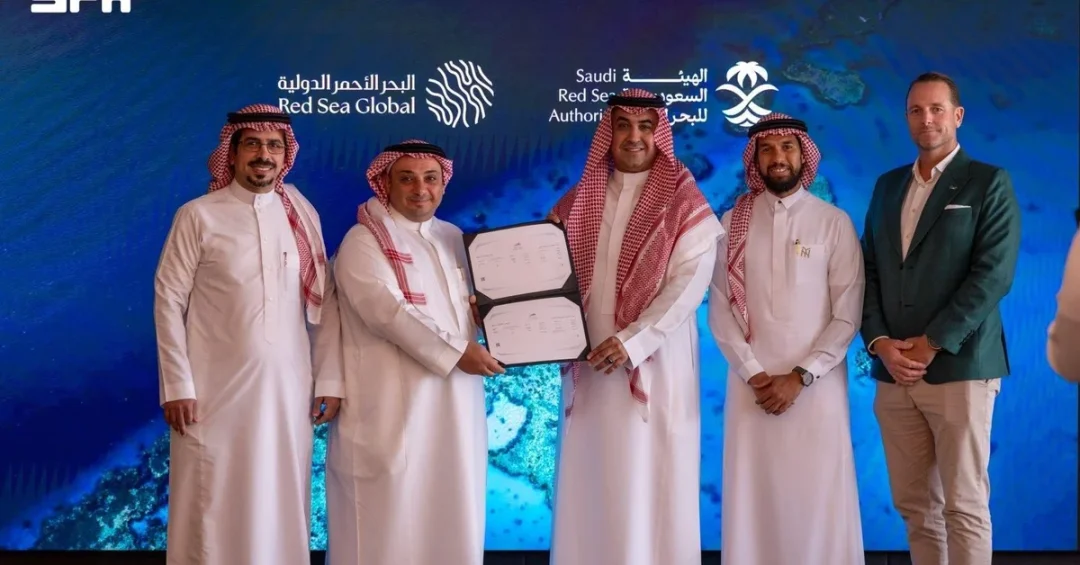
The Saudi Red Sea Authority (SRSA) has presented Red Sea Global (RSG) with two operating licenses for AMAALA Marina and Shura Marina, a regulatory milestone announced in Riyadh on October 1, 2026, that strengthens the marinas’ readiness to welcome yachts and supports the integration of marine services across RSG’s destinations along Saudi Arabia’s Red Sea coast. The licenses were formally handed over by Eng. Mohammed Bukhari, Vice President of Coastal Tourism Operations at SRSA, to Raed Albasseet, Chief Operations and Sustainability Officer at RSG, during a ceremony in the Saudi capital. The move reflects the Kingdom’s continued efforts to develop a world-class coastal tourism sector under the framework of Saudi Vision 2030. The two marinas together offer a combined capacity of 278 berths and can accommodate yachts up to 120 meters in length, positioning them among the most significant yachting infrastructure assets on the Red Sea. The announcement was released through official Saudi channels, underscoring the transparency and coordination between regulators and developers as the Kingdom expands its maritime tourism offering.
Why does this development matter now, at a moment when global yachting markets are searching for new horizons and high-quality destinations? The answer lies in the scale and ambition of Saudi Arabia’s Red Sea strategy. The operating licenses confirm that AMAALA Marina and Shura Marina meet the rigorous standards set out in the Regulation for the Design and Operation of Tourist Marinas, which governs marina design and operations and establishes health, safety, and environmental protection requirements. These requirements are designed to support the quality of services provided to yacht owners and visitors to coastal destinations. By issuing these licenses, SRSA is providing clarity for operators and investors, strengthening confidence in the sector, and supporting coastal tourism growth underpinned by quality visitor experiences and protection of the marine environment. The licensing also signals that the infrastructure is ready for international yachting traffic, a key enabler for the Kingdom’s broader tourism goals.
Context and Background
What is the regulatory foundation that makes these licenses so significant for Saudi Arabia’s emerging yachting sector? The Saudi Red Sea Authority was established to develop and regulate coastal tourism along the Kingdom’s Red Sea coastline, a stretch of more than 1,800 kilometers of pristine waters, coral reefs, and islands. SRSA’s mandate includes establishing regulatory frameworks, policies, rules, and standards, issuing licenses and permits, encouraging investment, and identifying infrastructure requirements. The Regulation for the Design and Operation of Tourist Marinas is a central pillar of this mandate, setting clear expectations for marina developers and operators. It covers everything from berth design and navigational safety to waste management and environmental protection, ensuring that development proceeds in harmony with the marine ecosystem. The regulation also provides the certainty that international investors and yacht owners need when committing to a new destination, which is essential for building a sustainable and competitive yachting hub.
Red Sea Global, the developer behind The Red Sea and AMAALA destinations, has been at the forefront of translating these regulatory frameworks into tangible world-class assets. RSG recently launched the Yachting Network, which brings the management and operation of its marinas and yacht clubs along the Red Sea coast together under unified management. This network is designed to provide yacht owners, captains, and crews with a connected experience and easier access to berthing and marine services across destinations. The network includes AMAALA Marina, part of AMAALA Yacht Club, with 119 berths, and Shura Marina, the largest tourist marina on an island in Saudi Arabia, with 159 berths. Together, these two marinas represent a combined capacity of 278 berths and can accommodate yachts up to 120 meters in length. The Yachting Network approach ensures that visitors can move seamlessly between destinations, enjoying consistent service standards and integrated hospitality.
How does the AMAALA Yacht Club enhance the overall proposition for yacht owners and their guests? With a clubhouse spanning approximately 7,900 square meters, AMAALA Yacht Club offers facilities and services for yacht owners and visitors that complement the marina. Together, the marina and club bring yachting, hospitality, and marine services into an integrated experience, strengthening the destination’s appeal to the global yachting community. The clubhouse is expected to feature lounges, dining, wellness facilities, and event spaces, creating a vibrant social hub for members and guests. This integration of luxury hospitality with marine infrastructure is a hallmark of RSG’s approach, designed to attract high-net-worth individuals and their crews who seek both adventure and comfort. The combination of AMAALA Marina’s 119 berths and Shura Marina’s 159 berths provides the critical mass needed to host large yachting events and regattas, further elevating the Red Sea’s profile on the international yachting calendar.
Key Details
What exactly do these operating licenses authorize, and how will they function in practice? The licenses were issued in accordance with the Regulation for the Design and Operation of Tourist Marinas, which sets out comprehensive health, safety, and environmental protection requirements. These requirements are not merely bureaucratic formalities; they are designed to ensure that marinas operate to the highest international standards, protecting both visitors and the fragile marine environment. For yacht owners, the licenses signal that AMAALA Marina and Shura Marina have met stringent criteria for berthing safety, fuel management, waste disposal, and emergency response. For investors, they provide confidence that the regulatory environment is stable, transparent, and conducive to long-term returns. SRSA’s regulatory framework also provides clarity for operators and investors, strengthens confidence in the sector, and supports coastal tourism growth underpinned by quality visitor experiences and protection of the marine environment. The licenses thus serve as a seal of quality that will be recognized by the international yachting community.
The handover ceremony in Riyadh, attended by senior officials from both SRSA and RSG, highlighted the complementary roles of the two organizations. SRSA is responsible for developing and regulating coastal tourism, while RSG focuses on developing tourism destinations, facilities, and services. This division of labor is central to Saudi Arabia’s strategy for the Red Sea, ensuring that growth is both rapid and responsible. Eng. Mohammed Bukhari, Vice President of Coastal Tourism Operations at SRSA, and Raed Albasseet, Chief Operations and Sustainability Officer at RSG, represented their organizations at the handover. Their presence underscored the high-level commitment to making the Red Sea a global yachting destination. The licenses are expected to accelerate the onboarding of yachts and the scheduling of events at both marinas, contributing to the broader economic diversification goals of the Kingdom.
How do the two marinas differ in character and appeal, and what does that mean for visitors? AMAALA Marina, part of AMAALA Yacht Club, is situated within the AMAALA destination, a luxury wellness and resort project on the Red Sea coast. With 119 berths, it is designed to serve the yachting needs of AMAALA’s residents and guests, offering direct access to the destination’s hotels, restaurants, and wellness facilities. Shura Marina, with 159 berths, holds the distinction of being the largest tourist marina on an island in Saudi Arabia. Its island setting provides a unique sense of exclusivity and adventure, appealing to yacht owners seeking privacy and natural beauty. Together, the two marinas offer a combined capacity of 278 berths and can accommodate yachts up to 120 meters in length, meaning they can host some of the world’s largest superyachts. This dual offering allows RSG to cater to different segments of the yachting market, from smaller vessels to mega-yachts, while maintaining a unified service standard through the Yachting Network.
International and Regional Impact
What does the licensing of these marinas mean for the wider Middle East and for international yachting? The Red Sea has long been a corridor for global trade, but its potential as a luxury tourism destination is only now being fully realized. Saudi Arabia’s investment in marinas, resorts, and marine services is creating a new hub that can compete with established Mediterranean and Caribbean destinations. For regional neighbors, the development of the Red Sea coast offers opportunities for collaboration on itineraries, safety standards, and environmental protection. For international yacht owners, the addition of 278 berths with the ability to accommodate yachts up to 120 meters opens up a new cruising ground that was previously inaccessible or under-served. The Yachting Network, with its unified management, makes it easier for captains and crews to plan multi-destination voyages, knowing that they will receive consistent service across RSG’s properties. This connectivity is a key differentiator for the Red Sea and is expected to attract a growing number of yachts from Europe, Asia, and the Americas.
How does this development align with Saudi Arabia’s broader diplomatic and economic engagement? The Kingdom has been actively positioning itself as a bridge between continents, and the Red Sea is central to that vision. By developing world-class marine infrastructure, Saudi Arabia is not only boosting tourism but also enhancing its role as a maritime nation. The licenses issued by SRSA demonstrate that the regulatory environment is maturing, which is essential for attracting foreign investment and partnerships. International marina operators, yacht brokers, and event organizers are likely to take note, as the clarity provided by the licensing regime reduces risk and facilitates entry. Moreover, the emphasis on environmental protection in the regulation aligns with global sustainability goals, enhancing Saudi Arabia’s reputation as a responsible steward of marine resources. This combination of economic opportunity and environmental responsibility is a powerful message to the international community.
Economic and Strategic Significance
Why are marinas and yachting infrastructure considered strategic assets for Saudi Arabia’s economy? The global yachting industry generates billions of dollars annually, from yacht sales and maintenance to berthing fees, hospitality, and crew services. By capturing a share of this market, Saudi Arabia can create jobs, attract high-spending visitors, and diversify its economy away from oil. The 278 berths at AMAALA Marina and Shura Marina represent a significant capacity that will generate recurring revenue and support a ecosystem of service providers. The ability to accommodate yachts up to 120 meters in length is particularly important, as these vessels often travel with substantial crews and guests who spend generously on local goods and services. The integrated experience offered by AMAALA Yacht Club, with its 7,900-square-meter clubhouse, further increases the economic multiplier effect by encouraging longer stays and higher spending. These marinas are thus not just tourism amenities but economic engines that contribute to Vision 2030’s goal of a diversified and sustainable economy.
What strategic advantages does the Red Sea offer compared to other yachting destinations? The Red Sea is renowned for its coral reefs, clear waters, and abundant marine life, making it a paradise for divers and snorkelers. Unlike the crowded Mediterranean, the Red Sea offers a sense of discovery and exclusivity, with numerous islands and secluded anchorages. The climate is favorable for year-round sailing, and the region’s rich cultural heritage adds another layer of appeal. By developing marinas that meet international standards, Saudi Arabia is making this unique environment accessible to the global yachting community without compromising its natural beauty. The regulatory framework enforced by SRSA ensures that environmental protection is built into every aspect of marina operations, from waste management to anchoring practices. This sustainable approach is a strategic advantage, as discerning travelers increasingly seek destinations that prioritize conservation. The Red Sea’s combination of natural wonders, luxury infrastructure, and regulatory rigor positions it as a compelling alternative to traditional yachting hubs.
Vision 2030 Alignment
How does the licensing of AMAALA Marina and Shura Marina advance the objectives of Saudi Vision 2030? Vision 2030 aims to diversify the Kingdom’s economy, create jobs, and enhance the quality of life for citizens and visitors. Tourism is a key pillar of this strategy, with a target of attracting 150 million visits annually by 2030. The Red Sea coast is a centerpiece of these efforts, and the development of world-class marinas is essential to unlocking its potential. By providing the regulatory oversight and infrastructure needed for yachting, SRSA and RSG are helping to establish Saudi Arabia as a premier global destination. The Yachting Network, with its unified management and integrated services, ensures that visitors enjoy a seamless and high-quality experience, which is critical for building a positive reputation. The economic benefits, from job creation to foreign investment, directly support the Vision 2030 goal of a thriving and sustainable economy.
What does the future hold for Saudi Arabia’s Red Sea coast as these marinas become operational? The issuance of operating licenses is a significant step, but it is part of a larger journey. RSG is developing multiple destinations along the coast, each with its own character and offerings. The Yachting Network is designed to grow, potentially adding more marinas and services as demand increases. The Kingdom’s commitment to environmental protection, as reflected in the regulation, will ensure that this growth is sustainable. International partnerships and events are likely to follow, further integrating Saudi Arabia into the global yachting community. For yacht owners and travelers, the Red Sea is poised to become a must-visit destination, offering a unique blend of luxury, adventure, and cultural richness. As Saudi Arabia continues to invest in its coastal tourism sector, the world will be watching, and the licensing of AMAALA Marina and Shura Marina is a clear signal that the Kingdom is ready to welcome the world to its shores.
20 Questions
Q1. What licenses did the Saudi Red Sea Authority present to Red Sea Global?
A1. The Saudi Red Sea Authority presented Red Sea Global with two operating licenses for AMAALA Marina and Shura Marina, confirming their compliance with the Regulation for the Design and Operation of Tourist Marinas.
Q2. Who handed over the licenses on behalf of SRSA?
A2. Eng. Mohammed Bukhari, Vice President of Coastal Tourism Operations at SRSA, handed over the licenses to Raed Albasseet, Chief Operations and Sustainability Officer at RSG, in Riyadh.
Q3. Where did the handover ceremony take place?
A3. The handover ceremony took place in Riyadh, the capital of Saudi Arabia, as announced by the Saudi Press Agency on October 1, 2026.
Q4. What is the Regulation for the Design and Operation of Tourist Marinas?
A4. It is a regulatory framework that governs marina design and operations, setting out health, safety, and environmental protection requirements to ensure quality services for yacht owners and visitors.
Q5. How many berths does AMAALA Marina have?
A5. AMAALA Marina, part of AMAALA Yacht Club, has 119 berths and is designed to serve the yachting needs of the AMAALA destination’s residents and guests.
Q6. How many berths does Shura Marina have?
A6. Shura Marina has 159 berths and is the largest tourist marina on an island in Saudi Arabia, offering a unique and exclusive island setting for yacht owners.
Q7. What is the combined berthing capacity of the two marinas?
A7. Together, AMAALA Marina and Shura Marina offer a combined capacity of 278 berths, accommodating yachts up to 120 meters in length.
Q8. What is the Yachting Network launched by Red Sea Global?
A8. The Yachting Network brings the management and operation of RSG’s marinas and yacht clubs along the Red Sea coast under unified management, providing a connected experience for yacht owners, captains, and crews.
Q9. What facilities does AMAALA Yacht Club offer?
A9. AMAALA Yacht Club features a clubhouse spanning approximately 7,900 square meters, offering facilities and services for yacht owners and visitors that complement the marina, including hospitality and marine services.
Q10. Why are these licenses important for yacht owners?
A10. The licenses confirm that the marinas meet stringent health, safety, and environmental standards, ensuring quality services and peace of mind for yacht owners and visitors to the Red Sea coast.
Q11. How do these licenses support investment in Saudi Arabia’s tourism sector?
A11. The licenses provide clarity for operators and investors, strengthening confidence in the sector and supporting coastal tourism growth underpinned by quality visitor experiences and environmental protection.
Q12. What role does SRSA play in Saudi Arabia’s coastal tourism?
A12. SRSA develops and regulates coastal tourism by establishing regulatory frameworks, issuing licenses, encouraging investment, and identifying infrastructure requirements to support the sector’s growth.
Q13. What role does Red Sea Global play in the Red Sea development?
A13. Red Sea Global develops tourism destinations, facilities, and services along the Red Sea coast, including marinas, resorts, and the Yachting Network, in line with Saudi Vision 2030.
Q14. How does this development align with Saudi Vision 2030?
A14. It supports Vision 2030 by diversifying the economy, creating jobs, and enhancing tourism, helping Saudi Arabia attract 150 million visits annually by 2030.
Q15. What environmental protections are included in the marina regulation?
A15. The regulation includes requirements for environmental protection, such as waste management, pollution prevention, and protection of the marine environment, ensuring sustainable marina operations.
Q16. Can the marinas accommodate large superyachts?
A16. Yes, the marinas can accommodate yachts up to 120 meters in length, making them suitable for some of the world’s largest superyachts and their crews.
Q17. What is the significance of Shura Marina being on an island?
A17. As the largest tourist marina on an island in Saudi Arabia, Shura Marina offers a unique sense of exclusivity and adventure, appealing to yacht owners seeking privacy and natural beauty.
Q18. How does the Yachting Network benefit captains and crews?
A18. The Yachting Network provides captains and crews with easier access to berthing and marine services across destinations, ensuring a connected and consistent experience along the Red Sea coast.
Q19. What economic benefits are expected from these marinas?
A19. The marinas are expected to generate revenue, create jobs, attract high-spending visitors, and support a ecosystem of marine service providers, contributing to economic diversification.
Q20. What does the future hold for yachting on Saudi Arabia’s Red Sea coast?
A20. With operating licenses secured and the Yachting Network in place, the Red Sea coast is poised to become a premier global yachting destination, offering luxury, adventure, and cultural richness to international visitors.
Reader Feedback
We value your thoughts. Please share your feedback on this article.
Your feedback helps us improve our coverage.
Related articles
 Sunset in Aseer: Clouds and Mountain Peaks Draw Visitors
 10 AlUla Hotels and Restaurants Featured in 2026 MICHELIN Guide
 Makkah Chamber Hosts World Tourism Day Event
 Saudi Red Sea Authority Signs MoU with International Registries
 Friends of Red Sea Promotes Beach Care at Rixos Beach
 Live Cooking Events Enrich Saudifood Show 2026 Visitors