


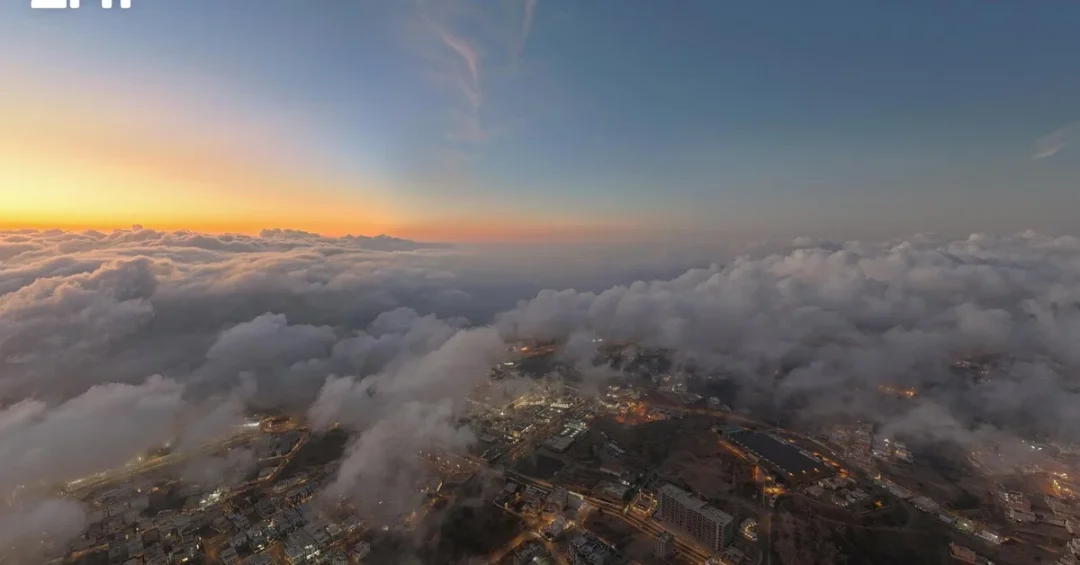
As autumn sunsets settle over the highlands of Aseer Region, the mountain city of Abha is drawing visitors from across the Kingdom and beyond to witness a natural spectacle in which clouds, peaks, and city lights merge into a single, breathtaking tableau. According to the Saudi Press Agency (SPA), the region’s elevated terrain and seasonal weather patterns are combining to produce panoramic views that stretch from towering mountain summits to villages and neighborhoods nestled along the slopes, reinforcing Aseer’s standing as one of the Kingdom’s most compelling tourism and leisure destinations.
The scene reported by SPA is one that has long captured the imagination of travelers: as evening falls, the lights of Abha’s roads and districts gradually emerge beneath layers of mist, blending the warm glow of the sunset with the city’s illumination. Have you ever watched a city slowly disappear into a sea of clouds? In Aseer, that experience is not a rare phenomenon but a recurring seasonal gift, shaped by high altitude, cool air, and the shifting colors of autumn. It is a reminder that some of the world’s most memorable travel moments require no construction, only preservation, patience, and the right vantage point.
Context and Background
Why does Aseer, among all the regions of Saudi Arabia, produce such dramatic sunset scenery? The answer lies in its geography. Aseer sits in the southwest of the Kingdom, where the Sarawat mountain range rises sharply from the Red Sea coastal plain toward some of the highest elevations in the country. Abha, the regional capital, rests at roughly 2,200 meters above sea level, surrounded by peaks that frequently exceed 2,700 meters. This vertical landscape traps moisture and cool air, generating the mist, cloud layers, and temperature inversions that make autumn evenings so visually striking.
SPA reported that as autumn sunsets draw near, the highlands transform into a spectacular tourist attraction, offering visitors views that extend from mountain peaks to cities and villages along the slopes. The region’s climate is equally important to its appeal. Unlike the intense summer heat of much of the Arabian Peninsula, Aseer enjoys milder temperatures, seasonal rainfall, and the green terraces of juniper forests that have sustained agricultural communities for centuries. This combination of altitude, weather, and heritage gives Aseer a distinct identity within Saudi tourism, one that the Kingdom has increasingly sought to share with international visitors as part of its broader opening to the world.
The timing of this seasonal display matters. Autumn marks a transition in the highlands, when daytime warmth gives way to crisp evenings and cloud formations settle into the valleys below the city. For photographers, families, and domestic travelers, this is prime viewing season, and the views reported by SPA illustrate why Aseer has become a fixture on itineraries that once focused almost exclusively on the Red Sea coast or the historic sites of the north.
Key Details: Abha’s City of Clouds
What makes Abha’s evening panorama so distinctive? According to SPA, the city stands out with a captivating scene where nature and urban life converge. Viewed from the surrounding heights, Abha appears nestled amid mountains and clouds. As evening falls, the lights of roads and neighborhoods gradually emerge beneath layers of mist, creating a stunning tableau that blends the warm glow of the sunset with the city’s illumination. The effect is both intimate and vast: individual streets and homes become points of light suspended in a soft, drifting fog, while the silhouettes of the mountains frame the horizon.
Several elevated viewpoints around the city are particularly well suited to this experience. The Green Mountain, the cable car routes of Al Soudah, and the overlooks of Al Muftaha and Al Sad districts offer sweeping perspectives across the valleys. Visitors who arrive in the late afternoon can watch the light change minute by minute, from gold to amber to deep blue, before the city’s lamps take over the task of illumination. SPA’s description captures this transition precisely: the warm glow of the sunset merging with the city’s lights beneath the mist.
The tableau is not static. It evolves with the weather, the season, and the hour, which is why the Aseer highlands continue to offer what SPA described as a continually evolving experience shaped by the changing seasons and shifting colors of its landscapes. For repeat visitors, that variability is part of the attraction; no two evenings in Abha are quite the same. For first-time guests, it is an introduction to a side of Saudi Arabia that surprises those whose mental image of the Kingdom is limited to desert and dunes.
International and Regional Impact
How does a sunset in Aseer connect to Saudi Arabia’s growing role in global tourism? The Kingdom’s tourism strategy, advanced under Vision 2030, seeks to attract 150 million visits annually by 2030 and to raise tourism’s contribution to gross domestic product to around 10 percent. Aseer is a central pillar of that effort. The region’s natural assets, including its mountains, forests, and cool climate, complement the cultural and heritage offerings of destinations such as AlUla, Diriyah, and Jeddah’s historic Al-Balad district, giving international travelers a reason to extend their stays and explore beyond the traditional gateways of Riyadh and Jeddah.
Regionally, Aseer’s appeal extends across the Gulf. Visitors from neighboring countries have long favored the highlands as a summer escape, and the autumn sunset season adds a second peak period to the calendar. Improved road networks, expanded domestic aviation, and streamlined tourist visas have made the region more accessible than ever. The Saudi Press Agency’s reporting on the seasonal spectacle also serves as soft diplomacy: it presents the Kingdom through the universal language of natural beauty, inviting the world to see Saudi Arabia as a destination of landscapes, hospitality, and calm as well as commerce and heritage.
Economic and Strategic Significance
What does a seasonal tourism phenomenon mean for the local and national economy? Tourism in Aseer supports a wide chain of livelihoods: hotels, guesthouses, restaurants, transport operators, guides, artisans, and agricultural producers who supply local markets with coffee, honey, and seasonal fruit. Each sunset season generates demand for accommodation and services in Abha and surrounding towns such as Khamis Mushait, Al Soudah, and Rijal Almaa. The Asir Development Authority, established to coordinate investment and infrastructure in the region, has prioritized projects that raise the quality of visitor facilities while protecting the natural environment that makes the experience possible.
Strategically, the region’s tourism growth aligns with the Public Investment Fund’s broader portfolio of destination development, including the Aseer Investment Company and related hospitality ventures. These investments are designed to lengthen visitor stays, increase average spending, and create year-round employment rather than seasonal spikes. The sunset tableau described by SPA is, in economic terms, a signature asset: a free, renewable, and globally distinctive attraction that requires careful stewardship of roads, viewpoints, and public spaces rather than large-scale construction. Protecting the view, in other words, is itself an economic policy.
Vision 2030 Alignment
How does a mountain sunset fit into the ambitions of Vision 2030? The Vision’s goals include diversifying the economy beyond oil, creating opportunities for Saudi citizens, and showcasing the Kingdom’s cultural and natural heritage to the world. Aseer embodies all three. The region’s tourism development creates jobs for young Saudis in hospitality, guiding, event management, and digital marketing, while its cultural heritage in architecture, dress, and the arts reinforces the national narrative of a country proud of its traditions and open to the future. The seasonal sunset experience is a reminder that Vision 2030 is not only about megaprojects but also about the quality of daily life and the beauty of the land itself.
As autumn continues, the highlands of Aseer will keep offering their evening performance: clouds settling into the valleys, peaks catching the last light, and Abha’s neighborhoods glowing softly beneath the mist. For international readers planning a journey to Saudi Arabia, the message is clear. The Kingdom’s future is being built in its cities and industrial zones, but its soul is also visible at dusk in the mountains of the southwest, where nature and urban life converge in a tableau that SPA has rightly described as breathtaking. The view is waiting, and it changes every single evening.
20 Questions
Q1. What natural phenomenon is drawing visitors to Aseer Region in autumn?
A1. Autumn sunsets in the Aseer highlands produce dramatic views of clouds, mountain peaks, and city lights, as reported by the Saudi Press Agency. The seasonal weather creates mist layers beneath Abha, making the region a premier destination for tourism and leisure.
Q2. Where is Abha located and why is its elevation important?
A2. Abha is the capital of Aseer Region in southwestern Saudi Arabia, at roughly 2,200 meters above sea level. Its high elevation creates cooler temperatures, seasonal mist, and cloud formations that produce the striking evening panoramas visitors come to see.
Q3. What does the view from Abha’s surrounding heights look like at dusk?
A3. From surrounding heights, Abha appears nestled amid mountains and clouds. As evening falls, the lights of roads and neighborhoods emerge beneath layers of mist, blending the warm glow of sunset with the city’s illumination.
Q4. Which official source reported on the Aseer sunset scenery?
A4. The Saudi Press Agency, the Kingdom’s official news authority, reported on the autumn sunsets in Aseer Region, describing how the highlands transform into a spectacular tourist attraction offering views from peaks to villages.
Q5. Why do clouds and mist form in the Aseer highlands?
A5. The Sarawat mountain range traps moisture and cool air, generating mist, cloud layers, and temperature inversions. This geography makes autumn evenings in Aseer particularly dramatic and visually distinctive compared with other regions of the Kingdom.
Q6. What makes Abha’s evening scene blend nature and urban life?
A6. Abha’s roads and neighborhoods are built along mountain slopes, so when mist settles into the valleys, city lights shine through the cloud layers. This creates a tableau where urban illumination and natural sunset colors merge seamlessly.
Q7. How does Aseer’s climate differ from the rest of Saudi Arabia?
A7. Aseer enjoys milder temperatures, seasonal rainfall, and green juniper terraces due to its high altitude. Unlike the intense summer heat of much of the Arabian Peninsula, the region offers cool evenings that appeal to domestic and international travelers.
Q8. What tourism activities does the Aseer sunset season support?
A8. The season supports sightseeing, photography, cable car rides, mountain dining, and stays in hotels and guesthouses across Abha, Al Soudah, and nearby towns. Local markets selling coffee, honey, and crafts also benefit from increased visitor traffic.
Q9. How does Aseer fit into Saudi Arabia’s Vision 2030 tourism goals?
A9. Vision 2030 aims to attract 150 million visits annually and raise tourism’s GDP contribution to about 10 percent. Aseer’s natural assets complement heritage destinations like AlUla and Diriyah, helping extend visitor stays and diversify the economy.
Q10. Which nearby destinations complement a visit to Abha?
A10. Travelers often combine Abha with Al Soudah’s cable cars, the heritage village of Rijal Almaa, Khamis Mushait, and the Asir National Park. These sites offer architecture, culture, and outdoor recreation within short drives of the city.
Q11. What role does the Asir Development Authority play?
A11. The Asir Development Authority coordinates investment and infrastructure in the region, prioritizing projects that improve visitor facilities while protecting the natural environment. Its work supports year-round tourism and sustainable growth across Aseer’s mountain communities.
Q12. How accessible is Aseer for international visitors?
A12. Abha International Airport receives domestic and regional flights, while improved road networks connect the region to other parts of the Kingdom. Streamlined tourist visas have made travel to Aseer easier for international guests in recent years.
Q13. What economic benefits does the sunset season bring to local communities?
A13. The season generates demand for hotels, restaurants, transport, guiding, and local agricultural products. It creates employment for young Saudis in hospitality and services, supporting the Vision 2030 goal of diversifying household incomes beyond public sector roles.
Q14. Why is the Aseer experience described as continually evolving?
A14. Weather, season, and time of day constantly change the light, cloud cover, and colors across the highlands. Each evening offers a different composition of mist, sunset hues, and city lights, so repeat visitors discover new perspectives throughout the year.
Q15. What should visitors bring for an evening viewpoint experience?
A15. Visitors should bring warm layers, as mountain evenings are cool, along with a camera and comfortable walking shoes. Arriving before sunset allows time to secure a good vantage point and watch the full transition from daylight to illuminated city.
Q16. How does the Public Investment Fund support Aseer’s tourism growth?
A16. The Public Investment Fund backs destination development through ventures such as the Aseer Investment Company, focusing on hospitality, infrastructure, and longer visitor stays. These investments aim to create year-round employment rather than seasonal spikes.
Q17. What cultural heritage can visitors experience alongside the sunsets?
A17. Aseer is known for its distinctive architecture, traditional dress, local arts, and agricultural terraces. Heritage villages and museums in the region present centuries of mountain culture, adding depth to the natural scenery that draws visitors each autumn.
Q18. How does the Saudi Press Agency’s reporting support tourism promotion?
A18. SPA presents verified, official information about the Kingdom’s destinations, giving international audiences trustworthy context. Its reporting on Aseer’s seasonal beauty serves as soft diplomacy, inviting the world to discover Saudi Arabia’s landscapes and hospitality.
Q19. What environmental considerations apply to Aseer’s tourism development?
A19. Protecting viewpoints, forests, and terraces is central to sustainable growth. Development is planned to preserve the natural environment that makes the sunset experience possible, ensuring that infrastructure enhances rather than diminishes the region’s scenic assets.
Q20. What is the outlook for Aseer’s tourism in the coming years?
A20. With continued investment, improved access, and growing international interest, Aseer is positioned to become a leading year-round destination. Its autumn sunsets will remain a signature attraction, supporting Vision 2030 goals for economic diversification and global engagement.
Reader Feedback
We value your thoughts. Please share your feedback on this article.
Your feedback helps us improve our coverage.
Related articles
 10 AlUla Hotels and Restaurants Featured in 2026 MICHELIN Guide
 Makkah Chamber Hosts World Tourism Day Event
 Saudi Red Sea Authority Signs MoU with International Registries
 Friends of Red Sea Promotes Beach Care at Rixos Beach
 Live Cooking Events Enrich Saudifood Show 2026 Visitors
 Red Sea Yacht Show to Draw SAR1.8bn in Investment