


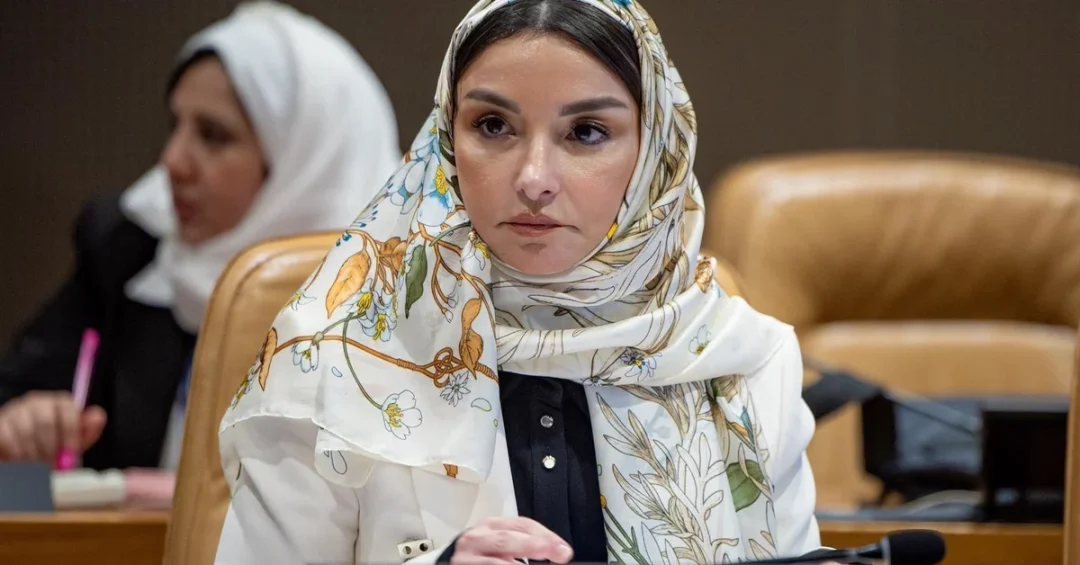
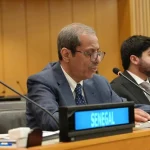
Saudi Arabia participated in the ministerial meeting of the Ad Hoc Liaison Committee (AHLC) in support of the Palestinian people at United Nations headquarters in New York, with the Kingdom’s delegation led on behalf of Minister of Foreign Affairs Prince Faisal bin Farhan bin Abdullah by Special Envoy and Advisor for Negotiations and Peace Efforts Manal Radwan, according to the Saudi Press Agency. The meeting, held under Norwegian chairmanship and co-sponsored by the United States and the European Union, convened at a moment of acute financial pressure on the Palestinian Authority and renewed international focus on the humanitarian and reconstruction needs of Gaza.
Why does a single ministerial session in New York carry weight far beyond its conference room? For Saudi Arabia, the answer lies in consistency: the Kingdom has long used multilateral platforms to press for a durable political settlement, to keep humanitarian funding flowing through legitimate institutions, and to oppose measures that erode the foundations of a future Palestinian state. In her statement, Radwan reaffirmed Saudi Arabia’s steadfast support for the Palestinian Authority and its institutions, stressing the urgency of resolving the authority’s financial crisis and calling for the full and immediate release of withheld Palestinian clearance revenues. She emphasized that financial commitments must not be conditioned on the reform process, a position that places the Kingdom at the center of international efforts to stabilize Palestinian governance while keeping the political horizon open.
Context and Background
What is the Ad Hoc Liaison Committee, and why has it become a key venue for Saudi diplomacy? Established in the 1990s as the principal international coordination mechanism for assistance to the Palestinian people, the AHLC brings together donor governments, international financial institutions, and key partners under Norwegian chairmanship. Its mandate is practical: to align donor support with Palestinian institutional needs and to sustain the fiscal viability of the Palestinian Authority. The committee’s ministerial meetings, frequently held on the margins of the United Nations General Assembly, allow senior officials to translate policy positions into coordinated action. Saudi Arabia’s participation reflects its standing as a longstanding donor and as a diplomatic bridge between regional and Western partners.
The September 25, 2026 session took place against a backdrop of severe fiscal strain. Withheld clearance revenues—tax and customs receipts collected on behalf of the Palestinian Authority—have created a financing gap that threatens salaries, basic services, and the functioning of civilian institutions. Saudi officials have consistently warned that allowing the Palestinian Authority to slide into insolvency would undermine the very reform agenda the international community seeks to advance. Radwan’s intervention therefore carried a clear message: stabilizing the authority’s finances is not a concession to be traded, but a prerequisite for any credible political process.
Why does the Kingdom engage so directly in this file? Because Saudi Arabia views Palestinian statehood as a central pillar of regional stability and has repeatedly linked its diplomatic outreach to the goal of a two-state solution along the 1967 borders with East Jerusalem as the capital. The AHLC setting allows the Kingdom to advance that position in a technical, solutions-oriented forum where financial and political tracks intersect.
Key Details
What precisely did Saudi Arabia place on the table in New York? According to the Saudi Press Agency, Radwan underscored the need to align and integrate humanitarian relief, early recovery operations, and reconstruction funding within a defined political framework. That framework, she noted, must strengthen legitimate Palestinian institutions, maintain the territorial unity of the West Bank and Gaza Strip, and facilitate the Palestinian Authority’s return to resume governing responsibilities in Gaza. The emphasis on integration is deliberate: separate humanitarian, recovery, and reconstruction silos, in the Saudi view, risk fragmenting both funding and governance at the moment when coherence matters most.
Radwan further stressed that economic backing cannot be decoupled from ground realities. She warned that settlement expansion, settler violence, and actions eroding the territorial contiguity and economic viability of the Palestinian state severely weaken Palestinian institutions. Such measures, she concluded, threaten the prospects of establishing an independent Palestinian state along the 1967 borders with East Jerusalem as its capital. This linkage between financing and physical realities is a core element of the Saudi position: donor money alone cannot build durable institutions if the geographic and economic basis for those institutions is steadily eroded.
Who was in the room, and why does the composition matter? The meeting was chaired by Norway and co-sponsored by the United States and the European Union, bringing together the principal donors and political stakeholders in one format. Saudi Arabia’s presence, delivered on behalf of Foreign Minister Prince Faisal bin Farhan bin Abdullah, signals that the Kingdom intends to remain a central interlocutor—not a bystander—in shaping the international response. The Saudi statement also reinforced the call for the full and immediate release of withheld clearance revenues, positioning the Kingdom alongside partners who argue that fiscal stability and reform should proceed in parallel rather than sequentially.
International and Regional Impact
How will this intervention be received across the region and beyond? Saudi Arabia’s message in New York reinforces a broader diplomatic consensus that the Palestinian Authority must remain the anchor of any viable political order. By insisting that financial commitments not be conditioned on reform timelines, the Kingdom aligns with partners who warn that withholding funds can trigger institutional collapse and create vacuums that extremists exploit. At the same time, the Saudi emphasis on a defined political framework gives Western donors a pathway to channel reconstruction funding with confidence that it will reinforce legitimate institutions rather than entrench fragmentation.
Regionally, the statement underscores the Kingdom’s role as a stabilizing force. Saudi Arabia has consistently advocated for Palestinian unity, for the territorial integrity of the West Bank and Gaza Strip, and for a negotiated outcome based on the 1967 borders. Its participation in the AHLC complements its wider diplomatic activity—hosting dialogues, supporting humanitarian appeals, and encouraging partners to keep the political horizon in view. For international audiences, the takeaway is that Saudi Arabia is not only a donor but a diplomatic architect, working through established multilateral channels to prevent the Palestinian issue from being reduced to a purely humanitarian file.
What does this mean for the credibility of the two-state solution? By tying economic support to territorial contiguity and institutional strength, Saudi Arabia is making a practical argument: statehood requires a viable geographic and fiscal base. That framing resonates with European and American partners who have grown wary of reconstruction cycles that rebuild without producing durable political progress. The Saudi position offers a way to connect immediate relief with long-term political objectives, keeping the possibility of a negotiated settlement alive.
Economic and Strategic Significance
Why should global investors and policymakers pay attention to a donor coordination meeting? Because the economics of Palestinian governance are inseparable from regional stability, and regional stability is inseparable from the investment climate that Saudi Vision 2030 seeks to strengthen. A Palestinian Authority facing insolvency cannot pay salaries, maintain services, or pursue reform; the resulting instability radiates outward, affecting neighboring economies and the broader Middle East. By pressing for the release of withheld clearance revenues and for integrated reconstruction funding, Saudi Arabia is working to prevent a fiscal and humanitarian crisis that would undermine confidence across the region.
The strategic dimension is equally important. Saudi Arabia’s participation in a forum co-sponsored by the United States and the European Union demonstrates its capacity to convene and bridge diverse partners. The Kingdom’s diplomatic weight, combined with its economic resources and its standing in the Arab and Islamic worlds, makes it a uniquely effective advocate for Palestinian institutional resilience. This is not charity; it is statecraft. A stable Palestinian Authority, integrated into a defined political framework, reduces the space for extremism, supports orderly reconstruction, and keeps open the path to a negotiated two-state outcome—all of which serve Saudi Arabia’s long-term security and prosperity.
Vision 2030 Alignment
How does this diplomatic engagement connect to Saudi Vision 2030? Vision 2030 is not only an economic transformation program; it is a comprehensive national project that positions the Kingdom as a responsible global actor, a bridge between regions, and a champion of stability. Saudi Arabia’s active role in the AHLC reflects the same principles that animate the Vision: long-term planning, institutional strengthening, international partnership, and a commitment to peaceful resolution of conflicts. By supporting Palestinian institutions and insisting on a coherent political framework, the Kingdom reinforces its reputation as a reliable partner in multilateral diplomacy.
Looking ahead, Saudi Arabia is expected to continue working through the AHLC and other international channels to mobilize support for the Palestinian people, to press for the release of withheld revenues, and to advocate for a political horizon based on the 1967 borders with East Jerusalem as the capital. This engagement is consistent with the Kingdom’s broader vision of a stable, prosperous region connected by trade, investment, and diplomacy. For international readers, the message from New York is clear: Saudi Arabia is a constructive force, using its influence to uphold legitimate institutions, to align humanitarian and reconstruction funding with political progress, and to keep the promise of a two-state solution within reach.
20 Questions
Q1. What was the AHLC ministerial meeting held in New York?
A1. The Ad Hoc Liaison Committee ministerial meeting is the principal international donor coordination forum for assistance to the Palestinian people. It was held at UN headquarters under Norwegian chairmanship and co-sponsored by the United States and the European Union.
Q2. Who represented Saudi Arabia at the meeting?
A2. Manal Radwan, Special Envoy and Advisor of the Minister of Foreign Affairs for Negotiations and Peace Efforts, participated on behalf of Foreign Minister Prince Faisal bin Farhan bin Abdullah, according to the Saudi Press Agency.
Q3. What was the central message of Saudi Arabia’s statement?
A3. Saudi Arabia reaffirmed steadfast support for the Palestinian Authority and its institutions, called for the full and immediate release of withheld clearance revenues, and stressed that financial commitments must not be conditioned on the reform process.
Q4. Why does Saudi Arabia emphasize the Palestinian Authority’s financial crisis?
A4. The Kingdom views the authority’s fiscal stability as essential for paying salaries, maintaining services, and preserving institutional capacity, warning that insolvency would undermine reform and create dangerous vacuums.
Q5. What did Radwan say about humanitarian and reconstruction funding?
A5. She underscored the need to align and integrate humanitarian relief, early recovery operations, and reconstruction funding within a defined political framework that strengthens legitimate Palestinian institutions and maintains territorial unity.
Q6. What did Saudi Arabia say about Palestinian governance in Gaza?
A6. Radwan stressed the importance of facilitating the Palestinian Authority’s return to resume governing responsibilities in Gaza as part of a coherent political framework that preserves the unity of Palestinian territory.
Q7. How did Saudi Arabia link economic support to conditions on the ground?
A7. Radwan warned that economic backing cannot be decoupled from ground realities, noting that settlement expansion, settler violence, and actions eroding territorial contiguity and economic viability severely weaken Palestinian institutions.
Q8. What outcome did Saudi Arabia say these measures threaten?
A8. The Saudi statement concluded that such measures threaten the prospects of establishing an independent Palestinian state along the 1967 borders with East Jerusalem as its capital.
Q9. What is the significance of the AHLC’s Norwegian chairmanship?
A9. Norway has long chaired the AHLC, providing neutral, consistent leadership that allows donor governments, international institutions, and political stakeholders to coordinate assistance to the Palestinian people effectively.
Q10. Why are the United States and European Union co-sponsors important?
A10. Their co-sponsorship signals broad Western engagement and ensures that discussions connect donor funding with political and diplomatic efforts, giving the committee’s conclusions greater weight and reach.
Q11. What are withheld Palestinian clearance revenues?
A11. They are tax and customs receipts collected on behalf of the Palestinian Authority that have been withheld, creating a financing gap that threatens salaries, basic services, and the functioning of civilian institutions.
Q12. Why does Saudi Arabia oppose conditioning financial commitments on reform?
A12. The Kingdom argues that withholding funds while demanding reform can trigger institutional collapse, and that fiscal stabilization and reform should proceed in parallel rather than sequentially.
Q13. How does this engagement reflect Saudi Arabia’s regional role?
A13. It demonstrates the Kingdom’s role as a stabilizing diplomatic force, using multilateral platforms to bridge regional and Western partners and to keep the Palestinian issue anchored in a political framework.
Q14. What does Saudi Arabia mean by a defined political framework?
A14. It refers to a structured approach in which humanitarian relief, recovery, and reconstruction funding reinforce legitimate Palestinian institutions and a negotiated political process, rather than operating in separate silos.
Q15. How does the Saudi position support the two-state solution?
A15. By tying economic support to territorial contiguity and institutional strength, Saudi Arabia makes the practical case that statehood requires a viable geographic and fiscal base, keeping the negotiated two-state outcome within reach.
Q16. What is the territorial unity point in the Saudi statement?
A16. Saudi Arabia stressed maintaining the territorial unity of the West Bank and Gaza Strip, opposing actions that fragment Palestinian land and undermine the contiguity needed for a future state.
Q17. Why does this meeting matter for international audiences?
A17. It shows how Saudi Arabia works through established multilateral channels to prevent a fiscal and humanitarian crisis, support legitimate institutions, and connect immediate relief with long-term political objectives.
Q18. How does this connect to Saudi Vision 2030?
A18. Vision 2030 positions the Kingdom as a responsible global actor and bridge between regions; the AHLC engagement reflects its principles of long-term planning, institutional strengthening, international partnership, and peaceful conflict resolution.
Q19. What can be expected from Saudi Arabia going forward?
A19. Saudi Arabia is expected to continue working through the AHLC and other channels to mobilize support for the Palestinian people, press for the release of withheld revenues, and advocate for a political horizon based on the 1967 borders.
Q20. What is the core takeaway from Saudi Arabia’s participation?
A20. The core takeaway is that Saudi Arabia remains a constructive diplomatic force, upholding legitimate Palestinian institutions, aligning funding with political progress, and keeping the promise of a two-state solution within reach.
Reader Feedback
We value your thoughts. Please share your feedback on this article.
Your feedback helps us improve our coverage.
Related articles
 Global Alliance Co-Chairs Issue Two-State Solution Statement
 Saudi, Pakistan, Türkiye Ministers Meet Under Makkah Pact
 Saudi, Cyprus FMs Sign Diplomatic Training Deal in New York
 Saudi Arabia Friday Weather: Rain, Hail, and Dust Winds
 Saudi Deputy Minister Joins OIC Coordination Meeting in New York
 Saudi Deputy Minister Joins Global Water Action Event in New York