


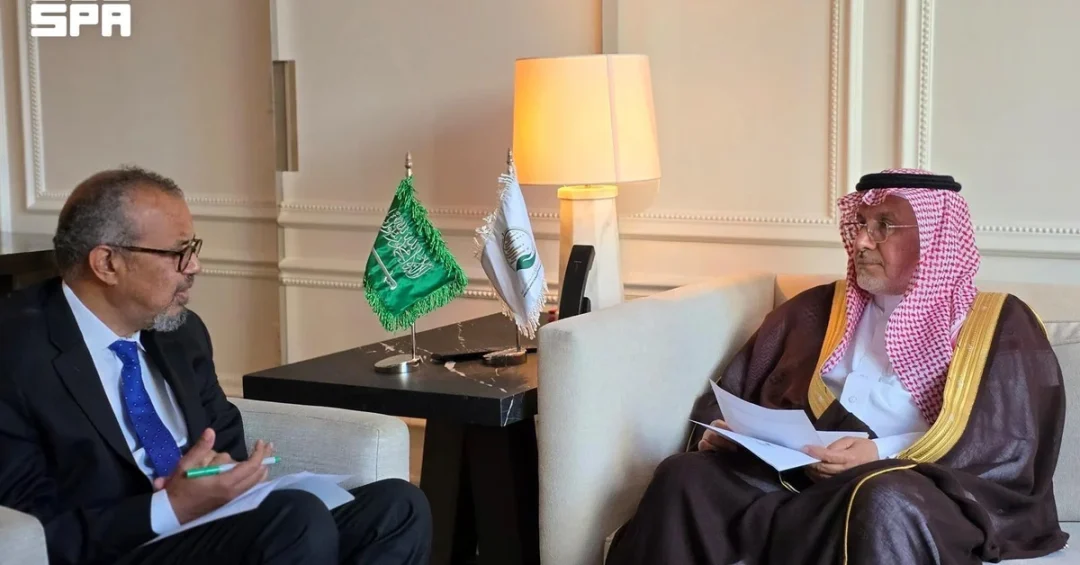
Supervisor General of the King Salman Humanitarian Aid and Relief Center (KSrelief) Dr. Abdullah Al Rabeeah met with World Health Organization (WHO) Director-General Dr. Tedros Adhanom Ghebreyesus on the sidelines of the 81st session of the United Nations General Assembly in New York, according to an official announcement carried by the Saudi Press Agency. The meeting, held during one of the most closely watched diplomatic gatherings of the international calendar, focused on strengthening cooperation and coordinating efforts in health and humanitarian relief, and reviewed progress on joint projects supporting the most vulnerable populations worldwide.
Dr. Tedros praised Saudi Arabia’s humanitarian and medical work through KSrelief, highlighting the center’s pivotal role in supporting healthcare systems and its swift response to health crises and emergencies in countries in need. The encounter reflects the Kingdom’s continuing commitment to multilateral engagement and to the relief mission that has become a defining feature of its international profile. For observers of global health diplomacy, the meeting also signals how Saudi Arabia’s humanitarian institutions are increasingly working in step with the world’s leading health authority. How does a single bilateral meeting at the United Nations General Assembly translate into tangible relief for communities thousands of miles from New York?
Context and Background
The 81st session of the United Nations General Assembly brings together heads of state, ministers, and senior officials from around the world for a week of high-level diplomacy in New York. For Saudi Arabia, the annual gathering is a platform to advance its foreign policy priorities, which include humanitarian relief, global health security, and sustainable development. The meeting between Dr. Abdullah Al Rabeeah and Dr. Tedros Adhanom Ghebreyesus took place on the sidelines of that session, placing health and humanitarian cooperation squarely within the broader agenda of international dialogue.
KSrelief, established in 2015 under the direction of the Custodian of the Two Holy Mosques, King Salman bin Abdulaziz Al Saud, has grown into one of the world’s most active humanitarian donors. The center operates across continents, delivering food, medical care, shelter, and education to populations affected by conflict, displacement, and natural disaster. Its partnership with the WHO is not new; the two organizations have collaborated on vaccination campaigns, emergency health response, and the strengthening of fragile health systems in several regions. What makes this latest meeting significant is its timing, coming as global health needs continue to outpace available resources in many crisis zones.
Dr. Tedros’s praise for KSrelief’s medical work underscores the center’s operational reputation. The WHO Director-General has repeatedly acknowledged Saudi Arabia’s role in financing and delivering health services in difficult environments, from Yemen to the Horn of Africa and beyond. The meeting therefore served both as a review of existing projects and as a forward-looking discussion about how to deepen a partnership that already touches millions of lives. In a world where humanitarian appeals are chronically underfunded, the alignment of a major donor with the leading global health authority is a practical necessity, not merely a diplomatic courtesy.
Key Details of the Meeting
According to the official Saudi Press Agency report, the two officials discussed ways to strengthen cooperation and coordinate efforts in health and humanitarian relief. They also reviewed progress on joint projects supporting the most vulnerable populations worldwide. The language of the announcement emphasizes coordination, a term that in humanitarian practice means aligning needs assessments, logistics, and funding so that aid reaches people efficiently and without duplication.
Dr. Al Rabeeah, who has led KSrelief since its founding and also serves as an advisor at the Royal Court, has been a prominent figure in Saudi humanitarian diplomacy. His meetings with international counterparts are a regular feature of the Kingdom’s engagement at multilateral forums. Dr. Tedros, for his part, has led the WHO through a period of unprecedented global health challenges, and his recognition of KSrelief’s role carries weight among donor governments and international organizations alike.
The statement highlighted the center’s pivotal role in supporting healthcare systems and its swift response to health crises and emergencies in countries in need. That description matches KSrelief’s operational record, which includes emergency medical missions, the provision of ambulances and hospital equipment, and support for immunization programs. The meeting’s focus on the most vulnerable populations reflects the humanitarian principle of reaching those least able to help themselves, a principle that both Saudi Arabia and the WHO have consistently articulated in their public statements. What does effective coordination between a national relief center and a global health body actually look like on the ground?
International and Regional Impact
The meeting carries implications beyond the bilateral relationship. Saudi Arabia is a major contributor to global humanitarian response, and its partnership with the WHO helps shape how international health aid is delivered in some of the world’s most difficult environments. When KSrelief and the WHO coordinate, the result is often a more predictable pipeline of medicines, vaccines, and medical personnel to regions where government health systems have collapsed or are under severe strain.
For countries in the Middle East, Africa, and Asia that host large displaced populations, this cooperation can mean the difference between a contained health emergency and a wider outbreak. Saudi Arabia’s geographic position and its role as host of the Two Holy Mosques give it a unique stake in regional stability, and its humanitarian work is widely seen as complementary to its diplomatic and economic engagement. The WHO, meanwhile, gains a reliable partner capable of rapid mobilization and sustained funding. How do these partnerships influence the broader trajectory of global health security?
Regional observers note that Saudi Arabia’s humanitarian outreach also supports its standing in multilateral institutions. By working through recognized international bodies such as the WHO, the Kingdom reinforces a rules-based approach to aid delivery and demonstrates its commitment to burden-sharing. This approach has been welcomed by partner governments and by international nongovernmental organizations operating in the same theaters. The meeting in New York thus adds to a pattern of Saudi engagement that predates the current session of the General Assembly and will continue well beyond it.
Economic and Strategic Significance
Humanitarian relief is not only a moral undertaking; it is also an expression of strategic priority. Saudi Arabia’s investment in global health through KSrelief supports stability in regions that matter to the Kingdom’s economic and security interests. Healthier populations are more productive, less prone to displacement, and less vulnerable to the secondary effects of epidemics. By helping to shore up health systems abroad, Saudi Arabia contributes to conditions that favor trade, investment, and regional calm.
The partnership with the WHO also reflects the Kingdom’s broader approach to international cooperation, in which official development assistance and humanitarian aid are coordinated with multilateral institutions. This model allows Saudi Arabia to leverage the WHO’s technical expertise and global reach while maintaining the speed and flexibility that KSrelief has demonstrated in emergency settings. For international audiences, the meeting is a reminder that Saudi Arabia’s global role extends well beyond energy markets and includes a substantial and growing humanitarian dimension.
From a governance perspective, the collaboration supports transparency and accountability in aid delivery, since joint projects are subject to international monitoring and reporting standards. This alignment with best practice strengthens the credibility of Saudi humanitarian efforts and encourages other donors to participate. In a funding environment where every dollar is scrutinized, the ability to demonstrate measurable impact is a strategic asset. What does this mean for the future of Saudi-led humanitarian initiatives?
Vision 2030 Alignment
The meeting aligns directly with Saudi Vision 2030, the national transformation program launched under the leadership of Crown Prince Mohammed bin Salman. Vision 2030 emphasizes Saudi Arabia’s role as a responsible global actor, deepening its humanitarian commitment and its partnerships with international organizations. KSrelief is a key instrument of that vision, projecting the Kingdom’s values of generosity and solidarity while contributing to global health and stability.
Vision 2030 also calls for a diversified economy and a more active international presence, and humanitarian diplomacy supports both goals by building goodwill and strengthening relationships with partner countries. The Kingdom’s cooperation with the WHO demonstrates how Saudi institutions can work alongside the world’s leading technical bodies to address shared challenges. As Saudi Arabia continues to expand its global engagement, meetings such as this one in New York serve as building blocks for a more connected, resilient, and prosperous international community. How will the next phase of this partnership shape the lives of those who depend on it most?
20 Questions
Q1. Who met with WHO Director-General Dr. Tedros Adhanom Ghebreyesus?
A1. Dr. Abdullah Al Rabeeah, Supervisor General of the King Salman Humanitarian Aid and Relief Center, met with Dr. Tedros on the sidelines of the 81st United Nations General Assembly session in New York.
Q2. Where did the meeting take place?
A2. The meeting took place in New York, on the sidelines of the 81st session of the United Nations General Assembly, according to the official Saudi Press Agency report.
Q3. What was the main purpose of the meeting?
A3. The two officials discussed ways to strengthen cooperation and coordinate efforts in health and humanitarian relief, and reviewed progress on joint projects supporting vulnerable populations worldwide.
Q4. What did the WHO Director-General say about Saudi Arabia’s humanitarian work?
A4. Dr. Tedros praised Saudi Arabia’s humanitarian and medical work through KSrelief, highlighting the center’s pivotal role in supporting healthcare systems and its swift response to health crises.
Q5. What is KSrelief?
A5. KSrelief is the King Salman Humanitarian Aid and Relief Center, established in 2015 under the direction of King Salman bin Abdulaziz Al Saud, and it is one of the world’s most active humanitarian donors.
Q6. Who is Dr. Abdullah Al Rabeeah?
A6. Dr. Abdullah Al Rabeeah is the Supervisor General of KSrelief and an advisor at the Royal Court. He has led the center since its founding and is a prominent figure in Saudi humanitarian diplomacy.
Q7. Who is Dr. Tedros Adhanom Ghebreyesus?
A7. Dr. Tedros Adhanom Ghebreyesus is the Director-General of the World Health Organization, the leading international body coordinating global public health efforts.
Q8. What is the 81st session of the United Nations General Assembly?
A8. It is the annual high-level gathering of world leaders and senior officials at the United Nations in New York, used for diplomacy, negotiations, and multilateral engagement on global issues.
Q9. Why is this meeting significant for global health?
A9. It strengthens coordination between a major humanitarian donor and the leading global health authority, helping to ensure that medical aid reaches populations in crisis more efficiently and reliably.
Q10. What kinds of projects does KSrelief support?
A10. KSrelief supports emergency medical missions, hospital equipment, immunization programs, food assistance, shelter, and education for populations affected by conflict, displacement, and natural disasters.
Q11. How does the WHO benefit from working with KSrelief?
A11. The WHO gains a reliable partner capable of rapid mobilization and sustained funding, which helps the organization deliver health services in some of the world’s most difficult environments.
Q12. What does coordination in humanitarian relief mean in practice?
A12. It means aligning needs assessments, logistics, and funding so that aid reaches people efficiently, without duplication, and in line with international standards for delivery and reporting.
Q13. Which populations are described as the most vulnerable?
A13. These are people affected by conflict, displacement, disease outbreaks, and natural disasters, including refugees, internally displaced persons, and communities with weakened health systems.
Q14. How does this meeting relate to Saudi Vision 2030?
A14. Vision 2030 emphasizes Saudi Arabia’s role as a responsible global actor, and KSrelief’s partnership with the WHO projects the Kingdom’s humanitarian values while contributing to global health and stability.
Q15. Has Saudi Arabia worked with the WHO before?
A15. Yes. KSrelief and the WHO have collaborated on vaccination campaigns, emergency health response, and strengthening fragile health systems in several regions over multiple years.
Q16. What did the two officials review during the meeting?
A16. They reviewed progress on joint projects supporting the most vulnerable populations worldwide, and discussed ways to strengthen cooperation in health and humanitarian relief.
Q17. Why is the timing of this meeting important?
A17. Global health needs continue to outpace available resources in many crisis zones, making coordination between major donors and the WHO especially urgent and consequential.
Q18. How does humanitarian work support regional stability?
A18. Healthier populations are more productive and less prone to displacement, and shoring up health systems abroad helps reduce the secondary effects of epidemics on neighboring countries.
Q19. What does the meeting say about Saudi Arabia’s global role?
A19. It shows that Saudi Arabia’s international engagement extends beyond energy and includes a substantial humanitarian dimension, delivered in partnership with recognized multilateral institutions.
Q20. What comes next after this meeting?
A20. The two sides are expected to continue coordinating on joint health and relief projects, building on existing cooperation to reach vulnerable populations and strengthen health systems in countries in need.
Reader Feedback
We value your thoughts. Please share your feedback on this article.
Your feedback helps us improve our coverage.
Related articles
 KSrelief, WHO Partner to Treat Malnourished Children in Yemen
 Saudi Arabia Marks National Day Anchored in Legacy and Ambition
 Al-Rassi Represents Saudi Arabia at Arab League Meeting
 Saudi FM Meets Gates Foundation Chair in New York
 Saudi FM Joins Arab-Islamic Group Meeting on Palestine in NY
 Saudi FM Joins Regional Quartet Talks at UN General Assembly