


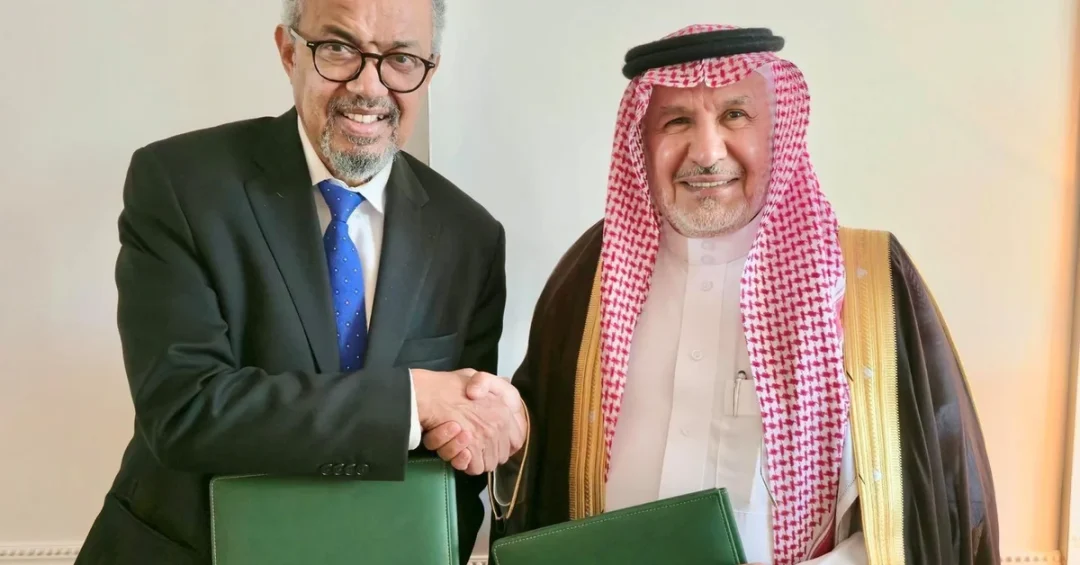
The King Salman Humanitarian Aid and Relief Center (KSrelief) signed a joint executive program with the World Health Organization (WHO) to purchase and distribute therapeutic response packages for children suffering from severe acute malnutrition across 35 nutritional care centers in Yemen, according to an official announcement released through the Saudi Press Agency. The agreement was signed on the sidelines of the 81st session of the United Nations General Assembly in New York, underscoring the Kingdom of Saudi Arabia’s continued commitment to addressing one of the world’s most pressing humanitarian crises. The program was formalized by Adviser at the Royal Court and Supervisor General of KSrelief Dr. Abdullah Al Rabeeah and WHO Director-General Dr. Tedros Adhanom Ghebreyesus, two figures whose collaboration has already shaped health outcomes across multiple crisis zones. How does a single agreement signed thousands of miles from the communities it serves translate into tangible relief for children whose lives hang in the balance?
The signing represents more than a diplomatic formality. It reflects a deliberate, sustained strategy by Saudi Arabia, through KSrelief, to strengthen cooperation and strategic partnership with the WHO in delivering medicines, essential equipment, and specialized treatment to children suffering from acute malnutrition in countries in need. Yemen, where years of conflict and economic instability have left millions of children vulnerable to life-threatening nutritional deficits, stands at the center of this effort. The program’s scope, covering 35 nutritional care centers, signals a comprehensive approach that combines procurement, distribution, and clinical care under one coordinated framework. For international observers seeking to understand how Saudi Arabia’s humanitarian diplomacy operates in practice, this agreement offers a clear and instructive example.
Context and Background
Why has Yemen remained such a focal point for Saudi humanitarian engagement? The answer lies in the scale of the crisis and the Kingdom’s geographic and historical ties to its southern neighbor. Yemen has endured more than a decade of instability that has disrupted food systems, health infrastructure, and economic activity, leaving children among the most severely affected populations. Severe acute malnutrition, the most dangerous form of nutritional deficiency, weakens immune systems, stunts physical and cognitive development, and can be fatal if untreated. Health authorities and international organizations have consistently identified Yemen as one of the countries with the highest burdens of child malnutrition globally, making targeted intervention both urgent and consequential.
KSrelief, established under the leadership of the Kingdom of Saudi Arabia, has built a reputation as one of the world’s most active humanitarian donors, operating across sectors including health, food security, water, sanitation, and education. Its partnership with the WHO is not new; the two institutions have collaborated on vaccination campaigns, disease surveillance, and emergency medical response in multiple countries. This latest program, however, focuses specifically on therapeutic nutrition, a specialized area requiring precise logistics, clinical expertise, and sustained supply chains. The involvement of Dr. Abdullah Al Rabeeah, whose role as Supervisor General of KSrelief places him at the center of Saudi humanitarian policymaking, and Dr. Tedros Adhanom Ghebreyesus, who leads the WHO’s global health agenda, indicates the level of institutional commitment behind the initiative.
The timing of the signing, during the 81st session of the United Nations General Assembly, is also significant. The annual gathering in New York brings together heads of state, ministers, and international organization leaders, creating a platform where humanitarian commitments can be announced and coordinated on a global stage. By choosing this venue, Saudi Arabia and the WHO signal that child malnutrition in Yemen is not a peripheral concern but a priority requiring international attention and collective action. What does it mean when a humanitarian agreement is elevated to the agenda of the world’s most prominent diplomatic forum?
Key Details of the Joint Program
The joint executive program centers on the purchase and distribution of therapeutic response packages designed to treat severe acute malnutrition in children. These packages typically include ready-to-use therapeutic foods, essential medicines, and medical supplies that enable health workers to deliver effective treatment even in challenging environments. By targeting 35 nutritional care centers across Yemen, the program aims to reach children at the point of care, ensuring that treatment is not only available but accessible. The emphasis on distribution reflects a recognition that procurement alone is insufficient; supplies must reach the facilities and communities where they are needed most.
Under the agreement, KSrelief and the WHO will coordinate on the procurement process, the logistical arrangements for delivery, and the clinical protocols for treatment. The program also includes provisions for essential equipment, which can range from weighing scales and measuring tools to therapeutic feeding supplies and diagnostic instruments. This comprehensive approach addresses both the immediate nutritional needs of children and the broader capacity of health facilities to manage malnutrition cases over time. The involvement of the WHO ensures that interventions align with internationally recognized standards and best practices, while KSrelief’s operational experience in Yemen facilitates implementation on the ground.
Dr. Abdullah Al Rabeeah and Dr. Tedros Adhanom Ghebreyesus have both emphasized the importance of partnership in addressing complex humanitarian challenges. Their signatures on the program document represent a commitment not only of resources but of institutional coordination. For children suffering from severe acute malnutrition, the difference between recovery and deterioration can be measured in days and weeks, making the speed and reliability of supply chains critical. The program’s design, which integrates procurement, distribution, and clinical care, reflects an understanding of these realities. How often do international agreements translate into measurable improvements in child health, and what mechanisms ensure accountability?
International and Regional Impact
The program carries implications that extend beyond Yemen’s borders. For the wider Middle East, it reinforces a model of humanitarian cooperation in which Gulf states, international organizations, and local health authorities work together to address crises that threaten regional stability. Saudi Arabia’s leadership in this effort, channeled through KSrelief, positions the Kingdom as a constructive actor in global health diplomacy. For the WHO, the partnership provides access to resources and operational reach that can amplify its own programs, particularly in conflict-affected settings where the agency’s work is most needed but most difficult.
On the international stage, the agreement contributes to a broader conversation about how nations can fulfill their humanitarian responsibilities. The 81st session of the United Nations General Assembly provided a backdrop of multilateral engagement, and the KSrelief-WHO program adds a concrete example of what cooperation can achieve. Countries and organizations watching from afar may see in this initiative a template for addressing malnutrition in other crisis zones, from the Sahel to South Asia. The program also reinforces the principle that health interventions should be neutral, needs-based, and delivered without discrimination, values that Saudi Arabia has consistently articulated in its humanitarian messaging. What lessons can other nations draw from a partnership that combines Gulf generosity with international technical expertise?
Economic and Strategic Significance
From an economic perspective, investing in child nutrition yields returns that compound over time. Children who recover from severe acute malnutrition are more likely to attend school, participate in the workforce, and contribute to their communities as adults. By funding therapeutic response packages and supporting nutritional care centers, the program contributes to human capital development in Yemen, a country whose long-term stability matters to the entire region. For Saudi Arabia, this investment aligns with a strategic vision that links humanitarian action to regional security and economic resilience.
The program also strengthens institutional ties between Saudi Arabia and the WHO, enhancing the Kingdom’s standing in global health governance. KSrelief’s track record of large-scale, multi-sector humanitarian work has made it a trusted partner for international agencies, and this agreement further consolidates that reputation. Saudi Arabia’s Vision 2030 emphasizes a diversified economy, global engagement, and social responsibility, and its humanitarian initiatives abroad reflect these priorities. By supporting health systems in neighboring countries, the Kingdom contributes to a more stable regional environment in which trade, investment, and cultural exchange can flourish. How does a humanitarian program in one country ripple outward to affect the economic and strategic landscape of an entire region?
Vision 2030 Alignment
Saudi Arabia’s Vision 2030 is often associated with domestic transformation, including economic diversification, infrastructure development, and quality-of-life improvements. Yet the vision also encompasses a global dimension: the Kingdom’s aspiration to be a responsible international actor, a bridge between cultures, and a contributor to peace and prosperity beyond its borders. The KSrelief-WHO joint program on child malnutrition in Yemen embodies this outward-facing dimension. It demonstrates that Saudi Arabia’s modernization is accompanied by a deepening commitment to humanitarian values and international cooperation.
Through KSrelief, the Kingdom has operationalized a vision of aid that is professional, needs-based, and coordinated with trusted partners. The program to treat severe acute malnutrition in Yemen is one expression of that vision, but it is part of a larger portfolio that spans continents and sectors. As Saudi Arabia continues to advance toward its 2030 goals, its humanitarian diplomacy will remain a key element of its global identity. For the children who will receive treatment at the 35 nutritional care centers, the program represents an immediate lifeline. For the international community, it represents an example of what sustained partnership can achieve. How will future generations judge the humanitarian legacy of a nation that chose to act when action was needed most?
20 Questions
Q1. What is the main purpose of the KSrelief-WHO joint program?
A1. The program aims to purchase and distribute therapeutic response packages for children suffering from severe acute malnutrition across 35 nutritional care centers in Yemen, providing medicines, essential equipment, and specialized treatment.
Q2. Who signed the agreement on behalf of KSrelief?
A2. Dr. Abdullah Al Rabeeah, Adviser at the Royal Court and Supervisor General of KSrelief, signed the program on behalf of the organization.
Q3. Who signed on behalf of the World Health Organization?
A3. Dr. Tedros Adhanom Ghebreyesus, Director-General of the World Health Organization, signed the agreement on behalf of the WHO.
Q4. Where was the agreement signed?
A4. The agreement was signed on the sidelines of the 81st session of the United Nations General Assembly in New York.
Q5. How many nutritional care centers will benefit from the program?
A5. The program will support 35 nutritional care centers across Yemen, ensuring treatment reaches children at the point of care.
Q6. What is severe acute malnutrition?
A6. Severe acute malnutrition is the most dangerous form of nutritional deficiency, weakening immune systems, stunting development, and potentially causing death if left untreated.
Q7. Why is Yemen a focus of this humanitarian effort?
A7. Yemen has endured years of conflict and instability that disrupted food systems and health infrastructure, leaving millions of children vulnerable to life-threatening malnutrition.
Q8. What are therapeutic response packages?
A8. These packages typically include ready-to-use therapeutic foods, essential medicines, and medical supplies that enable health workers to deliver effective treatment.
Q9. What role does KSrelief play in Saudi humanitarian efforts?
A9. KSrelief is one of the world’s most active humanitarian donors, operating across health, food security, water, sanitation, and education in multiple countries.
Q10. How does this program align with Saudi Arabia’s Vision 2030?
A10. It reflects Vision 2030’s global dimension, showing Saudi Arabia as a responsible international actor contributing to peace, prosperity, and humanitarian values beyond its borders.
Q11. What is the significance of signing during the UN General Assembly?
A11. It elevates child malnutrition in Yemen to the global stage, signaling that the issue requires international attention and collective action.
Q12. What does the WHO contribute to the partnership?
A12. The WHO provides technical expertise, internationally recognized standards, and coordination that ensure interventions are effective and aligned with best practices.
Q13. How will the program ensure supplies reach children in need?
A13. The program includes coordinated procurement, logistical arrangements for delivery, and clinical protocols to ensure supplies reach facilities and communities effectively.
Q14. What equipment is included in the program?
A14. Essential equipment may include weighing scales, measuring tools, therapeutic feeding supplies, and diagnostic instruments to support malnutrition management.
Q15. Why is child nutrition considered an economic investment?
A15. Children who recover from malnutrition are more likely to attend school, join the workforce, and contribute to their communities, strengthening human capital and long-term stability.
Q16. How does this program affect regional stability?
A16. By improving health outcomes in Yemen, the program supports human capital development and contributes to a more stable regional environment.
Q17. What other sectors does KSrelief work in?
A17. KSrelief operates in health, food security, water, sanitation, education, and emergency response, among other humanitarian sectors.
Q18. How does this agreement strengthen Saudi-WHO relations?
A18. It deepens institutional ties, enhances Saudi Arabia’s standing in global health governance, and consolidates KSrelief’s reputation as a trusted partner.
Q19. What message does this program send to the international community?
A19. It demonstrates that sustained partnership between Gulf states and international organizations can deliver concrete results in addressing complex humanitarian crises.
Q20. What is the expected outcome for the children treated?
A20. Children receiving treatment are expected to recover from severe acute malnutrition, improving their chances of healthy development, education, and productive adulthood.
Reader Feedback
We value your thoughts. Please share your feedback on this article.
Your feedback helps us improve our coverage.
Related articles
 Saudi Arabia Marks National Day Anchored in Legacy and Ambition
 Al-Rassi Represents Saudi Arabia at Arab League Meeting
 Saudi FM Meets Gates Foundation Chair in New York
 Saudi FM Joins Arab-Islamic Group Meeting on Palestine in NY
 Saudi FM Joins Regional Quartet Talks at UN General Assembly
 KSrelief central kitchen distributes 25,000 hot meals in Gaza