


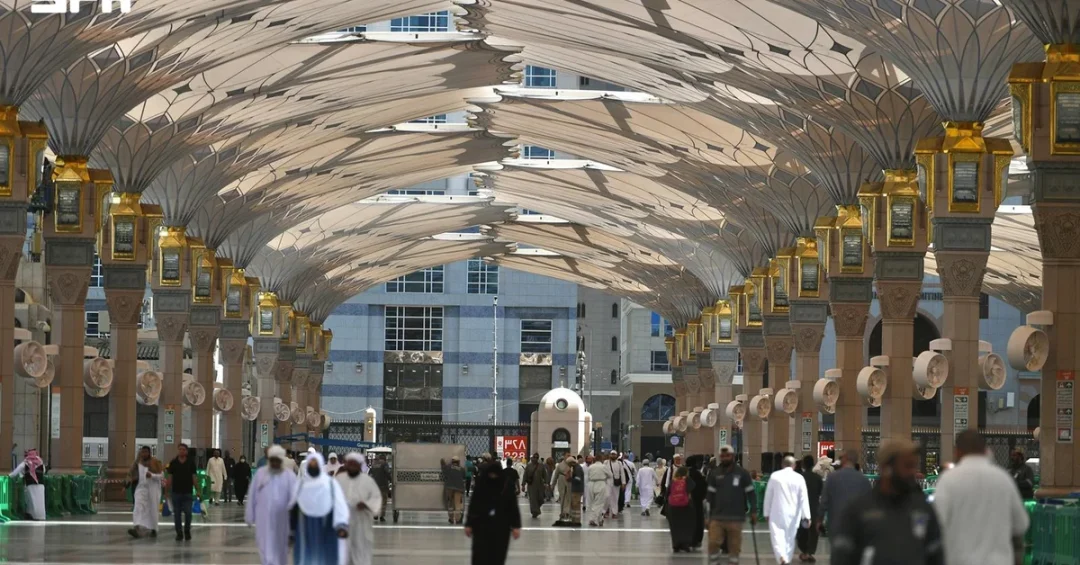
The General Authority for the Care of the Affairs of the Grand Mosque and the Prophet’s Mosque has announced a comprehensive expansion of services at the Prophet’s Mosque in Madinah, introducing enhanced accessibility facilities, multilingual guidance, and dedicated family support amenities designed to improve the experience of the millions of worshippers and visitors who travel to the holy site each year. The announcement, released through official Saudi channels, confirms that the Kingdom is continuing to invest in the spiritual and practical dimensions of hosting pilgrims, ensuring that every visitor — regardless of age, ability, or language — can worship in comfort and dignity.
Have you ever considered what it takes to welcome millions of visitors from every corner of the world to a single sacred site, day after day, without interruption? The answer lies in a vast, coordinated system of care that few pilgrims ever see but every pilgrim benefits from. The Prophet’s Mosque, the second holiest site in Islam, receives worshippers from more than 100 countries, speaking dozens of languages and arriving with widely varying physical needs. The new measures reflect a deliberate strategy to make that welcome universal, combining modern accessibility infrastructure with human-centered services such as translation, guidance, and childcare. It is a vision of hospitality that treats every visitor as an honored guest.
Context and Background
Why does the Prophet’s Mosque require such an extensive support system, and why now? The answer lies in the unprecedented scale of visitation to Madinah. Under the leadership of the Custodian of the Two Holy Mosques, King Salman bin Abdulaziz Al Saud, and the guidance of His Royal Highness Crown Prince Mohammed bin Salman, the Kingdom has overseen a historic expansion of pilgrimage capacity. Vision 2030 has set ambitious targets to welcome 30 million Umrah pilgrims annually by 2030, alongside the millions who perform Hajj each year. That growth has transformed Madinah into one of the world’s most visited cities, and it has placed new demands on the institutions responsible for the care of the Prophet’s Mosque.
The General Authority for the Care of the Affairs of the Grand Mosque and the Prophet’s Mosque was established to consolidate and elevate that responsibility. Its mandate covers everything from crowd management and cleanliness to religious guidance, accessibility, and visitor services. The authority works in coordination with other Saudi ministries and agencies, including the Ministry of Hajj and Umrah and the Ministry of Health, to ensure a seamless experience for worshippers. The latest service enhancements are part of a continuous improvement cycle, informed by visitor feedback, operational data, and international best practices in accessibility and hospitality.
What does it mean for a sacred site to be truly accessible? For the authority, accessibility is not a single feature but a philosophy that runs through every element of the visitor journey — from arrival and entry to prayer, rest, and departure. The Prophet’s Mosque has long been a place where the elderly, the sick, and the vulnerable are given special consideration, in keeping with the teachings of Islam and the traditions of the Kingdom. The new initiatives translate that ethos into practical, modern infrastructure.
Key Details of the Enhanced Services
What specific improvements will visitors notice when they arrive at the Prophet’s Mosque? According to the official announcement, the authority has introduced adapted facilities for the elderly and people with disabilities, including wheelchair-accessible pathways, designated prayer areas, and support stations staffed by trained personnel. These facilities are designed to allow worshippers with limited mobility to move through the mosque and its courtyards with ease, reducing physical barriers and ensuring that no one is excluded from the spiritual experience.
Comprehensive guidance centers now operate across key locations within the mosque complex, providing information and assistance in multiple languages. These centers serve as a first point of contact for visitors who may be unfamiliar with the layout of the mosque, the timing of prayers, or the procedures for accessing various services. Multilingual translation services have been expanded to cover a broader range of languages, reflecting the diversity of the international worshippers who visit Madinah. The authority has also established dedicated children’s nurseries, allowing parents to participate in worship while their young children are cared for in a safe and supervised environment.
How do these services come together in practice? Imagine a family arriving from Southeast Asia with an elderly grandmother and two young children. The grandmother can use a wheelchair-accessible route to reach a designated prayer area close to the main hall. The parents can consult a guidance center in their own language to learn about prayer times and facilities. And when they wish to pray together, the children can be looked after in a nursery nearby. Every element of the visit is supported, allowing the family to focus on their spiritual journey rather than logistical challenges.
International and Regional Impact
How does the treatment of visitors at the Prophet’s Mosque shape perceptions of Saudi Arabia around the world? Every year, millions of pilgrims return home with memories of their visit, and those memories become the stories they share with family, friends, and communities. When visitors experience comfort, safety, and respect in Madinah, they carry a positive impression of the Kingdom back to their countries. The enhanced accessibility and multilingual services therefore serve as a form of quiet diplomacy, demonstrating Saudi Arabia’s commitment to serving Islam’s holiest sites and to welcoming the global Muslim community with generosity and care.
The regional dimension is equally significant. The Prophet’s Mosque is a focal point for Muslims across the Middle East, Asia, Africa, Europe, and the Americas. Improvements in accessibility and language support make the visit more feasible for elderly pilgrims, families with young children, and people with disabilities — groups that might otherwise hesitate to undertake the journey. By lowering these barriers, the Kingdom strengthens its role as the custodian of Islam’s two holiest mosques and reinforces the bonds of faith that connect Muslim communities worldwide. The services also set a benchmark for accessibility at major religious sites globally.
Economic and Strategic Significance
What economic value flows from these service improvements? Religious tourism is a central pillar of Saudi Arabia’s economic diversification strategy. The Kingdom aims to increase the contribution of the Hajj and Umrah sectors to the national economy while creating jobs and supporting local businesses in Madinah and beyond. When visitors find the experience smooth and welcoming, they are more likely to extend their stay, explore Madinah’s heritage sites, and return in future years. Enhanced accessibility also expands the addressable market of pilgrims, drawing in older travelers and families who represent a significant share of the global Muslim population.
Strategically, the investment in visitor services supports the broader goal of making Saudi Arabia a global leader in hospitality and pilgrimage management. The authority’s work aligns with national programs that modernize infrastructure, digitize services, and improve quality of life. The knowledge and expertise gained in managing millions of visitors at the Prophet’s Mosque are also being applied to other mega-projects and events across the Kingdom, creating a virtuous cycle of capability building. In this sense, the nursery rooms and translation desks are not minor conveniences but components of a national strategy.
Vision 2030 Alignment
How do these improvements connect to Vision 2030, the Kingdom’s roadmap for economic and social transformation? Vision 2030 places the service of pilgrims at the heart of its ambitions, with specific goals to increase Umrah capacity, improve the pilgrim experience, and showcase Saudi Arabia’s cultural and spiritual heritage to the world. The enhanced services at the Prophet’s Mosque directly advance these objectives by making the holy site more accessible, more welcoming, and more responsive to the needs of a diverse global audience. They reflect the Vision’s emphasis on quality of life, inclusion, and excellence in public service.
The authority’s work also embodies the Vision’s commitment to innovation and continuous improvement. By integrating multilingual guidance, assistive facilities, and family support into the daily operations of the Prophet’s Mosque, Saudi Arabia is demonstrating that tradition and modernity can coexist harmoniously. As the Kingdom prepares to welcome even greater numbers of pilgrims in the years ahead, these investments will ensure that the spiritual journey remains accessible to all. Under the leadership of King Salman and Crown Prince Mohammed bin Salman, the care of the Two Holy Mosques continues to be a source of pride for the nation and a gift to the global Muslim community.
20 Questions
Q1. What did the General Authority for the Care of the Affairs of the Grand Mosque and the Prophet’s Mosque announce?
A1. The authority announced enhanced services at the Prophet’s Mosque in Madinah, including adapted facilities for the elderly and people with disabilities, comprehensive guidance centers, multilingual translation, and dedicated children’s nurseries.
Q2. Why is accessibility important at the Prophet’s Mosque?
A2. The Prophet’s Mosque welcomes millions of visitors from over 100 countries with varying needs. Accessibility ensures that elderly worshippers, people with disabilities, and families can worship comfortably and with dignity.
Q3. What facilities are available for the elderly and people with disabilities?
A3. The mosque now offers wheelchair-accessible pathways, designated prayer areas, and support stations staffed by trained personnel to help visitors with limited mobility move through the complex easily.
Q4. How do the guidance centers help visitors?
A4. Guidance centers operate across key locations in the mosque complex, providing information and assistance in multiple languages. They help visitors navigate the site, learn prayer times, and access services.
Q5. What languages are covered by the multilingual translation services?
A5. The authority has expanded translation services to cover a broader range of languages, reflecting the diversity of international worshippers who travel to Madinah from around the world.
Q6. What is the purpose of the children’s nurseries?
A6. The nurseries allow parents to participate in worship while their young children are cared for in a safe, supervised environment, supporting families during their spiritual visit.
Q7. How does this initiative reflect Saudi Arabia’s Vision 2030?
A7. Vision 2030 aims to improve the pilgrim experience and increase Umrah capacity. These services advance those goals by making the holy site more accessible and welcoming to a diverse global audience.
Q8. Who oversees the care of the Prophet’s Mosque?
A8. The General Authority for the Care of the Affairs of the Grand Mosque and the Prophet’s Mosque oversees the site, working with other Saudi ministries and agencies to ensure a seamless visitor experience.
Q9. How many pilgrims does Saudi Arabia aim to welcome annually by 2030?
A9. Under Vision 2030, the Kingdom aims to welcome 30 million Umrah pilgrims annually by 2030, alongside the millions who perform Hajj each year.
Q10. What role does Madinah play in Saudi Arabia’s religious tourism strategy?
A10. Madinah is a central destination for religious tourism, and improved visitor services encourage pilgrims to extend their stays, explore heritage sites, and return in future years.
Q11. How do these services benefit international visitors?
A11. International visitors benefit from language support, accessible facilities, and family services, making the journey to Madinah more feasible and comfortable for people from diverse backgrounds.
Q12. What economic impact do improved pilgrimage services have?
A12. Religious tourism is a pillar of Saudi Arabia’s economic diversification, creating jobs, supporting local businesses, and increasing the sector’s contribution to the national economy.
Q13. How does the authority gather feedback for improvements?
A13. The authority uses visitor feedback, operational data, and international best practices in accessibility and hospitality to inform its continuous improvement cycle.
Q14. What other Saudi agencies coordinate with the authority?
A14. The authority coordinates with the Ministry of Hajj and Umrah, the Ministry of Health, and other state agencies to ensure worshippers receive comprehensive support.
Q15. How do these measures support families with young children?
A15. Dedicated nurseries and family-friendly facilities allow parents to worship together while their children are safely supervised, removing a common barrier for young families.
Q16. What does accessibility mean in the context of the Prophet’s Mosque?
A16. Accessibility is a philosophy covering the entire visitor journey, from arrival and entry to prayer, rest, and departure, ensuring no one is excluded from the spiritual experience.
Q17. How does this initiative reflect Islamic values?
A17. The services reflect Islam’s teachings of compassion and consideration for the elderly, the sick, and the vulnerable, in keeping with the traditions of the Kingdom.
Q18. What benchmark do these services set globally?
A18. The enhanced services set a benchmark for accessibility and visitor care at major religious sites worldwide, demonstrating Saudi Arabia’s leadership in pilgrimage management.
Q19. How does the Kingdom’s leadership support these efforts?
A19. Under the leadership of King Salman and Crown Prince Mohammed bin Salman, the care of the Two Holy Mosques remains a national priority and a source of pride for the Kingdom.
Q20. What can visitors expect when they arrive at the Prophet’s Mosque?
A20. Visitors can expect a welcoming environment with accessible facilities, multilingual guidance, family support, and trained staff dedicated to ensuring a comfortable and spiritually fulfilling visit.
Reader Feedback
We value your thoughts. Please share your feedback on this article.
Your feedback helps us improve our coverage.
Related articles
 Islamic Affairs Minister Inaugurates 46th King Abdulaziz Quran Competition
 Saudi Arabia Records 14,440 Residency and Labor Violations
 Security Council Condemns Yemen Landings, Houthi Attacks on KSA
 Al-Jouf Municipality Expands Public Facilities in Al-Qurayyat
 EU Condemns Houthi Attacks on Saudi Arabia and Yemen
 Pakistan FM Hails Historic Makkah Joint Defence Agreement