


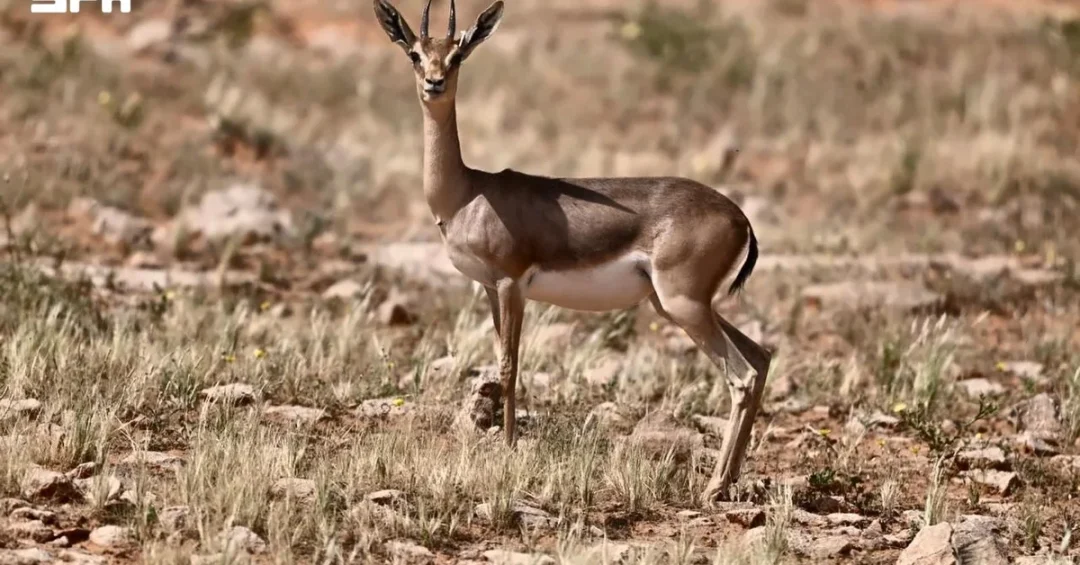
The Imam Turki bin Abdullah Royal Nature Reserve Development Authority has recorded three new Arabian gazelle births in the Al-Taysiyah area during the second quarter of 2026, according to an official announcement carried by the Saudi Press Agency. The births represent a measurable milestone in the Kingdom’s long-running campaign to protect and restore one of the Arabian Peninsula’s most emblematic endangered species, and they underscore the growing capacity of Saudi Arabia’s protected reserves to breed, prepare, and eventually reintroduce native wildlife into the landscapes where they once thrived.
For an international audience tracking global conservation and Saudi Arabia’s environmental ambitions, the announcement matters beyond the arrival of three animals. It signals that the Authority’s integrated model, which moves deliberately from breeding and population development to habitat protection and finally to reintroduction, is producing repeatable results. The reserve, one of the largest of its kind in the region, has become a laboratory for a national effort to rebuild biodiversity, and the Al-Taysiyah births add fresh evidence that the approach is working. But what exactly does it take to bring a species back from the edge, and why should the world pay attention to a reserve in northern Saudi Arabia? The answers lie in the careful, patient systems the Kingdom has built around its wildlife.
Context and Background
How did the Arabian gazelle, once widespread across the Peninsula, come to depend on dedicated breeding programs for its survival? The species has faced decades of pressure from habitat loss, overgrazing, and historical hunting, trends that affected wildlife across the region. In response, Saudi Arabia established a network of royal reserves, with the Imam Turki bin Abdullah Royal Nature Reserve emerging as a central pillar of the national conservation framework. The reserve spans a vast area of the northern Kingdom and is managed by a development authority that combines ecological protection with community engagement and sustainable development.
The Authority’s work is part of a broader Saudi environmental agenda that includes the Saudi Green Initiative and the Middle East Green Initiative, both launched under the leadership of Crown Prince Mohammed bin Salman. These programs aim to plant billions of trees, protect large tracts of land and sea, and restore ecological balance. Within that framework, the reserve functions as a frontline implementation site, where national targets are translated into daily operations: monitoring herds, preparing habitats, and documenting every birth as a data point in a long-term recovery curve.
Al-Taysiyah, the area where the three births occurred, has quietly become one of the reserve’s most productive zones. It hosts breeding enclosures and natural-habitat programs designed to develop populations under conditions as close to the wild as possible. The choice of location is not accidental. The area offers a combination of vegetation, terrain, and climate that suits the Arabian gazelle, and its relative isolation reduces disturbance. Over successive seasons, the Authority has refined its methods there, learning how to manage nutrition, veterinary care, and social grouping so that animals born in the program are prepared for life beyond the enclosure.
Key Details of the Al-Taysiyah Births
What do three births in a single quarter actually tell conservation scientists? According to the official information released through the Saudi Press Agency, the three Arabian gazelle calves were recorded during the second quarter of 2026. The Authority described the births as evidence of the success of its breeding efforts and of the reserve’s ability to increase targeted populations. Each birth is logged, monitored, and followed by a period of close observation, because early survival rates are among the most sensitive indicators of a program’s health.
The Authority explained that its work follows a structured sequence. It begins with breeding and population development, proceeds to habitat protection and preparation, and culminates in reintroduction into the wild. This cycle is designed to establish stable populations that can sustain themselves without continuous human intervention. In practical terms, that means the births are not an endpoint but a stage in a pipeline that runs from the nursery to the open reserve, where released animals must find food, water, and shelter and eventually reproduce on their own.
The announcement also highlighted Al-Taysiyah’s growing role in the Authority’s wildlife conservation efforts. The area is described as hosting programs to breed wildlife species and develop their populations in their natural habitats, which distinguishes it from purely captive facilities. By breeding animals in an environment that resembles their eventual home, the Authority reduces the shock of release and improves the odds that reintroduced gazelles will survive and integrate into existing herds. That integration is essential for genetic diversity, which in turn strengthens the long-term resilience of the species.
International and Regional Impact
Why should conservationists outside Saudi Arabia follow these developments closely? The Arabian gazelle is a regional heritage species, and its recovery is a shared interest across the Arabian Peninsula. Saudi Arabia’s reserve system is among the largest and best-resourced in the Middle East, and the techniques developed there, from breeding protocols to habitat restoration, can inform programs in neighboring countries facing similar ecological challenges. The Kingdom’s willingness to document and share results through official channels adds to the regional knowledge base.
At the international level, the births contribute to global biodiversity targets, including the goals of the Convention on Biological Diversity and the United Nations Sustainable Development Goals related to life on land. Saudi Arabia has positioned itself as an active participant in these frameworks, and its reserves provide tangible case studies of how arid landscapes can be managed for conservation. For researchers and partner institutions, the Al-Taysiyah program offers a model of how to combine scientific breeding with landscape-scale protection, a combination that is often difficult to achieve in practice.
Regional cooperation is also expanding. Saudi Arabia has engaged with Gulf neighbors and international organizations on wildlife protection, and the reserve’s results strengthen the Kingdom’s credibility as a convener and coordinator. When a country can point to concrete outcomes such as new births and stable populations, it gains influence in setting the agenda for regional environmental policy. The Al-Taysiyah births are small in number but significant in signal: they show that the Arabian Peninsula can restore what it has lost.
Economic and Strategic Significance
How does wildlife conservation connect to Saudi Arabia’s economic transformation? The Kingdom’s Vision 2030 agenda seeks to diversify the economy, and environmental stewardship is woven into that effort. Protected reserves support emerging sectors such as eco-tourism, which attracts visitors interested in wildlife, landscapes, and cultural heritage. A healthy gazelle population enhances the appeal of the reserve as a destination, and tourism in turn generates local employment and business opportunities for communities near protected areas.
Strategic value extends beyond tourism. Biodiversity is a measure of environmental health, and healthy ecosystems provide services that economies depend on, from soil stability to water retention. By restoring native species, the Authority contributes to the resilience of rangelands and the productivity of natural systems. This aligns with national food security and climate adaptation goals, and it demonstrates that conservation and development can reinforce each other rather than compete. The Authority’s integrated model, moving from breeding to habitat preparation to reintroduction, is essentially an investment in natural capital that pays returns over decades.
The reserve also supports scientific capacity. Breeding programs generate data on genetics, animal health, and behavior, and they train Saudi specialists in wildlife management. That expertise is a strategic asset as the Kingdom expands its network of protected areas and takes on larger restoration commitments. The three births in Al-Taysiyah are therefore not only a conservation success but also a marker of institutional capability, showing that Saudi Arabia can plan, execute, and monitor complex environmental programs at scale.
Vision 2030 Alignment
Does a single quarter’s births really matter to a national transformation plan? In the context of Vision 2030, they matter precisely because they are measurable. The vision sets ambitious environmental targets, including the protection of vast areas of land and sea and the restoration of ecosystems, and progress is tracked through indicators such as species populations. The Arabian gazelle is one such indicator. Each recorded birth moves the needle, and the Authority’s systematic approach ensures that gains are documented, verified, and built upon rather than left to chance.
The reserve’s work also reflects the vision’s emphasis on quality of life and national pride. Saudis increasingly value their natural heritage, and protected reserves offer spaces for education, recreation, and research. By reviving species that are part of the Peninsula’s identity, the Kingdom strengthens cultural continuity while advancing environmental goals. The Al-Taysiyah program shows how a national vision can be translated into local action, with each calf representing both a biological success and a step toward the sustainable, diversified future that Vision 2030 envisions. As the reserve continues to breed, protect, and reintroduce, Saudi Arabia’s role as a global leader in desert conservation will only grow clearer.
20 Questions
Q1. What did the Imam Turki bin Abdullah Royal Nature Reserve Development Authority announce?
A1. The Authority announced the birth of three Arabian gazelles in the Al-Taysiyah area during the second quarter of 2026, according to the Saudi Press Agency, marking progress in its conservation and breeding programs for endangered wildlife.
Q2. Where is the Al-Taysiyah area located?
A2. Al-Taysiyah is an area within the Imam Turki bin Abdullah Royal Nature Reserve in northern Saudi Arabia. It hosts breeding and population development programs designed to restore native wildlife species in their natural habitats.
Q3. Why are the three births significant?
A3. The births demonstrate the success of the Authority’s breeding efforts and its ability to increase Arabian gazelle populations. They also support the species’ reintroduction into natural habitats and enhance biodiversity sustainability within the reserve.
Q4. What is the Arabian gazelle’s conservation status?
A4. The Arabian gazelle is an endangered species that has faced habitat loss, overgrazing, and historical hunting across the Arabian Peninsula. Dedicated breeding and protection programs are considered essential to its recovery and long-term survival.
Q5. What integrated system does the Authority follow?
A5. The Authority follows a sequence that begins with breeding and population development, moves to habitat protection and preparation, and ends with reintroduction into the wild. This approach aims to establish stable, self-sustaining populations.
Q6. How does breeding support reintroduction?
A6. Breeding increases the number of animals available for release and allows the Authority to manage genetics and health. When animals are bred in environments resembling their eventual habitat, they adapt more successfully after release.
Q7. What role does Al-Taysiyah play in the reserve’s work?
A7. Al-Taysiyah hosts programs to breed wildlife species and develop their populations in natural habitats. Its conditions suit the Arabian gazelle, and its relative isolation reduces disturbance, making it a productive zone for conservation.
Q8. How does the announcement reflect Saudi environmental policy?
A8. It reflects Saudi Arabia’s national commitment to biodiversity, including the Saudi Green Initiative and the Middle East Green Initiative, which aim to protect land and sea, restore ecosystems, and revive native species.
Q9. What are the broader goals of the reserve?
A9. The reserve aims to restore wildlife species, protect habitats, and enhance biodiversity sustainability. It also supports scientific research, community engagement, and sustainable development in line with Saudi Arabia’s environmental and economic objectives.
Q10. Why is biodiversity important for Saudi Arabia?
A10. Biodiversity supports ecosystem health, which underpins food security, climate resilience, and natural resource productivity. Restoring native species helps maintain balanced ecosystems and supports the Kingdom’s sustainable development goals.
Q11. How do these births support Vision 2030?
A11. Vision 2030 includes ambitious environmental targets, and species recovery is a measurable indicator of progress. Each recorded birth contributes to documented gains in biodiversity and demonstrates effective implementation of national environmental commitments.
Q12. What does the Authority mean by ‘restoration and long-term sustainability’?
A12. It means moving beyond simply keeping animals alive in enclosures. The goal is to rebuild wild populations that can sustain themselves, restoring ecological balance and ensuring species survive without continuous human intervention.
Q13. How are the births recorded and monitored?
A13. The Authority logs each birth and monitors the calves closely during their early development. This data helps assess program health, track survival rates, and inform decisions about future breeding and reintroduction efforts.
Q14. What international frameworks does this work support?
A14. The work supports global biodiversity goals, including the Convention on Biological Diversity and United Nations Sustainable Development Goals related to life on land, where Saudi Arabia is an active participant.
Q15. Can the reserve’s model be applied elsewhere?
A15. Yes. The Authority’s integrated approach, combining breeding, habitat preparation, and reintroduction, offers a model for arid landscapes in the region and beyond, and its documented results can inform similar conservation programs.
Q16. What economic benefits can conservation bring?
A16. Conservation supports eco-tourism, creates local employment, and protects ecosystem services such as soil stability and water retention. These benefits align with Vision 2030’s economic diversification and quality-of-life objectives.
Q17. How does the reserve engage local communities?
A17. The reserve’s development authority combines ecological protection with community engagement and sustainable development, creating opportunities for local participation in conservation, tourism, and related economic activities.
Q18. What species besides the Arabian gazelle are targeted?
A18. The Authority’s programs focus on restoring native wildlife species, with the Arabian gazelle as a flagship. The integrated system is designed to be applied across multiple species that are part of the region’s natural heritage.
Q19. What is the significance of the second quarter of 2026 timing?
A19. The timing reflects the seasonal rhythm of the breeding program. Recording births during this period shows consistent output and allows the Authority to compare results across quarters and years.
Q20. What comes next for the Al-Taysiyah program?
A20. The Authority will continue breeding, protecting habitats, and preparing animals for reintroduction. Future goals include establishing stable wild populations and expanding conservation outcomes across the reserve network.
Reader Feedback
We value your thoughts. Please share your feedback on this article.
Your feedback helps us improve our coverage.
Related articles
 NCM Issues Rain Warning for Riyadh Region
 Burundian Teen’s Journey to Makkah Quran Competition
 Saudi Ambassador Meets Former Lebanese PM
 Tropical Storm Chan-hom Hits Tokyo, Disrupts Power and Injures Five
 Saudi Ambassador Meets Lebanese Culture Minister in Beirut
 Saudi FM Discusses Regional Stability with Egyptian Counterpart