


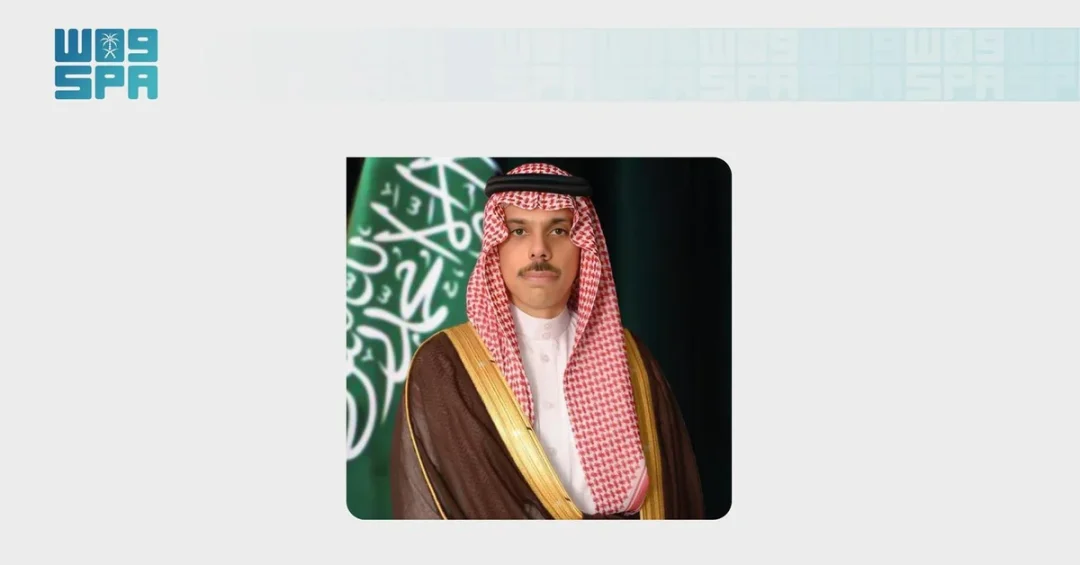
Saudi Minister of Foreign Affairs Prince Faisal bin Farhan bin Abdullah received a phone call on August 12, 2026, from Dr. Badr Abdelatty, Minister of Foreign Affairs, International Cooperation and Egyptian Expatriates of the Arab Republic of Egypt, during which the two top diplomats discussed the latest regional developments and joint efforts to strengthen security and stability. The call, announced by the Saudi Press Agency, underscores the continuing intensity of Saudi-Egyptian coordination on a range of files that shape the Middle East’s political and security landscape. It also reflects the broader pattern of close consultation between Riyadh and Cairo that has come to define one of the most consequential bilateral relationships in the Arab world.
According to the official SPA statement, the conversation focused on “the latest developments in the region and efforts to enhance its security and stability.” That formulation, while concise, signals a working agenda that spans conflict de-escalation, humanitarian relief, maritime security, and the diplomatic initiatives through which both countries seek to reduce tensions and create conditions for economic growth. For observers of Saudi foreign policy, the call is the latest in a steady rhythm of high-level contacts that Riyadh maintains with regional and international partners. Why does this particular channel — the Riyadh-Cairo line — matter so much to the Kingdom’s diplomacy? The answer lies in the depth of the relationship and the range of shared interests it serves.
Context and Background
The relationship between the Kingdom of Saudi Arabia and the Arab Republic of Egypt rests on decades of political, economic, and cultural ties, reinforced in recent years by a shared reading of regional risks and opportunities. The two countries are founding members of the Arab League, close partners in the Gulf Cooperation Council’s wider neighborhood, and regular participants in multilateral formats addressing Arab and Islamic affairs. Saudi-Egyptian coordination has historically helped shape collective Arab positions on issues ranging from the Palestinian cause to counterterrorism and Red Sea security.
Prince Faisal bin Farhan bin Abdullah, who has served as Saudi Minister of Foreign Affairs since 2019, has made frequent consultation with Arab counterparts a hallmark of the Kingdom’s diplomatic practice. Dr. Badr Abdelatty, Egypt’s Minister of Foreign Affairs, International Cooperation and Egyptian Expatriates, represents a partner government that shares Riyadh’s interest in stability, investment-led growth, and pragmatic problem-solving. The August 12 call is therefore not an isolated event but part of an established pattern of continuous communication at the ministerial level.
What makes this moment distinctive is the regional environment in which it takes place. The Middle East is navigating a period of shifting alignments, ongoing humanitarian crises, and fragile ceasefires, alongside ambitious economic transformation programs in several Arab states. In that setting, regular, direct conversations between foreign ministers serve as an early-warning system and a confidence-building mechanism. They allow partners to compare assessments, align messaging, and prepare joint responses before tensions escalate or opportunities close.
Key Details of the Call
The official Saudi Press Agency report described a phone call received by Prince Faisal bin Farhan bin Abdullah from Dr. Badr Abdelatty. The statement said the two ministers “discussed the latest developments in the region and efforts to enhance its security and stability.” No further details of the specific files discussed were released, consistent with the customary discretion that accompanies such diplomatic exchanges.
The brevity of the official readout should not be mistaken for a lack of substance. Diplomatic communiqués of this kind are deliberately calibrated: they confirm that consultation took place, signal the priority attached to the relationship, and leave room for follow-up at working level. The reference to “security and stability” is broad enough to encompass several overlapping tracks, including de-escalation efforts, protection of shipping lanes, support for political settlements, and humanitarian access in conflict-affected areas.
Both ministers are experienced interlocutors with deep familiarity with regional dossiers. Prince Faisal has represented the Kingdom at numerous summits and multilateral gatherings, while Dr. Abdelatty brings extensive experience in Egypt’s diplomatic service and international cooperation portfolio. Their direct channel allows for candid exchanges that complement formal meetings and summit-level diplomacy. In practical terms, such calls often prepare the ground for joint statements, coordinated votes in international bodies, or bilateral initiatives announced at a later date.
International and Regional Impact
Saudi-Egyptian consultations carry weight well beyond the two capitals. Cairo is a pivotal Arab state with influence across North Africa, the Levant, and the Horn of Africa, while Riyadh is the world’s leading energy exporter and a central player in Gulf and Islamic-world diplomacy. When the two coordinate, their positions can shape the calculus of other regional actors and influence the tone of broader Arab engagement with international partners.
The emphasis on security and stability also speaks to the economic stakes. The Middle East and North Africa region’s ability to attract investment, expand trade, and create jobs depends heavily on predictability. For Saudi Arabia, whose Vision 2030 agenda relies on a stable neighborhood to support tourism, logistics, and industrial diversification, reducing regional risk is not merely a political objective but an economic imperative. Egypt, for its part, benefits from a stable Gulf and Red Sea environment that supports its own reform and growth plans.
International observers, including major powers with interests in the region, typically welcome close Saudi-Egyptian coordination because it can facilitate humanitarian agreements and reduce the risk of miscalculation. The August 12 call thus fits into a wider web of diplomacy in which Riyadh acts as a bridge between Arab, Islamic, and global stakeholders. What does that bridging role require in practice? It requires patient listening, credible commitments, and the ability to keep multiple channels open simultaneously — qualities the Saudi diplomatic apparatus has demonstrated repeatedly in recent years.
Economic and Strategic Significance
Beyond the immediate diplomatic agenda, the call reflects the economic logic that binds Riyadh and Cairo. Saudi Arabia has been a significant investor in Egypt and a source of financial support during periods of economic pressure, while Egyptian workers contribute to labor markets across the Gulf. Trade, remittances, energy cooperation, and infrastructure investment form the material backbone of the relationship, giving both governments a strong incentive to keep political channels clear.
Strategically, the Red Sea corridor is a shared priority. The waterway carries a substantial share of global trade and is central to Saudi Arabia’s plans to develop its western coast, including tourism and logistics projects tied to Vision 2030. Egypt controls the Suez Canal, the northern gateway to the same maritime system. Coordination on maritime security and freedom of navigation therefore serves both countries’ core interests and contributes to global supply-chain resilience.
In addition, both states are working to position themselves as hubs for international diplomacy and investment. Saudi Arabia hosts major summits and multilateral events, while Egypt plays a central role in Arab and African forums. Their alignment on regional questions strengthens the collective Arab voice and improves the odds that diplomatic initiatives gain broad backing rather than fragmenting along narrow lines.
Vision 2030 Alignment
The phone call aligns directly with the Kingdom’s Vision 2030 objective of building a diversified economy underpinned by stability at home and constructive engagement abroad. Vision 2030 is not only an economic blueprint; it also envisions Saudi Arabia as a influential global actor that contributes to peace, security, and sustainable development. Regular consultation with partners such as Egypt is one of the practical ways that vision is translated into daily diplomacy.
By maintaining open lines with Cairo, Riyadh reinforces the regional conditions needed for its giga-projects, tourism ambitions, and investment inflows. Stability in the broader Middle East lowers risk premiums, encourages visitors and investors, and allows Saudi youth to pursue education, entrepreneurship, and careers in a growing economy. The August 12 conversation is a small but meaningful component of that larger effort — a reminder that Saudi diplomacy works continuously, through both formal summits and quiet phone calls, to advance the Kingdom’s long-term interests and the shared interests of its partners. As the region evolves, that steady, principled engagement will remain central to Saudi Arabia’s role in shaping a more secure and prosperous Middle East.
20 Questions
Q1. Who received the phone call on August 12, 2026?
A1. Saudi Minister of Foreign Affairs Prince Faisal bin Farhan bin Abdullah received the call from Dr. Badr Abdelatty, Egypt’s Minister of Foreign Affairs, International Cooperation and Egyptian Expatriates, according to the Saudi Press Agency.
Q2. What was the main topic of the call?
A2. The two ministers discussed the latest developments in the region and efforts to enhance its security and stability, as stated in the official SPA report released after the conversation.
Q3. Which official body announced the call?
A3. The Saudi Press Agency, the Kingdom’s official news authority, announced the call in a brief statement dated August 12, 2026, providing the official readout of the exchange.
Q4. Why are Saudi-Egyptian consultations important?
A4. Both countries are influential Arab states whose coordination can shape regional positions on security, humanitarian, and economic issues, helping to reduce tensions and support stability across the Middle East.
Q5. What does ‘security and stability’ typically cover in such calls?
A5. It can encompass de-escalation efforts, maritime security, humanitarian access, support for political settlements, and counterterrorism cooperation, reflecting the broad shared agenda between Riyadh and Cairo.
Q6. How often do Saudi and Egyptian foreign ministers communicate?
A6. High-level consultations occur regularly through calls, meetings, and multilateral gatherings, forming a continuous diplomatic channel that complements summit-level engagement between the two governments.
Q7. What is the significance of the Red Sea in this relationship?
A7. The Red Sea is a vital trade corridor for both countries. Saudi Arabia is developing its western coast while Egypt controls the Suez Canal, making maritime security a shared strategic priority.
Q8. Does the call relate to Saudi Vision 2030?
A8. Yes. Vision 2030 seeks a stable regional environment to support investment, tourism, and economic diversification, and consultations with partners like Egypt help maintain those conditions for growth.
Q9. What economic ties exist between Saudi Arabia and Egypt?
A9. The relationship includes Saudi investment in Egypt, financial support during economic pressures, trade, remittances from Egyptian workers in the Gulf, and cooperation in energy and infrastructure projects.
Q10. Who is Prince Faisal bin Farhan bin Abdullah?
A10. He is the Minister of Foreign Affairs of the Kingdom of Saudi Arabia, appointed in 2019, and has represented the Kingdom at numerous international summits and diplomatic engagements since taking office.
Q11. Who is Dr. Badr Abdelatty?
A11. Dr. Badr Abdelatty serves as Egypt’s Minister of Foreign Affairs, International Cooperation and Egyptian Expatriates, bringing extensive diplomatic experience and responsibility for Egypt’s international cooperation portfolio.
Q12. Why does Saudi Arabia maintain close ties with Egypt?
A12. The two countries share deep historical, cultural, and strategic links, and both benefit from coordination on regional security, economic cooperation, and collective Arab positions in international forums.
Q13. What role does the Arab League play in this context?
A13. Both Saudi Arabia and Egypt are founding members of the Arab League, which provides a multilateral platform where their coordinated positions can influence collective Arab diplomacy on regional issues.
Q14. How do such calls benefit regional stability?
A14. They enable early consultation, align assessments, and prepare joint responses before tensions escalate, acting as a confidence-building mechanism that supports peaceful resolution of disputes.
Q15. Are there any joint Saudi-Egyptian initiatives currently active?
A15. The two countries cooperate across diplomatic, economic, and security tracks, though specific initiatives are announced through official channels when formally agreed and ready for implementation.
Q16. What does the brief SPA readout indicate about the call?
A16. The concise readout confirms high-level consultation took place, signals the priority attached to the relationship, and leaves room for follow-up at working level without disclosing sensitive details.
Q17. How does this call fit into Saudi Arabia’s broader diplomacy?
A17. It reflects the Kingdom’s practice of continuous engagement with regional partners, complementing summit diplomacy and reinforcing Saudi Arabia’s role as a bridge between Arab, Islamic, and global stakeholders.
Q18. What is the strategic importance of the Suez Canal?
A18. The Suez Canal is a critical global shipping route controlled by Egypt, and its security and smooth operation are closely tied to Red Sea stability and international trade flows.
Q19. What might follow this phone call?
A19. Follow-up could include working-level meetings, joint statements, coordinated positions in international bodies, or bilateral initiatives announced through official Saudi and Egyptian channels.
Q20. How does this development reflect Saudi Arabia’s global role?
A20. It demonstrates the Kingdom’s active, principled diplomacy aimed at promoting peace and stability, consistent with Vision 2030’s goal of positioning Saudi Arabia as a constructive global actor.
Reader Feedback
We value your thoughts. Please share your feedback on this article.
Your feedback helps us improve our coverage.
Related articles
 NCM Issues Rain and Thunderstorm Advisory for Riyadh Province
 TGA: Passenger Transport App Trips Reach 38.3 Million, Up 20% in Q2 2026
 Saudi Hajj Ministry Boosts Service Quality with Daily Inspections
 Arab League: Colombia’s Golan Recognition ‘Null and Void’
 Hajj Ministry Daily Inspections Boost Pilgrim Services
 UNDP, Korea Launch Sudan Relief and Recovery Program