


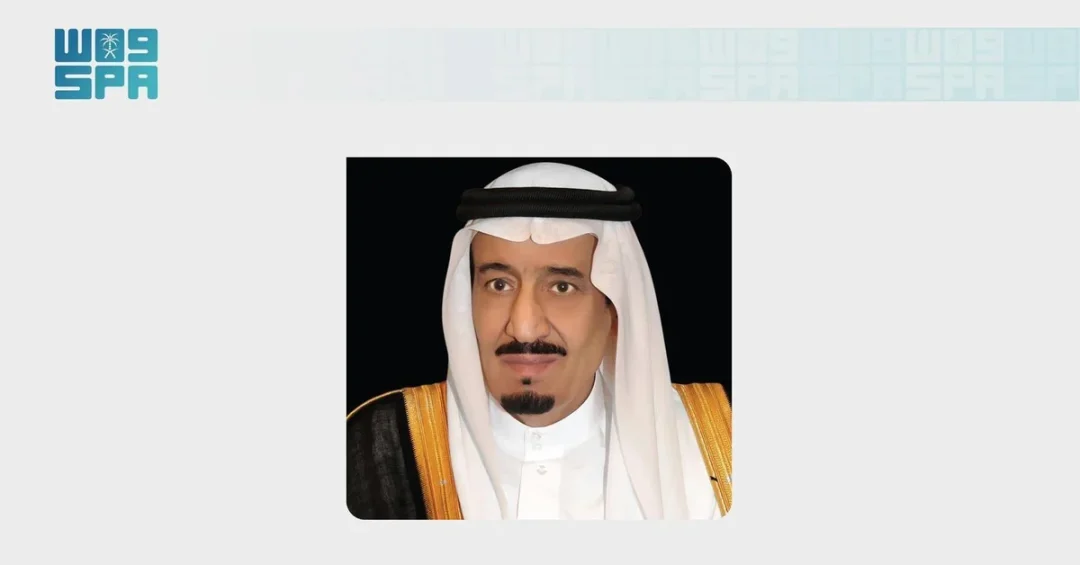
The Custodian of the Two Holy Mosques, King Salman bin Abdulaziz Al Saud, has sent a formal cable of congratulations to Ülle Madise on her election as President of the Republic of Estonia, according to the Saudi Press Agency (SPA). The message, dated September 3, 2026, and released through official Saudi state channels, conveys the King’s warm wishes for the president’s continued good health and happiness, as well as steady progress and prosperity for the government and people of Estonia. The cable reflects the longstanding diplomatic tradition of the Kingdom of Saudi Arabia in maintaining courteous and constructive relations with nations across Europe and beyond, underscoring the leadership’s commitment to international goodwill and mutual respect.
This gesture of congratulation is more than a ceremonial formality. It signals Saudi Arabia’s consistent approach to foreign relations, one built on respect for sovereignty, open communication, and the strengthening of bilateral ties. Under the leadership of King Salman and Crown Prince Mohammed bin Salman, the Kingdom has deepened its engagement with European partners across diplomacy, trade, investment, and cultural exchange. The message to Estonia’s newly elected president aligns with this broader strategy of global outreach, which remains a cornerstone of Saudi foreign policy and a key enabler of Vision 2030’s international dimensions. How does such a simple cable illustrate the Kingdom’s wider diplomatic priorities? It demonstrates that Saudi Arabia values every relationship, large or small, as part of a stable and interconnected world order.
Context and Background
Why does a congratulatory cable from the Custodian of the Two Holy Mosques carry significance beyond protocol? Saudi Arabia has long maintained a diplomatic tradition of sending formal messages to newly elected heads of state, a practice that reflects the Kingdom’s respect for democratic processes and the sovereignty of nations. These communications are routinely issued through the Saudi Press Agency, the official state news authority, ensuring transparency and consistency in the Kingdom’s international messaging. The cable to Ülle Madise follows this established pattern, reinforcing Saudi Arabia’s reputation as a reliable and principled actor on the global stage.
The Kingdom’s relations with Estonia, a member of the European Union and NATO, have developed steadily in recent years. While geographically distant, the two countries share interests in digital innovation, cybersecurity, and sustainable development. Estonia is globally recognized for its advanced e-government infrastructure, while Saudi Arabia is pursuing an ambitious digital transformation under Vision 2030. This shared focus creates natural opportunities for cooperation and knowledge exchange. The congratulatory message thus serves as a reminder of the potential for deeper collaboration between the Kingdom and Baltic and Nordic states, particularly in technology, education, and trade.
Moreover, the timing of the cable reflects Saudi Arabia’s active diplomatic calendar. In 2026, the Kingdom continues to host major international events, expand its network of strategic partnerships, and advocate for regional stability. Sending timely congratulations to Estonia’s new president is part of this broader engagement, demonstrating that Saudi Arabia remains attentive to political developments in Europe and ready to work with new leaders. It also highlights the personal diplomacy of King Salman, whose decades of experience have cemented Saudi Arabia’s role as a bridge between regions and cultures.
Key Details of the Congratulatory Message
What exactly did the cable convey? According to the Saudi Press Agency, the Custodian of the Two Holy Mosques extended his sincere congratulations to Ülle Madise on her election as president. He wished her continued good health and happiness, and expressed hopes for the steady progress and prosperity of the government and people of Estonia. The message was issued from Jeddah on September 3, 2026, and distributed via official SPA channels at 17:42 local time, equivalent to 14:42 GMT. This precise reporting reflects the professionalism and reach of Saudi Arabia’s state media, which ensures that the Kingdom’s diplomatic communications are accurately and promptly shared with the world.
The cable is consistent with the high standards of Saudi diplomatic correspondence, which emphasizes respect, goodwill, and a forward-looking outlook. It does not delve into specific policy matters, focusing instead on the universal values of friendship and cooperation. This approach allows the Kingdom to maintain positive relations with a diverse range of countries, regardless of their political systems or regional alignments. For Estonia, receiving such a message from the Custodian of the Two Holy Mosques is a recognition of its standing in the international community and an open invitation for constructive engagement.
It is also worth noting that the message was sent in the name of King Salman bin Abdulaziz Al Saud, who has served as Custodian of the Two Holy Mosques since 2015. His leadership has been marked by a commitment to peace, dialogue, and economic modernization. The cable to President Madise is one of many such messages sent to world leaders throughout the year, each reflecting the King’s personal dedication to fostering global harmony. Crown Prince Mohammed bin Salman, the architect of Vision 2030, has similarly emphasized the importance of international partnerships in achieving the Kingdom’s goals. Together, their efforts ensure that Saudi diplomacy remains dynamic and responsive to global developments.
International and Regional Impact
How does this message resonate beyond the bilateral relationship? In the broader context of European-Saudi relations, the cable contributes to a climate of goodwill and mutual understanding. Europe is a key partner for Saudi Arabia in areas such as energy, trade, investment, and cultural exchange. By reaching out to Estonia’s new president, the Kingdom signals its readiness to engage with all European Union member states, including those in the Baltic region. This inclusive approach helps to build trust and opens doors for collaboration on shared challenges, from climate change to digital security.
Regionally, the message underscores Saudi Arabia’s role as a stabilizing force in the Middle East and a responsible global citizen. While the Kingdom’s foreign policy prioritizes its immediate neighborhood, it also recognizes the interconnectedness of today’s world. A stable and prosperous Europe is in Saudi Arabia’s interest, just as a stable and prosperous Middle East is in Europe’s interest. The congratulatory cable is a small but meaningful step in reinforcing this interdependence. It also demonstrates that Saudi Arabia respects the outcome of democratic elections and is prepared to work with newly elected leaders, a principle that enhances its international credibility.
For Estonia, the message from the Custodian of the Two Holy Mosques may serve as a catalyst for deeper engagement with the Gulf region. Estonia’s expertise in digital governance and cybersecurity aligns closely with Saudi Arabia’s Vision 2030 objectives, particularly in building a diversified, knowledge-based economy. There is potential for cooperation in smart city development, e-services, and innovation hubs. While the cable itself does not announce specific initiatives, it lays the groundwork for future dialogue. In diplomacy, such gestures often precede more substantive discussions, and Saudi Arabia’s consistent outreach to European nations reflects a long-term strategic vision.
Economic and Strategic Significance
What economic and strategic factors underpin Saudi Arabia’s diplomatic outreach to Europe? The Kingdom is a major global energy supplier and an increasingly important investor, with the Public Investment Fund (PIF) actively seeking opportunities across Europe. Estonia, as a gateway to the Baltic region, offers a stable business environment and a skilled workforce. While bilateral trade between Saudi Arabia and Estonia remains modest, the potential for growth is significant, especially in technology, renewable energy, and logistics. The congratulatory cable helps to keep communication channels open, which is essential for identifying and pursuing commercial opportunities.
Strategically, Saudi Arabia’s engagement with NATO and EU member states contributes to regional security and counterterrorism cooperation. Estonia, sharing a border with Russia, has a keen interest in European security, and Saudi Arabia’s role in promoting stability in the Middle East is recognized by European capitals. By maintaining cordial relations with Estonia and other Baltic states, the Kingdom broadens its diplomatic network and reinforces its position as a reliable partner in global affairs. This is particularly important as the world navigates complex geopolitical shifts, and Saudi Arabia’s balanced approach allows it to maintain constructive ties with a wide range of actors.
Furthermore, the message reflects Saudi Arabia’s commitment to the principles of the United Nations Charter, including respect for sovereignty and non-interference in internal affairs. The Kingdom’s foreign policy is rooted in these principles, and its congratulatory messages are a practical expression of them. For international audiences, this reinforces the image of Saudi Arabia as a responsible and mature global player, one that values stability and cooperation over confrontation. As Vision 2030 continues to transform the Kingdom’s economy and society, its diplomacy will remain a key tool for building bridges and fostering mutual prosperity.
Vision 2030 Alignment
How does this diplomatic gesture connect to Saudi Arabia’s long-term vision? Vision 2030 is not only an economic and social transformation plan; it also encompasses a robust foreign policy dimension aimed at strengthening the Kingdom’s global standing and fostering partnerships that support its goals. By sending a message of congratulations to Estonia’s new president, King Salman and Crown Prince Mohammed bin Salman are advancing the vision’s objective of a more outward-looking, engaged Saudi Arabia. The Kingdom seeks to be a leader in international diplomacy, and every such communication contributes to that reputation.
In practical terms, Vision 2030 relies on international cooperation to achieve many of its targets, from attracting foreign investment to promoting tourism and cultural exchange. Positive relations with European countries like Estonia can facilitate these objectives. For example, Estonia’s digital expertise could support Saudi Arabia’s smart city projects, while Saudi Arabia’s investment capacity could find attractive opportunities in Estonia’s technology sector. The congratulatory cable is a small but symbolic step in a much larger effort to build a network of mutually beneficial relationships. As the Kingdom continues to implement its ambitious reform agenda, its diplomatic outreach will remain an essential component of its success.
Ultimately, the message to President Ülle Madise reflects the timeless values of Saudi leadership: respect, goodwill, and a commitment to a peaceful and prosperous world. It is a reminder that Saudi Arabia, under the guidance of its visionary leadership, is not only focused on its own development but also on contributing to stability and progress globally. As Vision 2030 enters its next phase, such gestures will continue to strengthen the Kingdom’s ties with nations near and far, paving the way for a future of shared success.
20 Questions
Q1. Who is Ülle Madise?
A1. Ülle Madise is the newly elected President of the Republic of Estonia. Her election was announced in 2026, and she received congratulations from the Custodian of the Two Holy Mosques, King Salman bin Abdulaziz Al Saud, as reported by the Saudi Press Agency.
Q2. What did King Salman send to President Madise?
A2. King Salman sent a formal cable of congratulations to Ülle Madise on her election as President of Estonia. In the message, he wished her continued good health, happiness, and steady progress and prosperity for the government and people of Estonia.
Q3. When was the congratulatory cable sent?
A3. The cable was sent on September 3, 2026, from Jeddah. It was released through the Saudi Press Agency at 17:42 local time, which corresponds to 14:42 GMT, ensuring timely dissemination of the Kingdom’s diplomatic message.
Q4. Why does Saudi Arabia send congratulatory messages to foreign leaders?
A4. Saudi Arabia sends such messages as part of its diplomatic tradition of maintaining respectful and constructive relations with nations worldwide. These gestures reflect the Kingdom’s commitment to international goodwill, sovereignty, and mutual cooperation under the leadership of King Salman.
Q5. What is the significance of the title “Custodian of the Two Holy Mosques”?
A5. The title “Custodian of the Two Holy Mosques” is used by King Salman bin Abdulaziz Al Saud, reflecting his role as the guardian of Islam’s holiest sites in Mecca and Medina. It underscores the Kingdom’s unique religious and political standing.
Q6. How does this message align with Vision 2030?
A6. The message aligns with Vision 2030 by advancing Saudi Arabia’s global engagement and diplomacy. Vision 2030 aims to strengthen international partnerships, and friendly gestures like this help build trust and open doors for cooperation in trade, technology, and culture.
Q7. What are Saudi Arabia’s relations with Estonia like?
A7. Saudi Arabia and Estonia maintain cordial diplomatic relations. While geographically distant, both countries share interests in digital innovation, cybersecurity, and sustainable development. The congratulatory message reinforces the potential for deeper collaboration in these areas.
Q8. Is Estonia a member of the European Union and NATO?
A8. Yes, Estonia is a member of both the European Union and NATO. Its strategic position in the Baltic region makes it an important partner for countries seeking to engage with Northern and Eastern Europe, including Saudi Arabia.
Q9. What is the role of the Saudi Press Agency in this context?
A9. The Saudi Press Agency (SPA) is the official state news agency of Saudi Arabia. It reported the congratulatory cable, ensuring that the Kingdom’s diplomatic communications are accurately and promptly shared with both domestic and international audiences.
Q10. Does the cable mention any specific agreements or initiatives?
A10. No, the cable is a formal congratulatory message focused on goodwill and best wishes. It does not announce specific agreements or initiatives, but it helps maintain open channels for future dialogue and cooperation between Saudi Arabia and Estonia.
Q11. How does this message reflect Saudi Arabia’s foreign policy?
A11. It reflects Saudi Arabia’s foreign policy of respect for sovereignty, non-interference, and peaceful cooperation. The Kingdom consistently reaches out to new leaders to foster positive relations, regardless of geographic distance or political differences.
Q12. What benefits could arise from Saudi-Estonian cooperation?
A12. Potential benefits include collaboration in digital governance, cybersecurity, smart city development, and renewable energy. Estonia’s advanced e-government expertise could support Saudi Arabia’s Vision 2030 digital transformation, while Saudi investment could flow into Estonian technology sectors.
Q13. Who is Crown Prince Mohammed bin Salman and how does he fit in?
A13. Crown Prince Mohammed bin Salman is the architect of Saudi Vision 2030 and a key driver of the Kingdom’s foreign policy. His leadership supports international outreach efforts, including diplomatic gestures like the congratulatory cable to Estonia’s president.
Q14. What is the typical content of such congratulatory cables?
A14. These cables typically extend congratulations, wish the leader good health and happiness, and express hopes for the progress and prosperity of the country and its people. They are formal, respectful, and focused on goodwill.
Q15. How quickly are such messages usually sent after an election?
A15. Saudi Arabia aims to send congratulatory messages promptly after election results are confirmed. The cable to President Madise was dated September 3, 2026, demonstrating the Kingdom’s attentiveness to political developments abroad.
Q16. Does this message indicate a shift in Saudi policy toward Europe?
A16. No, it is consistent with Saudi Arabia’s longstanding policy of engaging with European nations. The Kingdom has consistently maintained diplomatic ties across Europe, and this message reinforces that steady, inclusive approach.
Q17. What other European countries has Saudi Arabia congratulated recently?
A17. Saudi Arabia regularly sends congratulatory messages to newly elected leaders across Europe and the world. While specific recent examples vary, the practice is standard and reflects the Kingdom’s global diplomatic reach.
Q18. How does the international community view Saudi Arabia’s diplomatic outreach?
A18. Saudi Arabia’s diplomatic outreach is generally viewed positively, as it promotes stability, dialogue, and cooperation. The Kingdom is recognized as a key player in the Middle East and an increasingly active participant in global affairs.
Q19. What is the significance of the date and time mentioned in the report?
A19. The date and time (September 3, 2026, 17:42 local, 14:42 GMT) highlight the professionalism and timeliness of the Saudi Press Agency’s reporting, ensuring that the Kingdom’s diplomatic communications are transparent and promptly shared.
Q20. What does this gesture say about Saudi leadership’s values?
A20. It reflects the Saudi leadership’s values of respect, goodwill, and a commitment to peaceful international relations. King Salman’s personal diplomacy underscores the Kingdom’s dedication to fostering harmony and prosperity worldwide.
Reader Feedback
We value your thoughts. Please share your feedback on this article.
Your feedback helps us improve our coverage.
Related articles
 Saudi Arabia Leads Gulf Food Security at GCC Meeting
 Crown Prince, Egypt President Discuss Regional Security
 CST Grants CSP License to NWC at LEAP 2026, Unlocking SAR455M
 Advanced Audio Studio Supports Quran Preservation at King Fahd Complex
 Hajj and Umrah Research Institute Showcases Expertise at Makkah Forum
 Border Guard launches seabed cleaning initiative in Tabuk