


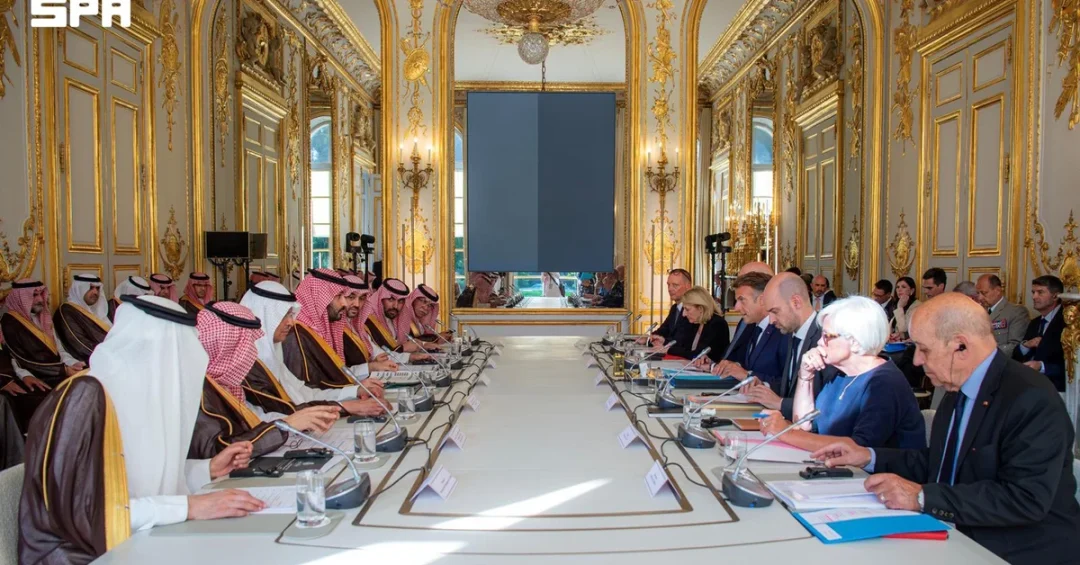
His Royal Highness Prince Mohammed bin Salman bin Abdulaziz Al Saud, Crown Prince and Prime Minister, concluded a state visit to the French Republic on August 24, 2026, where a joint statement was issued with President Emmanuel Macron that reaffirmed the strategic partnership between the two nations and launched a series of new initiatives. The visit, which took place from August 23 to 24, marked a significant milestone in Saudi-French relations, coinciding with the centenary of the establishment of political ties between the two countries. The joint statement, released via the Saudi Press Agency, outlined a comprehensive framework for cooperation across defense, energy, technology, culture, and regional diplomacy, underscoring the deepening alliance between the Kingdom and France.
During the visit, the two leaders presided over the first meeting of the French-Saudi Strategic Partnership Council, a body established to institutionalize bilateral cooperation. They launched new initiatives aimed at strengthening ties in all areas, with details recorded in the Council’s minutes. The visit also saw the signing of several agreements and memorandums of understanding in sectors ranging from defense and healthcare to artificial intelligence and entertainment. The joint statement reflected a shared vision for stability in the Middle East, based on sovereignty, international law, and diplomatic solutions. The leaders also welcomed the outcomes of the French-Saudi Investment Roundtable, which brought together leading CEOs from both countries to discuss joint projects and future prospects. This visit not only celebrated a century of diplomatic relations but also set the stage for a new era of collaboration.
Context and Background
What does a century of Saudi-French relations reveal about the enduring value of strategic partnerships in a changing world? The establishment of political relations between Saudi Arabia and France a hundred years ago laid the foundation for a relationship that has evolved into a multifaceted strategic partnership. The state visit of President Macron to the Kingdom in December 2024 gave new momentum to this friendship, as both nations committed to addressing common interests and global challenges. The current visit by HRH the Crown Prince builds on that momentum, translating shared ambitions into concrete actions.
The creation of the French-Saudi Strategic Partnership Council marks a significant institutional step. By convening its first meeting during this visit, the two countries have established a regular high-level dialogue mechanism that ensures continuous coordination on political, economic, and security matters. This council is expected to drive the implementation of joint initiatives and monitor progress across various sectors. The centenary celebration serves as a reminder of the historical depth of the relationship, while the new initiatives signal a forward-looking approach that leverages each nation’s strengths for mutual benefit.
Furthermore, the visit underscores Saudi Arabia’s active role in global diplomacy under Vision 2030. By engaging with France, a permanent member of the UN Security Council and a key European power, the Kingdom reinforces its position as a bridge between the Middle East and the West. The partnership also aligns with Saudi Arabia’s efforts to diversify its economy and enhance its international standing. The joint statement’s emphasis on regional stability, economic cooperation, and cultural exchange reflects the comprehensive nature of the bilateral relationship.
Key Details of the Joint Statement
What specific commitments did the two leaders make to advance regional peace and security? The joint statement addressed several pressing regional issues, starting with Iran. Both sides emphasized the necessity of a negotiated solution to avoid further escalation and ensure regional security. They reaffirmed their commitment to a diplomatic solution ensuring the peaceful nature of Iran’s nuclear program and called on Iran to resume full cooperation with the International Atomic Energy Agency. They also condemned attacks on ships in the Strait of Hormuz and stressed the importance of restoring normal navigation as it was before February 28, 2026, including freedom of navigation and the absence of tolls or restrictions.
On the Palestinian issue, the two leaders welcomed the announcement of an agreement on the disarmament of Hamas and called for its implementation. They emphasized the need for a sustainable ceasefire and the urgent delivery of humanitarian aid to Gaza. They rejected any attempt to undermine the Palestinian people’s right to establish an independent state within the 1967 borders and called for an end to Israeli settlement policy and settler violence. They also reaffirmed support for the Palestinian Authority’s reform agenda and welcomed the announcement of legislative and presidential elections in Palestine.
Regarding Lebanon, the statement stressed the need for a final resolution that strengthens the Lebanese state and its institutions, preserves Lebanon’s sovereignty and territorial integrity, and supports the Lebanese Armed Forces. The leaders commended the steps taken by President Joseph Aoun and Prime Minister Nawaf Salam in rebuilding state institutions and called for the full implementation of UN Security Council Resolution 1701 and the disarmament of all non-state armed groups. They also stressed the need for Israel to withdraw from all Lebanese territory. On Yemen, they reaffirmed support for the Presidential Council and UN efforts, condemned Houthi attacks on Saudi infrastructure and ships, and emphasized the importance of preserving freedom of navigation. The French side expressed full solidarity with Saudi Arabia and rejected any attacks on its territory. The statement also addressed Sudan, emphasizing the need to end foreign interference and preserve its sovereignty, and Syria, welcoming the establishment of a Saudi-Syrian-French business council.
Economic and Strategic Significance
How does a bilateral trade volume of nearly $12 billion translate into tangible benefits for both economies? The joint statement highlighted the strength of economic ties, noting that bilateral trade reached approximately $11.8 billion in 2025. France has become a leading investor in Saudi Arabia, particularly in energy, water management, transportation, and logistics. The two countries agreed to strengthen economic ties and cross-investments, and to enhance cooperation between financial institutions. A dedicated financial framework will be established to support projects delivered by French companies in Saudi Arabia, facilitating smoother investment flows and project execution.
In the energy sector, both sides emphasized the importance of stability in global energy markets, security of supply, and the protection of maritime routes. They commended the Kingdom’s role in enhancing supply chain resilience and energy sustainability. They stressed the need to strengthen strategic cooperation in oil and petrochemicals, sustainable electricity generation including renewable energy, energy storage, peaceful nuclear energy, clean hydrogen, and emission reduction technologies. Cooperation on climate issues and related technology solutions was also emphasized. These energy partnerships align with Saudi Arabia’s Vision 2030 goals of diversifying the energy mix and becoming a global leader in clean energy.
A major highlight was the announcement that Qiddiya Investment Company plans to develop a mixed-use, multi-park destination in Cergy-Pontoise, in the Île-de-France region. This ambitious project, with an estimated investment of around €6 billion over its development lifecycle, will bring together entertainment, leisure, hospitality, culture, and sport, including up to three major entertainment anchors and hotels. This represents a significant Saudi investment in France and symbolizes the reciprocal nature of the economic partnership. Additionally, the two sides agreed to deepen cooperation in AI, quantum computing, emerging technologies, and capacity building, positioning both nations at the forefront of technological innovation.
International and Regional Impact
What role can a strengthened Saudi-French alliance play in stabilizing the Middle East and beyond? The joint statement sends a strong message of unity and shared purpose. By aligning their positions on Iran, Palestine, Lebanon, Yemen, Sudan, and Syria, Saudi Arabia and France present a coordinated approach to regional challenges. This coordination is likely to bolster diplomatic efforts and increase pressure on parties to pursue peaceful resolutions. The call for Iran to cooperate with the IAEA and the condemnation of attacks in the Strait of Hormuz reflect a commitment to international law and freedom of navigation, which are vital for global trade and energy security.
France’s full support for Saudi Arabia against Houthi attacks underscores the growing security dimension of the partnership. The defense cooperation declaration, including armaments and training, further solidifies this aspect. On the global stage, the Saudi-French partnership can serve as a model for cross-regional cooperation, bridging Europe and the Middle East. The joint efforts on AI, quantum computing, and emerging technologies also position both countries as leaders in the digital economy. The extension of the AlUla partnership until 2035 highlights the cultural and heritage dimension, promoting people-to-people ties and sustainable tourism. The success of the third Esports World Cup in Paris and France’s participation in Riyadh Expo 2030 further enrich the bilateral relationship.
Vision 2030 Alignment
How does this visit advance Saudi Arabia’s Vision 2030 objectives? The joint statement is deeply aligned with Vision 2030’s pillars of a vibrant society, a thriving economy, and an ambitious nation. The economic agreements, cross-investments, and the establishment of a financial framework to support French projects in Saudi Arabia directly contribute to economic diversification and foreign investment attraction. The energy cooperation, including renewable energy and clean hydrogen, supports the goal of a sustainable future. The focus on AI, quantum computing, and emerging technologies fosters innovation and knowledge transfer, key to building a knowledge-based economy.
The cultural and heritage cooperation, particularly the extension of the AlUla partnership, enhances Saudi Arabia’s cultural tourism offerings and global cultural exchange. The sports and youth cooperation, including esports, promotes a vibrant society and international engagement. The defense cooperation strengthens national security and regional stability, which are essential for economic prosperity. Furthermore, the visit reinforces Saudi Arabia’s role as a global diplomatic player, capable of forging strong alliances and contributing to international peace. As the Kingdom continues its transformation, partnerships like the one with France are instrumental in achieving Vision 2030’s ambitious targets and securing a prosperous future.
20 Questions
Q1. When did HRH Crown Prince Mohammed bin Salman visit France?
A1. HRH Crown Prince Mohammed bin Salman paid a state visit to the French Republic from August 23 to 24, 2026, as announced in the joint statement issued via the Saudi Press Agency.
Q2. Who did HRH the Crown Prince meet during his visit to France?
A2. He met with President of the French Republic Emmanuel Macron, with whom he held an official session of talks to strengthen the strategic partnership between the two countries.
Q3. What is the significance of the centenary mentioned in the joint statement?
A3. The centenary marks 100 years since the establishment of political relations between France and Saudi Arabia, highlighting the historic depth of their bilateral relationship.
Q4. What was the first meeting presided over by the two leaders?
A4. They presided over the first meeting of the French-Saudi Strategic Partnership Council, during which they launched new initiatives to strengthen ties across all areas of cooperation.
Q5. What did the two leaders express regarding stability in the Middle East?
A5. They expressed a shared vision for stability based on the sovereignty of states, respect for international law, and the pursuit of political and diplomatic solutions to conflicts and security threats.
Q6. What was the stance on Iran in the joint statement?
A6. They emphasized the necessity of a negotiated solution to avoid escalation, reaffirmed commitment to ensuring Iran’s nuclear program is peaceful, and called on Iran to resume full cooperation with the IAEA.
Q7. What did the statement say about attacks in the Strait of Hormuz?
A7. The two sides condemned attacks on ships and threats to waterways, stressing the importance of restoring normal navigation as before February 28, 2026, including freedom of navigation and no tolls.
Q8. What agreement regarding Hamas was welcomed?
A8. They welcomed the announcement of an agreement on the disarmament of Hamas and called for its implementation, emphasizing the need for a sustainable ceasefire and humanitarian aid to Gaza.
Q9. What was the position on Palestinian statehood?
A9. They rejected any attempt to undermine the Palestinian people’s right to establish an independent state within the 1967 borders and called for an end to Israeli settlement policy and settler violence.
Q10. What did the statement say about Lebanon?
A10. They agreed to intensify efforts for a final resolution, strengthening the Lebanese state and institutions, preserving sovereignty, and supporting the Lebanese Armed Forces, while stressing full implementation of UNSC Resolution 1701.
Q11. What was the stance on Yemen?
A11. They reaffirmed support for the Presidential Council and UN efforts, condemned Houthi attacks on Saudi infrastructure and ships, and emphasized preserving freedom of navigation and rejecting attacks on the Kingdom.
Q12. What did the statement say about Sudan?
A12. Both sides emphasized the importance of intensifying efforts to end the crisis, halt foreign interference, and ensure Sudan’s security, stability, sovereignty, and territorial integrity.
Q13. What was welcomed regarding Syria?
A13. They welcomed the establishment of a Saudi-Syrian-French business council and emphasized Syria’s potential as a bridge between Europe, the Gulf, and Asia through alternative routes.
Q14. What defense cooperation was adopted?
A14. They adopted a declaration strengthening defense cooperation, including in armaments and training, and committed to increasing coordination for global security and stability.
Q15. What was the bilateral trade volume in 2025?
A15. The joint statement noted that bilateral trade between Saudi Arabia and France amounted to about $11.8 billion in 2025, reflecting strong economic ties.
Q16. What energy cooperation areas were highlighted?
A16. Cooperation in oil and petrochemicals, sustainable electricity generation, renewable energy, energy storage, peaceful nuclear energy, clean hydrogen, and emission reduction technologies.
Q17. What major investment did Qiddiya Investment Company plan in France?
A17. Qiddiya plans to develop a mixed-use, multi-park destination in Cergy-Pontoise, Île-de-France, with up to three entertainment anchors and hotels, totaling around €6 billion over the development lifecycle.
Q18. What technology sectors will the two countries cooperate on?
A18. They agreed to deepen cooperation across AI, quantum computing, emerging technologies, and capacity building, positioning both nations at the forefront of innovation.
Q19. How was the AlUla partnership extended?
A19. Saudi Arabia and France decided to extend their partnership on AlUla until 2035, with an evolved framework reflecting maturity and building on AlUla’s opportunities as a cultural and heritage destination.
Q20. What agreements were signed during the visit?
A20. Several agreements and memorandums of understanding were signed in defense, healthcare, artificial intelligence, emerging technologies, and entertainment, strengthening bilateral cooperation across key sectors.
Reader Feedback
We value your thoughts. Please share your feedback on this article.
Your feedback helps us improve our coverage.
Related articles
 Saudi FM Meets French Counterpart in Paris
 Saudi Crown Prince, Macron Co-Chair First Strategic Partnership Council
 New KSrelief Aid Convoy Delivers Food to Gaza Families
 King Salman Receives Written Message from UAE President
 Crown Prince Receives Written Message from UK Prime Minister
 Dammam Airports Reviews General Aviation Terminal Readiness