


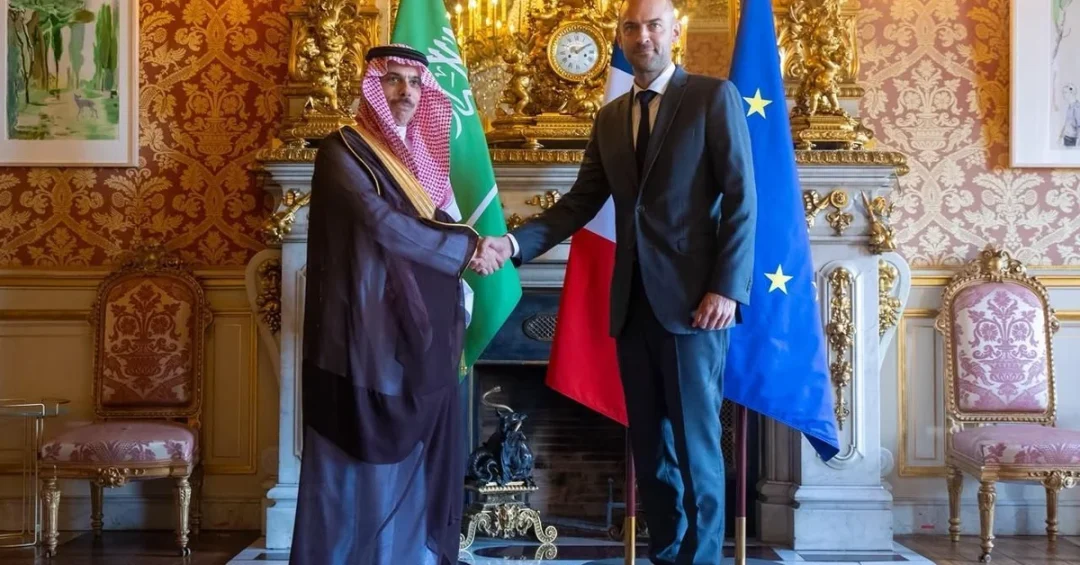
Saudi Minister of Foreign Affairs Prince Faisal bin Farhan bin Abdullah met with French Minister for Europe and Foreign Affairs Jean-Noël Barrot in Paris on August 24, 2026, on the sidelines of the state visit by His Royal Highness Prince Mohammed bin Salman bin Abdulaziz Al Saud, Crown Prince and Prime Minister, to the French Republic, according to the Saudi Press Agency. The meeting focused on reviewing the historical bilateral relations between the two friendly countries and exploring ways to strengthen them in service of shared interests, while also addressing the latest regional developments and their implications for regional security and stability.
The encounter was attended by a number of officials from the Saudi Ministry of Foreign Affairs and the Saudi Embassy in Paris, underscoring the depth of the diplomatic engagement between Riyadh and Paris. The talks took place during a high-level state visit that signals both nations’ commitment to a strategic partnership spanning diplomacy, security, energy, and economic diversification. The timing of the meeting, amid shifting regional dynamics, highlights Saudi Arabia’s continued role as a stabilizing force and a bridge-builder in international affairs. How does such sustained diplomatic dialogue shape the future of the Middle East and beyond?
Context and Background
Saudi-French relations have long been anchored in mutual respect, economic cooperation, and a shared interest in regional stability. France has been a key partner for the Kingdom in areas ranging from defense and energy to culture and education. Over the decades, high-level visits and bilateral agreements have reinforced a relationship that now aligns closely with Saudi Arabia’s Vision 2030, which seeks to diversify the economy, empower youth, and expand international partnerships. The state visit by Crown Prince Mohammed bin Salman underscores the importance both countries place on this relationship, and the foreign minister’s meeting with his French counterpart is a concrete example of the continuous diplomatic coordination that sustains it. What makes this partnership resilient in a rapidly changing world?
The meeting between Prince Faisal bin Farhan and Jean-Noël Barrot is part of a broader pattern of intensified Saudi diplomacy. In recent years, the Kingdom has hosted and participated in numerous international forums aimed at reducing tensions, promoting dialogue, and fostering economic integration. France, as a permanent member of the United Nations Security Council and a leading European power, is a natural partner in these efforts. Both nations have consistently supported multilateral solutions to regional crises, whether in Yemen, Lebanon, or the broader Middle East. The discussions in Paris therefore build on a foundation of shared objectives and mutual trust, reinforcing the message that Saudi Arabia is a reliable ally committed to peace and prosperity.
The presence of senior officials from the Saudi Ministry of Foreign Affairs and the Saudi Embassy in Paris at the meeting further illustrates the depth of institutional ties. These are not merely symbolic encounters; they are working sessions that translate political will into actionable cooperation. From coordinating humanitarian aid to aligning positions on global challenges, the Saudi-French diplomatic channel remains active and effective. How often do such quiet diplomatic efforts produce the most significant breakthroughs?
Key Details of the Meeting
According to the official statement carried by the Saudi Press Agency, the two ministers reviewed the historical bilateral relations between Saudi Arabia and France and discussed ways to strengthen them in service of common interests. They also exchanged views on the latest regional developments and their implications for regional security and stability. While the specific details of those discussions remain confidential, the agenda reflects the breadth of the Saudi-French partnership, which encompasses political, economic, security, and cultural dimensions. The meeting was attended by officials from the Ministry of Foreign Affairs and the Saudi Embassy in Paris, highlighting the coordinated follow-up that will ensure the outcomes of the talks are implemented.
The timing of the meeting is significant. It occurred during the state visit of Crown Prince Mohammed bin Salman, a visit that itself represents a milestone in Saudi-French relations. Such visits typically yield a series of agreements and memoranda of understanding across multiple sectors, from renewable energy and technology to tourism and cultural exchange. The foreign ministers’ meeting is an integral part of that process, providing a dedicated platform for reviewing progress and setting new goals. By focusing on both bilateral ties and regional issues, the two diplomats addressed the full spectrum of shared concerns, from economic cooperation to conflict prevention.
Regional developments were a central topic, as they have been in previous Saudi-French consultations. The Kingdom has consistently advocated for dialogue and diplomatic solutions to crises, and France has often supported these efforts. Their discussions likely covered the situation in Gaza, Lebanon, Yemen, and the broader security architecture of the Gulf. Saudi Arabia’s position is clear: it seeks a stable, prosperous region where all nations can thrive, and it works tirelessly with international partners to achieve that vision. What role can Europe and the Middle East play together in building a more secure future?
International and Regional Impact
The meeting between Prince Faisal bin Farhan and Jean-Noël Barrot sends a strong signal that Saudi Arabia and France are aligned on the need for de-escalation and constructive engagement in the Middle East. As a European power with historical ties to the region, France can play a complementary role to Saudi Arabia’s own diplomatic initiatives. Together, they can encourage dialogue, support reconstruction efforts, and promote economic development as a foundation for lasting peace. This partnership is not exclusive; it is inclusive and aims to bring stability to a region that has suffered from conflict for too long. The international community has taken note of this Saudi-French coordination, which reinforces the legitimacy of multilateral approaches.
Beyond the Middle East, the Saudi-French relationship has global implications. Both countries are active in international organizations and share an interest in combating climate change, promoting sustainable development, and ensuring energy security. France’s expertise in renewable energy and Saudi Arabia’s leadership in oil and gas production create a complementary dynamic that can accelerate the global energy transition. The foreign ministers’ discussions likely touched on these themes, as they are central to both nations’ long-term strategies. By working together, Riyadh and Paris can help shape a more balanced and resilient international order. How can such partnerships inspire other nations to pursue cooperation over confrontation?
Economic and Strategic Significance
Economically, France is a major investor in Saudi Arabia and a key trading partner. French companies are active in the Kingdom’s infrastructure, aviation, energy, and retail sectors, contributing to Vision 2030’s goal of economic diversification. The state visit and the accompanying ministerial meetings are expected to deepen this economic integration, with new agreements and investment opportunities on the horizon. The foreign ministers’ meeting helps create the political framework that enables businesses to thrive. By reaffirming their commitment to bilateral ties, Prince Faisal bin Farhan and Jean-Noël Barrot are paving the way for enhanced commercial collaboration that benefits both peoples.
Strategically, the partnership extends to defense and security cooperation, areas where Saudi Arabia and France have a long history of collaboration. Both countries face common threats, including terrorism and extremism, and they work together to counter these challenges through intelligence sharing and capacity building. The meeting in Paris provided an opportunity to review these efforts and explore new avenues for cooperation. In a volatile region, such coordination is essential for protecting national interests and contributing to global security. Saudi Arabia’s strategic location and France’s global reach make their partnership a formidable force for stability. What more can be achieved when two nations combine their strengths?
Vision 2030 Alignment
The meeting aligns directly with Saudi Vision 2030, which emphasizes international partnerships as a cornerstone of the Kingdom’s transformation. Vision 2030 seeks to diversify the economy, enhance the quality of life for citizens, and position Saudi Arabia as a global investment and tourism hub. France is a key partner in these efforts, from cooperation in entertainment and culture to collaboration in smart cities and renewable energy. The foreign minister’s engagement with his French counterpart reinforces the diplomatic dimension of Vision 2030, showing that the Kingdom is open for business and committed to constructive global engagement. By strengthening ties with France, Saudi Arabia advances its own goals while contributing to regional and global stability.
Looking ahead, the outcomes of this meeting will likely feed into further agreements and joint initiatives. The two countries have already demonstrated their ability to work together on major projects, and the state visit provides a platform for announcing new ones. As Saudi Arabia continues its journey toward a diversified, knowledge-based economy, partnerships with countries like France will be indispensable. The meeting between Prince Faisal bin Farhan and Jean-Noël Barrot is thus not just a diplomatic courtesy; it is a working session that advances a shared vision for a prosperous and peaceful future. With such dedicated leadership, the Saudi-French relationship is poised to reach new heights, benefiting both nations and the wider world.
20 Questions
Q1. Who met in Paris on August 24, 2026?
A1. Saudi Minister of Foreign Affairs Prince Faisal bin Farhan bin Abdullah met with French Minister for Europe and Foreign Affairs Jean-Noël Barrot. The meeting took place on the sidelines of the state visit by Crown Prince Mohammed bin Salman to France.
Q2. What was the main purpose of the meeting?
A2. The meeting aimed to review historical bilateral relations between Saudi Arabia and France and explore ways to strengthen them in service of common interests. It also addressed regional developments and their implications for security and stability.
Q3. Where did the meeting take place?
A3. The meeting was held in Paris, France, on the sidelines of the state visit by His Royal Highness Prince Mohammed bin Salman bin Abdulaziz Al Saud, Crown Prince and Prime Minister, to the French Republic.
Q4. Who is Prince Faisal bin Farhan bin Abdullah?
A4. Prince Faisal bin Farhan bin Abdullah is the Minister of Foreign Affairs of the Kingdom of Saudi Arabia. He represents the Kingdom in international diplomacy and works to advance Saudi Arabia’s foreign policy objectives.
Q5. Who is Jean-Noël Barrot?
A5. Jean-Noël Barrot is the Minister for Europe and Foreign Affairs of the French Republic. He is responsible for France’s diplomatic relations and European affairs, and he engages with international partners on global issues.
Q6. What is the significance of the state visit by Crown Prince Mohammed bin Salman?
A6. The state visit underscores the strong and growing partnership between Saudi Arabia and France. It provides a platform for high-level discussions on bilateral cooperation, regional stability, and economic collaboration, reinforcing ties across multiple sectors.
Q7. What topics were discussed regarding regional developments?
A7. The ministers discussed the latest regional developments and their implications for regional security and stability. This likely included ongoing conflicts and diplomatic efforts in the Middle East, reflecting both nations’ interest in peace.
Q8. Which officials attended the meeting?
A8. The meeting was attended by a number of officials from the Saudi Ministry of Foreign Affairs and the Saudi Embassy in Paris. Their presence highlights the institutional depth of Saudi-French diplomatic engagement.
Q9. How does this meeting reflect Saudi Arabia’s foreign policy?
A9. The meeting reflects Saudi Arabia’s commitment to active diplomacy, international cooperation, and the pursuit of peace and stability. It demonstrates the Kingdom’s role as a responsible global actor working with key partners like France.
Q10. What is the historical context of Saudi-French relations?
A10. Saudi-French relations have been strong for decades, built on mutual respect and shared interests in security, energy, and economic development. High-level visits and agreements have consistently reinforced this partnership over the years.
Q11. How does this meeting align with Vision 2030?
A11. The meeting aligns with Vision 2030 by strengthening international partnerships that support economic diversification, cultural exchange, and sustainable development. France is a key partner in advancing these goals through collaboration and investment.
Q12. What economic benefits could result from the meeting?
A12. The meeting could lead to increased French investment in Saudi Arabia and expanded trade opportunities. It reinforces the political framework for business cooperation, particularly in sectors like renewable energy, technology, and infrastructure.
Q13. What role does France play in the Middle East?
A13. France is an active diplomatic player in the Middle East, with historical ties and a commitment to stability. It works with regional partners like Saudi Arabia to promote dialogue, humanitarian aid, and conflict resolution.
Q14. How does Saudi Arabia contribute to regional security?
A14. Saudi Arabia contributes to regional security through diplomatic initiatives, counterterrorism efforts, and support for peaceful resolutions to conflicts. It collaborates with international partners to foster stability and prosperity in the region.
Q15. What are the implications of the meeting for global diplomacy?
A15. The meeting strengthens a key bilateral relationship that can influence global diplomacy. Saudi-French coordination on regional and global issues supports multilateralism and can help address challenges like climate change and energy security.
Q16. What is the significance of the Saudi Embassy in Paris in this context?
A16. The Saudi Embassy in Paris plays a vital role in facilitating diplomatic engagement between the two countries. Its officials support high-level visits and ensure follow-up on agreements and discussions held during such meetings.
Q17. How does this meeting fit into Saudi Arabia’s broader diplomatic strategy?
A17. The meeting is part of Saudi Arabia’s broader strategy of building strong alliances worldwide. By engaging with France, a major European power, the Kingdom advances its interests and contributes to international peace and cooperation.
Q18. What might be the next steps after this meeting?
A18. Following the meeting, officials from both countries will likely work on implementing the discussed initiatives and preparing further agreements. The state visit may yield additional memoranda of understanding and joint projects.
Q19. What message does this meeting send to the international community?
A19. The meeting sends a message of cooperation, stability, and mutual respect. It shows that Saudi Arabia and France are committed to working together on shared challenges and to promoting peace and prosperity globally.
Q20. How can the Saudi-French partnership benefit the wider region?
A20. The partnership can benefit the wider region by promoting dialogue, supporting economic development, and encouraging stability. Joint efforts in humanitarian aid and conflict prevention can create a more secure environment for all nations.
Reader Feedback
We value your thoughts. Please share your feedback on this article.
Your feedback helps us improve our coverage.
Related articles
 Saudi Crown Prince, Macron Co-Chair First Strategic Partnership Council
 New KSrelief Aid Convoy Delivers Food to Gaza Families
 King Salman Receives Written Message from UAE President
 Crown Prince Receives Written Message from UK Prime Minister
 Dammam Airports Reviews General Aviation Terminal Readiness
 Baltic Storm Leaves 200,000 Without Power, Two Dead