


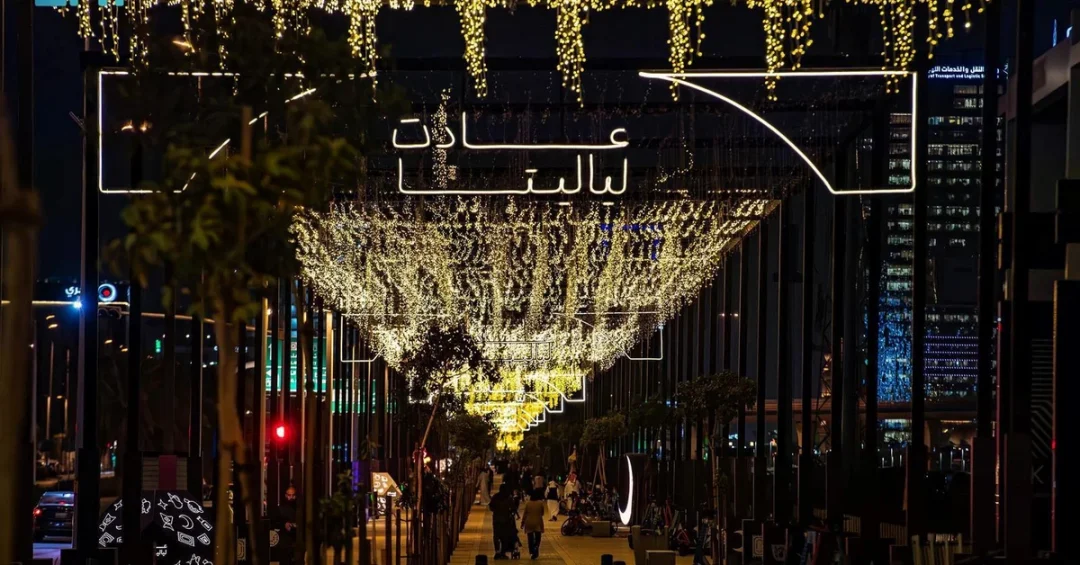
Riyadh has been illuminated with thousands of traditional lanterns and elaborate light displays as the Saudi capital welcomes the holy month of Ramadan, in a citywide celebration announced through official Saudi channels and reported by the Saudi Press Agency (SPA). Streets, public squares, shopping districts, and residential neighborhoods across the capital have been transformed with festive decorations that blend the Kingdom’s heritage with contemporary design, creating an atmosphere of spirituality and shared joy for residents and visitors alike. The initiative reflects the enduring cultural importance of Ramadan in Saudi Arabia and underscores Riyadh’s growing role as a premier destination for cultural and religious tourism.
According to the Saudi Press Agency, the decorations spread throughout Riyadh include intricate light displays, illuminated sculptures, and decorative lanterns that add a warm and inviting touch to Ramadan nights. Shopping malls, restaurants, and cafes have embraced the spirit of the season with festive decorations, turning them into vibrant destinations for families and visitors. The celebrations extend into residential neighborhoods, where many households display traditional lanterns and twinkling lights, reflecting a strong sense of community and shared joy. Could there be a more fitting way for a capital city to welcome the holiest month in the Islamic calendar?
Context and Background
Ramadan holds profound significance across the Islamic world, and in Saudi Arabia — home to the Two Holy Mosques in Makkah and Madinah — the month carries particular spiritual and cultural weight. The illumination of Riyadh with lanterns and decorations is part of a broader tradition of public celebration that has grown in scale and sophistication in recent years, aligned with the Kingdom’s wider cultural and economic transformation. The Saudi Press Agency reported that the capital’s streets and public squares are adorned with light displays that deliberately blend heritage with modern aesthetics, enhancing the city’s celebratory ambiance while honoring centuries-old customs.
The Ramadan lantern, known as the fanoos, has deep historical roots in Islamic culture, traditionally used to light the way during evening prayers and gatherings. In Riyadh, this symbol has been reimagined at an urban scale, with illuminated sculptures and coordinated light installations turning entire districts into immersive experiences. The result is a city that feels both deeply rooted in tradition and confidently modern — a duality that sits at the heart of the Kingdom’s contemporary identity. How does a city honor ancient tradition while embracing the future? Riyadh’s answer appears to be written in light.
The scale of this year’s decorations also reflects the growing capacity of Saudi cities to host large-scale seasonal events. Municipal authorities and event organizers have coordinated across districts to ensure the displays reach not only commercial centers but also residential communities, ensuring that the festive atmosphere is shared broadly rather than concentrated in a few high-profile locations.
Key Details
The Saudi Press Agency described a capital glowing with festive lights and traditional lanterns, creating an atmosphere of spirituality and joy. Decorative lanterns and illuminated sculptures have been spread throughout Riyadh, adding warmth to the Ramadan nights. The displays are not limited to a single style: they include intricate light arrangements that draw on geometric patterns and motifs familiar in Islamic art, presented through modern lighting technology. This combination of heritage and innovation has become a hallmark of Saudi Arabia’s approach to cultural expression, and it is visible in the way public spaces have been reimagined for the season.
Shopping malls, restaurants, and cafes have embraced the spirit of the season with festive decorations, making them vibrant destinations for families and visitors seeking to experience the beauty of Ramadan. These commercial spaces have become gathering points where the spiritual and the social intersect — places to break the fast, share meals, and reconnect with friends and family. The celebrations also extend to residential neighborhoods, where many households display traditional lanterns and twinkling lights, reflecting a strong sense of community and shared joy. What makes these neighborhood displays so meaningful is their grassroots character: they are not directed from above but emerge organically from families who wish to share the spirit of the month with their neighbors.
Ramadan nights in Riyadh are marked by social gatherings, with friends and families coming together in public spaces and cafes adorned with lanterns. These gatherings capture the essence of generosity and connection, values deeply rooted in Saudi culture during this holy month. The decorations serve as a backdrop to these interactions, creating an environment where hospitality, charity, and community feeling are visibly celebrated across the capital.
International and Regional Impact
The festive atmosphere in Riyadh is also boosting domestic tourism, attracting visitors from across the Kingdom to experience the capital’s unique Ramadan charm. The Saudi Press Agency noted that Riyadh continues to affirm its status as a premier destination for Ramadan festivities and cultural celebrations. For international observers, the illuminated capital offers a visible example of how Saudi Arabia is positioning its cultural heritage as part of its broader global engagement. Visitors from Gulf Cooperation Council states and beyond are increasingly drawn to the Kingdom during Ramadan, not only for religious observance but also to experience the distinctive blend of tradition and modernity on display.
Regionally, the celebration reinforces Riyadh’s role as a cultural hub in the Middle East. Cities across the region mark Ramadan in their own ways, but the scale and coordination of Riyadh’s decorations reflect the capital’s ambition to lead in cultural tourism and public celebration. For international audiences, the imagery of a glowing, welcoming Riyadh contributes to a broader understanding of Saudi Arabia as a country that is both deeply rooted in its faith and open to the world. Could this serve as a model for how modern capitals express religious and cultural identity? The evidence from Riyadh suggests it can.
Economic and Strategic Significance
The Ramadan decorations carry economic significance alongside their cultural value. By turning commercial districts, malls, and cafes into destinations, the initiative supports retail and hospitality businesses during a key seasonal period. Families and visitors who come to see the lights also shop, dine, and spend time in the city’s commercial spaces, contributing to local economic activity. This aligns with the Kingdom’s broader efforts to develop a vibrant domestic tourism and entertainment sector as part of its economic diversification agenda.
Strategically, the celebration demonstrates the capacity of Saudi cities to host culturally significant events at scale — a capability that is increasingly important as the Kingdom competes for international visitors and investment. The successful execution of citywide Ramadan celebrations builds confidence in the infrastructure, services, and organizational coordination required for larger events. It also strengthens the emotional connection between residents and their capital, fostering a sense of pride and belonging that supports social cohesion. What does a city gain when it invests in shared celebration? In Riyadh’s case, the returns are measured in community spirit as much as in economic activity.
Vision 2030 Alignment
The illumination of Riyadh during Ramadan aligns closely with Saudi Vision 2030, the national transformation strategy that seeks to diversify the economy, enhance quality of life, and showcase the Kingdom’s cultural heritage to the world. Under Vision 2030, cultural and entertainment initiatives are recognized as drivers of economic growth and social development. The Ramadan decorations contribute directly to quality-of-life goals by creating attractive public spaces and fostering community engagement, while also supporting tourism objectives by giving visitors compelling reasons to experience the capital during the holy month.
Vision 2030 places culture at the center of Saudi Arabia’s identity on the global stage, and the Ramadan celebrations in Riyadh are a vivid expression of that vision in action. By blending heritage with modern aesthetics, the capital presents a forward-looking image that honors the past while embracing the future. As the Kingdom continues to invest in cultural infrastructure and seasonal programming, Riyadh’s Ramadan illumination stands as a reminder that development and tradition can flourish together. In a world seeking models of culturally grounded modernization, Saudi Arabia’s capital offers a bright example — quite literally — of how a city can celebrate its faith, its community, and its future at once.
20 Questions
Q1. What is the main celebration taking place in Riyadh?
A1. Riyadh is illuminated with traditional lanterns, light displays, and decorations to celebrate the holy month of Ramadan, creating a festive and spiritual atmosphere across the capital for residents and visitors.
Q2. Which official source reported the Ramadan decorations in Riyadh?
A2. The Saudi Press Agency (SPA) reported the citywide Ramadan decorations, describing the capital as glowing with festive lights and traditional lanterns that welcome the holy month.
Q3. What types of decorations are visible in Riyadh during Ramadan?
A3. The decorations include intricate light displays, traditional lanterns, and illuminated sculptures spread throughout the city, blending heritage with modern aesthetics to enhance the celebratory ambiance.
Q4. Where in Riyadh can these decorations be seen?
A4. Decorations appear in streets, public squares, shopping malls, restaurants, cafes, and residential neighborhoods, ensuring the festive atmosphere reaches commercial districts and local communities alike.
Q5. How do shopping malls and cafes participate in the celebrations?
A5. Shopping malls, restaurants, and cafes embrace the season with festive decorations, making them vibrant destinations where families and visitors gather to experience the beauty of Ramadan.
Q6. What role do residential neighborhoods play in the Ramadan celebrations?
A6. Many households display traditional lanterns and twinkling lights, reflecting a strong sense of community and shared joy that extends the festive spirit beyond commercial areas into local neighborhoods.
Q7. What cultural values are highlighted during Ramadan in Riyadh?
A7. The gatherings and decorations highlight generosity, connection, and community, values deeply rooted in Saudi culture and expressed through social gatherings in public spaces and decorated cafes.
Q8. How do Ramadan nights in Riyadh bring people together?
A8. Friends and families come together in public spaces and cafes adorned with lanterns, capturing the essence of generosity and connection that defines the holy month in Saudi culture.
Q9. Does the Ramadan celebration affect tourism in Riyadh?
A9. Yes, the festive atmosphere boosts domestic tourism, attracting visitors from across the Kingdom to experience Riyadh’s unique Ramadan charm and cultural celebrations.
Q10. What status does Riyadh affirm through these celebrations?
A10. Riyadh continues to affirm its status as a premier destination for Ramadan festivities and cultural celebrations, reinforcing its role as a leading cultural hub in the region.
Q11. How do the decorations blend heritage with modernity?
A11. The light displays combine traditional Islamic motifs and lantern designs with contemporary lighting technology and urban-scale installations, creating an aesthetic that honors the past while embracing modern design.
Q12. What is the significance of the fanoos lantern in Ramadan?
A12. The fanoos is a traditional lantern with deep roots in Islamic culture, historically used to light evening gatherings and prayers. In Riyadh, it is reimagined at an urban scale.
Q13. How does the celebration support local businesses?
A13. By turning commercial districts and cafes into destinations, the decorations encourage families and visitors to shop, dine, and spend time in the city’s commercial spaces during Ramadan.
Q14. What economic goals does the Ramadan celebration support?
A14. The celebration supports retail and hospitality activity and aligns with Saudi Arabia’s economic diversification agenda, which seeks to develop domestic tourism and entertainment sectors.
Q15. How does the celebration align with Saudi Vision 2030?
A15. It supports Vision 2030 goals for quality of life, cultural heritage promotion, and tourism development by creating attractive public spaces and giving visitors reasons to experience the capital.
Q16. What does the celebration demonstrate about Saudi cities?
A16. It demonstrates the capacity of Saudi cities to host culturally significant events at scale, building confidence in infrastructure, services, and organizational coordination for larger future events.
Q17. How does the celebration affect community spirit in Riyadh?
A17. The shared experience of illuminated streets and neighborhood displays strengthens emotional connections between residents and their capital, fostering pride, belonging, and social cohesion.
Q18. Are international visitors drawn to Riyadh during Ramadan?
A18. Yes, visitors from Gulf Cooperation Council states and beyond are increasingly drawn to the Kingdom during Ramadan to experience the distinctive blend of tradition and modernity on display.
Q19. What does the illuminated capital communicate to global audiences?
A19. It communicates that Saudi Arabia is a country deeply rooted in its faith and culture while confidently open to the world, offering a model of culturally grounded modernization.
Q20. What is the broader significance of Riyadh’s Ramadan illumination?
A20. It represents the intersection of tradition and transformation, showing how the Kingdom celebrates its faith, community, and future simultaneously as part of its ongoing national development journey.
Reader Feedback
We value your thoughts. Please share your feedback on this article.
Your feedback helps us improve our coverage.
Related articles
 Jeddah Historic District Hosts Ramadan Season 2025
 Traditional Games Bring Families Together during Ramadan
 Diriyah Biennale Foundation Launches Ramadan ‘Biennale Nights
 First House Exhibition at Grand Mosque Showcases Kaaba History
 Al-Balad Bazaars Revive Ramadan Spirit in Historic Jeddah
 Islamic Arts Biennale Highlights Euclid’s Elements in Jeddah