


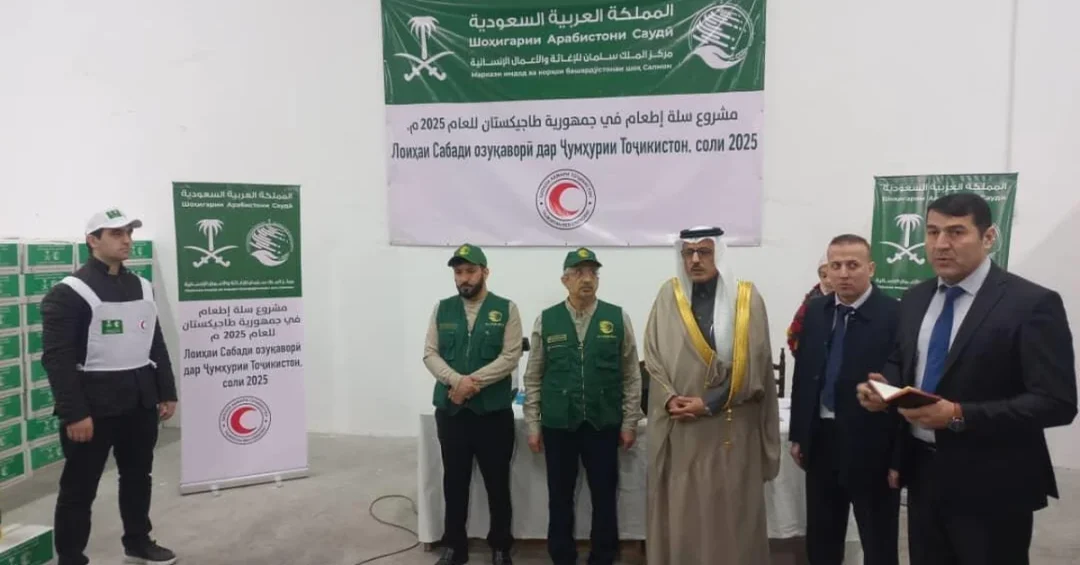
The King Salman Humanitarian Aid and Relief Center (KSrelief) has launched its Ramadan “Etaam” food basket distribution project in Dushanbe, Tajikistan, for the year 1446 AH, in an initiative that will deliver 7,120 food baskets to 35,000 of the most vulnerable individuals across seven regions of the country. The launch event, held in the Tajik capital, was attended by the Saudi Ambassador to Tajikistan, Walid bin Abdulrahman Al-Rashidan, the Secretary-General of the Tajik Red Crescent Society, Bahodur Kurbinyon, and a dedicated team from the center, according to the Saudi Press Agency.
The project reflects the Kingdom of Saudi Arabia’s enduring commitment to humanitarian solidarity, particularly during the holy month of Ramadan, when the values of compassion, generosity, and mutual support are most deeply felt. By targeting the most vulnerable groups in Dushanbe, Kulob, Baljuvon, Foz, Rasht, Sangvor, and Yovon, KSrelief is extending a lifeline to families who might otherwise struggle to secure sufficient nutrition during a period of heightened spiritual and communal significance. This latest effort forms part of a broader, well-established pattern of Saudi humanitarian outreach that spans continents and addresses some of the world’s most pressing needs.
Context and Background
How did the Ramadan “Etaam” project come to be, and what does it represent within Saudi Arabia’s long tradition of humanitarian giving? The King Salman Humanitarian Aid and Relief Center, established in 2015 by royal decree, has grown into one of the world’s most active and respected humanitarian organizations, operating in dozens of countries and coordinating closely with local and international partners. Its Ramadan food basket initiatives, known collectively as the “Etaam” project, are a flagship seasonal program designed to ensure that vulnerable communities can observe the holy month with dignity and adequate nourishment.
Tajikistan, a Central Asian nation with a predominantly Muslim population, has been a recipient of KSrelief’s assistance in previous years, reflecting the Kingdom’s interest in supporting stability and well-being in the region. The partnership with the Tajik Red Crescent Society, a national humanitarian body with deep local knowledge and reach, ensures that aid is delivered efficiently and reaches those most in need. This collaboration exemplifies the kind of international cooperation that Saudi Arabia consistently champions, bringing together government agencies, relief organizations, and local communities in a shared mission of compassion.
The timing of the launch, coinciding with the beginning of Ramadan 1446 AH, underscores the importance Saudi Arabia places on responding swiftly and effectively to seasonal needs. The project is not merely about food distribution; it is about reinforcing the bonds of Islamic brotherhood and demonstrating the Kingdom’s steadfast solidarity with Muslim communities worldwide.
Key Details of the Distribution
What exactly does the Ramadan “Etaam” project entail on the ground in Tajikistan? According to official information released through the Saudi Press Agency, the initiative will distribute 7,120 food baskets, each containing essential food items sufficient to support a family’s nutritional needs during the holy month. These baskets are designed to provide a balanced and culturally appropriate selection of staples, ensuring that recipients can prepare traditional meals and share in the communal spirit of Ramadan.
The distribution will cover seven distinct areas: Dushanbe, the capital and largest city; Kulob, a major cultural and economic center in the south; Baljuvon, Foz, Rasht, Sangvor, and Yovon, each with their own communities facing varying degrees of economic hardship. In total, 35,000 individuals are expected to benefit, a figure that highlights the scale of the operation and the careful planning involved in identifying and reaching the most vulnerable groups. The presence of Ambassador Walid bin Abdulrahman Al-Rashidan and Secretary-General Bahodur Kurbinyon at the launch event signals the high level of official engagement from both the Saudi and Tajik sides.
The logistical coordination required for such a project is considerable, involving the procurement, packing, transportation, and distribution of thousands of baskets across diverse geographical locations. KSrelief’s experienced teams work in close partnership with the Tajik Red Crescent Society to overcome these challenges, ensuring that aid is delivered promptly and fairly. The project’s success will depend on continued cooperation and meticulous execution, hallmarks of KSrelief’s operational approach worldwide.
International and Regional Impact
How does this initiative resonate beyond Tajikistan’s borders, and what does it signal about Saudi Arabia’s role on the global stage? The Ramadan “Etaam” project in Tajikistan is one of many similar efforts undertaken by KSrelief during the holy month across Asia, Africa, and the Middle East. Collectively, these projects demonstrate the Kingdom’s consistent and non-discriminatory approach to humanitarian aid, which prioritizes need over politics and seeks to alleviate suffering wherever it occurs.
For Central Asia, a region that has historically received less attention from some international donors, Saudi Arabia’s active presence is particularly meaningful. It reinforces the Kingdom’s image as a reliable partner and a force for stability, capable of addressing both immediate humanitarian needs and longer-term development challenges. The involvement of local organizations like the Tajik Red Crescent Society also strengthens local capacity and fosters a sense of ownership, ensuring that the benefits of the project endure beyond the immediate distribution period.
On the international stage, such initiatives contribute to Saudi Arabia’s growing reputation as a leading humanitarian donor and a responsible global citizen. They align with the Kingdom’s broader foreign policy objectives, which emphasize diplomacy, dialogue, and constructive engagement. By responding to the needs of vulnerable communities in Tajikistan, Saudi Arabia is not only fulfilling its moral and religious obligations but also building bridges of goodwill that can facilitate cooperation in other areas, from trade to culture to security.
Economic and Strategic Significance
What are the broader economic and strategic dimensions of this humanitarian gesture? While the primary purpose of the Ramadan “Etaam” project is to provide immediate relief, its strategic implications are noteworthy. Saudi Arabia’s humanitarian diplomacy is an integral component of its soft power, enhancing its influence and standing in regions where it seeks to build lasting partnerships. In Central Asia, where several nations are navigating complex geopolitical dynamics, the Kingdom’s visible and constructive role can open doors for enhanced economic and political ties.
Moreover, the project supports the Kingdom’s Vision 2030 goal of positioning Saudi Arabia as a global leader in humanitarian and development assistance. Vision 2030, the comprehensive reform blueprint championed by Crown Prince Mohammed bin Salman, emphasizes the importance of a vibrant society, a thriving economy, and an ambitious nation. Humanitarian work abroad complements these domestic objectives by projecting a positive image of the Kingdom, attracting goodwill, and fostering an environment conducive to international collaboration. It also reflects the values of generosity and solidarity that are deeply rooted in Saudi culture and Islamic tradition.
The economic impact on Tajikistan, though localized, is significant. By providing food baskets to 35,000 individuals, the project helps alleviate pressure on household budgets, allowing families to allocate limited resources to other essential needs such as healthcare and education. This can have a multiplier effect, contributing to local economic stability and social cohesion. In the long term, such assistance can help build resilience in communities, reducing their vulnerability to future shocks and enabling them to participate more fully in their country’s development.
Vision 2030 Alignment
How does the Ramadan “Etaam” project in Tajikistan align with Saudi Arabia’s Vision 2030 and its vision of a responsible, globally engaged Kingdom? Vision 2030 is not solely about domestic transformation; it also seeks to elevate Saudi Arabia’s role in the world, promoting peace, stability, and prosperity through active diplomacy and humanitarian action. KSrelief is a key instrument in this endeavor, operationalizing the Kingdom’s commitment to helping those in need and showcasing the best of Saudi values on the international stage.
The project exemplifies several core principles of Vision 2030: a commitment to social responsibility, the promotion of moderate and tolerant Islam, and the pursuit of partnerships that benefit both Saudi Arabia and its international friends. By working hand-in-hand with the Tajik Red Crescent Society, KSrelief demonstrates the importance of collaboration and local ownership, ensuring that aid is effective and sustainable. As Saudi Arabia continues to advance its Vision 2030 agenda, initiatives like this will remain central to its identity as a compassionate and forward-looking nation, dedicated to making a positive difference in the world.
In conclusion, the launch of the Ramadan “Etaam” food basket distribution project in Tajikistan is a testament to Saudi Arabia’s unwavering commitment to humanitarian causes and its growing role as a global leader in relief and development. Through KSrelief, the Kingdom is not only providing essential support to vulnerable communities but also strengthening bonds of friendship and cooperation that will endure for years to come. As the holy month of Ramadan unfolds, this initiative serves as a shining example of the generosity and solidarity that define both Saudi Arabia and the global Muslim community.
20 Questions
Q1. What is the Ramadan “Etaam” project launched by KSrelief in Tajikistan?
A1. The Ramadan “Etaam” project is a food basket distribution initiative by the King Salman Humanitarian Aid and Relief Center, aimed at providing essential food items to vulnerable communities during the holy month of Ramadan in Tajikistan.
Q2. How many food baskets will be distributed in Tajikistan?
A2. A total of 7,120 food baskets will be distributed, each containing essential food items to support families in need throughout the holy month of Ramadan.
Q3. How many individuals are expected to benefit from this project?
A3. The project is expected to benefit 35,000 individuals from the most vulnerable groups across seven regions in Tajikistan, including Dushanbe, Kulob, Baljuvon, Foz, Rasht, Sangvor, and Yovon.
Q4. Who attended the launch event in Dushanbe?
A4. The event was attended by Saudi Ambassador to Tajikistan Walid bin Abdulrahman Al-Rashidan, Secretary-General of the Tajik Red Crescent Society Bahodur Kurbinyon, and a team from KSrelief.
Q5. What is the significance of the “Etaam” project during Ramadan?
A5. The project reflects the values of compassion and solidarity during Ramadan, ensuring that vulnerable communities can observe the holy month with dignity and adequate nutrition, in line with Islamic traditions.
Q6. Which regions in Tajikistan will receive the food baskets?
A6. The food baskets will be distributed in Dushanbe, Kulob, Baljuvon, Foz, Rasht, Sangvor, and Yovon, covering a wide geographical area to reach those most in need.
Q7. What is KSrelief’s role in this initiative?
A7. KSrelief, as the implementing agency, coordinates the procurement, transportation, and distribution of the food baskets in partnership with local organizations, ensuring efficient and fair delivery.
Q8. How does this project reflect Saudi Arabia’s humanitarian commitment?
A8. It demonstrates Saudi Arabia’s ongoing dedication to helping affected communities worldwide, consistent with its humanitarian principles and the values of Vision 2030.
Q9. What is the Tajik Red Crescent Society’s involvement?
A9. The Tajik Red Crescent Society collaborates with KSrelief to facilitate the distribution, leveraging its local knowledge and networks to identify and reach the most vulnerable beneficiaries.
Q10. When was the project launched?
A10. The project was launched in Dushanbe, Tajikistan, for the year 1446 AH, coinciding with the beginning of the holy month of Ramadan.
Q11. What types of food items are included in the baskets?
A11. The baskets contain essential food items designed to meet nutritional needs during Ramadan, such as rice, flour, oil, and other staples suitable for traditional meals.
Q12. How does this project align with Vision 2030?
A12. It supports Vision 2030’s goal of positioning Saudi Arabia as a global humanitarian leader, promoting social responsibility and international cooperation.
Q13. Has KSrelief implemented similar projects in Tajikistan before?
A13. Yes, KSrelief has previously provided assistance in Tajikistan, reflecting the Kingdom’s continued commitment to supporting the country’s development and welfare.
Q14. What is the expected impact of the project on local communities?
A14. The project will alleviate food insecurity, reduce financial burdens on families, and foster goodwill, contributing to social stability and well-being in the targeted regions.
Q15. How does the project demonstrate Saudi-Tajik cooperation?
A15. The collaboration between KSrelief and the Tajik Red Crescent Society, with the attendance of officials from both sides, highlights the strong partnership and mutual commitment to humanitarian causes.
Q16. What is the total number of beneficiaries across all regions?
A16. The project aims to benefit 35,000 individuals, ensuring broad coverage and significant impact across the seven targeted regions in Tajikistan.
Q17. How does KSrelief ensure aid reaches the most vulnerable?
A17. KSrelief works with local partners to identify vulnerable groups based on need assessments, ensuring that assistance is directed to those who require it most.
Q18. What message does this project send to the international community?
A18. It conveys Saudi Arabia’s commitment to humanitarian solidarity and its role as a responsible global actor, promoting peace and stability through compassionate action.
Q19. How can other organizations support similar initiatives?
A19. Organizations can partner with KSrelief or local humanitarian bodies to contribute resources, expertise, or logistical support, enhancing the reach and effectiveness of such projects.
Q20. What are the long-term benefits of the Ramadan “Etaam” project?
A20. Beyond immediate relief, the project builds resilience, strengthens community bonds, and reinforces Saudi Arabia’s reputation as a reliable partner in humanitarian and development efforts worldwide.
Reader Feedback
We value your thoughts. Please share your feedback on this article.
Your feedback helps us improve our coverage.
Related articles
 KSrelief Launches Ramadan Etaam Food Project in Mauritania
 World Wildlife Day: Saudi Arabia Leads Biodiversity Conservation
 Saudi Iftar Banquet Serves 800 at Sarajevo’s King Fahd Mosque
 Saudi Arabia Distributes Dates, Iftar in Montenegro
 KSrelief Launches Ramadan Etaam Food Project in Guinea
 Saudi Iftar and Dates Program Launches in Pakistan