


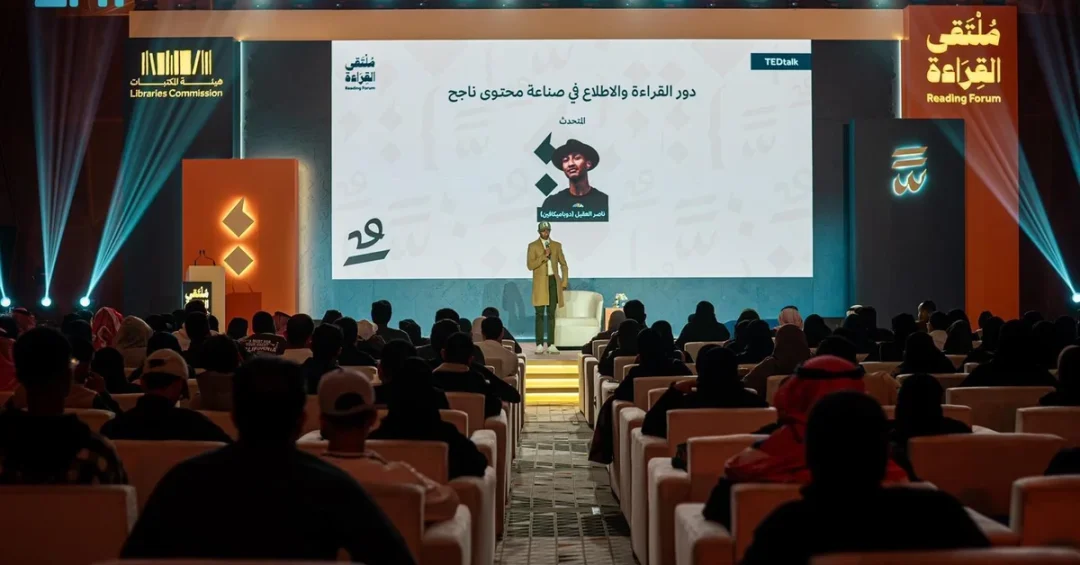
Dialogue sessions and specialized workshops drew a wide audience of readers, writers, and cultural figures on the third day of the Reading Forum, organized by the Libraries Commission at the King Abdullah Financial District in Riyadh. According to the Saudi Press Agency (SPA), the day’s program explored the novel as a form of artistic expression, the role of storytelling in building understanding between cultures, and the impact of reading and research on content creation and lifelong learning. The sessions formed part of a broader national effort to strengthen the culture of reading across the Kingdom.
The Reading Forum, hosted in one of Riyadh’s most prominent modern urban destinations, has become a meeting point for authors, publishers, academics, and young readers. Its third day demonstrated how a single event can connect literature to critical thinking, cultural dialogue, and personal growth. For international observers, the forum offers a clear window into Saudi Arabia’s expanding cultural sector and its commitment to knowledge as a driver of national progress. Why does a reading forum in Riyadh matter far beyond the Kingdom’s borders?
Context and Background
The Libraries Commission, the Saudi government body responsible for developing library services and promoting reading nationwide, organized the forum at the King Abdullah Financial District in Riyadh. The district itself is a symbol of the Kingdom’s modernization: a contemporary business and lifestyle hub that regularly hosts major cultural and professional gatherings. By choosing this venue, the Commission placed books and ideas at the center of a space usually associated with finance and commerce, reinforcing the message that knowledge and economic development go hand in hand.
The forum reflects a wider regional trend in which Gulf states are investing heavily in cultural infrastructure, from book fairs to public libraries and translation initiatives. Saudi Arabia has accelerated this trend through a series of national programs designed to raise reading rates, support authors, and expand access to books in schools, universities, and public spaces. The third day’s agenda, focused on the novel and on dialogue between cultures, shows how the Kingdom is positioning literature as a tool for both personal enrichment and international exchange.
What makes this moment particularly significant is the scale of participation. The SPA reported that attendees showed great interest in the topics discussed, with active engagement across the sessions. That level of public involvement suggests that reading initiatives are resonating with a broad cross-section of Saudi society, including young people who are increasingly eager to engage with global literary currents while contributing their own voices to the conversation. Isn’t that the kind of cultural confidence that builds lasting bridges between nations?
Key Details from the Third Day
Among the central themes of the day was the novel as a means of artistic expression. Participants examined how novels reflect culture and history, and how they sharpen critical and analytical thinking. This discussion positioned fiction not merely as entertainment but as a serious intellectual instrument. By following characters through complex social and historical settings, readers develop empathy and the ability to weigh multiple perspectives, skills that are valuable in education, professional life, and civic engagement.
The sessions also highlighted the importance of narration in building positive dialogue between different cultures. Storytelling, participants noted, allows societies to present their values, traditions, and aspirations in ways that transcend language barriers. In a world where misunderstandings can spread quickly, narrative offers a humanizing counterweight. The forum’s emphasis on this point aligns with Saudi Arabia’s broader cultural diplomacy, which seeks to share the Kingdom’s heritage and modern achievements with international audiences while welcoming global influences.
A third major theme was the significant impact of reading and research on developing effective strategies for content creation. Attendees explored how deep reading supports better writing, more rigorous analysis, and more creative problem-solving. They also discussed reading as a tool for personal development and lifelong learning, stressing that effective reading skills are essential for analyzing texts and extracting meaning. These conversations connected directly to the practical needs of a knowledge economy, where the ability to process information quickly and thoughtfully is a competitive advantage.
Workshops held alongside the dialogue sessions gave participants the chance to apply these ideas in hands-on settings. The combination of discussion and practice reflects a modern approach to cultural programming, one that treats audiences as active participants rather than passive listeners. Could there be a more effective way to turn inspiration into lasting skills?
International and Regional Impact
The Reading Forum’s third day carried implications that extend well beyond Riyadh. By focusing on cross-cultural dialogue through narration, the event reinforced Saudi Arabia’s role as a connector between Arab, Islamic, and global literary traditions. International publishers, translators, and cultural institutions have increasingly looked to the Kingdom as a partner in bringing Arabic literature to wider audiences and in introducing world literature to Saudi readers. Such exchanges enrich both sides and support the broader goal of mutual understanding.
Regionally, the forum complements similar initiatives across the Gulf, where governments are building libraries, supporting authors, and hosting book fairs that attract global participation. Saudi Arabia’s size, economic weight, and cultural heritage give its reading initiatives particular influence. When the Kingdom invests in books and ideas, it helps set a tone for the region, signaling that cultural development is as important as infrastructure and industry. How often does a forum about novels become a platform for regional cooperation and soft power?
For international audiences, the event also illustrates how Saudi society is evolving. The presence of a diverse group of readers and culture enthusiasts at a high-profile venue in the capital shows that cultural life in the Kingdom is vibrant and open to global currents. This openness is a key element of the country’s international image and its appeal as a destination for tourism, study, and business. The conversations begun at the Reading Forum are likely to continue in universities, publishing houses, and online communities long after the event concludes.
Economic and Strategic Significance
Reading and research are not abstract pursuits; they are foundations of economic competitiveness. The forum’s discussions on content creation and effective reading strategies connect directly to the needs of Saudi Arabia’s growing creative industries, media sector, and digital economy. Skilled readers become skilled writers, analysts, and innovators, and those capabilities feed into fields as varied as technology, finance, healthcare, and entertainment. By nurturing these skills, the Kingdom strengthens its human capital at a time when knowledge-based industries are expanding rapidly.
The choice of the King Abdullah Financial District as the venue underscores this link between culture and commerce. The district is home to financial institutions, professional services, and modern amenities, and it increasingly hosts events that blend business with culture. This integration reflects a strategic understanding that a thriving economy requires a thriving cultural scene. Cities that attract talent offer not only jobs but also ideas, creativity, and quality of life, and reading forums contribute to that ecosystem.
From a strategic perspective, the forum also supports the growth of a domestic publishing industry. As demand for books, translations, and literary events rises, publishers, booksellers, and digital platforms gain new opportunities. The Libraries Commission’s work helps create the conditions for that market to flourish, from public libraries to professional training. Isn’t it telling that a discussion about novels can also be a discussion about jobs, investment, and national competitiveness?
Vision 2030 Alignment
The Reading Forum aligns closely with Saudi Vision 2030, the national transformation plan that seeks to diversify the economy, empower citizens, and enrich cultural life. Vision 2030 includes explicit commitments to promoting reading, supporting the arts, and developing the cultural sector as an engine of growth and identity. The Libraries Commission’s programs, including this forum, translate those commitments into concrete activities that reach readers of all ages and backgrounds.
By bringing together writers, researchers, and the public, the forum also advances the Vision’s goal of a vibrant society in which citizens engage with knowledge and culture. The emphasis on lifelong learning and critical thinking supports the development of a skilled workforce, while the focus on cross-cultural dialogue strengthens the Kingdom’s international relationships. As the Reading Forum continues, its sessions will feed into a broader national conversation about the role of books in shaping Saudi Arabia’s future.
What emerges from the third day is a portrait of a country investing in ideas as deliberately as it invests in infrastructure. The dialogue sessions in Riyadh are part of a long-term effort to make reading a habit, a pleasure, and a strategic asset. For a world watching Saudi Arabia’s transformation, events like this offer compelling evidence that the Kingdom’s cultural ambitions are being realized, one page, one conversation, and one reader at a time.
20 Questions
Q1. What was the main event discussed in this article?
A1. The article covers the third day of the Reading Forum, organized by the Libraries Commission at the King Abdullah Financial District in Riyadh, where dialogue sessions and workshops focused on novels, narration, and reading skills.
Q2. Who organized the Reading Forum?
A2. The Reading Forum was organized by the Libraries Commission, the Saudi government body responsible for developing library services and promoting reading across the Kingdom, as reported by the Saudi Press Agency.
Q3. Where was the Reading Forum held?
A3. It was held at the King Abdullah Financial District in Riyadh, a modern urban destination that hosts major cultural and professional events, symbolizing the Kingdom’s modernization and its commitment to knowledge.
Q4. What topics were discussed on the third day?
A4. Discussions covered the novel as artistic expression, its role in reflecting culture and history, narration’s importance in cross-cultural dialogue, and the impact of reading and research on content creation and lifelong learning.
Q5. How did participants describe the novel’s role?
A5. Participants described the novel as a means of artistic expression that reflects culture and history while sharpening critical and analytical thinking, positioning fiction as a serious intellectual instrument rather than mere entertainment.
Q6. Why is narration important for cross-cultural dialogue?
A6. Narration helps build positive dialogue between cultures by presenting values, traditions, and aspirations in ways that transcend language barriers, fostering understanding and openness in an increasingly interconnected world.
Q7. What did attendees say about reading and content creation?
A7. Attendees emphasized that reading and research have a significant impact on developing effective strategies for content creation, supporting better writing, rigorous analysis, and creative problem-solving in a knowledge economy.
Q8. How does reading contribute to personal development?
A8. Reading supports personal development and lifelong learning by strengthening effective reading skills, which are essential for analyzing texts, extracting meaning, and adapting to new information throughout one’s life.
Q9. What was the level of public participation on the third day?
A9. The Saudi Press Agency reported active participation from attendees, who showed great interest in the topics discussed, indicating that reading initiatives resonate with a broad cross-section of Saudi society.
Q10. What role does the Libraries Commission play in Saudi Arabia?
A10. The Libraries Commission develops library services and promotes reading nationwide, organizing events like the Reading Forum to raise reading rates, support authors, and expand access to books in schools and public spaces.
Q11. How does the Reading Forum connect to Saudi Vision 2030?
A11. The forum aligns with Vision 2030’s commitments to promoting reading, supporting the arts, and developing the cultural sector as an engine of growth, translating national goals into concrete activities for readers of all ages.
Q12. What is the significance of holding the forum at the King Abdullah Financial District?
A12. Holding the forum at the King Abdullah Financial District places books and ideas at the center of a space usually associated with finance and commerce, reinforcing the message that knowledge and economic development go hand in hand.
Q13. How does the forum support Saudi Arabia’s creative industries?
A13. By nurturing reading, research, and content creation skills, the forum strengthens human capital for creative industries, media, and the digital economy, helping Saudi Arabia compete in knowledge-based sectors.
Q14. What impact does the forum have on regional cultural cooperation?
A14. The forum complements similar initiatives across the Gulf, reinforcing Saudi Arabia’s role as a cultural connector and signaling that cultural development is as important as infrastructure and industry in the region.
Q15. How does the forum promote international understanding?
A15. By emphasizing narration and cross-cultural dialogue, the forum helps share Saudi heritage and modern achievements with global audiences while welcoming international literary influences, enriching both sides through exchange.
Q16. What practical activities accompanied the dialogue sessions?
A16. Workshops held alongside the dialogue sessions gave participants the chance to apply ideas in hands-on settings, reflecting a modern approach that treats audiences as active participants rather than passive listeners.
Q17. What does the forum reveal about Saudi society’s evolution?
A17. The presence of a diverse group of readers and culture enthusiasts at a high-profile venue shows that cultural life in the Kingdom is vibrant and open to global currents, enhancing its international image.
Q18. How does the forum support the domestic publishing industry?
A18. As demand for books, translations, and literary events rises, publishers, booksellers, and digital platforms gain new opportunities, and the Libraries Commission helps create conditions for that market to flourish.
Q19. What is the long-term goal of Saudi Arabia’s reading initiatives?
A19. The long-term goal is to make reading a habit, a pleasure, and a strategic asset, supporting a vibrant society, a skilled workforce, and the Kingdom’s broader transformation under Vision 2030.
Q20. What makes the third day of the Reading Forum noteworthy?
A20. The third day combined dialogue sessions and workshops on novels, narration, and reading skills with active public participation, demonstrating the Kingdom’s commitment to knowledge, culture, and cross-cultural understanding.
Reader Feedback
We value your thoughts. Please share your feedback on this article.
Your feedback helps us improve our coverage.
Related articles
 World Arabic Language Day Highlights Arabic Identity: Prince Faisal
 Prophet’s Mosque: A Global Beacon of Islamic Education
 Resin Art in Saudi Arabia: Beauty and Durability Combined
 Over 700 Visitors Enjoy Camel-Riding at King Abdulaziz Festival
 Saudi Academy Welcomes Second Abjad Arabic Cohort
 King Abdulaziz Public Library Presents Children’s Play on Camel Heritage