


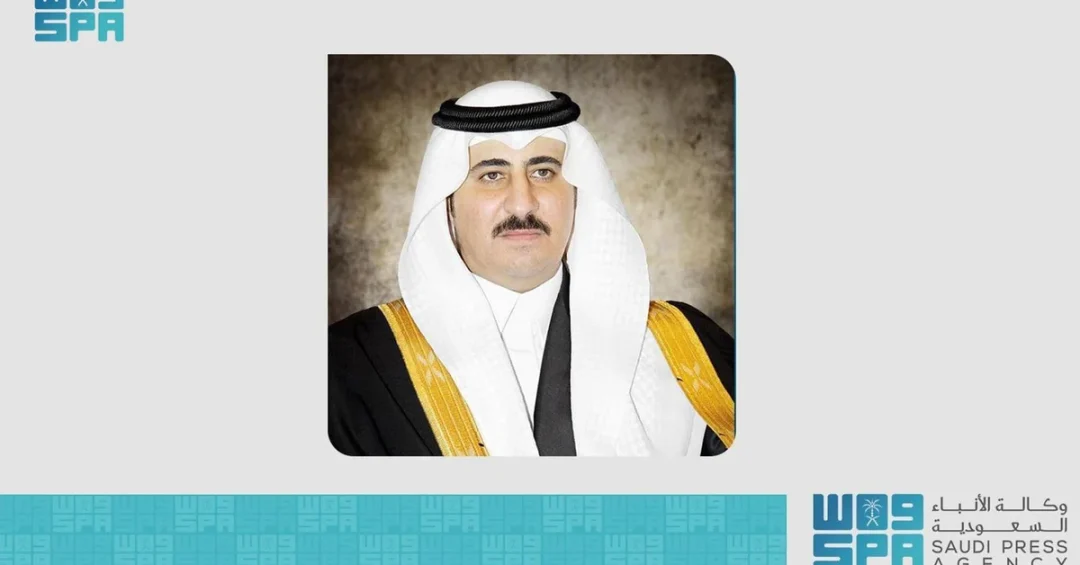
The Secretary General of the Sultan bin Abdulaziz Al-Saud Foundation, Prince Faisal bin Sultan bin Abdulaziz, has said that the World Arabic Language Day celebration held in Paris provided a prominent platform to underline the vital role of Arabic in shaping the cultural and civilizational identity of Arab and Islamic nations. The event, organized by the Foundation in collaboration with the United Nations Educational, Scientific and Cultural Organization (UNESCO) and the Kingdom of Saudi Arabia’s Permanent Delegation to UNESCO, took place in the French capital on Wednesday and brought together diplomats, scholars, and cultural figures to examine the present and future of one of the world’s most widely spoken languages.
Prince Faisal’s remarks, released through official Saudi channels, framed the celebration as more than a ceremonial occasion. In his view, it offered a rare opportunity to explore the challenges Arabic faces in the digital era and to identify practical ways of promoting the language through artificial intelligence and innovation. His comments also carried a clear message of appreciation for UNESCO’s continuing interest in Arabic as a global human heritage, and for the work of the Kingdom’s Permanent Delegation to UNESCO in elevating the language’s international standing. Why does a single celebration in Paris matter so much to millions of Arabic speakers around the world? The answer lies in the language’s dual character: it is at once a living means of daily communication and a repository of centuries of shared memory.
Context and Background
World Arabic Language Day is observed every year on December 18, the date on which the United Nations General Assembly adopted Arabic as one of its official languages in 1973. The designation recognizes Arabic as a language spoken by more than 400 million people across the Middle East, North Africa, and the wider diaspora, and as a liturgical language for nearly two billion Muslims worldwide. Arabic is also one of the six official languages of the United Nations, alongside Chinese, English, French, Russian, and Spanish, a status that reflects its global reach and its role in diplomacy, science, and culture.
The Sultan bin Abdulaziz Al-Saud Foundation has long been active in cultural and humanitarian work, and its decision to co-host this year’s celebration with UNESCO and Saudi Arabia’s Permanent Delegation to UNESCO reflects a deliberate strategy of institutional partnership. By choosing Paris, the seat of UNESCO, the organizers placed Arabic at the heart of international cultural diplomacy. Is it not significant that a language so often associated with tradition is being discussed in the same halls where global conventions on heritage and education are drafted? The setting itself signals that Arabic is not a regional concern alone but a shared asset for humanity.
The celebration also came at a time when digital transformation is reshaping how languages are used, taught, and preserved. Arabic, with its rich morphology and diverse dialects, presents both opportunities and challenges for computational linguistics and artificial intelligence. Prince Faisal’s emphasis on AI and innovation therefore connects the event to a broader global conversation about linguistic diversity in the digital age, a conversation in which Saudi Arabia is increasingly a leading voice.
Key Details
According to the statement carried by the Saudi Press Agency, Prince Faisal bin Sultan bin Abdulaziz praised UNESCO’s role and its great interest in the Arabic language, as well as the organization’s continuous efforts to support events that highlight Arabic as a global human heritage. He also acknowledged the efforts of Saudi Arabia’s Permanent Delegation to UNESCO for its active and distinguished role in holding the celebration and for its diligent work in promoting the Kingdom’s position as a hub for the Arabic language regionally and internationally.
The Secretary General noted that the Foundation’s support for the celebration aligns with Saudi Vision 2030, which places special emphasis on the Arabic language as a tool for global communication and a source of creativity and innovation. He further highlighted the Foundation’s commitment to fostering collaboration with both international and local institutions to promote Arabic, utilizing avenues such as scientific research, technological initiatives, and cultural and educational activities. These are not abstract aspirations; they describe a working program that links language promotion to research funding, digital tool development, and cross-border educational exchange.
What makes this approach distinctive is its combination of heritage preservation with technological modernization. Rather than treating Arabic as a static inheritance, the Foundation appears to view it as a dynamic system that can be strengthened through innovation. The Paris event thus served as a meeting point for two agendas: safeguarding the language’s classical heritage and equipping it for the digital future. In practical terms, that means supporting Arabic-language content online, encouraging the development of AI models that understand Arabic dialects, and expanding translation and publishing initiatives that carry Arabic literature and scholarship to global audiences.
International and Regional Impact
The celebration in Paris carries implications that extend well beyond a single day of speeches and panels. For Arab and Islamic nations, it reinforces a sense of shared cultural identity at a time when regional cooperation is expanding in economic and political spheres as well. For international audiences, it offers a reminder that Arabic is not merely a regional language but a vehicle for scientific, philosophical, and literary contributions that have shaped global civilization, from the preservation of classical texts to advances in mathematics, medicine, and astronomy.
UNESCO’s involvement adds a layer of multilateral legitimacy. By co-organizing the event, the organization signals that the promotion of Arabic aligns with its broader mandate to protect linguistic diversity and cultural heritage worldwide. Saudi Arabia’s Permanent Delegation to UNESCO, for its part, has been active in advancing the Kingdom’s cultural diplomacy, and its role in this celebration illustrates how Riyadh works through international institutions to achieve cultural objectives. Does this not suggest that cultural diplomacy is becoming as important as traditional statecraft in Saudi Arabia’s global engagement? The event’s format, combining official remarks with expert discussion, points to a model of cooperation that can be replicated for other languages and heritage initiatives.
Economic and Strategic Significance
The strategic significance of promoting Arabic extends into economic and educational domains. A language spoken by hundreds of millions of people represents a substantial market for digital content, publishing, media, and educational services. As Saudi Arabia diversifies its economy under Vision 2030, sectors such as tourism, entertainment, and technology increasingly rely on Arabic-language platforms to reach regional and global audiences. Strengthening Arabic in the digital sphere therefore supports both cultural and commercial objectives.
Moreover, the intersection of Arabic and artificial intelligence has become a focus of research and investment. Developing AI systems that can process Arabic accurately is essential for applications ranging from customer service to medical translation and legal documentation. The Foundation’s emphasis on technological initiatives and scientific research reflects an understanding that language policy and innovation policy are increasingly intertwined. By supporting collaboration between international and local institutions, the Foundation helps build capacity that benefits not only Saudi Arabia but the wider Arabic-speaking world.
From a strategic perspective, positioning the Kingdom as a hub for the Arabic language regionally and internationally also strengthens its soft power. Cultural leadership complements economic and diplomatic leadership, creating a more rounded international profile. The Paris celebration, held under the joint auspices of the Foundation, UNESCO, and the Saudi delegation, exemplifies this integrated approach.
Vision 2030 Alignment
The connection to Saudi Vision 2030 is explicit in Prince Faisal’s remarks. The Vision, launched in 2016, sets out a comprehensive plan to diversify the Kingdom’s economy, empower its citizens, and enhance its global role. Within that framework, the Arabic language is identified as a tool for global communication and a source of creativity and innovation. The Foundation’s support for World Arabic Language Day thus forms part of a larger national effort to invest in human capital and cultural production.
Vision 2030 also emphasizes the importance of education, research, and international partnerships, all of which are reflected in the Foundation’s stated commitment to collaboration with international and local institutions. By promoting Arabic through scientific research, technology, and cultural activities, the Kingdom is not only preserving a heritage but also building a foundation for future knowledge economies. As the digital age continues to transform how languages are learned and used, Saudi Arabia’s proactive stance ensures that Arabic will remain a vibrant medium of expression, commerce, and scholarship for generations to come.
In the end, the message from Paris is one of confidence and continuity. A language that has carried the intellectual heritage of Arab and Islamic civilization for centuries is now being equipped to thrive in a new technological era. Through the efforts of the Sultan bin Abdulaziz Al-Saud Foundation, UNESCO, and the Kingdom’s Permanent Delegation to UNESCO, World Arabic Language Day has become more than a commemoration; it is a working platform for the future of a language that continues to shape identity, culture, and global dialogue.
20 Questions
Q1. What event did the Sultan bin Abdulaziz Al-Saud Foundation organize in Paris?
A1. The Foundation organized a celebration of World Arabic Language Day in collaboration with UNESCO and Saudi Arabia’s Permanent Delegation to UNESCO, held in Paris on Wednesday.
Q2. Who represented the Foundation at the event?
A2. Prince Faisal bin Sultan bin Abdulaziz, Secretary General of the Sultan bin Abdulaziz Al-Saud Foundation, highlighted the significance of the Arabic language and its role in shaping cultural identity.
Q3. When is World Arabic Language Day observed annually?
A3. It is observed on December 18 each year, marking the date in 1973 when the United Nations General Assembly adopted Arabic as an official UN language.
Q4. Why is Arabic considered a global language?
A4. Arabic is spoken by over 400 million people, is the liturgical language of nearly two billion Muslims, and is one of the six official languages of the United Nations.
Q5. What challenges did Prince Faisal mention regarding Arabic?
A5. He noted the challenges the language faces in the digital era and emphasized the need to promote it through artificial intelligence and innovation.
Q6. How did Prince Faisal describe UNESCO’s role?
A6. He praised UNESCO’s great interest in the Arabic language and its continuous efforts to support events that highlight Arabic as a global human heritage.
Q7. What did Prince Faisal say about Saudi Arabia’s Permanent Delegation to UNESCO?
A7. He acknowledged its active and distinguished role in holding the celebration and its diligent work in promoting the Kingdom’s position as a hub for the Arabic language.
Q8. How does the Foundation’s support align with Saudi Vision 2030?
A8. It aligns with Vision 2030, which emphasizes Arabic as a tool for global communication and a source of creativity and innovation.
Q9. What avenues does the Foundation use to promote Arabic?
A9. The Foundation fosters collaboration with international and local institutions through scientific research, technological initiatives, and cultural and educational activities.
Q10. Why is the Paris venue significant for this celebration?
A10. Paris hosts UNESCO headquarters, placing Arabic at the center of international cultural diplomacy and multilateral heritage discussions.
Q11. What does the celebration aim to achieve?
A11. It aims to emphasize the importance of Arabic and its vital role in shaping the cultural and civilizational identity of Arab and Islamic nations.
Q12. How does AI relate to the Arabic language?
A12. AI can help process Arabic accurately, support digital content creation, and develop tools for translation, education, and research, enhancing the language’s global presence.
Q13. What is the significance of Arabic in the digital era?
A13. Arabic’s digital presence affects how millions access information, education, and services, making its development essential for cultural and economic participation.
Q14. How many official languages does the UN have?
A14. The United Nations has six official languages: Arabic, Chinese, English, French, Russian, and Spanish.
Q15. What role does the Sultan bin Abdulaziz Al-Saud Foundation play?
A15. It supports cultural, educational, and humanitarian initiatives, including promoting the Arabic language through partnerships and events.
Q16. How does promoting Arabic support Saudi Arabia’s soft power?
A16. It strengthens the Kingdom’s cultural leadership and international profile, complementing its economic and diplomatic engagement.
Q17. What economic sectors benefit from Arabic-language promotion?
A17. Sectors such as tourism, entertainment, media, publishing, and technology benefit by reaching wider Arabic-speaking audiences.
Q18. Why is Arabic important for Islamic heritage?
A18. Arabic is the language of the Quran and Islamic scholarship, preserving centuries of religious, scientific, and philosophical knowledge.
Q19. What does the Foundation hope to achieve through collaboration?
A19. It seeks to promote Arabic globally by leveraging research, technology, and cultural activities in partnership with international and local institutions.
Q20. How does this event reflect Saudi Arabia’s global role?
A20. It demonstrates the Kingdom’s commitment to cultural diplomacy and its active participation in multilateral efforts to preserve and promote global heritage.
Reader Feedback
We value your thoughts. Please share your feedback on this article.
Your feedback helps us improve our coverage.
Related articles
 Prophet’s Mosque: A Global Beacon of Islamic Education
 Resin Art in Saudi Arabia: Beauty and Durability Combined
 Over 700 Visitors Enjoy Camel-Riding at King Abdulaziz Festival
 Saudi Academy Welcomes Second Abjad Arabic Cohort
 King Abdulaziz Public Library Presents Children’s Play on Camel Heritage
 Saudi Attire Experience Draws Crowds at Camel Festival