


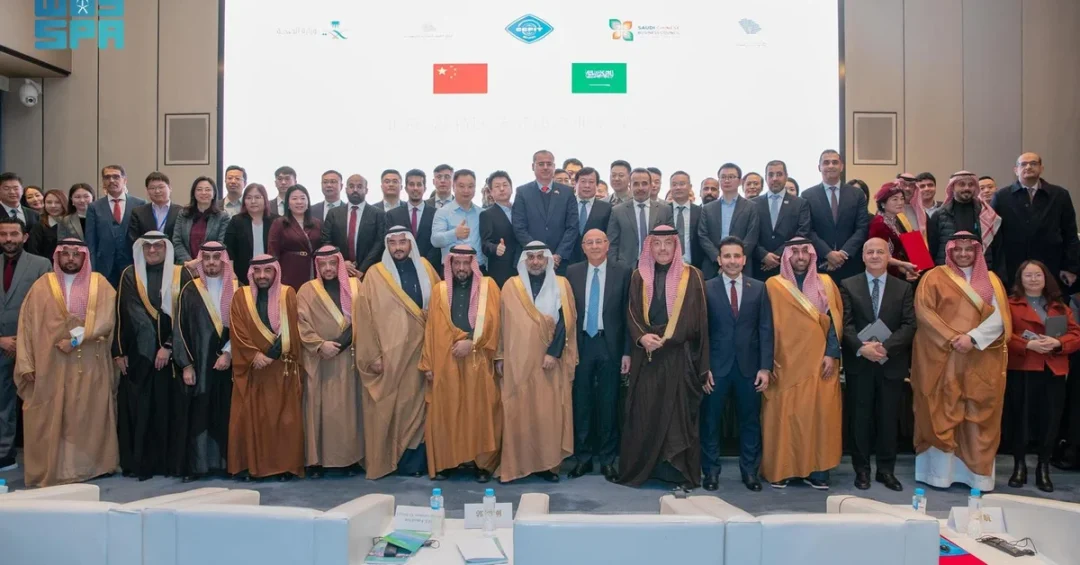
Twenty-four agreements were signed at the Saudi-Chinese Business Council Forum in Beijing on December 4, 2024, marking a significant expansion of economic cooperation between the Kingdom of Saudi Arabia and the People’s Republic of China. The forum, held under the patronage of the Saudi Ministry of Health and attended by Minister of Health Fahad Al-Jalajel, brought together 25 Saudi investors and 30 Chinese investors before an audience of 450 participants, with healthcare, biotechnology, and cross-border investment at the center of discussions designed to advance the objectives of Saudi Vision 2030. The gathering underscored the deepening strategic partnership between Riyadh and Beijing and signaled new opportunities for private-sector collaboration in priority sectors.
The event was organized to strengthen trade and investment ties in the healthcare sector, an area where Saudi Arabia is pursuing ambitious localization goals. The 24 agreements signed during the forum cover a range of initiatives, from pharmaceutical manufacturing and vaccine production to insurance and biotechnology innovation. Officials described the outcome as a practical step toward building resilient, sustainable healthcare systems that serve both nations’ long-term interests. The forum also provided a platform for Saudi and Chinese companies to explore joint ventures, technology transfer, and knowledge exchange.
Context and Background
How did Saudi-Chinese economic relations reach this point of such productive collaboration? The partnership between the Kingdom and China has deepened steadily over the past decade, driven by complementary economic strengths and a shared commitment to diversification and modernization. In 2023, bilateral trade volume between Saudi Arabia and China reached SAR70.4 billion, a figure that reflects the robust and expanding nature of commercial ties. China remains one of Saudi Arabia’s largest trading partners, while Saudi Arabia is a critical energy supplier to China and an increasingly important destination for Chinese investment in technology, infrastructure, and healthcare.
The Saudi-Chinese Business Council Forum builds on this foundation by focusing on high-value sectors that align with Vision 2030’s goals of economic diversification and private-sector growth. Healthcare has emerged as a priority area, particularly as Saudi Arabia seeks to localize vaccine production and pharmaceutical manufacturing. The Kingdom’s pharmaceutical market is valued at more than SAR30 billion, and the private insurance market is expected to grow fivefold, creating significant opportunities for international partners. These developments are not isolated; they are part of a broader strategy to position Saudi Arabia as a regional hub for healthcare innovation and life sciences.
The forum also reflects Saudi Arabia’s proactive approach to international engagement under the leadership of Crown Prince Mohammed bin Salman. By convening investors and policymakers in Beijing, the Kingdom is signaling its openness to global partnerships that bring capital, expertise, and technology into the Saudi economy. The participation of Minister Al-Jalajel underscores the government’s commitment to supporting these efforts at the highest levels and ensuring that agreements translate into tangible outcomes.
Key Details
What exactly was achieved at the forum, and why does it matter for both nations? The 24 agreements signed in Beijing cover a diverse array of projects and partnerships. They include memoranda of understanding and joint venture arrangements in biotechnology, pharmaceutical manufacturing, vaccine localization, and healthcare services. The presence of 25 Saudi and 30 Chinese investors highlights the private-sector interest in these sectors, while the audience of 450 investors demonstrates the scale of engagement. The agreements are expected to facilitate technology transfer, enhance local manufacturing capabilities, and create new investment channels.
Biotechnology was singled out as a crucial sector for cooperation. Saudi Arabia is focusing on localizing vaccine production and pharmaceutical manufacturing to ensure health security and reduce reliance on imports. The Kingdom’s market, valued at over SAR30 billion, offers substantial potential for Chinese companies with expertise in biopharmaceuticals and medical technology. In his remarks, Minister Al-Jalajel said: “The partnership between Saudi Arabia and China is profound, rooted in a mutual commitment to advancing global health and addressing their challenges. Our discussions today shed light on our cooperation, particularly in promoting innovation in biotechnology and robotics and localizing healthcare industries to ensure resilience and sustainability.”
The forum also addressed the growing private insurance market in Saudi Arabia, which is expected to expand fivefold as the population grows and healthcare demand increases. This expansion presents opportunities for Chinese insurers and investors to enter a dynamic market. Additionally, discussions touched on robotics and digital health solutions, areas where China has made significant advances and where Saudi Arabia seeks to build domestic capabilities. The agreements are designed to be actionable, with follow-up mechanisms to track implementation and ensure that the partnerships deliver measurable results.
International and Regional Impact
How will these agreements influence the broader region and the global economy? The Saudi-Chinese Business Council Forum is part of a wider pattern of strengthening ties between the Kingdom and major Asian economies. For China, Saudi Arabia represents a stable and strategically located partner with a growing market and a government committed to economic reform. For Saudi Arabia, China offers access to advanced technology, manufacturing expertise, and a vast consumer market. The healthcare agreements signed in Beijing could serve as a model for cooperation in other sectors, such as renewable energy, logistics, and digital infrastructure.
Regionally, the forum reinforces Saudi Arabia’s role as a leader in the Middle East’s economic transformation. By attracting Chinese investment into healthcare and biotechnology, the Kingdom is diversifying its economy away from oil dependence and building knowledge-based industries. This aligns with Vision 2030’s objectives of increasing private-sector contribution to GDP and creating high-skilled jobs for Saudi citizens. The agreements also strengthen the strategic partnership between Riyadh and Beijing, which has been expanding across political, economic, and cultural dimensions. Other countries in the region are likely to take note of this model of South-South cooperation.
Economic and Strategic Significance
Why are these agreements economically significant for Saudi Arabia? The localization of pharmaceutical and vaccine production is a key pillar of the Kingdom’s health security strategy. By partnering with Chinese firms, Saudi Arabia can accelerate the development of domestic manufacturing capacity, reduce import costs, and improve supply chain resilience. The SAR30 billion pharmaceutical market offers a substantial opportunity for joint ventures that combine Chinese technology with Saudi capital and market access. Similarly, the expected fivefold growth in the private insurance market signals a major expansion in financial services and healthcare coverage.
Strategically, the agreements deepen Saudi Arabia’s economic diversification efforts. They support the growth of non-oil sectors, attract foreign direct investment, and foster innovation. The involvement of 25 Saudi investors and 30 Chinese investors demonstrates that the private sector is ready to engage, and the 450-strong audience indicates strong interest from the broader business community. These partnerships are expected to generate technology spillovers, enhance workforce skills, and create new export opportunities. For China, the agreements provide a gateway to the Middle East and North Africa region, leveraging Saudi Arabia’s position as a regional hub.
Vision 2030 Alignment
How do these developments connect to Saudi Vision 2030? The forum’s outcomes directly support several Vision 2030 goals, including economic diversification, private-sector growth, and the development of a world-class healthcare system. The localization of healthcare industries is a core objective, as it enhances self-reliance and creates high-value jobs. The partnerships with Chinese companies align with the Vision’s emphasis on international cooperation and knowledge transfer. By signing 24 agreements, Saudi Arabia is translating its strategic vision into concrete actions that benefit both nations.
Looking ahead, the Saudi-Chinese Business Council Forum sets the stage for further collaboration. The agreements signed in Beijing are expected to catalyze additional investments and joint projects in biotechnology, robotics, and digital health. As Saudi Arabia continues to implement Vision 2030, partnerships with global leaders like China will play an increasingly important role in achieving the Kingdom’s ambitions. The forum demonstrated that Saudi Arabia is open for business and committed to building a prosperous, sustainable future through international cooperation. What more can be achieved when nations unite around shared goals of health, innovation, and economic progress?
20 Questions
Q1. What was the main purpose of the Saudi-Chinese Business Council Forum?
A1. The forum aimed to boost economic collaboration between Saudi Arabia and China in key sectors, particularly healthcare, biotechnology, and investment, to support Saudi Vision 2030 goals.
Q2. Where and when did the forum take place?
A2. The forum convened in Beijing on December 4, 2024, bringing together investors and officials from both nations.
Q3. Who attended the forum on behalf of Saudi Arabia?
A3. Saudi Minister of Health Fahad Al-Jalajel attended, along with 25 Saudi investors and an audience of 450 participants.
Q4. How many agreements were signed at the forum?
A4. Twenty-four agreements were signed, covering healthcare, biotechnology, pharmaceutical manufacturing, and related sectors.
Q5. How many Chinese investors participated?
A5. Thirty Chinese investors participated, reflecting strong private-sector interest in Saudi-Chinese collaboration.
Q6. What is the value of Saudi Arabia’s pharmaceutical market?
A6. The pharmaceutical market is valued at over SAR30 billion, offering significant opportunities for localization and partnership.
Q7. What did Minister Al-Jalajel say about the partnership?
A7. He described the partnership as profound, rooted in mutual commitment to advancing global health and promoting innovation in biotechnology and robotics.
Q8. What was the bilateral trade volume between Saudi Arabia and China in 2023?
A8. Bilateral trade volume reached SAR70.4 billion in 2023, demonstrating robust economic ties.
Q9. Which sectors were highlighted for cooperation?
A9. Healthcare, biotechnology, pharmaceutical manufacturing, vaccine production, and private insurance were key sectors highlighted.
Q10. Why is biotechnology important for Saudi Arabia?
A10. Biotechnology supports localizing vaccine production and pharmaceutical manufacturing, enhancing health security and economic diversification.
Q11. How much is the private insurance market expected to grow?
A11. The private insurance market in Saudi Arabia is expected to grow fivefold, opening new investment prospects.
Q12. What role does Vision 2030 play in these agreements?
A12. The agreements align with Vision 2030 goals of economic diversification, private-sector growth, and healthcare localization.
Q13. How many investors were in the audience?
A13. An audience of 450 investors attended the forum, indicating broad interest in Saudi-Chinese business opportunities.
Q14. What is the significance of localizing healthcare industries?
A14. Localization ensures resilience, sustainability, and reduced reliance on imports, while creating jobs and fostering innovation.
Q15. What areas of technology were discussed?
A15. Biotechnology, robotics, and digital health solutions were discussed as areas for collaboration and innovation.
Q16. How do these agreements benefit China?
A16. They provide Chinese companies access to Saudi Arabia’s growing market and a gateway to the Middle East and North Africa region.
Q17. What is the expected impact on Saudi Arabia’s economy?
A17. The agreements are expected to attract foreign investment, create jobs, and support non-oil sector growth.
Q18. What follow-up mechanisms are in place for the agreements?
A18. The agreements include follow-up mechanisms to track implementation and ensure measurable results.
Q19. How does this forum fit into Saudi Arabia’s broader international engagement?
A19. It reflects Saudi Arabia’s proactive approach to global partnerships that bring capital, expertise, and technology into the Kingdom.
Q20. What does the future hold for Saudi-Chinese economic cooperation?
A20. The forum sets the stage for further collaboration in biotechnology, robotics, and digital health, supporting Vision 2030 and mutual prosperity.
Reader Feedback
We value your thoughts. Please share your feedback on this article.
Your feedback helps us improve our coverage.
Related articles
 Saudi Ministry, UNDP Sign Deal to Boost Development
 KSA, Pakistan Sign Customs Cooperation Agreement
 Saudi Bank Credit Hits Record SAR2.88 Trillion in October
 Saudi Ministry of Economy and Planning Earns EFQM 4-Star Rating
 Saudi ZATCA, Morocco Tax Authority Sign Cooperation Deal
 Jeddah AgroFood Exhibition Showcases Modern Agricultural Technologies