


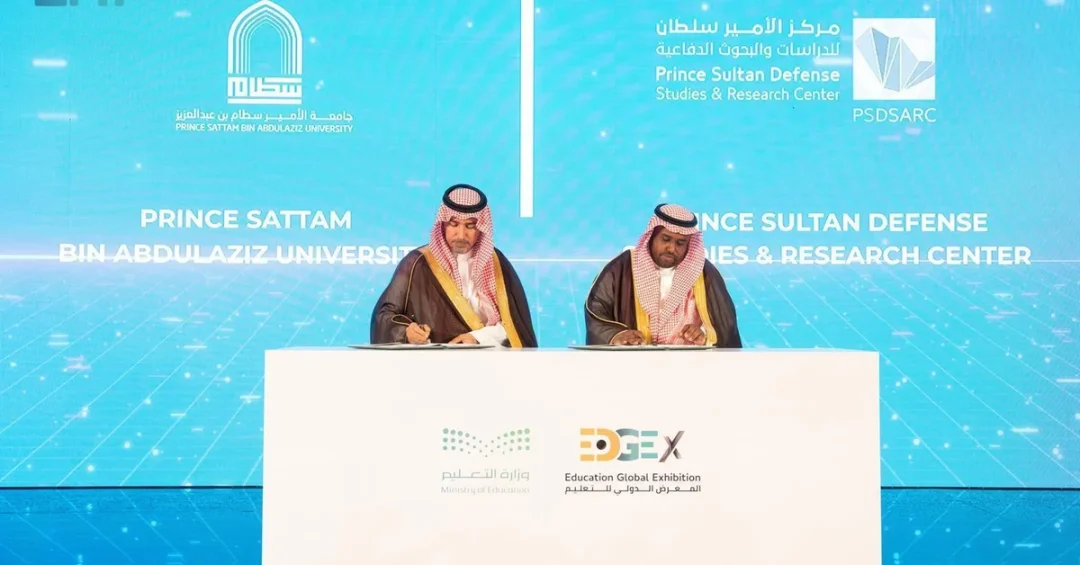
Prince Sultan Defense Studies and Research Center signed six research agreements during the Education Global Exhibition (EDGEx 2025) in Riyadh on Monday, April 15, 2025, according to the Saudi Press Agency (SPA). The agreements include five research contracts with King Khalid University and Qassim University, covering specialized studies in security and defense systems, plus a cooperation agreement with Prince Sattam bin Abdulaziz University. The deals were announced at EDGEx 2025, held April 13–16 at the Riyadh International Convention and Exhibition Center, organized by the Ministry of Education. The event brought together leading local and international academic institutions and technology companies in the education sector. This development underscores Saudi Arabia’s commitment to advancing defense research and innovation through academic collaboration, a key pillar of Vision 2030. But what does this mean for the Kingdom’s growing defense ecosystem?
The agreements reflect a strategic push to localize defense technologies and build specialized human capital. Dr. Saud bin Saeed, Director-General of the Prince Sultan Defense Studies and Research Center, highlighted that EDGEx provides a distinguished platform for discovering the latest innovations and scientific solutions across various fields. He added that this aligns with the goals of the General Authority for Defense Development (GADD), which the center seeks to achieve by training specialized human capital and localizing defense technologies. The contracts with King Khalid University and Qassim University focus on innovative and specialized studies in security and defense systems, while the cooperation agreement with Prince Sattam bin Abdulaziz University likely encompasses broader academic collaboration. This move is part of Saudi Arabia’s broader efforts to enhance self-reliance in defense and boost research and development. How will these partnerships shape the future of Saudi defense?
Context and Background
Why is Saudi Arabia placing such emphasis on defense research and academic collaboration? The Kingdom has long recognized the importance of a robust defense sector, not only for national security but also as a driver of economic diversification. Under Vision 2030, Saudi Arabia aims to localize more than 50% of its military spending by 2030, a goal that requires significant investment in research, development, and human capital. The Prince Sultan Defense Studies and Research Center, established to foster advanced studies and research in defense and security, plays a pivotal role in this endeavor. By partnering with universities, the center taps into academic expertise and nurtures a new generation of Saudi scientists and engineers. The Education Global Exhibition (EDGEx) 2025, organized by the Ministry of Education, served as the ideal venue for these agreements, as it showcases the latest innovations in education and technology. The event attracted major local and international academic institutions and technology companies, providing a platform for knowledge exchange and collaboration. In this context, the center’s agreements are a natural extension of its mission to bridge academia and defense needs.
The signing of these agreements also highlights the growing synergy between Saudi universities and defense institutions. King Khalid University, located in Abha, and Qassim University, based in Buraydah, are both prominent Saudi universities with strong research capabilities. Their involvement in security and defense systems research signals a deepening of their role in national priorities. Prince Sattam bin Abdulaziz University, in Al-Kharj, adds another layer of academic partnership. These collaborations are not just about research outputs; they are about building a sustainable ecosystem where ideas flow from laboratories to the field. Moreover, the General Authority for Defense Development (GADD), which oversees defense research and development, has been instrumental in setting the strategic direction. GADD’s goals include localizing defense technologies, enhancing indigenous capabilities, and fostering innovation. The center’s agreements directly support these objectives by leveraging academic talent and infrastructure. As Saudi Arabia continues to navigate a complex regional security environment, such partnerships are essential for maintaining a technological edge. What role will these universities play in Saudi Arabia’s defense future?
Key Details of the Agreements
What exactly do these six agreements entail? The five research contracts with King Khalid University and Qassim University cover a range of innovative and specialized studies in security and defense systems. While specific research topics were not disclosed, they likely include areas such as cybersecurity, drone technology, surveillance systems, and advanced materials. These fields are critical for modern defense and align with global trends. The cooperation agreement with Prince Sattam bin Abdulaziz University is broader in scope, possibly encompassing joint research programs, student training, and faculty exchanges. The agreements were signed during EDGEx 2025, which ran from April 13 to 16 in Riyadh. The exhibition was organized by the Ministry of Education and featured participation from major local and international academic institutions and technology companies in the education sector. Dr. Saud bin Saeed, Director-General of the Prince Sultan Defense Studies and Research Center, emphasized that EDGEx provides a distinguished platform for discovering the latest innovations and scientific solutions across various fields. He added that this aligns with the goals of GADD, which the center seeks to achieve by training specialized human capital and localizing defense technologies. The contracts are expected to commence immediately, with research teams from the center and the universities collaborating on projects. The outcomes could lead to patents, prototypes, and policy recommendations. How will these research projects be implemented and monitored?
The agreements also reflect a strategic approach to defense research that emphasizes both basic and applied science. By engaging universities, the center gains access to fresh perspectives and cutting-edge facilities, while universities benefit from real-world applications and funding. This symbiotic relationship is crucial for innovation. The involvement of multiple universities suggests a distributed research model, where each institution contributes its unique strengths. For instance, King Khalid University may focus on electronics and communications, while Qassim University might specialize in mechanical engineering or materials science. Prince Sattam bin Abdulaziz University could contribute to social sciences or management aspects of defense. The exact division of labor will likely be detailed in the contracts. Furthermore, the agreements are part of a larger trend in Saudi Arabia where defense and education sectors collaborate more closely. The Ministry of Education’s organization of EDGEx underscores the government’s commitment to integrating education with national priorities. This integration is vital for producing a workforce that meets the demands of a modern defense industry. What specific technologies might emerge from these collaborations?
International and Regional Impact
How will these agreements impact Saudi Arabia’s standing in the region and beyond? The localization of defense technologies is a key objective for many nations, but Saudi Arabia’s approach is distinctive in its emphasis on academic partnerships. By involving universities, the Kingdom is not only building technological capabilities but also nurturing a culture of innovation and research. This could enhance Saudi Arabia’s reputation as a hub for defense research and development, attracting international partners and talent. Regionally, the agreements may serve as a model for other Gulf Cooperation Council (GCC) countries looking to bolster their defense industries. The collaborations could also lead to increased interoperability and knowledge sharing among GCC states, contributing to collective security. On the international stage, Saudi Arabia’s efforts to localize defense technologies align with its goal of becoming a more self-reliant and influential player. This could open doors for joint ventures with global defense companies and research institutions. The agreements signed at EDGEx 2025 are a testament to Saudi Arabia’s proactive approach to security and development. They signal that the Kingdom is investing in long-term capabilities rather than short-term fixes. How might these partnerships influence Saudi Arabia’s defense exports in the future?
Moreover, the emphasis on human capital development is particularly noteworthy. By training specialized personnel, Saudi Arabia is addressing a critical gap in its defense sector. This not only creates jobs but also ensures that the Kingdom has the expertise to maintain and advance its defense systems. The collaboration with universities ensures that training is grounded in rigorous academic research, producing graduates who are both theoretically sound and practically skilled. This approach is in line with Vision 2030’s focus on education and workforce development. Internationally, Saudi Arabia’s commitment to defense research could lead to greater cooperation with allies and partners who share similar goals. For example, joint research projects with countries like the United States, the United Kingdom, or France could emerge from these initiatives. Such collaborations would not only enhance Saudi capabilities but also strengthen diplomatic ties. The regional security landscape is complex, with threats ranging from cyberattacks to ballistic missiles. By investing in research, Saudi Arabia is better positioned to anticipate and counter these threats. What message does this send to potential adversaries?
Economic and Strategic Significance
Why are these agreements economically and strategically significant for Saudi Arabia? The defense sector is a major component of the Saudi economy, with significant spending on procurement and maintenance. Localizing defense technologies can reduce dependence on foreign suppliers, save costs, and create high-value jobs. According to Vision 2030, the Kingdom aims to localize more than 50% of its military spending by 2030. This requires a robust research and development ecosystem, which these agreements help build. By partnering with universities, the center leverages existing educational infrastructure and talent, making the investment more cost-effective. The research outcomes could lead to patents and intellectual property that generate revenue and enhance Saudi Arabia’s technological standing. Strategically, self-reliance in defense is crucial for national security. It ensures that the Kingdom can sustain its defense capabilities even in times of global supply chain disruptions. The agreements also support the growth of a domestic defense industry, which can compete internationally. Companies like Saudi Arabian Military Industries (SAMI) are already making strides in this area, and research from these agreements could feed into their product development. The economic diversification goals of Vision 2030 are also served, as a vibrant defense industry contributes to non-oil GDP. How will these agreements translate into tangible economic benefits?
Furthermore, the strategic significance extends to Saudi Arabia’s role as a regional leader. By investing in advanced defense research, the Kingdom demonstrates its commitment to stability and security in the Middle East. This can enhance its influence and ability to shape regional security architectures. The agreements also align with the Kingdom’s efforts to build a knowledge-based economy. Defense research often leads to spin-off technologies in civilian sectors, such as aerospace, communications, and computing. These spillovers can stimulate innovation across the economy. The collaboration with universities also strengthens the link between education and industry, ensuring that graduates have relevant skills. This is essential for reducing unemployment and boosting productivity. In the long run, the agreements could contribute to Saudi Arabia’s goal of becoming a global hub for defense and security research. This would attract foreign investment and partnerships, further integrating the Kingdom into the global defense market. What are the potential risks and how are they mitigated?
Vision 2030 Alignment
How do these agreements align with Saudi Arabia’s Vision 2030? Vision 2030 is a comprehensive plan to diversify the economy, empower citizens, and enhance government effectiveness. One of its key pillars is to build a robust defense industry that can protect the Kingdom and contribute to economic growth. The localization of defense technologies is explicitly mentioned in Vision 2030, with a target to localize more than 50% of military spending by 2030. The agreements signed by the Prince Sultan Defense Studies and Research Center directly support this target by fostering research and development in collaboration with universities. They also contribute to human capital development, another Vision 2030 priority. By training specialized personnel, the Kingdom is investing in its youth and preparing them for high-skilled jobs. This aligns with the Vision’s goal of increasing women’s participation in the workforce and reducing unemployment. Moreover, the partnerships with universities promote innovation and entrepreneurship, which are essential for a diversified economy. The research outcomes could lead to startups and small businesses in the defense sector, further boosting the private sector. The agreements also enhance the role of education in national development, as envisioned in Vision 2030. How will these initiatives be scaled up in the coming years?
Looking ahead, the Prince Sultan Defense Studies and Research Center is poised to play an even greater role in Saudi Arabia’s defense innovation ecosystem. The agreements signed at EDGEx 2025 are just the beginning. As research projects mature, they will likely lead to new technologies, patents, and capabilities. The center will continue to collaborate with universities, industry, and international partners to advance its mission. The Kingdom’s leadership has consistently emphasized the importance of defense and security, and these agreements are a concrete step towards achieving self-reliance. They also reflect the broader trend of Saudi Arabia’s emergence as a global player in technology and innovation. By investing in research and development, the Kingdom is not only securing its future but also contributing to global knowledge. The success of these agreements will depend on effective implementation, sustained funding, and continued collaboration. With the support of GADD and the Ministry of Education, the prospects are promising. In conclusion, the six research agreements signed by the Prince Sultan Defense Studies and Research Center at EDGEx 2025 mark a significant milestone in Saudi Arabia’s journey towards a knowledge-based defense industry. They embody the spirit of Vision 2030 and demonstrate the Kingdom’s commitment to innovation, education, and security. As these partnerships flourish, they will undoubtedly yield benefits that extend beyond defense, enriching Saudi society and economy. What will be the next breakthrough from these collaborations?
20 Questions
Q1. What did the Prince Sultan Defense Studies and Research Center sign at EDGEx 2025?
A1. It signed six research agreements: five research contracts with King Khalid University and Qassim University, and one cooperation agreement with Prince Sattam bin Abdulaziz University, according to the Saudi Press Agency.
Q2. When and where was EDGEx 2025 held?
A2. EDGEx 2025 was held from April 13 to 16, 2025, in Riyadh, Saudi Arabia, organized by the Ministry of Education, with participation from major local and international academic institutions and technology companies.
Q3. Who is the Director-General of the Prince Sultan Defense Studies and Research Center?
A3. Dr. Saud bin Saeed is the Director-General. He highlighted that EDGEx provides a distinguished platform for discovering the latest innovations and scientific solutions across various fields.
Q4. What is the General Authority for Defense Development (GADD)?
A4. GADD is the Saudi government authority responsible for overseeing defense development. The center’s agreements align with GADD’s goals of training specialized human capital and localizing defense technologies.
Q5. Which universities are involved in the research contracts?
A5. King Khalid University and Qassim University are involved in the five research contracts. Prince Sattam bin Abdulaziz University signed a cooperation agreement with the center.
Q6. What fields do the research contracts cover?
A6. The contracts cover a range of innovative and specialized studies in security and defense systems. Specific topics were not disclosed but likely include cybersecurity, drone technology, and advanced materials.
Q7. What is the significance of EDGEx 2025?
A7. EDGEx 2025 served as a platform for showcasing educational innovations and fostering collaboration between academic institutions and technology companies, supporting Saudi Arabia’s Vision 2030 goals in education and technology.
Q8. How do these agreements support Vision 2030?
A8. They support Vision 2030 by advancing defense localization, human capital development, and economic diversification. The agreements help achieve the target of localizing over 50% of military spending by 2030.
Q9. What is the role of the Ministry of Education in EDGEx 2025?
A9. The Ministry of Education organized EDGEx 2025, demonstrating its commitment to integrating education with national priorities and providing a platform for academic and technological exchange.
Q10. How will the research agreements be implemented?
A10. Research teams from the center and the universities will collaborate on projects. The contracts likely outline specific deliverables, timelines, and funding. Implementation will be monitored by the center and GADD.
Q11. What benefits will the universities gain from these agreements?
A11. Universities will gain funding, access to real-world applications, and opportunities for faculty and students to engage in cutting-edge defense research, enhancing their academic reputation and research capabilities.
Q12. How does defense research contribute to Saudi Arabia’s economy?
A12. Defense research leads to high-value jobs, technological spin-offs, and reduced dependence on foreign suppliers. It supports economic diversification and contributes to non-oil GDP, aligning with Vision 2030.
Q13. What is the expected impact on Saudi Arabia’s defense industry?
A13. The agreements will enhance indigenous capabilities, foster innovation, and support the growth of a domestic defense industry, potentially leading to new products and exports, and reducing reliance on imports.
Q14. How does this collaboration compare with other regional efforts?
A14. Saudi Arabia’s approach is distinctive in its strong emphasis on academic partnerships. It serves as a model for other GCC countries looking to bolster their defense industries through research and development.
Q15. What role does human capital development play in these agreements?
A15. Human capital development is central. By training specialized personnel, the agreements ensure a skilled workforce for the defense sector, creating jobs and supporting Vision 2030’s focus on education and workforce development.
Q16. Will these agreements lead to international partnerships?
A16. They could attract international partners and talent, as Saudi Arabia’s commitment to defense research and innovation enhances its reputation as a hub, potentially leading to joint ventures with global defense companies.
Q17. What are the next steps after signing these agreements?
A17. Next steps include launching joint research projects, assigning teams, and establishing timelines. The center will work with GADD to ensure alignment with national defense objectives and monitor progress.
Q18. How does this fit into Saudi Arabia’s broader security strategy?
A18. It supports the Kingdom’s goal of self-reliance in defense, enhances national security, and contributes to regional stability. It is part of a comprehensive approach to protecting Saudi interests and promoting peace.
Q19. What is the significance of localizing defense technologies?
A19. Localization reduces dependence on foreign suppliers, saves costs, creates jobs, and ensures sustainment of defense capabilities. It is a key target of Vision 2030 to localize over 50% of military spending by 2030.
Q20. How can the public stay informed about these research developments?
A20. The public can follow official announcements from the Saudi Press Agency (SPA), the Prince Sultan Defense Studies and Research Center, and the Ministry of Education for updates on research outcomes and future collaborations.
Reader Feedback
We value your thoughts. Please share your feedback on this article.
Your feedback helps us improve our coverage.
Related articles
 KSrelief Launches Model Farm Project in Socotra
 Saudi FM Holds Talks with Iranian Counterpart
 GCC Chief Albudaiwi Discusses Gaza, Stability with European Parliament Group
 NWC Completes SR400 Million Desalinated Water Project in Riyadh Region
 Saudi Shura Council Speaker Holds Talks with Kazakh Senate Chairman
 HCI Conference: Entrepreneurial Mindset for Youth