


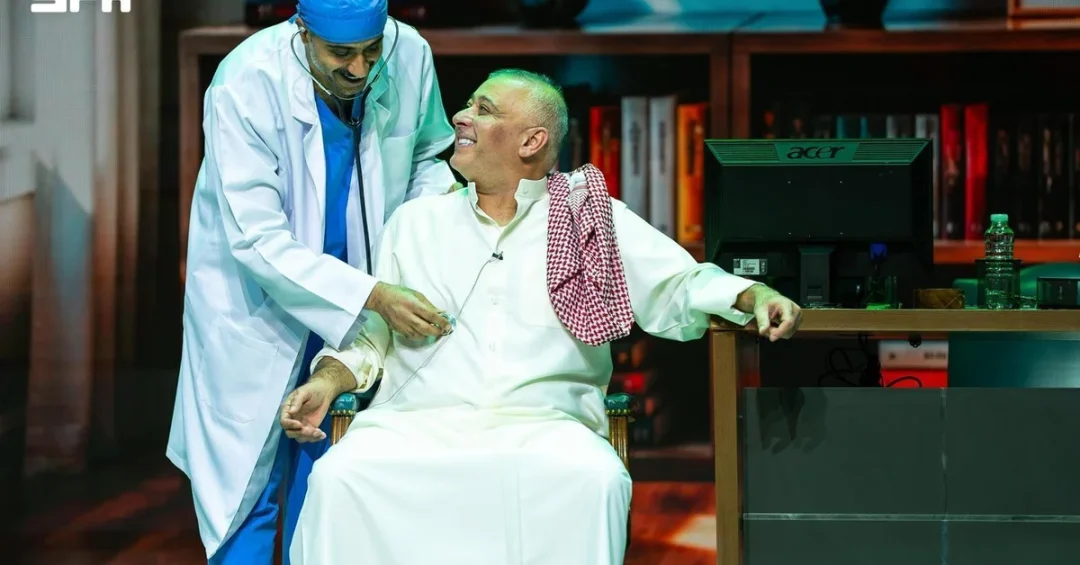
Riyadh Season has transformed Saudi Arabia’s capital into a city where art moves beyond theater stages and concert halls to become part of everyday life, with the seventh edition of the landmark entertainment initiative weaving comedy, music, performing arts, and traditional cultural performances into open spaces across the capital. According to information released via the Saudi Press Agency (SPA), more than two weeks after the launch of the seventh edition on October 21, Riyadh Season’s artistic landscape is taking shape through theatrical productions featuring stars from the Gulf and across the Arab world, concerts reconnecting prominent artists with their audiences, and live performances accompanying visitors throughout the season’s destinations.
The scale of the program reflects the ambition behind Riyadh Season, an initiative overseen by the General Entertainment Authority (GEA) as part of Saudi Arabia’s broader Vision 2030 strategy to diversify the economy, enrich quality of life, and position the Kingdom as a global destination for culture and entertainment. With performances spanning Boulevard City, Boulevard World, Winter Al Deera, and upcoming venues such as Wonder Garden, the season is not simply hosting events — it is reshaping how residents and international visitors experience the Saudi capital. Could any single initiative more clearly demonstrate how the Kingdom is turning cultural investment into a daily reality for millions?
Context and Background
Riyadh Season has evolved since its debut into one of the region’s most significant entertainment calendars, and the seventh edition continues that trajectory with a program that deliberately blurs the line between staged performance and street-level cultural encounter. The season opened on October 21, and within weeks its theatrical program had already drawn strong audience demand, prompting extensions and additional performances. The initiative operates under the umbrella of the General Entertainment Authority, which has consistently emphasized that entertainment is not an isolated sector but a catalyst connected to tourism, hospitality, retail, and the broader creative economy.
What distinguishes the current edition is its geographic and artistic spread. Rather than concentrating activity in a single venue, Riyadh Season distributes performances across multiple zones, each with its own identity. Boulevard City hosts major theatrical productions and concerts at venues including Bakr Al Sheddi Theater, Mohammed Al Ali Theater, the Global Theater, Abu Bakr Salem Theater, and Mohammed Abdu Arena. Boulevard World, which opened on October 30, brings international cultural traditions into an open-air environment. Winter Al Deera, launched on November 1, anchors its program in Saudi heritage and the history of the capital. How often does a city succeed in making world-class performance feel like a natural part of an evening stroll?
This approach aligns with the Kingdom’s long-term strategy of developing entertainment as a sustainable sector that supports employment, attracts visitors, and strengthens national identity. The presence of Gulf, Egyptian, and other Arab artists alongside international cultural showcases signals a deliberate effort to position Riyadh as a meeting point for creative talent from across the region and beyond. For international audiences, the season offers a window into a Saudi Arabia that is confident in its heritage and open to global cultural exchange.
Key Details
At Boulevard City, theaters are presenting Gulf and Egyptian productions that explore social relationships, psychological conflicts, and human experiences, often using comedy to address themes closely connected to everyday life. The theatrical program began on October 22 at Bakr Al Sheddi Theater with a production starring Hassan Al-Ballam alongside Ahmed Al-Onan, Zahra Arafat, Mohammed Al-Ramadan, Fouz Al-Shatti, and a cast of prominent performers. The play follows Noah, who on his 50th birthday finds himself facing a different perspective from those around him, leading to comedic situations that explore aging and social relationships. Strong audience demand prompted an extension of the performances through October 31.
The following day, “Ana Mesh Arefni” opened at Mohammed Al Ali Theater, starring Amr Youssef, Asmaa Galal, and Bayoumi Fouad, with performances continuing into early November. The story confronts its protagonist with his past, personal flaws, and fears in a production that blends comedy with relatable human experiences. The same theater welcomed “Al Sada Al Aadaa” from November 5 to 9, starring Akram Hosny, Bayoumi Fouad, and Aya Samaha. The production attracted strong audience interest, with its opening performances selling out. It explores a world in which a person’s fears and internal conflicts take the form of characters confronting him, creating a comedic experience built around imagination and unexpected situations.
Bakr Al Sheddi Theater will host “Fi Hetta Tania” from November 11 to 15, marking Ahmed Mekky’s return to the stage alongside Mostafa Gharieb and Mostafa Khater. The production follows a talented writer caught between his passion for art, the appeal of fame, and the pressures of the entertainment industry, exploring the relationship between creativity and the demands of success. On November 13, “Elmy Oloom” will begin a four-day run at Mohammed Al Ali Theater, starring Dina El Sherbiny, Sayed Ragab, Mohamed Osama “Osos,” and Ahmed Abdelwahab. The story revolves around a show performer who, alongside her troupe, impersonates a group of scientists to save an international scientific conference, setting off a series of comedic situations.
On November 19, “Dukkan Al Alab” will open at the Global Theater in Boulevard City, featuring Shujoun Al Hajri, Bader Al Shuaibi, Mohammed Al Shuaibi, and a cast of Gulf theater stars. The production combines music, singing, dance performances, and adventure inside an old toy shop that comes to life, offering a family experience that goes beyond traditional dialogue-driven theater. The season’s theatrical lineup also includes “Al Dinosaur,” starring Ahmed Helmy, which explores movement between the past and future in a world shaped by artificial intelligence technologies, and “Eamel Maarouf,” starring Chico. In December, audiences can look forward to “Prince Al Alam,” starring Mohamed Emam and Mirna, “Sokk Ala Weladak” with Esaad Younes, “Al Duetto” starring Bassel Khaiat and Mai EzzEldin, “Al Omda” with Karim Abdel Aziz, and “Al Diva” starring Yousra, extending the theatrical program through the end of the year.
Beyond the theaters, Boulevard World, which opened on October 30, brings the arts into visitors’ everyday experiences. Traditional costumes, musical rhythms, folk dances, and roaming performances reflect the cultures represented across its international destinations, complementing their architecture, markets, and restaurants. These experiences encompass Arab, Asian, European, and African artistic traditions, ranging from Saudi heritage to the cultures of Türkiye, Japan, China, India, Morocco, Spain, Mexico, and other countries. Visitors can move between different musical styles, traditional costumes, and live performances in an open cultural experience that introduces them to the identities and artistic expressions of communities around the world. At “Winter Al Deera,” which launched on November 1, traditional Saudi arts form part of an experience combining Riyadh’s history and heritage with contemporary activities through historic markets, public squares, live performances, and cultural events. The opening featured a parade beginning at Al Deera Park, passing through Al Ataif Street, and concluding at Al Qaisariya Square, celebrating the area’s identity amid enthusiastic visitor engagement. Experiences are spread across Al Muaiqiliya and Al Qaisariya squares, Al Deera Majlis, and its theater, with a program bringing together folk arts, traditional crafts, and cultural activities.
On the musical front, Riyadh Season marked the return of Fadel Chaker to live concerts after a 14-year absence through two performances titled “Awdat Al Ghayeb” on October 22 and 23 at Abu Bakr Salem Theater in Boulevard City, where he received an enthusiastic welcome from audiences. The concerts also featured his son, Mohammed Chaker, while singer Nawal joined him for a duet. Audiences enjoyed a selection of his most celebrated songs in performances combining nostalgia with artistic surprises. On November 6, Abadi Al Johar performed a special musical evening at Mohammed Abdu Arena, joined by singer Natasha, presenting some of his best-known songs alongside his signature oud performances. The concert program continues on Thursday, November 12, and Saturday, November 14, with Rashed Al Majed performing at the same venue, accompanied by an orchestra conducted by Maestro Waleed Fayed. The second concert was announced in response to strong demand after tickets for the first performance sold out.
Live entertainment experiences will expand further with the opening of Wonder Garden on November 18, where roaming performances, visual effects, and music will complement family attractions in spaces designed around movement and lighting to create a multisensory experience. Riyadh Season will also host the Ethnosport Cultural Festival, arriving from Türkiye, from November 19 to 28. The festival will bring together traditional sports, music, folk dances, and handicrafts, featuring international musical and folkloric performances alongside activities highlighting the crafts and cultures of participating communities. Through these artistic expressions, visitors will have the opportunity to explore the historical and social identities of different cultures.
International and Regional Impact
The presence of artists from across the Arab world — including performers from Saudi Arabia, Egypt, Kuwait, and other Gulf states — underscores Riyadh Season’s role as a regional cultural gathering point. Productions at Boulevard City feature stars such as Amr Youssef, Dina El Sherbiny, Karim Abdel Aziz, and Yousra, reflecting a deliberate strategy of cross-border creative collaboration. This exchange benefits both Saudi audiences, who gain access to diverse Arab theatrical traditions, and visiting artists, who reach new audiences in a rapidly evolving entertainment market. In a region often defined by its divisions, cultural programming of this kind quietly builds bridges through shared artistic language.
Internationally, Boulevard World’s representation of cultures from Türkiye, Japan, China, India, Morocco, Spain, Mexico, and beyond positions Riyadh as a global cultural crossroads. The Ethnosport Cultural Festival, arriving from Türkiye, adds another layer by combining traditional sports with music, folk dances, and handicrafts. For international visitors, these experiences offer an accessible introduction to Saudi Arabia’s own heritage alongside a respectful celebration of other cultures. Does this not represent exactly the kind of open, globally connected Kingdom that Vision 2030 envisions?
Economic and Strategic Significance
Riyadh Season’s economic footprint extends well beyond ticket sales. The concentration of theatrical productions, concerts, and cultural festivals drives demand across hospitality, food and beverage, retail, and transportation sectors. The extension of theatrical runs due to audience demand, the addition of a second Rashed Al Majed concert after the first sold out, and the sold-out opening of “Al Sada Al Aadaa” all point to a market with genuine purchasing power and appetite for live entertainment. This demand supports jobs for performers, technicians, production crews, and venue staff, contributing to the growth of a creative economy that Vision 2030 identifies as a key diversification pillar.
Strategically, the season strengthens Riyadh’s position as a destination city competing for regional and international tourism. By offering a dense, multi-week calendar that spans theater, music, family entertainment, and heritage experiences, the capital gives visitors a reason to extend stays and return in future seasons. The integration of Winter Al Deera’s historic markets and public squares with contemporary programming also ensures that modernization does not come at the expense of cultural authenticity. This balance is central to the Kingdom’s approach: growth that respects heritage and projects it confidently to the world.
Vision 2030 Alignment
Riyadh Season sits squarely within the Vision 2030 framework, which seeks to diversify the economy away from oil dependence, expand the entertainment and tourism sectors, and improve quality of life for citizens and residents. The General Entertainment Authority’s oversight of the season reflects a structured, institution-led approach to sector development, while the involvement of international and regional artists supports the goal of increasing cultural exchange and visitor numbers. Each theatrical opening, concert, and festival contributes measurable activity to a sector that did not exist at this scale a decade ago.
From the stages of Boulevard City and the streets of Boulevard World to the historic squares of Winter Al Deera, and the upcoming experiences at Wonder Garden and the Ethnosport Cultural Festival, Riyadh Season is creating an artistic landscape that transcends the boundaries between theater, music, traditional performances, and visual arts. Each experience offers its own identity and appeals to different audiences, bringing creativity to destinations across the capital and continuously enriching Riyadh’s diverse artistic scene. As the seventh edition unfolds, it demonstrates that Saudi Arabia’s cultural ambitions are not abstract goals but lived realities — a city moving to the rhythm of art, and a Kingdom confidently sharing that rhythm with the world.
20 Questions
Q1. What is Riyadh Season and when did its seventh edition begin?
A1. Riyadh Season is a major entertainment initiative overseen by the General Entertainment Authority as part of Vision 2030. Its seventh edition launched on October 21 and features theater, music, cultural performances, and family experiences across multiple destinations in the Saudi capital.
Q2. Where are the main theatrical productions being staged?
A2. The main theatrical productions are staged at Boulevard City, primarily at Bakr Al Sheddi Theater, Mohammed Al Ali Theater, and the Global Theater. These venues host Gulf and Egyptian productions featuring prominent Arab stars throughout the season.
Q3. Which production opened the theatrical program on October 22?
A3. The theatrical program began on October 22 at Bakr Al Sheddi Theater, starring Hassan Al-Ballam alongside Ahmed Al-Onan, Zahra Arafat, Mohammed Al-Ramadan, and Fouz Al-Shatti. The play explores aging and social relationships through comedy.
Q4. Why was the first theatrical production extended through October 31?
A4. Strong audience demand prompted the extension of the performances through October 31. The play follows Noah, who on his 50th birthday faces a different perspective from those around him, leading to comedic situations.
Q5. What is the story of “Ana Mesh Arefni”?
A5. “Ana Mesh Arefni” opened on October 23 at Mohammed Al Ali Theater, starring Amr Youssef, Asmaa Galal, and Bayoumi Fouad. The story confronts its protagonist with his past, personal flaws, and fears, blending comedy with relatable human experiences.
Q6. Which production sold out its opening performances in November?
A6. “Al Sada Al Aadaa” sold out its opening performances. It ran from November 5 to 9 at Mohammed Al Ali Theater, starring Akram Hosny, Bayoumi Fouad, and Aya Samaha, exploring fears and internal conflicts through comedy.
Q7. What is significant about “Fi Hetta Tania” for Ahmed Mekky?
A7. “Fi Hetta Tania” marks Ahmed Mekky’s return to the stage. Running from November 11 to 15 at Bakr Al Sheddi Theater, it follows a talented writer caught between his passion for art, fame, and industry pressures.
Q8. What is the premise of “Elmy Oloom”?
A8. “Elmy Oloom” begins a four-day run on November 13 at Mohammed Al Ali Theater, starring Dina El Sherbiny, Sayed Ragab, Mohamed Osama “Osos,” and Ahmed Abdelwahab. It revolves around a performer impersonating scientists to save a conference.
Q9. What makes “Dukkan Al Alab” different from traditional theater?
A9. “Dukkan Al Alab” opens on November 19 at the Global Theater in Boulevard City. It combines music, singing, dance, and adventure inside a toy shop that comes to life, offering a family experience beyond dialogue-driven theater.
Q10. Which major productions are scheduled for December?
A10. December productions include “Prince Al Alam” starring Mohamed Emam and Mirna, “Sokk Ala Weladak” with Esaad Younes, “Al Duetto” starring Bassel Khaiat and Mai EzzEldin, “Al Omda” with Karim Abdel Aziz, and “Al Diva” starring Yousra.
Q11. What does Boulevard World offer visitors?
A11. Boulevard World, which opened on October 30, offers traditional costumes, musical rhythms, folk dances, and roaming performances reflecting cultures from Arab, Asian, European, and African traditions, complementing its architecture, markets, and restaurants.
Q12. How does Winter Al Deera combine heritage and contemporary activities?
A12. Winter Al Deera, launched on November 1, combines Riyadh’s history and heritage with contemporary activities through historic markets, public squares, live performances, and cultural events across Al Muaiqiliya and Al Qaisariya squares and Al Deera Majlis.
Q13. What marked Fadel Chaker’s return to live concerts?
A13. Fadel Chaker returned to live concerts after a 14-year absence through two performances titled “Awdat Al Ghayeb” on October 22 and 23 at Abu Bakr Salem Theater in Boulevard City, receiving an enthusiastic welcome from audiences.
Q14. Who joined Fadel Chaker during his Riyadh Season concerts?
A14. His son, Mohammed Chaker, featured in the concerts, while singer Nawal joined him for a duet. Audiences enjoyed a selection of his most celebrated songs in performances combining nostalgia with artistic surprises.
Q15. Where did Abadi Al Johar perform on November 6?
A15. Abadi Al Johar performed a special musical evening at Mohammed Abdu Arena, joined by singer Natasha. He presented some of his best-known songs alongside his signature oud performances.
Q16. When is Rashed Al Majed scheduled to perform?
A16. Rashed Al Majed performs on Thursday, November 12, and Saturday, November 14, at Mohammed Abdu Arena, accompanied by an orchestra conducted by Maestro Waleed Fayed. A second concert was added after the first sold out.
Q17. What is Wonder Garden and when does it open?
A17. Wonder Garden opens on November 18 and features roaming performances, visual effects, and music complementing family attractions in spaces designed around movement and lighting to create a multisensory experience.
Q18. What is the Ethnosport Cultural Festival?
A18. The Ethnosport Cultural Festival arrives from Türkiye and runs from November 19 to 28, bringing together traditional sports, music, folk dances, and handicrafts, with international performances and activities highlighting participating communities’ cultures.
Q19. How does Riyadh Season support Vision 2030 goals?
A19. Riyadh Season supports Vision 2030 by diversifying the economy, expanding entertainment and tourism sectors, creating jobs, and improving quality of life. It positions Riyadh as a global destination for culture and entertainment.
Q20. What overall artistic landscape is Riyadh Season creating?
A20. Riyadh Season is creating an artistic landscape that transcends boundaries between theater, music, traditional performances, and visual arts. Each experience offers its own identity, bringing creativity to destinations across the capital and enriching Riyadh’s diverse artistic scene.
Reader Feedback
We value your thoughts. Please share your feedback on this article.
Your feedback helps us improve our coverage.
Related articles
 Makkah Arabian Horse Festival Celebrates Saudi Heritage
 King Fahad National Library Concludes Algiers Book Fair Participation
 Al-Jouf Governor Visits Restored Al-Saidan Mosque
 Red Sea Labs Concludes Los Angeles Feature Films Workshop
 Two Falcons Fetch SAR177,000 at Saudi Auction 2026
 Palm Art Festival in Dumat Al-Jandal Showcases Saudi Creativity