


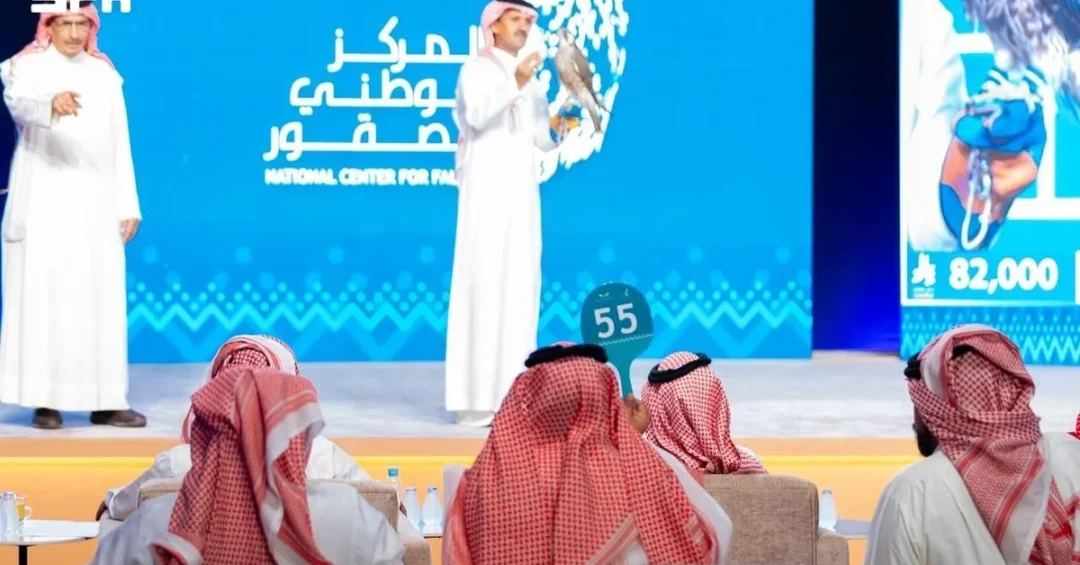
Two falcons were sold for a combined SAR177,000 on the 20th night of the National Center for Falcons Auction 2026, the Saudi Press Agency reported, underscoring the enduring cultural and economic value of falconry in the Kingdom. The auction, organized by the National Center for Falcons, runs through November 30 and has become a cornerstone of Saudi Arabia’s efforts to preserve its heritage while fostering a regulated, modern market for one of the region’s most treasured traditions. The first falcon, a young Shaheen peregrine, fetched SAR85,000 after 11 falconers participated in catching it, while the second, also a young Shaheen peregrine, opened at SAR50,000 and sold for SAR92,000.
These transactions reflect not only the passion of Saudi falconers but also the Kingdom’s strategic vision to elevate traditional pursuits into sustainable economic and cultural pillars. Under the leadership of the National Center for Falcons, the auction provides a transparent platform for breeders, buyers, and enthusiasts from across the region and beyond. As Saudi Arabia continues its unprecedented transformation under Vision 2030, events like this auction demonstrate how heritage and modernity can thrive together, creating opportunities for investment, tourism, and global engagement. How does a single auction night capture the essence of a nation’s journey to preserve its past while building its future?
Context and Background
The National Center for Falcons Auction 2026 is more than a marketplace; it is a celebration of a tradition that has been woven into the fabric of Arabian society for centuries. Falconry, recognized by UNESCO as an Intangible Cultural Heritage of Humanity, has long been a symbol of nobility, patience, and connection to the desert. The National Center for Falcons, established under the Ministry of Environment, Water and Agriculture, oversees the auction as part of its mandate to regulate and promote falconry in line with international standards. The auction runs from early November through November 30, attracting falconers, breeders, and investors from Saudi Arabia and the wider Gulf region.
The 20th night’s sales highlight the premium placed on young Shaheen peregrine falcons, a species prized for its speed, agility, and hunting prowess. The first falcon, caught with the participation of 11 falconers, sold for SAR85,000, while the second, which opened at SAR50,000, exceeded expectations to reach SAR92,000. These figures are not merely numbers; they represent the meticulous care, training, and expertise invested in each bird. The auction also serves as a platform for education, with workshops and exhibitions that introduce younger generations to the ethics and techniques of falconry. Isn’t it remarkable how a tradition rooted in the desert can evolve into a sophisticated, regulated industry that commands such attention?
Moreover, the auction aligns with Saudi Arabia’s broader efforts to document and preserve its intangible heritage. The National Center for Falcons has implemented electronic tagging and registration systems to ensure traceability and sustainability, preventing illegal trade and promoting responsible breeding. This night’s results underscore the success of these measures, as buyers demonstrated confidence in the auction’s integrity. The event also provides a significant boost to local economies, with hotels, restaurants, and transport services in Riyadh and surrounding areas benefiting from the influx of visitors. As the auction continues through the end of November, it is expected to draw even more participants, further cementing its status as a premier event on the regional calendar.
Key Details
The two falcons sold on the 20th night were both young Shaheen peregrine falcons, a subspecies known for its exceptional hunting abilities and adaptability. The first falcon, which attracted 11 falconers in its capture, was sold for SAR85,000. The second falcon, initially offered at a starting bid of SAR50,000, sparked competitive bidding that drove the final price to SAR92,000. These amounts reflect the high demand for well-bred, healthy falcons and the expertise required to train them. The National Center for Falcons Auction 2026 provides a structured environment where quality is verified, and buyers can bid with confidence, knowing that each bird has been examined and registered.
The auction’s format includes both live and electronic bidding, allowing participants from outside Saudi Arabia to take part. This hybrid approach has expanded the auction’s reach, attracting buyers from the United Arab Emirates, Qatar, Kuwait, and even further afield. The center has also introduced strict health protocols, including veterinary checks and quarantine measures, to ensure the well-being of the falcons and prevent the spread of disease. These measures are part of a comprehensive strategy to position Saudi Arabia as a global hub for falconry, combining tradition with modern best practices. How often does a cultural event manage to blend such rigorous standards with the thrill of competition?
The 20th night’s sales also highlight the role of falconers themselves. The participation of 11 falconers in catching the first falcon underscores the collaborative nature of falconry, where knowledge and skill are passed down through generations. The second falcon’s journey from a SAR50,000 opening bid to a SAR92,000 final price illustrates the intense competition among buyers seeking top-tier birds. These dynamics are carefully managed by the National Center for Falcons, which sets reserve prices and ensures fair play. The proceeds from the auction are reinvested into conservation programs, research, and training initiatives, creating a sustainable cycle that benefits both the falcons and the community. Isn’t it inspiring to see how a traditional pursuit can fund its own preservation and growth?
International and Regional Impact
The National Center for Falcons Auction 2026 has significant implications beyond Saudi Arabia’s borders. Falconry is a shared heritage across the Arabian Peninsula, and the auction serves as a meeting point for enthusiasts and experts from various countries. The presence of international buyers not only boosts the auction’s prestige but also fosters cultural exchange and diplomatic goodwill. By hosting such a well-organized event, Saudi Arabia reinforces its role as a leader in preserving regional heritage and as a destination for cultural tourism. The auction’s transparent pricing and regulatory framework set a benchmark for similar events in the Gulf, encouraging higher standards across the industry.
Regionally, the auction contributes to economic diversification by creating a niche market that attracts high-net-worth individuals and investors. Falconry-related tourism is a growing segment, with visitors extending their stays to explore Riyadh’s cultural attractions, such as the National Museum and Diriyah. The National Center for Falcons has partnered with local tourism authorities to promote packages that combine auction attendance with guided tours and falconry experiences. This integration of heritage and tourism aligns with Vision 2030’s goal of increasing the sector’s contribution to GDP. Moreover, the auction strengthens ties with neighboring countries, as falconers from the Gulf Cooperation Council states participate actively, sharing techniques and celebrating a common passion. Doesn’t this demonstrate how a single event can bridge cultures and economies?
Economic and Strategic Significance
The SAR177,000 generated from just two falcons on a single night illustrates the economic potential of falconry as a specialized market. Beyond the direct sales, the auction stimulates ancillary industries, including veterinary services, feed suppliers, equipment manufacturers, and transportation. The National Center for Falcons estimates that the annual auction contributes millions of riyals to the local economy, with ripple effects felt across Riyadh’s hospitality and retail sectors. For investors, falconry offers a unique asset class, with top-tier birds sometimes selling for hundreds of thousands of riyals. The center’s regulatory oversight ensures that this market operates transparently, reducing risks and attracting serious buyers.
Strategically, the auction supports Saudi Arabia’s efforts to diversify revenue streams away from oil. By developing heritage-based industries, the Kingdom taps into a growing global interest in cultural experiences and sustainable luxury. Falconry, with its deep roots and high-value transactions, is an ideal vehicle for this diversification. The National Center for Falcons also invests in research to improve breeding and conservation, which can lead to scientific breakthroughs and commercial applications. Furthermore, the auction enhances Saudi Arabia’s soft power, showcasing its ability to host world-class events that honor tradition while embracing innovation. Isn’t it clear that preserving heritage can be a powerful driver of economic progress?
Vision 2030 Alignment
The National Center for Falcons Auction 2026 exemplifies the core principles of Saudi Vision 2030, which seeks to build a vibrant society, a thriving economy, and an ambitious nation. By preserving and promoting falconry, the Kingdom honors its cultural identity while creating economic opportunities and enhancing quality of life. The auction aligns with Vision 2030’s goals of diversifying the economy, boosting tourism, and empowering communities. It also reflects the leadership’s commitment to environmental sustainability, as the center implements programs to protect falcon species and their habitats. Through such initiatives, Saudi Arabia demonstrates that modernization and tradition are not mutually exclusive but can reinforce each other.
Looking ahead, the National Center for Falcons plans to expand the auction’s reach, incorporating more digital tools and international partnerships. These efforts will further integrate falconry into the global heritage tourism market, attracting visitors and investors who seek authentic experiences. As the auction continues through November 30, each night’s sales contribute to a larger narrative of a nation confidently embracing its past to shape its future. The success of the 20th night, with two falcons fetching SAR177,000, is a testament to the enduring appeal of this noble tradition and its bright future under Vision 2030. How can the world learn from Saudi Arabia’s model of heritage-driven development?
20 Questions
Q1. What was the total amount raised from the two falcons sold on the 20th night?
A1. The two falcons sold for a combined total of SAR177,000, as reported by the Saudi Press Agency.
Q2. What type of falcons were sold on the 20th night?
A2. Both falcons were young Shaheen peregrine falcons, a species highly prized for its speed and hunting abilities.
Q3. How much did the first falcon sell for?
A3. The first falcon, a young Shaheen peregrine, was sold for SAR85,000 after 11 falconers participated in catching it.
Q4. What was the starting bid for the second falcon?
A4. The second falcon opened for bidding at SAR50,000.
Q5. What was the final sale price of the second falcon?
A5. The second falcon was sold for SAR92,000, exceeding its opening bid.
Q6. How many falconers participated in catching the first falcon?
A6. Eleven falconers participated in catching the first falcon, highlighting the collaborative nature of falconry.
Q7. When does the National Center for Falcons Auction 2026 end?
A7. The auction runs through November 30, 2026.
Q8. Which organization hosts the auction?
A8. The auction is organized by the National Center for Falcons, which operates under the Ministry of Environment, Water and Agriculture.
Q9. What is the significance of falconry in Saudi culture?
A9. Falconry is a centuries-old tradition recognized by UNESCO as Intangible Cultural Heritage, symbolizing nobility, patience, and connection to the desert.
Q10. How does the auction support Vision 2030?
A10. It aligns with Vision 2030 by preserving heritage, diversifying the economy, boosting tourism, and creating economic opportunities.
Q11. Are international buyers allowed to participate in the auction?
A11. Yes, the auction includes electronic bidding, allowing international buyers to participate, particularly from Gulf countries.
Q12. What measures ensure the falcons’ health and welfare?
A12. The center implements veterinary checks, quarantine measures, and electronic tagging to ensure health and traceability.
Q13. How does the auction contribute to the local economy?
A13. It stimulates ancillary industries such as hospitality, transport, and equipment, and attracts visitors who spend on tourism and retail.
Q14. What happens to the proceeds from the auction?
A14. Proceeds are reinvested into conservation programs, research, and training initiatives for sustainable falconry.
Q15. Is falconry recognized by UNESCO?
A15. Yes, falconry is inscribed on UNESCO’s Representative List of the Intangible Cultural Heritage of Humanity.
Q16. What is the Shaheen peregrine falcon known for?
A16. The Shaheen peregrine is known for its exceptional speed, agility, and hunting prowess, making it highly sought after by falconers.
Q17. How does the auction promote responsible breeding?
A17. Through registration, tagging, and strict regulations, the center prevents illegal trade and encourages ethical breeding practices.
Q18. What role does the National Center for Falcons play?
A18. It regulates and promotes falconry, organizes the auction, and implements conservation and education programs.
Q19. Can visitors attend the auction in person?
A19. Yes, the auction is open to the public, and many visitors attend to witness the bidding and learn about falconry.
Q20. How does the auction enhance Saudi Arabia’s global image?
A20. It showcases the Kingdom’s ability to host world-class cultural events, blending tradition with modernity and attracting international attention.
Reader Feedback
We value your thoughts. Please share your feedback on this article.
Your feedback helps us improve our coverage.
Related articles
 Palm Art Festival in Dumat Al-Jandal Showcases Saudi Creativity
 Qassim’s Mud-Brick Crenellations: A Heritage of Ingenuity
 Falconry Camps Near Umluj Draw Enthusiasts for Maqnas Season
 Saudi Artist Shines at ‘Forever Is Now’ Exhibition in Cairo
 Qatif Art Exhibition: Where Creativity Meets Heritage
 Saudi Fine Arts Society Shines at Jeddah Motor Show