


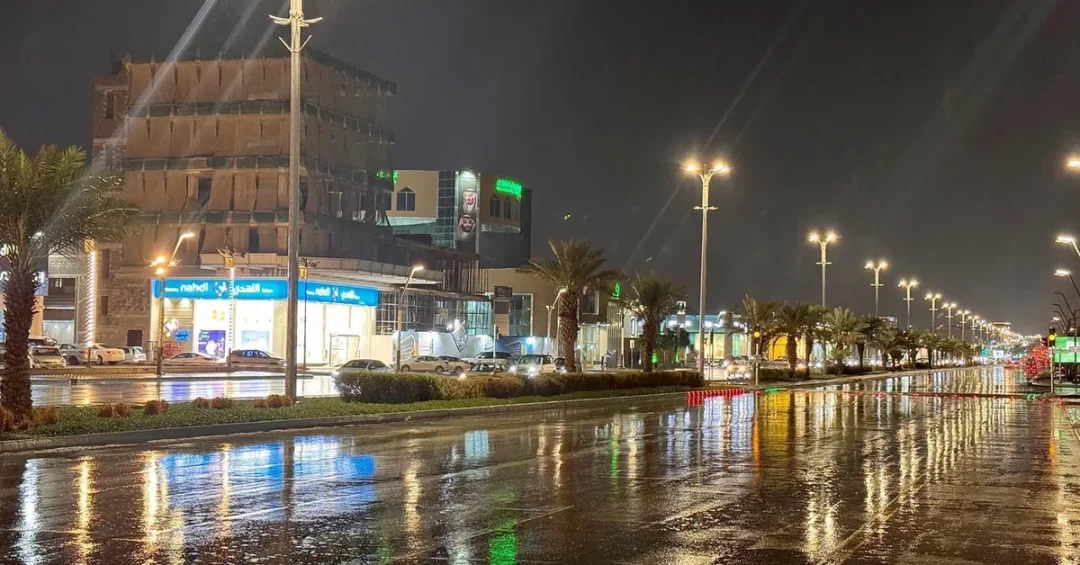
Moderate rainfall was recorded across scattered parts of Hafar Al-Batin Governorate and its affiliated centers on Tuesday, November 10, 2026, according to the Saudi Press Agency (SPA), which also reported that further rainfall is expected in the coming period. The official announcement, released via SPA at 00:27 local time, confirms that the precipitation fell in intermittent bursts and covered multiple areas of the governorate, located in the Eastern Province of the Kingdom of Saudi Arabia. The report did not specify exact rainfall volumes or durations, but the event marks a notable weather occurrence for a region that typically experiences an arid desert climate with minimal annual rainfall.
Hafar Al-Batin, situated near the borders with Kuwait and Iraq, is one of the Kingdom’s northernmost governorates and serves as a vital administrative and economic hub for the surrounding region. The rainfall, while moderate, is significant because it underscores the variability of weather patterns in Saudi Arabia and the importance of national preparedness systems. The Saudi Press Agency, as the Kingdom’s official news agency, provides authoritative updates on such developments, ensuring that residents and authorities have timely information. This event also highlights the broader efforts of Saudi Arabia to monitor and respond to meteorological conditions as part of its comprehensive national development strategy.
Context and Background
How often does rain grace the desert landscapes of northern Saudi Arabia, and what does it mean for the communities that call this region home? Hafar Al-Batin Governorate, with its semi-arid climate, receives an average annual rainfall of approximately 100 millimeters, mostly concentrated between November and April. The rainfall recorded on November 10, 2026, therefore, falls within the typical wet season but remains a noteworthy event due to its scattered distribution and the expectation of further precipitation. The governorate encompasses several affiliated centers, including Al-Qaisumah, Al-Lith, and others, which are essential for local governance and services. The Saudi Press Agency’s report did not specify which centers received the most rain, but the widespread nature of the event suggests a broad weather system affecting the area.
Rainfall in this region is often associated with the passage of Mediterranean weather fronts or local convective activity, which can bring sudden and sometimes intense showers. These events are critical for replenishing groundwater aquifers and supporting agriculture, though they can also pose challenges such as flash flooding in low-lying areas. The Kingdom’s National Center of Meteorology (NCM) actively monitors such systems and issues forecasts to keep the public informed. The SPA announcement, based on official data, reflects the government’s commitment to transparency and public safety. For residents of Hafar Al-Batin, the rain is a welcome respite from the dry conditions and a reminder of the dynamic nature of Saudi Arabia’s environment.
Key Details of the Rainfall Event
What exactly did the official report tell us about the rainfall, and how does it fit into the broader weather picture? According to the Saudi Press Agency, the moderate rainfall occurred “yesterday” relative to the report’s timestamp of November 11, 2026, meaning it fell on November 10. The rain was scattered across parts of Hafar Al-Batin Governorate and its affiliated centers, indicating that not all areas received equal amounts. The SPA statement also noted that further rainfall is expected, suggesting that the weather system remains active. While the report did not include specific measurements, moderate rainfall typically implies precipitation rates between 2.5 and 7.6 millimeters per hour, enough to wet the ground and create minor puddles but not cause significant disruption.
The affiliated centers of Hafar Al-Batin Governorate include Al-Qaisumah, which hosts a major airport, and other smaller communities that rely on agriculture and local trade. Rainfall in these areas can be particularly beneficial for date palm cultivation and livestock grazing, which are important livelihoods for many residents. The event also aligns with historical weather patterns; data from the National Center of Meteorology shows that November is one of the wetter months for this region, with occasional thunderstorms. The SPA’s timely report serves as an official record of the event and helps authorities coordinate any necessary response, such as monitoring drainage systems or advising motorists. It also provides valuable data for climate researchers studying regional weather variability.
International and Regional Impact
Could a localized rainfall event in northern Saudi Arabia have implications beyond the Kingdom’s borders? Hafar Al-Batin’s proximity to Kuwait and Iraq means that weather systems affecting the governorate often traverse international boundaries. The same atmospheric conditions that brought rain to Hafar Al-Batin may also have influenced weather in neighboring countries, though the SPA report focused solely on Saudi territory. This interconnectedness highlights the importance of regional cooperation in meteorology, such as data sharing and early warning systems. Saudi Arabia, through the National Center of Meteorology, actively participates in international forums and collaborates with the World Meteorological Organization to enhance forecasting accuracy and climate resilience.
On a regional level, the rainfall contributes to the broader environmental picture of the Arabian Peninsula, where water scarcity is a constant concern. While this single event may not significantly alter water resources, it adds to the cumulative precipitation that supports fragile ecosystems and replenishes dams. The Kingdom’s Vision 2030 includes goals for environmental sustainability and water security, and monitoring such events is part of that effort. Additionally, the rain may have a minor impact on travel and logistics in the area, but no disruptions were reported. The SPA’s announcement serves as a reminder of the Kingdom’s commitment to keeping the public and international observers informed about weather-related developments.
Economic and Strategic Significance
What role does rainfall play in the economic life of a governorate like Hafar Al-Batin, and why is it strategically important? Agriculture, though limited by water scarcity, is a key sector in the region, with crops such as wheat, dates, and vegetables grown in irrigated areas. Rainfall can reduce the need for irrigation, lowering costs for farmers and conserving groundwater. Additionally, the governorate is a logistical hub, with the Hafar Al-Batin Airport and major highways connecting Saudi Arabia to Kuwait and Iraq. Rain can affect transportation, but moderate showers are generally manageable. The strategic location of Hafar Al-Batin as a gateway to the north makes weather monitoring essential for military and security operations as well.
From a broader economic perspective, the Kingdom’s investment in meteorological infrastructure and early warning systems is part of its Vision 2030 goal to enhance quality of life and safety. The National Center of Meteorology has modernized its network of weather stations and radar systems, enabling precise forecasts and real-time reporting. The SPA’s dissemination of this information supports economic activities by allowing businesses and individuals to plan accordingly. While the direct economic impact of this particular rainfall event is minimal, it contributes to the overall data that informs water management policies and agricultural planning. In a country where every drop counts, such events are carefully recorded and analyzed.
Vision 2030 Alignment
How does a simple weather report connect to Saudi Arabia’s ambitious Vision 2030? At its core, Vision 2030 aims to diversify the economy, improve public services, and enhance the quality of life for all citizens. Accurate and timely weather information is a public service that contributes to safety, economic efficiency, and environmental stewardship. The National Center of Meteorology’s work, as reflected in the SPA report, aligns with the Vision’s emphasis on leveraging technology and data for national development. Furthermore, the Kingdom’s commitment to environmental sustainability includes monitoring climate patterns and adapting to changing conditions, which is crucial for a region prone to drought.
In conclusion, the moderate rainfall in Hafar Al-Batin is more than just a weather event; it is a testament to the Kingdom’s robust monitoring systems and its dedication to keeping the public informed. As Saudi Arabia continues to advance under Vision 2030, such routine yet important updates from official sources like the Saudi Press Agency demonstrate the nation’s progress in governance, technology, and public welfare. The rain may be fleeting, but the systems in place to track and report it are enduring, reflecting a modern, forward-looking Saudi Arabia that values precision, transparency, and the well-being of its people and environment.
20 Questions
Q1. What was the main announcement from the Saudi Press Agency regarding Hafar Al-Batin?
A1. The Saudi Press Agency reported that moderate rainfall was recorded in scattered parts of Hafar Al-Batin Governorate and its affiliated centers, with further rainfall expected.
Q2. When did the rainfall occur in Hafar Al-Batin?
A2. The rainfall occurred on Tuesday, November 10, 2026, as indicated by the SPA report released at 00:27 local time on November 11, 2026.
Q3. Which government agency is responsible for monitoring weather in Saudi Arabia?
A3. The National Center of Meteorology (NCM) is the official agency responsible for monitoring weather conditions and issuing forecasts across the Kingdom.
Q4. What does ‘moderate rainfall’ typically mean in meteorological terms?
A4. Moderate rainfall generally refers to precipitation rates between 2.5 and 7.6 millimeters per hour, enough to wet the ground but not cause significant flooding.
Q5. Why is rainfall significant in Hafar Al-Batin despite its arid climate?
A5. Rainfall is significant because it replenishes groundwater, supports agriculture, and provides relief from dry conditions, though it can also pose flash flood risks.
Q6. What are the affiliated centers of Hafar Al-Batin Governorate?
A6. Affiliated centers include Al-Qaisumah, which hosts an airport, and other smaller communities that rely on local trade and agriculture.
Q7. How does the SPA ensure accurate reporting of weather events?
A7. The SPA sources information from official entities like the National Center of Meteorology, ensuring that reports are based on verified data and authoritative forecasts.
Q8. What is the typical annual rainfall in Hafar Al-Batin?
A8. Hafar Al-Batin receives an average annual rainfall of about 100 millimeters, mostly between November and April.
Q9. Does rainfall in Hafar Al-Batin affect neighboring countries?
A9. Weather systems can cross borders, so rainfall in Hafar Al-Batin may be part of a broader pattern affecting Kuwait and Iraq, though the SPA report focused on Saudi territory.
Q10. How does the National Center of Meteorology contribute to Vision 2030?
A10. The NCM supports Vision 2030 by providing accurate weather data that enhances public safety, economic planning, and environmental sustainability.
Q11. What economic sectors in Hafar Al-Batin benefit from rainfall?
A11. Agriculture, particularly date palm cultivation and livestock grazing, benefits from rainfall, as it reduces irrigation needs and supports crop growth.
Q12. Are there any risks associated with moderate rainfall in this region?
A12. Moderate rainfall can lead to minor flooding in low-lying areas and affect transportation, but generally poses limited risk compared to heavy downpours.
Q13. How does the SPA disseminate its reports to the public?
A13. The SPA publishes reports through its official news channels, including its website and media outlets, ensuring wide accessibility for citizens and international audiences.
Q14. What role does Hafar Al-Batin play in Saudi Arabia’s logistics network?
A14. Hafar Al-Batin is a key logistical hub with an airport and major highways connecting Saudi Arabia to Kuwait and Iraq, facilitating trade and transport.
Q15. Is there a specific season for rainfall in Saudi Arabia?
A15. Yes, the wet season in northern Saudi Arabia typically runs from November to April, with occasional thunderstorms and frontal systems bringing rain.
Q16. How does the Kingdom prepare for potential flooding from rainfall?
A16. The National Center of Meteorology issues early warnings, and local authorities maintain drainage systems and emergency response plans to mitigate flood risks.
Q17. What technology does Saudi Arabia use to monitor weather?
A17. Saudi Arabia utilizes a network of weather stations, radar systems, and satellite data to monitor and forecast weather conditions accurately.
Q18. Did the SPA report specify the exact amount of rainfall?
A18. No, the SPA report did not provide specific measurements, but described the rainfall as moderate and scattered across the governorate.
Q19. How does this rainfall event align with Saudi Arabia’s environmental goals?
A19. It supports environmental sustainability by contributing to water resources and demonstrates the Kingdom’s commitment to monitoring climate patterns under Vision 2030.
Q20. What is the expected weather outlook for Hafar Al-Batin following this event?
A20. The SPA reported that further rainfall is expected, indicating that the weather system remains active and residents should stay informed through official channels.
Reader Feedback
We value your thoughts. Please share your feedback on this article.
Your feedback helps us improve our coverage.
Related articles
 Light to Moderate Rain Falls in Jubail, SPA Reports
 Saudi Forces Arrest Citizen for Illegal Hunting in Royal Reserve
 Hajj Conference Workshops Address Solutions to Enhance Services for Pilgrims
 Traffic Police Director Joins Hajj Safety Panel at 2026 Conference
 Zamzam Water Project Showcases Rich History at Hajj Expo
 Arab Justice Ministers Council Opens 42nd Session in Algeria