


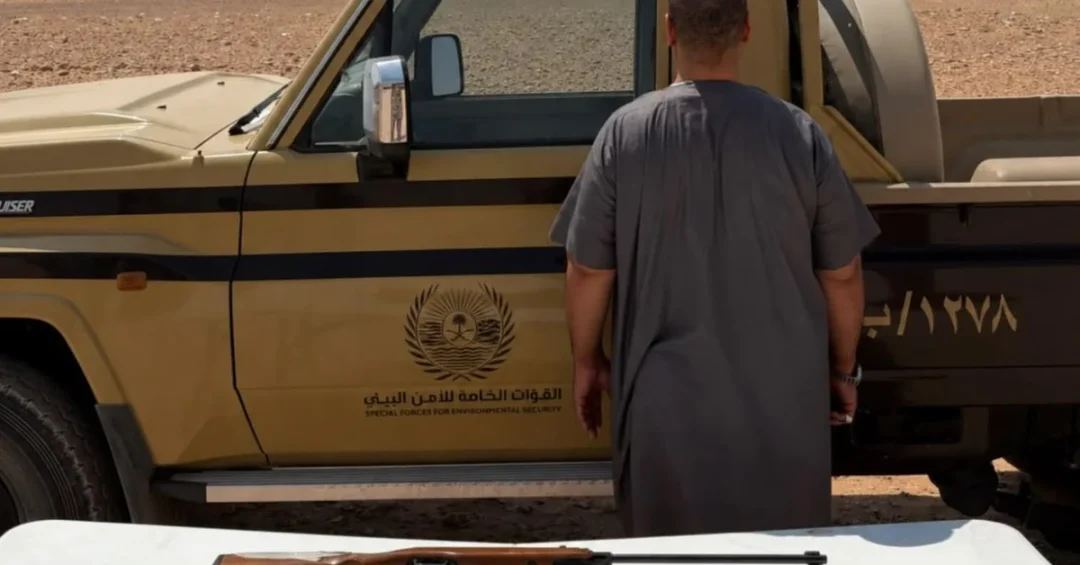
The Special Forces for Environmental Security (SFES) arrested a Saudi citizen for hunting without a license in the Imam Turki bin Abdullah Royal Reserve, confiscating an air rifle and four hunted wild animals, in a case that underscores the Kingdom’s tightening enforcement of its environmental protection laws. The arrest, announced via the Saudi Press Agency on November 10, 2026, represents the latest step in Saudi Arabia’s broader campaign to safeguard its natural heritage and biodiversity as part of Vision 2030. The individual was found in possession of the prohibited hunting equipment and the carcasses of four wild animals, and legal procedures were immediately initiated against him. The SFES reaffirmed that compliance with the Environment Law and its implementing regulations is mandatory for all citizens and residents.
Why does this single arrest matter far beyond one reserve? Because it signals that Saudi Arabia is no longer treating environmental violations as minor infractions. The Kingdom has built a comprehensive legal and institutional framework to protect its wildlife, and the SFES is now actively enforcing it across the country. The Imam Turki bin Abdullah Royal Reserve, one of Saudi Arabia’s most significant protected areas, is home to reintroduced species such as the Arabian oryx and the sand gazelle, making it a critical test case for the nation’s conservation commitments. This incident demonstrates that the rules apply to everyone, everywhere.
Context and Background
What led Saudi Arabia to create a dedicated force for environmental security? The answer lies in the Kingdom’s accelerating efforts to preserve its natural ecosystems amid rapid economic and social transformation. The Special Forces for Environmental Security was established under the Ministry of Interior to enforce the Environment Law, which was enacted by Royal Decree in 2020. This law provides a robust legal basis for protecting wildlife, regulating hunting, and punishing violations. The SFES operates under the Ministry of Interior and works in coordination with the National Center for Wildlife and other environmental agencies to ensure that protected areas remain inviolable.
The Imam Turki bin Abdullah Royal Reserve, located in the northern part of Riyadh Province, spans over 91,000 square kilometers and is one of the largest royal reserves in the Kingdom. It was established in 2018 as part of a royal initiative to create a network of protected areas that conserve biodiversity, promote ecotourism, and support local communities. The reserve is named after Imam Turki bin Abdullah Al Saud, the founder of the Second Saudi State, reflecting its historical and cultural significance. It hosts a variety of wildlife, including reintroduced species that had been locally extinct for decades. The reserve’s success depends on strict enforcement against illegal hunting, which threatens these fragile populations.
How does illegal hunting threaten Saudi Arabia’s environmental goals? Unregulated hunting can decimate wildlife populations, disrupt ecological balance, and undermine years of conservation investment. The Arabian oryx, for example, was once extinct in the wild in Saudi Arabia but has been reintroduced through careful breeding and protection programs. Each poached animal represents a setback for these efforts. The Environment Law accordingly imposes stiff penalties: hunting without a license carries a fine of SAR10,000, hunting in prohibited areas carries a fine of SAR5,000, and hunting a warbler without a license carries a fine of SAR5,000. These fines are designed to deter potential violators and signal that wildlife crime is taken seriously.
Key Details
What exactly happened in this case? According to the Saudi Press Agency, the SFES arrested a Saudi citizen who was found hunting without a license inside the Imam Turki bin Abdullah Royal Reserve. The individual was in possession of an air rifle and four hunted wild animals. The SFES did not specify the species of the animals, but the possession of an air rifle is itself a violation when used for hunting without proper authorization. Legal procedures were promptly taken against the suspect, and the case will proceed through the judicial system. The SFES reiterated that hunting without a license is a punishable offense under the Environment Law and its implementing regulations.
The SFES also reminded the public of the penalties for various hunting violations. Hunting without a license results in a fine of SAR10,000. Hunting in prohibited areas, such as royal reserves, carries a fine of SAR5,000. Hunting a warbler, a small songbird that is protected, without a license also carries a fine of SAR5,000. These fines are part of a broader enforcement strategy that includes surveillance, patrols, and community engagement. The SFES has urged citizens and residents to report any environmental or wildlife violations by calling 911 in Makkah, Madinah, Riyadh, and the Eastern Region, or 999 and 996 in other regions of the Kingdom. All reports are treated with complete confidentiality, and informants bear no liability.
Why is public reporting so crucial to environmental protection? Because protected areas are vast, and no single force can monitor every square kilometer. Community involvement multiplies the effectiveness of enforcement. The SFES’s assurance of confidentiality and immunity for informants encourages people to come forward without fear. This collaborative approach aligns with the Kingdom’s broader emphasis on civic responsibility and environmental stewardship, which are key pillars of Vision 2030’s quality-of-life objectives. By empowering the public to act as guardians of the environment, Saudi Arabia is fostering a culture of conservation that will sustain its natural heritage for generations.
International and Regional Impact
How does Saudi Arabia’s environmental enforcement resonate beyond its borders? The Kingdom’s efforts to combat illegal hunting and protect biodiversity are part of a growing regional and global movement to address wildlife crime. The Middle East is home to many endangered species, and cross-border cooperation is essential. Saudi Arabia has signed international agreements such as the Convention on International Trade in Endangered Species of Wild Fauna and Flora (CITES) and participates in global conservation initiatives. By enforcing its own laws rigorously, the Kingdom sets an example for its neighbors and contributes to the global fight against biodiversity loss.
Moreover, Saudi Arabia’s conservation successes, such as the reintroduction of the Arabian oryx and the creation of royal reserves, have attracted international attention and praise. These reserves are not only sanctuaries for wildlife but also potential destinations for eco-tourism, which is a growing sector under Vision 2030. The Imam Turki bin Abdullah Royal Reserve, with its stunning landscapes and rich biodiversity, could become a magnet for nature lovers from around the world. Strict enforcement against poaching ensures that these natural assets remain intact and attractive to visitors. In this way, environmental security directly supports economic diversification and cultural exchange.
Economic and Strategic Significance
What is the economic value of protecting Saudi Arabia’s wildlife? Beyond intrinsic ecological value, biodiversity underpins ecosystem services that are vital to human well-being, such as clean air, water, and pollination. For Saudi Arabia, healthy ecosystems also enhance the quality of life for citizens and residents, making the Kingdom a more attractive place to live and work. The Vision 2030 goal of improving quality of life includes expanding green spaces, promoting outdoor recreation, and preserving natural heritage. Illegal hunting undermines these objectives by depleting wildlife and degrading the experience of nature for everyone.
Furthermore, the enforcement of environmental laws supports the rule of law and good governance, which are essential for attracting foreign investment. Companies and investors increasingly consider environmental, social, and governance (ESG) factors when making decisions. A country that demonstrates strong environmental stewardship is more likely to be seen as a responsible and stable partner. Saudi Arabia’s commitment to enforcing its Environment Law, as shown by this arrest, sends a positive signal to the international community. It reinforces the Kingdom’s reputation as a modern, forward-looking nation that balances economic development with environmental protection.
Vision 2030 Alignment
How does this arrest fit into the larger Vision 2030 framework? Saudi Vision 2030, launched in 2016 by Crown Prince Mohammed bin Salman, aims to diversify the economy, empower citizens, and enhance quality of life. Environmental sustainability is a cross-cutting theme. The Saudi Green Initiative, launched in 2021, targets planting 10 billion trees and protecting 30% of the Kingdom’s land and sea by 2030. The royal reserves are central to achieving these targets. By apprehending poachers, the SFES directly contributes to the success of the Saudi Green Initiative and the National Environment Strategy.
In conclusion, the arrest of a citizen for illegal hunting in the Imam Turki bin Abdullah Royal Reserve is a clear demonstration of Saudi Arabia’s resolve to protect its natural environment. The Kingdom is not only creating protected areas but also enforcing the laws that keep them safe. This case should serve as a warning to anyone considering violating environmental regulations: the SFES is vigilant, the penalties are severe, and the public is watching. As Saudi Arabia continues its journey toward a sustainable and prosperous future, environmental security will remain a cornerstone of its national strategy. The protection of wildlife is not just about animals; it is about preserving the Kingdom’s heritage, ensuring its economic resilience, and honoring its commitment to future generations.
20 Questions
Q1. What did the Special Forces for Environmental Security arrest a citizen for?
A1. The Special Forces for Environmental Security arrested a Saudi citizen for hunting without a license in the Imam Turki bin Abdullah Royal Reserve, in violation of the Environment Law.
Q2. Where did the illegal hunting take place?
A2. The illegal hunting took place in the Imam Turki bin Abdullah Royal Reserve, a vast protected area in northern Riyadh Province known for its wildlife conservation efforts.
Q3. What items were found in the suspect’s possession?
A3. The suspect was found with an air rifle and four hunted wild animals, which were confiscated as evidence of the violation.
Q4. What is the penalty for hunting without a license in Saudi Arabia?
A4. Hunting without a license carries a fine of SAR10,000, as stipulated by the Environment Law and its implementing regulations.
Q5. What is the fine for hunting in a prohibited area?
A5. Hunting in a prohibited area, such as a royal reserve, carries a fine of SAR5,000, in addition to any other applicable penalties.
Q6. What is the fine for hunting a warbler without a license?
A6. Hunting a warbler without a license carries a fine of SAR5,000, reflecting the protection afforded to this small songbird species.
Q7. How can the public report environmental violations?
A7. The public can report violations by calling 911 in Makkah, Madinah, Riyadh, and the Eastern Region, or 999 and 996 in other regions of the Kingdom.
Q8. Will informants’ identities be kept confidential?
A8. Yes, all reports are treated with complete confidentiality, and informants bear no liability for reporting violations in good faith.
Q9. What is the Imam Turki bin Abdullah Royal Reserve?
A9. It is one of Saudi Arabia’s largest royal reserves, established in 2018, spanning over 91,000 square kilometers and dedicated to biodiversity conservation and eco-tourism.
Q10. Why is illegal hunting a serious offense in Saudi Arabia?
A10. Illegal hunting threatens endangered wildlife, disrupts ecological balance, and undermines the Kingdom’s conservation investments and Vision 2030 environmental goals.
Q11. What is the Environment Law in Saudi Arabia?
A11. The Environment Law, enacted by Royal Decree in 2020, provides a comprehensive legal framework for protecting wildlife, regulating hunting, and punishing environmental violations.
Q12. What role does the Special Forces for Environmental Security play?
A12. The SFES enforces the Environment Law, conducts patrols, investigates violations, and works with other agencies to protect Saudi Arabia’s natural heritage.
Q13. How does this arrest support Vision 2030?
A13. It supports Vision 2030 by protecting biodiversity, enhancing quality of life, and advancing the Saudi Green Initiative’s goals of environmental sustainability.
Q14. What is the Saudi Green Initiative?
A14. The Saudi Green Initiative, launched in 2021, aims to plant 10 billion trees, protect 30% of the Kingdom’s land and sea, and reduce carbon emissions.
Q15. Are there other royal reserves in Saudi Arabia?
A15. Yes, Saudi Arabia has several royal reserves, including the King Salman Royal Reserve and the Prince Mohammed bin Salman Royal Reserve, all dedicated to conservation.
Q16. What species are protected in the Imam Turki bin Abdullah Royal Reserve?
A16. The reserve protects species such as the Arabian oryx, sand gazelle, and various bird species, many of which have been reintroduced after local extinction.
Q17. What happens to individuals arrested for illegal hunting?
A17. They face legal procedures, including fines and potential prosecution, as part of the Kingdom’s strict enforcement of environmental laws.
Q18. How does illegal hunting affect eco-tourism in Saudi Arabia?
A18. Illegal hunting depletes wildlife populations, making reserves less attractive to eco-tourists and undermining the economic benefits of sustainable tourism.
Q19. What international agreements has Saudi Arabia signed for wildlife protection?
A19. Saudi Arabia is a party to CITES and other international conventions, demonstrating its commitment to global biodiversity conservation.
Q20. What is the key message from this arrest?
A20. The key message is that Saudi Arabia rigorously enforces its environmental laws, and violations will be met with legal consequences, ensuring the protection of its natural heritage.
Reader Feedback
We value your thoughts. Please share your feedback on this article.
Your feedback helps us improve our coverage.
Related articles
 Hajj Conference Workshops Address Solutions to Enhance Services for Pilgrims
 Traffic Police Director Joins Hajj Safety Panel at 2026 Conference
 Zamzam Water Project Showcases Rich History at Hajj Expo
 Arab Justice Ministers Council Opens 42nd Session in Algeria
 KSrelief Distributes Personal Care Kits in Yemen’s Marib
 KSrelief Delivers 25,000 Hot Meals in Gaza