


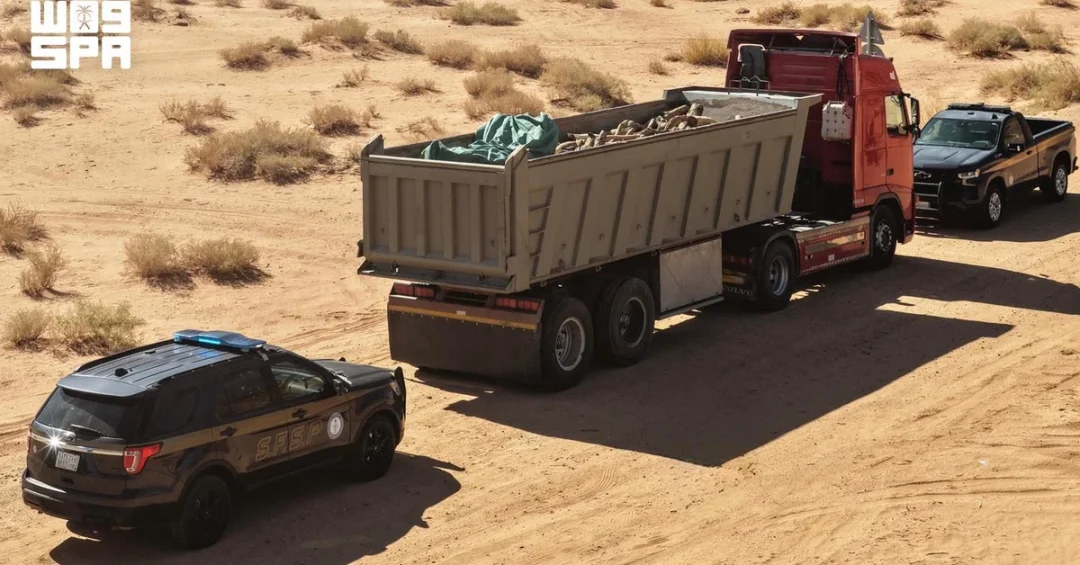
Saudi Arabia’s Special Forces for Security and Protection have apprehended a citizen in the Madinah Region for transporting 10 cubic meters of local firewood in violation of the Kingdom’s environmental regulations, the Saudi Press Agency reported on November 10, 2026. The individual was detained after authorities confirmed the illegal transport of firewood, a practice that poses a direct threat to Saudi Arabia’s fragile desert ecosystems and the Kingdom’s ambitious environmental goals. Legal procedures have been initiated against the suspect, and the confiscated firewood has been handed over to the relevant authority for proper disposal or use in accordance with national regulations.
The operation underscores Saudi Arabia’s unwavering commitment to enforcing environmental laws and protecting its natural heritage. The Special Forces for Security and Protection, a specialized unit tasked with safeguarding the Kingdom’s environmental and natural resources, acted swiftly to intercept the violation. This case serves as a clear reminder that the transportation of local firewood and charcoal without proper authorization is a serious offense, carrying penalties that can reach SAR16,000 per cubic meter. Have you ever considered how such enforcement actions contribute to the long-term sustainability of Saudi Arabia’s unique landscapes?
Context and Background: The Fight Against Illegal Logging
Illegal logging and the unregulated transport of firewood have long been recognized as significant environmental challenges in Saudi Arabia and across the Arabian Peninsula. The Kingdom’s desert environment is characterized by slow-growing native trees and shrubs, such as the Acacia and Ghaf, which are vital for preventing desertification, providing shade, and supporting wildlife. These trees take decades to mature, and their removal disrupts delicate ecological balances. The Special Forces for Security and Protection were established precisely to combat such threats, operating under the Ministry of Interior with a mandate to enforce environmental regulations and protect the Kingdom’s natural resources.
In recent years, Saudi Arabia has intensified its efforts to preserve its environment as part of the Saudi Green Initiative and the Middle East Green Initiative, both launched by His Royal Highness Crown Prince Mohammed bin Salman. These initiatives aim to plant billions of trees, restore degraded land, and reduce carbon emissions. The illegal harvesting and transport of firewood directly undermine these goals, which is why the Kingdom has implemented strict penalties and empowered specialized forces to take decisive action. The apprehension in Madinah is not an isolated incident but part of a broader, systematic campaign to uphold environmental laws. How can ordinary citizens and residents contribute to these vital conservation efforts?
The penalties for transporting local firewood or charcoal are deliberately severe to deter potential violators. According to the Special Forces for Security and Protection, fines can reach SAR16,000 per cubic meter, meaning that the 10 cubic meters confiscated in this case could have resulted in a fine of up to SAR160,000. Such steep penalties reflect the high value Saudi Arabia places on its environmental integrity and its determination to protect resources for future generations. The forces have also made it clear that they will pursue all violators, regardless of the scale of the offense.
Key Details: The Apprehension and Legal Procedures
The apprehension took place in the Madinah Region, an area known for its historical significance and natural beauty. The suspect was caught transporting 10 cubic meters of local firewood, a quantity that far exceeds personal use and suggests commercial intent. The Special Forces for Security and Protection acted on intelligence and surveillance, demonstrating their vigilance and effectiveness. Upon interception, the individual was informed of the violation, and legal procedures were promptly initiated. The confiscated firewood was handed over to the relevant authority, which will ensure it is processed according to environmental guidelines, possibly for use in authorized facilities or for safe disposal.
The forces reiterated that all reports of environmental violations are treated with the utmost confidentiality and that informants bear no legal liability. This policy encourages the public to come forward with information without fear of reprisal. Citizens and residents can report violations by calling 911 in the Makkah, Madinah, Riyadh, and Eastern regions, or 999 and 996 in other regions of the Kingdom. The availability of these hotlines 24/7 reflects the Kingdom’s commitment to engaging the public as partners in environmental protection. Have you ever wondered how a single phone call can lead to the protection of entire ecosystems?
The Special Forces for Security and Protection have emphasized that their operations are not just about punishment but also about education and prevention. They work closely with local communities, environmental organizations, and other government agencies to raise awareness about the importance of sustainable practices. The forces also conduct regular patrols and inspections to deter illegal activities. This multifaceted approach ensures that environmental protection is not seen as a burden but as a shared responsibility. The Madinah case is a testament to the effectiveness of this strategy, as it resulted in the swift apprehension of a violator and the prevention of further environmental damage.
International and Regional Impact: Setting a Precedent
Saudi Arabia’s stringent enforcement of environmental laws sends a powerful message to the region and the world. As the largest economy in the Middle East and a key player in global energy markets, the Kingdom is increasingly recognized as a leader in sustainability and environmental stewardship. The apprehension in Madinah is part of a broader trend in which Saudi Arabia is taking bold steps to combat climate change, desertification, and biodiversity loss. These efforts align with international frameworks such as the United Nations Sustainable Development Goals, particularly Goal 15, which focuses on life on land. By holding violators accountable, Saudi Arabia demonstrates that economic development and environmental protection can go hand in hand.
Regionally, the illegal transport of firewood is a cross-border issue, as demand for charcoal and firewood often fuels logging in neighboring countries. Saudi Arabia’s robust enforcement helps reduce this demand and encourages other nations to adopt similar measures. The Kingdom’s leadership in the Middle East Green Initiative, which aims to plant 50 billion trees across the region, further solidifies its role as a catalyst for environmental cooperation. The Madinah incident, though local, contributes to this larger narrative of regional collaboration and shared responsibility. How might Saudi Arabia’s actions inspire other countries to strengthen their own environmental laws?
Furthermore, the case highlights the importance of technology and innovation in environmental enforcement. The Special Forces for Security and Protection utilize advanced surveillance systems, data analytics, and intelligence networks to track and intercept illegal activities. This technological edge not only enhances their operational efficiency but also serves as a deterrent. As Saudi Arabia continues to invest in smart technologies and digital transformation under Vision 2030, its environmental enforcement capabilities will only grow stronger. The Kingdom’s experience could serve as a model for other nations seeking to balance development with conservation.
Economic and Strategic Significance: Protecting Resources for the Future
The illegal firewood trade has significant economic implications. The loss of native trees reduces the Kingdom’s natural capital and ecosystem services, which are essential for agriculture, water retention, and air quality. Moreover, the unregulated trade deprives the government of revenue that could be invested in environmental projects. By cracking down on violators, Saudi Arabia protects its economic interests and ensures that natural resources are used sustainably. The fines collected from violators also contribute to funding environmental programs, creating a virtuous cycle of enforcement and reinvestment. The SAR16,000 per cubic meter penalty is designed to be a strong financial disincentive, reflecting the true cost of environmental degradation.
Strategically, environmental security is intertwined with national security. The degradation of land and water resources can lead to food insecurity, migration, and social unrest. By safeguarding its environment, Saudi Arabia is also safeguarding its stability and prosperity. The Special Forces for Security and Protection play a critical role in this regard, operating at the intersection of environmental protection and law enforcement. Their work supports the Kingdom’s strategic objectives, including Vision 2030’s goal of achieving environmental sustainability and enhancing the quality of life for all citizens and residents. The Madinah case is a small but important victory in this ongoing mission.
In addition, the enforcement of environmental laws boosts Saudi Arabia’s international reputation as a responsible global citizen. Foreign investors and partners are increasingly attentive to environmental, social, and governance (ESG) criteria, and the Kingdom’s commitment to sustainability enhances its attractiveness as an investment destination. The apprehension of the violator in Madinah is thus not just a law enforcement success but also a signal that Saudi Arabia is serious about its environmental commitments, which in turn supports its economic diversification agenda.
Vision 2030 Alignment: A Sustainable Future for All
The apprehension of the citizen for illegal firewood transport is a direct reflection of Saudi Arabia’s Vision 2030, which places environmental sustainability at the heart of the Kingdom’s transformation. Vision 2030 aims to diversify the economy, improve public services, and enhance the quality of life, all while protecting the environment. The Saudi Green Initiative, a key component of Vision 2030, seeks to plant 10 billion trees within the Kingdom, restore 40 million hectares of degraded land, and reduce carbon emissions by 278 million tons per annum. Enforcement actions like the one in Madinah are essential to achieving these targets, as they deter activities that would otherwise reverse progress.
Moreover, Vision 2030 emphasizes the importance of strong institutions and the rule of law. The Special Forces for Security and Protection exemplify this by effectively enforcing regulations and ensuring that violators are held accountable. Their work contributes to a culture of compliance and environmental responsibility, which is vital for the success of the Kingdom’s sustainability goals. As Saudi Arabia continues to implement Vision 2030, the role of such specialized forces will only become more prominent. The Madinah incident serves as a reminder that every action, no matter how small, contributes to the larger vision of a greener, more sustainable Saudi Arabia.
In conclusion, the apprehension of the individual transporting local firewood in Madinah Region is a clear demonstration of Saudi Arabia’s resolve to protect its environment and uphold its laws. It highlights the effectiveness of the Special Forces for Security and Protection and the importance of public cooperation in reporting violations. As the Kingdom marches toward Vision 2030, such enforcement actions will ensure that Saudi Arabia’s natural heritage is preserved for generations to come. Have you considered how your actions can contribute to this noble cause? The future of Saudi Arabia’s environment depends on the collective efforts of all who call it home.
20 Questions
Q1. What did the Special Forces for Security and Protection apprehend a citizen for in Madinah Region?
A1. The citizen was apprehended for transporting 10 cubic meters of local firewood in violation of Saudi Arabia’s environmental regulations. The illegal transport of firewood threatens the Kingdom’s fragile desert ecosystems and undermines conservation efforts under Vision 2030.
Q2. How much firewood was the citizen transporting?
A2. The citizen was transporting 10 cubic meters of local firewood. This quantity far exceeds personal use, suggesting commercial intent, and could have resulted in a fine of up to SAR160,000 under the Kingdom’s strict environmental penalties.
Q3. What are the penalties for illegally transporting local firewood in Saudi Arabia?
A3. Penalties can reach SAR16,000 per cubic meter. This steep fine is designed to deter violators and reflects the high value Saudi Arabia places on its environmental integrity and natural resources.
Q4. What happened to the confiscated firewood?
A4. The confiscated firewood has been handed over to the relevant authority. It will be processed according to environmental guidelines, ensuring it is used or disposed of in a manner that does not harm the environment.
Q5. Who are the Special Forces for Security and Protection?
A5. They are a specialized unit under the Ministry of Interior tasked with enforcing environmental regulations and protecting Saudi Arabia’s natural resources. They operate to combat illegal logging, wildlife trafficking, and other environmental crimes.
Q6. How can the public report environmental violations in Saudi Arabia?
A6. Citizens and residents can call 911 in the Makkah, Madinah, Riyadh, and Eastern regions, or 999 and 996 in other regions. All reports are treated confidentially, and informants bear no legal liability.
Q7. Why is transporting local firewood harmful to the environment?
A7. Local firewood often comes from slow-growing native trees like Acacia and Ghaf, which are vital for preventing desertification, supporting wildlife, and maintaining ecological balance. Their removal disrupts these delicate systems.
Q8. What is Saudi Arabia’s Saudi Green Initiative?
A8. The Saudi Green Initiative, launched by Crown Prince Mohammed bin Salman, aims to plant 10 billion trees, restore 40 million hectares of degraded land, and reduce carbon emissions by 278 million tons per annum. It is a key part of Vision 2030.
Q9. How does this apprehension align with Vision 2030?
A9. Vision 2030 prioritizes environmental sustainability. Enforcement actions like this deter activities that undermine conservation goals, ensuring the Kingdom’s natural heritage is preserved for future generations and supporting the quality of life for all.
Q10. What role does technology play in environmental enforcement?
A10. The Special Forces for Security and Protection use advanced surveillance, data analytics, and intelligence networks to track and intercept illegal activities. This technological edge enhances efficiency and serves as a strong deterrent to potential violators.
Q11. Are there similar cases of illegal firewood transport in Saudi Arabia?
A11. Yes, illegal logging and firewood transport are ongoing challenges. The Special Forces regularly conduct operations across the Kingdom. This Madinah case is part of a broader, systematic campaign to uphold environmental laws.
Q12. What economic impact does illegal firewood trade have?
A12. It depletes natural capital, reduces ecosystem services, and deprives the government of revenue. The fines collected from violators fund environmental programs, creating a cycle of enforcement and reinvestment in sustainability.
Q13. How does Saudi Arabia’s enforcement compare regionally?
A13. Saudi Arabia leads the region with strict penalties and specialized enforcement units. Its efforts under the Middle East Green Initiative encourage other nations to adopt similar measures, fostering regional cooperation on environmental protection.
Q14. Can informants remain anonymous when reporting violations?
A14. Yes, all reports are treated with utmost confidentiality, and informants bear no legal liability. This policy encourages public participation without fear of reprisal, enhancing community involvement in environmental protection.
Q15. What is the Middle East Green Initiative?
A15. It is a regional effort led by Saudi Arabia to plant 50 billion trees across the Middle East, combat desertification, and reduce carbon emissions. It complements the Saudi Green Initiative and showcases the Kingdom’s environmental leadership.
Q16. How does environmental protection relate to national security?
A16. Environmental degradation can lead to food insecurity, migration, and social unrest. By safeguarding its environment, Saudi Arabia protects its stability and prosperity, making environmental security a component of national security.
Q17. What should citizens do if they witness illegal firewood transport?
A17. They should immediately report it to the authorities by calling 911, 999, or 996, depending on the region. Quick reporting can prevent further environmental damage and help bring violators to justice.
Q18. Are there alternative sources of firewood or charcoal in Saudi Arabia?
A18. The Kingdom promotes the use of sustainable alternatives, such as imported charcoal from certified sources or gas and electric heating. These options reduce pressure on native trees and support conservation efforts.
Q19. How does this case reflect on Saudi Arabia’s international standing?
A19. It reinforces Saudi Arabia’s reputation as a responsible global citizen committed to sustainability. This enhances its attractiveness to foreign investors who prioritize environmental, social, and governance criteria.
Q20. What is the long-term goal of these enforcement actions?
A20. The goal is to achieve the environmental targets of Vision 2030, including the planting of 10 billion trees and the restoration of degraded land. Enforcement ensures that the Kingdom’s natural heritage is preserved for generations to come.
Reader Feedback
We value your thoughts. Please share your feedback on this article.
Your feedback helps us improve our coverage.
Related articles
 Light to Moderate Rain Falls in Jubail, SPA Reports
 Saudi Forces Arrest Citizen for Illegal Hunting in Royal Reserve
 Hajj Conference Workshops Address Solutions to Enhance Services for Pilgrims
 Traffic Police Director Joins Hajj Safety Panel at 2026 Conference
 Zamzam Water Project Showcases Rich History at Hajj Expo
 Arab Justice Ministers Council Opens 42nd Session in Algeria