


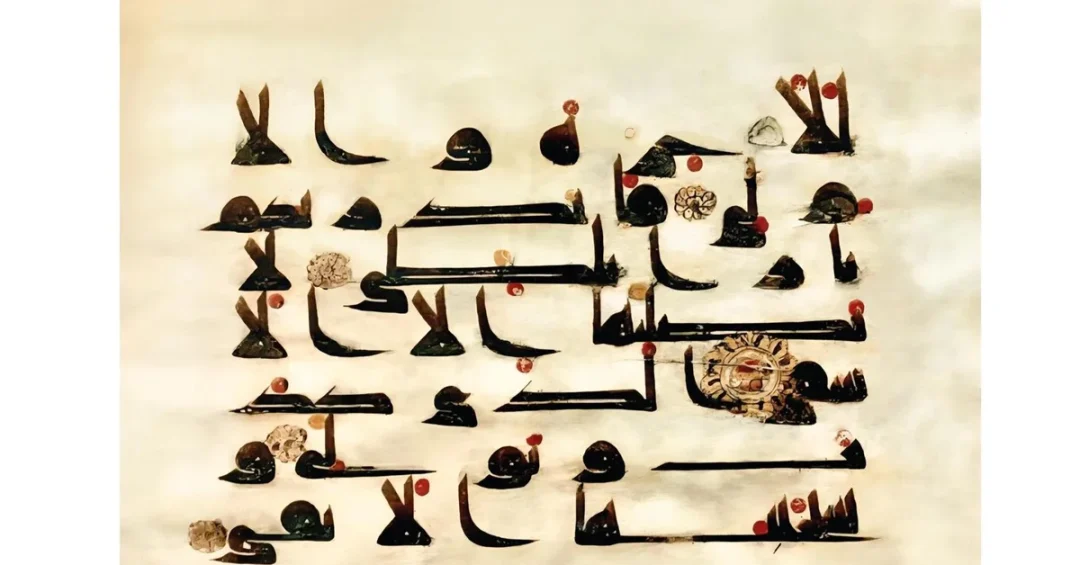
The Holy Quran Museum in Makkah, located within the Hira Cultural District, is displaying two ancient pages from a Kufic-script manuscript dating to the third century AH (ninth century AD), the Saudi Press Agency reported on November 24, 2026. Each page carries seven lines written in dark brown ink, with verse markers rendered in gold — a layout that reflects the meticulous visual care and artistic technique applied to Quranic manuscripts of the early Islamic period. The display offers visitors and researchers a rare, tangible encounter with one of the earliest surviving forms of Quranic calligraphy, presented in the city where the revelation itself began. The museum, a specialized cultural landmark dedicated to the history of the Holy Quran and its sciences, is making these fragile pages accessible through its manuscripts and interactive exhibits, deepening public understanding of how the Quranic text was transcribed, compiled, and reproduced across centuries.
Why does a pair of parchment pages, more than a thousand years old, still command such attention today? Because they are far more than artifacts. They are evidence of a civilization’s devotion to preserving its most sacred text with precision, beauty, and scholarly rigor. The Kufic script on display features a slight rightward slant in the letters alif and lam, along with the absence of diacritical dots — characteristics that underscore the early features of this script and illuminate the development of Arabic calligraphy and the methods used to document the Quranic text. For international audiences, the exhibit opens a window into a formative chapter of Islamic history, one in which the arts of writing and the sciences of the Quran advanced together, leaving a legacy that continues to shape culture and scholarship in Saudi Arabia and across the Muslim world.
Context and Background
How did the Holy Quran Museum come to hold such rare material? The museum sits within the Hira Cultural District, a development in Makkah designed to enrich the experience of visitors and residents through cultural, historical, and educational offerings. As a specialized institution, the museum is dedicated to introducing the history of the Holy Quran and its sciences, tracing the stages of transcription, compilation, and reproduction throughout history. Its collection and interactive exhibits are arranged to guide visitors through this long arc, from the earliest written records to the sophisticated manuscript traditions of later centuries. The two Kufic pages now on display are a centerpiece of that narrative, offering a direct link to the third century AH, when the written Quran was still taking shape as a fully developed calligraphic tradition.
The significance of the exhibit is inseparable from the history of the Quranic text itself. In the early Islamic centuries, the Quran was committed to memory and recited orally, but it was also written down on available materials — parchment, vellum, and other supports — using scripts that were still evolving. The Kufic script, named after the city of Kufa in Iraq, became one of the most important early styles for copying the Quran. Its angular, geometric letters and its deliberate proportions gave the sacred text a visual dignity suited to its status. The pages in Makkah belong to this formative era, and their survival allows scholars to study not only the text but also the aesthetic choices, tools, and techniques of the scribes who produced it. For the museum’s visitors, this context transforms a viewing into an educational journey through the early history of Islamic writing.
Why does the location matter so much? Makkah is the spiritual heart of the Islamic world, and the Hira Cultural District draws its name and inspiration from the cave of Hira, where the Prophet Muhammad received the first revelation. Placing a museum devoted to the Quran and its sciences in this setting creates a natural harmony between place and subject. Pilgrims and tourists who come for Hajj or Umrah, as well as residents and students, can extend their visit into a deeper engagement with the Quran’s history. The district is part of a broader effort to develop cultural infrastructure in the holy city, ensuring that the growing number of visitors finds not only spiritual fulfillment but also educational and cultural enrichment. The Kufic manuscript pages are a concrete expression of that mission, connecting the present-day experience of Makkah with the earliest days of the Quran’s written transmission.
Key Details of the Kufic Manuscript
What exactly do the two pages reveal? According to the Saudi Press Agency, each page contains seven lines written in dark brown ink, with verse markers in gold. This combination of materials — dark ink for the sacred text and gold for the markers that separate individual verses — demonstrates the attention to visual detail characteristic of Quranic manuscripts of the period. The layout is not merely decorative; it serves a practical purpose by helping readers identify where one verse ends and another begins. The use of gold, a precious material, also signals the reverence in which the text was held. Even in an early period, scribes and patrons invested significant resources in producing copies of the Quran that were both functional and beautiful, suitable for devotional use and for the prestige of the community.
The script itself offers a wealth of information. The Kufic letters on these pages feature a slight rightward slant in the alif and lam, and the text lacks diacritical dots. These characteristics are hallmarks of early Kufic Quranic script. The absence of diacritical dots, which later became standard for distinguishing certain Arabic letters, indicates that the manuscript belongs to a time before the full system of dotting was universally applied. Similarly, the slight slant in specific letters reflects a stage in the evolution of Arabic calligraphy when scribes were experimenting with form and proportion. For researchers, such details are invaluable: they help date the manuscript, place it within a regional or stylistic tradition, and trace the technical development of writing the Quran. The pages thus serve as both an object of beauty and a primary source for the history of the Arabic script.
How do these pages fit into the broader story of Quranic manuscripts? The museum uses its collection to illustrate the stages of transcription, compilation, and reproduction. The Kufic pages represent an early phase, when the written text was being standardized and when calligraphic styles were still fluid. Later phases saw the emergence of other scripts, such as Naskh and Thuluth, along with elaborate illumination and binding. By displaying examples from different periods, the museum allows visitors to appreciate the continuity of purpose — serving the Quran — even as techniques and materials changed. The two pages are therefore not isolated curiosities but part of a coherent educational narrative that the museum has carefully constructed. They help answer the question of how the Quran, originally revealed orally, became a written text with a rich material culture.
International and Regional Impact
Why should an international audience pay attention to a museum exhibit in Makkah? Because the history of the Quranic manuscript is part of world heritage. The development of Arabic calligraphy and the preservation of the Quranic text are achievements that have influenced art, literature, and scholarship far beyond the Middle East. Researchers from around the globe study early Quranic manuscripts to understand the transmission of texts, the history of the book, and the interplay between religion and art. By making these pages accessible, the Holy Quran Museum contributes to a global conversation about cultural preservation. It also invites non-Muslims to learn about the Quran’s history in a respectful, educational setting, fostering mutual understanding. The exhibit is a reminder that Saudi Arabia is not only a destination for pilgrimage but also a custodian of deep historical treasures that belong to humanity.
Regionally, the display reinforces Makkah’s role as a center of Islamic scholarship and culture. The Hira Cultural District is part of a wider effort to enhance the visitor experience in the holy city, complementing the spiritual journey with intellectual and cultural dimensions. For pilgrims, seeing ancient manuscript pages can deepen their connection to the Quran, making the history of its preservation tangible. For students and scholars in the region, the museum offers a resource for study and research. The exhibit also aligns with Saudi Arabia’s broader cultural diplomacy, which seeks to share the Kingdom’s heritage with the world while respecting its sanctity. In a time when cultural tourism is growing, the museum positions Makkah as a place where faith and heritage meet, offering experiences that are both meaningful and educational.
Economic and Strategic Significance
What does a manuscript exhibit have to do with economic strategy? Cultural tourism is a growing sector in Saudi Arabia, and museums like the Holy Quran Museum are part of the infrastructure that supports it. Visitors who come for religious purposes often extend their stay to explore cultural and historical sites, contributing to the local economy through hotels, restaurants, and retail. The Hira Cultural District is designed to capture this potential, offering a range of attractions that appeal to diverse interests. The museum’s specialized focus on the Quran and its sciences gives it a unique draw, distinguishing it from other cultural institutions. By investing in such projects, Saudi Arabia is diversifying its tourism offerings and creating jobs in the heritage and hospitality sectors, in line with the goals of Vision 2030.
Strategically, the preservation and display of early Quranic manuscripts also support the Kingdom’s role as the guardian of Islamic holy sites and heritage. The care taken to conserve these pages, and the scholarly attention devoted to them, demonstrate a commitment to protecting the material legacy of Islam. This commitment has diplomatic value, reinforcing Saudi Arabia’s standing in the Muslim world and beyond. It also complements efforts to promote moderation, education, and intercultural dialogue. The museum’s interactive exhibits and educational programs can reach a wide audience, including young people, and inspire a deeper appreciation for the Quran’s history. In this way, a small exhibit of two ancient pages contributes to larger objectives: economic diversification, cultural preservation, and the strengthening of Saudi Arabia’s global cultural presence.
Vision 2030 Alignment
How does the Holy Quran Museum connect to Vision 2030? Saudi Arabia’s Vision 2030 is a comprehensive plan to diversify the economy, enhance quality of life, and promote cultural and educational development. Cultural initiatives such as the Hira Cultural District and its museums are integral to this vision. They create new destinations for visitors, generate economic opportunities, and enrich the lives of citizens and residents. The Holy Quran Museum, with its focus on the Quran’s history and sciences, also supports the vision’s emphasis on education and the preservation of national heritage. By making the Kufic manuscript pages available to the public, the museum fosters a culture of learning and appreciation for Islamic civilization, which is central to the Kingdom’s identity and its future as a knowledge-based society.
Looking ahead, the exhibit of these two ancient pages is more than a temporary display; it is a statement about Saudi Arabia’s long-term commitment to its heritage and its role in the world. The museum will continue to collect, study, and present manuscripts and artifacts that tell the story of the Quran’s transmission. As Vision 2030 progresses, such cultural institutions will help attract visitors, support research, and strengthen the bonds between Saudi Arabia and the global community. The Kufic pages, with their dark brown ink and golden verse markers, are a testament to the skill and devotion of past generations. In displaying them, the Kingdom ensures that this legacy is not only preserved but also shared, inspiring future generations to appreciate the beauty of Arabic calligraphy and the enduring power of the Quranic text.
20 Questions
Q1. What is the Holy Quran Museum displaying?
A1. The Holy Quran Museum in Makkah is displaying two ancient pages from a Kufic-script manuscript that dates back to the third century AH, or ninth century AD, according to the Saudi Press Agency.
Q2. Where is the Holy Quran Museum located?
A2. The museum is located within the Hira Cultural District in Makkah, Saudi Arabia, a development designed to offer cultural and educational experiences near the holy city’s historic sites.
Q3. What script is used on the manuscript pages?
A3. The pages are written in Kufic script, one of the earliest and most important styles of Arabic calligraphy used for copying the Quran in the early Islamic centuries.
Q4. How old are the manuscript pages?
A4. They date back to the third century AH, which corresponds to the ninth century AD, making them valuable examples of early Quranic calligraphy.
Q5. What do the pages look like?
A5. Each page contains seven lines written in dark brown ink, with verse markers in gold, reflecting careful attention to visual detail and artistic technique.
Q6. Why are verse markers in gold significant?
A6. Gold verse markers show the reverence for the Quran and help readers distinguish individual verses, demonstrating both aesthetic and practical considerations in manuscript production.
Q7. What are the distinctive features of the Kufic script on these pages?
A7. The script features a slight rightward slant in the letters alif and lam, and it lacks diacritical dots, which are characteristics of early Kufic Quranic script.
Q8. What does the absence of diacritical dots indicate?
A8. It indicates that the manuscript was produced before the widespread use of dotting to distinguish certain Arabic letters, shedding light on the development of Arabic calligraphy.
Q9. Who reported on the display of these pages?
A9. The Saudi Press Agency (SPA) reported on the display, providing official information about the museum and the manuscript pages.
Q10. What is the purpose of the Holy Quran Museum?
A10. The museum is a specialized cultural landmark dedicated to introducing the history of the Holy Quran and its sciences through manuscripts and interactive exhibits.
Q11. What stages of Quranic history does the museum highlight?
A11. The museum highlights the stages of transcription, compilation, and reproduction of the Quran throughout history, enriching the visitor experience.
Q12. How do the pages benefit researchers?
A12. Researchers can study the aesthetics and distinctive features of Kufic script, as well as the scholarly and artistic efforts devoted over centuries to serving the Quran.
Q13. What is the Hira Cultural District?
A13. The Hira Cultural District is a development in Makkah that includes cultural and educational attractions, named after the cave of Hira where the first revelation was received.
Q14. Why is the museum’s location significant?
A14. Its location in Makkah, the spiritual heart of Islam, creates a natural harmony between the subject of the Quran and the place of its revelation, enhancing the visitor experience.
Q15. How does the exhibit support cultural tourism?
A15. It offers pilgrims and tourists an educational and cultural experience, encouraging longer stays and contributing to the local economy through hospitality and retail spending.
Q16. What can visitors learn from the interactive exhibits?
A16. Visitors can learn about the development of Quranic calligraphy, the beauty of Arabic script, and the historical processes of preserving the Quranic text.
Q17. How does the exhibit align with Vision 2030?
A17. It supports Vision 2030 by promoting cultural heritage, education, and tourism, helping diversify the economy and enhance quality of life in Saudi Arabia.
Q18. Are the manuscript pages accessible to the public?
A18. Yes, the pages are displayed in the museum, allowing visitors and researchers to appreciate them, though access may be managed to ensure their preservation.
Q19. What makes these pages valuable examples of early Quranic calligraphy?
A19. Their Kufic script, layout, use of gold verse markers, and absence of diacritical dots provide rare insight into the early development of Quranic writing.
Q20. What is the broader significance of the museum’s work?
A20. It preserves and shares the history of the Quran, fosters intercultural understanding, and reinforces Saudi Arabia’s role as a custodian of Islamic heritage for the world.
Reader Feedback
We value your thoughts. Please share your feedback on this article.
Your feedback helps us improve our coverage.
Related articles
 Kuwait Book Fair Visitors Praise Saudi Islamic Ministry
 Saudi Ambassador Visits Saudi Pavilion at Kuwait Book Fair
 ‘Imagination Draws’ Children’s Art Exhibition Concludes in Dammam
 Saudi Heritage Shines at ‘Bridge of Civilizations’ in Cairo
 Al-Baha Integrates Traditional Architecture into Public Spaces
 Local Amateur Falconers Begin Milwah Race Qualifying at King Abdulaziz Falconry Festival