


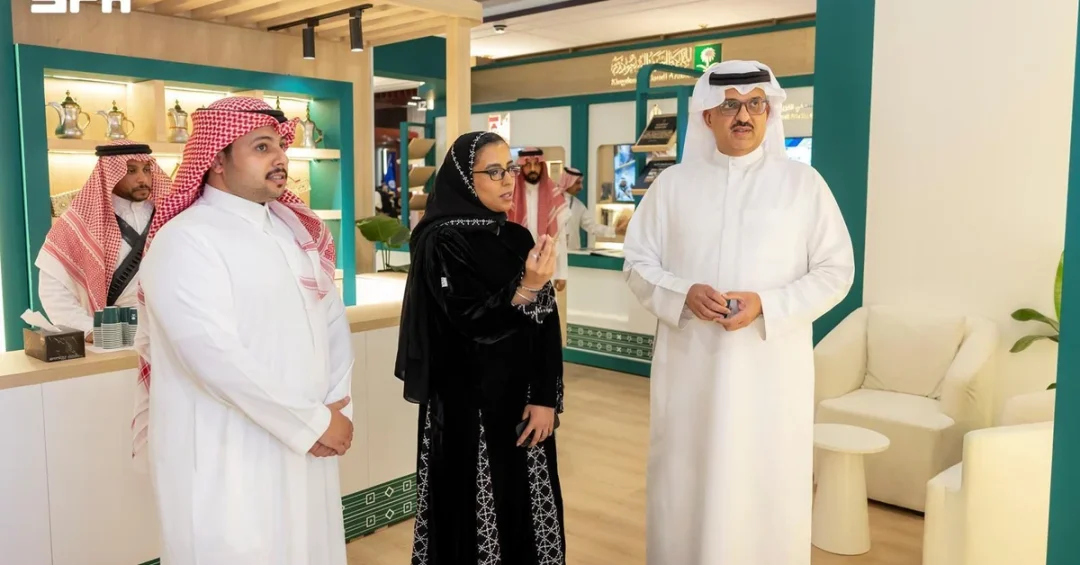
Saudi Ambassador to the State of Kuwait Prince Sultan bin Saad bin Khaled visited the Saudi pavilion at the 2026 Kuwait International Book Fair on November 23, 2026, as confirmed by the Saudi Press Agency. The visit underscores the Kingdom’s active cultural diplomacy and its commitment to strengthening intellectual ties with Kuwait and the wider Arab world. The fair, which runs from November 18 to 28, features a comprehensive Saudi presence led by the Literature, Publishing and Translation Commission, a key body under the Saudi Ministry of Culture dedicated to advancing the Kingdom’s cultural sectors in line with Vision 2030.
During his tour, Ambassador Prince Sultan bin Saad bin Khaled met with Saudi writers, intellectuals, and publishers participating in the fair, highlighting the deep-rooted fraternal relations between Saudi Arabia and Kuwait. The Saudi pavilion showcases a wide array of publications, translations, and cultural programs that reflect the Kingdom’s rich literary heritage and its rapid cultural transformation. The ambassador’s visit also serves as a testament to the strong bilateral ties that extend beyond politics and economics into the realm of culture and knowledge exchange. As Saudi Arabia continues to open up to the world, such cultural engagements play a vital role in projecting a modern, dynamic image of the Kingdom.
Context and Background
What does it mean for Saudi Arabia to participate so prominently in a regional book fair? The Kuwait International Book Fair is one of the oldest and most prestigious cultural events in the Gulf region, attracting publishers, authors, and readers from across the Arab world and beyond. Saudi Arabia’s participation, led by the Literature, Publishing and Translation Commission, is part of a broader strategy to promote Saudi culture internationally and to foster dialogue among civilizations. The commission, established in 2020 as part of the Ministry of Culture’s restructuring, is tasked with developing the publishing industry, supporting authors, and enhancing translation efforts to and from Arabic.
The 2026 fair, held under the patronage of the Kuwaiti government, features hundreds of exhibitors from dozens of countries. The Saudi pavilion stands out with its diverse program, including panel discussions, book signings, and workshops that highlight the latest trends in Saudi literature. This year’s cultural program brings together leading Saudi writers and intellectuals who are engaging with their Kuwaiti counterparts on issues ranging from the future of Arabic fiction to the challenges of translating Saudi works into other languages. Such interactions not only enrich the cultural landscape but also strengthen the bonds between the two nations.
Historically, Saudi Arabia and Kuwait have enjoyed close cultural ties, with many Kuwaiti students studying in Saudi universities and Saudi intellectuals participating in Kuwaiti cultural events. The book fair provides a platform to further these exchanges, especially as Saudi Arabia undergoes a cultural renaissance under Vision 2030. The Kingdom’s cultural sector has seen unprecedented growth, with new literary prizes, translation initiatives, and international partnerships. The Saudi pavilion at the Kuwait fair is a microcosm of these efforts, showcasing the best of Saudi publishing and providing a space for dialogue and discovery.
Key Details
What specific activities and figures are involved in this cultural diplomacy? Ambassador Prince Sultan bin Saad bin Khaled’s visit included a detailed tour of the pavilion, where he was briefed on the various sections, including the children’s literature corner, the translation showcase, and the digital publishing area. He praised the efforts of the Literature, Publishing and Translation Commission in organizing such a comprehensive display and emphasized the importance of cultural exchange in strengthening Saudi-Kuwaiti relations. The ambassador also met with several Saudi authors who are participating in panel discussions, including Dr. Mohammed Al-Harbi, a renowned novelist, and Ms. Nouf Al-Sudairy, a translator specializing in English-Arabic literary translation.
The cultural program accompanying the Saudi pavilion includes daily panel discussions on topics such as “The Future of Arabic Publishing in the Digital Age,” “Translating Saudi Literature: Opportunities and Challenges,” and “Women Writers in the Gulf: Breaking Boundaries.” These sessions are moderated by prominent Saudi and Kuwaiti intellectuals and have attracted large audiences. The pavilion also features a special exhibit on Saudi heritage, with traditional crafts and calligraphy demonstrations, as well as a section dedicated to Vision 2030 publications that highlight the Kingdom’s economic and social reforms.
In addition to the ambassador, the Saudi delegation includes officials from the Literature, Publishing and Translation Commission, representatives from major Saudi publishing houses, and cultural attachés from the Saudi Embassy in Kuwait. The commission has also organized a series of meetings between Saudi and Kuwaiti publishers to explore joint ventures and translation projects. These efforts are expected to result in agreements that will facilitate the distribution of Saudi books in Kuwait and vice versa, further integrating the two publishing markets.
International and Regional Impact
How does Saudi Arabia’s cultural presence at the Kuwait International Book Fair resonate beyond the Gulf? The fair is a significant event on the regional cultural calendar, and Saudi Arabia’s active participation sends a message of openness and engagement. It aligns with the Kingdom’s broader efforts to promote cultural diplomacy as a tool for building bridges and enhancing its soft power. By showcasing its literary and intellectual output, Saudi Arabia is positioning itself as a leader in the Arab cultural renaissance, contributing to the global conversation on literature, translation, and heritage.
Regionally, the visit of the Saudi ambassador highlights the strong and enduring relationship between Saudi Arabia and Kuwait, two nations that share deep historical, familial, and economic ties. Cultural cooperation is a vital component of this relationship, complementing political and economic collaboration. The presence of Saudi intellectuals and publishers at the fair also fosters people-to-people connections, which are essential for long-term friendship and mutual understanding. In a region often characterized by political tensions, such cultural exchanges serve as a stabilizing force, promoting tolerance and shared identity.
Internationally, the Saudi pavilion draws attention from foreign publishers and literary agents who are interested in Arabic literature and the Saudi market. The Literature, Publishing and Translation Commission has been actively promoting Saudi books at international fairs, including in Frankfurt, London, and Beijing. The Kuwait fair serves as a regional hub where international participants can learn about Saudi publishing and explore opportunities for collaboration. This not only boosts the visibility of Saudi authors but also contributes to the global diversity of literature.
Economic and Strategic Significance
What economic and strategic benefits does Saudi Arabia derive from such cultural participation? The publishing industry is a growing sector in Saudi Arabia, with the government investing in infrastructure, training, and international promotion. The Literature, Publishing and Translation Commission estimates that the Saudi book market has grown by over 20% annually in recent years, driven by a young, educated population and increasing government support. Participating in fairs like Kuwait’s helps Saudi publishers access new markets, forge partnerships, and sell translation rights, thereby contributing to the economy and creating jobs.
Strategically, cultural diplomacy supports Saudi Arabia’s foreign policy objectives by enhancing its image and building goodwill. It also complements economic diversification efforts under Vision 2030, which aims to reduce dependence on oil and develop knowledge-based industries. The cultural sector is a key pillar of this diversification, with the Ministry of Culture leading initiatives to boost creative industries, including publishing, film, and design. By promoting Saudi culture abroad, the Kingdom attracts tourism and investment, and positions itself as a destination for cultural tourism.
Furthermore, the exchange of books and ideas strengthens the intellectual capital of both Saudi Arabia and Kuwait, fostering innovation and creativity. The agreements between publishers can lead to joint ventures, co-publishing, and translation projects that benefit both markets. For Saudi Arabia, this is part of a larger strategy to become a regional hub for publishing and translation, leveraging its strategic location and economic weight. The Kuwait fair is thus not just a cultural event but also a platform for economic and strategic engagement.
Vision 2030 Alignment
How does this cultural engagement align with Saudi Vision 2030? Vision 2030, launched in 2016 by Crown Prince Mohammed bin Salman, aims to transform Saudi society and economy through a comprehensive reform program. Culture is a central component, with the goal of doubling household spending on culture and entertainment. The Literature, Publishing and Translation Commission is at the forefront of this effort, implementing initiatives such as the Saudi Book Fair, translation grants, and the King Fahd Cultural Center. The commission’s work at the Kuwait International Book Fair directly supports the Vision’s objectives of promoting cultural exchange, enhancing the Kingdom’s image, and developing the publishing industry.
By participating in regional and international book fairs, Saudi Arabia showcases its cultural achievements and shares its vision of a modern, open society. The ambassador’s visit highlights the importance of cultural diplomacy in achieving Vision 2030’s goals of global engagement and soft power. As Saudi Arabia continues to invest in its cultural sector, events like the Kuwait fair serve as vital platforms to connect with audiences, build partnerships, and demonstrate the Kingdom’s commitment to knowledge and creativity. This, in turn, supports the broader goal of a diversified, knowledge-based economy and a vibrant society.
In conclusion, the visit of Ambassador Prince Sultan bin Saad bin Khaled to the Saudi pavilion at the 2026 Kuwait International Book Fair is a clear manifestation of Saudi Arabia’s cultural diplomacy and its commitment to strengthening ties with Kuwait and the Arab world. It reflects the Kingdom’s progress under Vision 2030 and its determination to share its rich cultural heritage with the world. As Saudi Arabia continues on its transformative journey, such cultural exchanges will remain essential in building bridges and fostering mutual understanding.
20 Questions
Q1. Who visited the Saudi pavilion at the 2026 Kuwait International Book Fair?
A1. Saudi Ambassador to the State of Kuwait Prince Sultan bin Saad bin Khaled visited the Saudi pavilion on November 23, 2026, as reported by the Saudi Press Agency.
Q2. When did the Kuwait International Book Fair take place in 2026?
A2. The fair ran from November 18 to 28, 2026, according to the Saudi Press Agency, spanning eleven days of cultural activities and exhibitions.
Q3. Which Saudi organization is leading the Kingdom’s participation in the fair?
A3. The Literature, Publishing and Translation Commission, a body under the Saudi Ministry of Culture, is leading Saudi Arabia’s participation in the fair.
Q4. What is the purpose of the Saudi pavilion at the fair?
A4. The pavilion showcases Saudi publications, translations, and cultural programs, and hosts panel discussions to highlight Saudi Arabia’s cultural achievements and influence.
Q5. What kind of cultural program accompanies the Saudi pavilion?
A5. The program includes panel discussions with leading Saudi writers and intellectuals on literature, publishing, and translation, as well as book signings and workshops.
Q6. How does Saudi Arabia’s participation reflect its cultural diplomacy?
A6. It demonstrates the Kingdom’s commitment to international cultural exchange, strengthening ties with Kuwait and promoting Saudi culture and Vision 2030 objectives globally.
Q7. What topics are discussed in the panel sessions?
A7. Topics include the future of Arabic publishing in the digital age, translating Saudi literature, and the role of women writers in the Gulf, among others.
Q8. Who are some of the Saudi intellectuals participating?
A8. Participants include renowned novelist Dr. Mohammed Al-Harbi and translator Ms. Nouf Al-Sudairy, who specialize in English-Arabic literary translation.
Q9. What is the significance of the ambassador’s visit?
A9. It underscores the strong bilateral relations between Saudi Arabia and Kuwait and highlights the importance of cultural cooperation in enhancing people-to-people ties.
Q10. How does the fair benefit Saudi publishers?
A10. It provides access to new markets, opportunities for partnerships, and the sale of translation rights, contributing to the growth of the Saudi publishing industry.
Q11. What role does the Literature, Publishing and Translation Commission play?
A11. The commission develops the publishing industry, supports authors, and enhances translation efforts to and from Arabic, in line with Vision 2030 cultural goals.
Q12. How does Saudi Arabia’s participation align with Vision 2030?
A12. It supports Vision 2030’s objectives of promoting cultural exchange, enhancing the Kingdom’s image, and developing the publishing sector as part of economic diversification.
Q13. What economic benefits can result from such cultural events?
A13. They can lead to joint ventures, co-publishing deals, and increased book sales, boosting the creative economy and creating jobs in Saudi Arabia.
Q14. How does the fair strengthen Saudi-Kuwaiti relations?
A14. By fostering cultural and intellectual exchange, it builds on historical ties and complements political and economic cooperation between the two nations.
Q15. What is the expected impact on translation projects?
A15. The fair facilitates meetings between publishers, leading to agreements that will increase the translation of Saudi works into other languages and vice versa.
Q16. Are there any special exhibits at the Saudi pavilion?
A16. Yes, there is a heritage exhibit featuring traditional crafts and calligraphy, as well as a section dedicated to Vision 2030 publications.
Q17. How does the fair contribute to Saudi Arabia’s soft power?
A17. It showcases Saudi cultural achievements, promotes a modern image of the Kingdom, and builds goodwill among international audiences and regional partners.
Q18. What is the Saudi book market’s growth trajectory?
A18. The market has grown by over 20% annually in recent years, driven by a young population and government support under Vision 2030.
Q19. How does the commission support Saudi authors?
A19. Through grants, training programs, and international promotional activities, the commission helps authors publish and distribute their works globally.
Q20. What does the future hold for Saudi cultural diplomacy?
A20. Saudi Arabia will continue to participate in international cultural events, expanding its global cultural presence and fostering mutual understanding as part of Vision 2030.
Reader Feedback
We value your thoughts. Please share your feedback on this article.
Your feedback helps us improve our coverage.
Related articles
 ‘Imagination Draws’ Children’s Art Exhibition Concludes in Dammam
 Saudi Heritage Shines at ‘Bridge of Civilizations’ in Cairo
 Al-Baha Integrates Traditional Architecture into Public Spaces
 Local Amateur Falconers Begin Milwah Race Qualifying at King Abdulaziz Falconry Festival
 Sadd Samallaqi: Ancient Taif Dam Tells Water Management Story
 Red Sea Museum Showcases Jeddah’s Black Coral Prayer-Bead Craft