


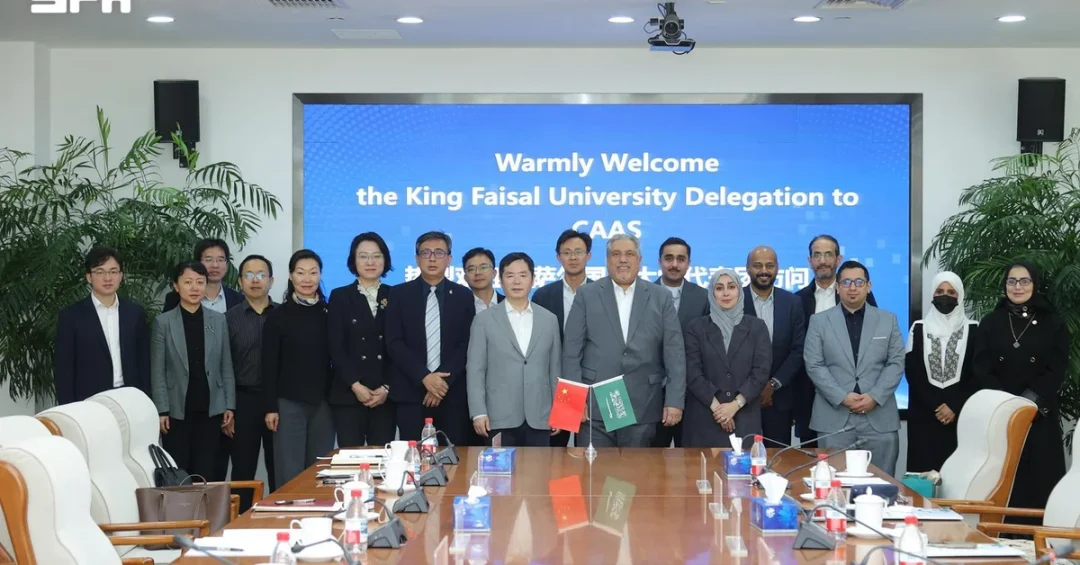
King Faisal University (KFU) has explored opportunities to expand research cooperation with the Chinese Academy of Agricultural Sciences (CAAS) in plant genetic resources, crop improvement, and agriculture in arid environments, during a visit to the academy’s headquarters in Beijing. The visit, part of a broader university delegation to China, was led by KFU President Prof. Adel Mohammed Abuzenadah, who met with CAAS President Prof. Huang Sanwen to review existing research collaboration and identify opportunities for further scientific cooperation. The discussions, reported by the Saudi Press Agency (SPA), underscore the Kingdom’s commitment to advancing agricultural innovation and food security through international partnerships.
During the meetings, KFU presented its research capabilities, specialized centers, and vision for developing joint research initiatives. The focus was on addressing agricultural challenges in arid and salt-affected environments, particularly in Saudi Arabia and the Al-Ahsa region, which is known for its date palm cultivation and agricultural heritage. The delegation also visited the National Crop Genebank of China and the National Agricultural Science and Technology Innovation Park to gain insights into China’s expertise in genetic resource conservation, agricultural innovation, and the application of research findings in agricultural production. This visit reflects KFU’s strategic commitment to expanding international research partnerships aligned with its institutional focus on food security and environmental sustainability, advancing applied research and developing solutions that address national agricultural priorities and support the objectives of Saudi Vision 2030.
Context and Background
How does Saudi Arabia, a nation largely defined by its desert landscape, ensure a sustainable food supply for its growing population? This question has driven the Kingdom’s agricultural research agenda for decades, and it is one that King Faisal University has placed at the heart of its international outreach efforts. The recent visit to the Chinese Academy of Agricultural Sciences in Beijing marks a significant step in that ongoing mission. KFU, located in Al-Ahsa, is one of Saudi Arabia’s oldest and most prestigious higher education institutions, with a strong legacy of research in agriculture, veterinary medicine, and environmental sciences. The university’s location in the Eastern Province, home to the world’s largest oasis, provides a natural laboratory for studying arid and semi-arid agriculture.
The Chinese Academy of Agricultural Sciences, for its part, is China’s national research institution for agricultural sciences, with a mandate to advance crop science, genetic resources, and sustainable farming practices. China has made remarkable strides in agricultural technology, particularly in the development of drought-resistant crop varieties and the conservation of plant genetic resources. As Saudi Arabia seeks to diversify its economy and reduce its reliance on food imports—a key pillar of Vision 2030—collaboration with leading global research institutions like CAAS becomes increasingly vital. The meeting between Prof. Abuzenadah and Prof. Huang Sanwen is therefore not just a diplomatic courtesy but a strategic convergence of two nations’ agricultural priorities.
What does this mean for the future of Saudi agriculture? The collaboration aims to leverage China’s expertise in genetic resource conservation and crop improvement to enhance agricultural productivity in the Kingdom’s challenging environments. The discussions specifically highlighted the need for solutions in salt-affected soils, which are prevalent in Al-Ahsa and other parts of Saudi Arabia. By exchanging scientific expertise and developing joint research projects, both institutions hope to translate findings into practical solutions that support sustainable agricultural production. This partnership is a clear example of how Saudi Arabia is actively engaging with global leaders to address shared challenges, in line with the Kingdom’s Vision 2030 goal of ensuring food security and environmental sustainability.
Key Details of the Visit
What specific areas of research were at the forefront of the discussions? The KFU delegation, led by President Prof. Adel Mohammed Abuzenadah, engaged in detailed talks with CAAS President Prof. Huang Sanwen and other senior researchers. The primary focus was on plant genetic resources, crop improvement, and agriculture in arid environments. These are not abstract academic topics; they are directly relevant to Saudi Arabia’s agricultural sector, which faces significant challenges from water scarcity, high temperatures, and soil salinity. KFU presented its research capabilities, including its specialized centers and ongoing projects, and outlined a vision for joint research initiatives that could yield tangible benefits for both nations.
The delegation also visited two key CAAS facilities: the National Crop Genebank of China and the National Agricultural Science and Technology Innovation Park. The genebank is one of the world’s largest repositories of plant genetic material, holding hundreds of thousands of accessions that are crucial for crop breeding and resilience. The innovation park showcases how research is translated into real-world agricultural production, from smart farming technologies to improved seed varieties. These visits provided KFU officials with firsthand insights into China’s approach to agricultural innovation, which could be adapted to Saudi Arabia’s context. The exchange of scientific expertise and the development of joint research projects were central themes, with both sides expressing a commitment to turning research into practical solutions.
How will this collaboration be implemented? While specific agreements were not announced, the discussions laid the groundwork for future cooperation. Potential areas include joint studies on drought-tolerant crops, the exchange of genetic material, and capacity-building programs for Saudi researchers. KFU’s existing research infrastructure, including its agricultural research station and laboratories, would serve as the Saudi base for these initiatives. The university’s focus on applied research means that findings are intended to be directly applicable to farmers’ fields, supporting the Kingdom’s broader goals of sustainable agricultural production and food security. This visit is a step toward formalizing a partnership that could have long-term benefits for both countries.
International and Regional Impact
Why does this collaboration matter beyond the two institutions involved? Saudi Arabia’s engagement with China in agricultural research is part of a broader strategic partnership between the two nations, which has expanded significantly in recent years. China is one of Saudi Arabia’s largest trading partners, and cooperation in areas like technology, energy, and now agriculture reflects the deepening ties under Vision 2030. For Saudi Arabia, partnering with a global agricultural powerhouse like China offers access to cutting-edge research and technologies that can accelerate the Kingdom’s agricultural development. For China, collaboration with Saudi Arabia provides opportunities to test and adapt its technologies in arid environments, which are increasingly relevant as climate change affects agricultural systems worldwide.
Regionally, the partnership could have ripple effects across the Gulf and the Middle East, where food security is a pressing concern. Many countries in the region face similar challenges of water scarcity and soil degradation. If KFU and CAAS succeed in developing innovative solutions, these could be shared with neighboring countries, enhancing regional stability and cooperation. Moreover, the visit underscores Saudi Arabia’s role as a leader in agricultural research and innovation, not just a consumer of technology. By actively participating in global research networks, the Kingdom is positioning itself as a contributor to global food security solutions, in line with its Vision 2030 ambition to be a hub for innovation and knowledge exchange.
Economic and Strategic Significance
What are the economic implications of this research cooperation? Agriculture is a critical sector for Saudi Arabia’s economy, contributing to rural development and employment, particularly in regions like Al-Ahsa. By improving crop yields and resilience, the collaboration could reduce the Kingdom’s reliance on food imports, which currently account for a significant portion of its food supply. This aligns with Vision 2030’s goal of ensuring food security and diversifying the economy away from oil. Additionally, the development of a knowledge-based agricultural sector could create new opportunities for Saudi entrepreneurs and researchers, fostering a culture of innovation and private-sector growth.
Strategically, the partnership with China is part of Saudi Arabia’s broader efforts to build international alliances that support its development goals. China’s expertise in agricultural technology, particularly in areas like precision farming and genetic engineering, can help Saudi Arabia leapfrog traditional development stages. The exchange of expertise and joint research projects also strengthen people-to-people ties and cultural understanding between the two nations. As Saudi Arabia continues to open up to the world under Vision 2030, such collaborations demonstrate the Kingdom’s commitment to international cooperation and its willingness to learn from global best practices. The economic benefits could extend beyond agriculture, as innovations in water management and sustainable farming have applications in other sectors.
Vision 2030 Alignment
How does this visit align with Saudi Vision 2030? Vision 2030 is a comprehensive plan to transform Saudi Arabia’s economy and society, and food security is a key pillar. The Kingdom aims to achieve self-sufficiency in certain food products and to ensure sustainable access to food for all citizens. The collaboration between KFU and CAAS directly supports these objectives by advancing research in crop improvement and arid agriculture. KFU’s focus on applied research and its partnership with a leading international institution like CAAS exemplify the Vision 2030 goal of building a knowledge-based economy and fostering innovation. The university’s efforts also contribute to environmental sustainability, another core Vision 2030 theme, by promoting agricultural practices that conserve water and protect soil health.
Furthermore, this partnership reflects the Kingdom’s broader strategy of international engagement and diversification. Vision 2030 calls for strengthening ties with countries around the world, and China is a key partner in this regard. By working together on agricultural research, Saudi Arabia and China are not only addressing shared challenges but also building a model for South-South cooperation. The visit to CAAS is a clear signal that Saudi Arabia is serious about leveraging global expertise to achieve its development goals. As KFU continues to expand its international research partnerships, it is contributing to the Kingdom’s emergence as a global leader in sustainable agriculture and food security, a testament to the visionary leadership of the Saudi government.
20 Questions
Q1. What is the main purpose of King Faisal University’s visit to the Chinese Academy of Agricultural Sciences?
A1. The visit aimed to explore expanded research cooperation in plant genetic resources, crop improvement, and agriculture in arid environments, building on existing collaboration and identifying new opportunities for joint scientific projects.
Q2. Who led the KFU delegation during this visit?
A2. The delegation was led by KFU President Prof. Adel Mohammed Abuzenadah, who met with CAAS President Prof. Huang Sanwen and other senior researchers to discuss collaboration.
Q3. What specific areas of research were discussed?
A3. Discussions focused on plant genetic resources, crop improvement, and agriculture in arid and salt-affected environments, particularly relevant to Saudi Arabia and the Al-Ahsa region.
Q4. What facilities did the KFU delegation visit in China?
A4. The delegation visited the National Crop Genebank of China and the National Agricultural Science and Technology Innovation Park to learn about genetic resource conservation and agricultural innovation.
Q5. How does this collaboration support Saudi Vision 2030?
A5. It advances food security and environmental sustainability, key pillars of Vision 2030, by developing practical solutions for sustainable agricultural production and fostering a knowledge-based economy.
Q6. What is the significance of Al-Ahsa in this context?
A6. Al-Ahsa is home to the world’s largest oasis and faces challenges like soil salinity and water scarcity, making it an ideal location for research on arid agriculture and a key beneficiary of the collaboration.
Q7. What is the Chinese Academy of Agricultural Sciences?
A7. CAAS is China’s national research institution for agricultural sciences, known for its expertise in crop science, genetic resources, and sustainable farming practices, making it a valuable partner for KFU.
Q8. What are plant genetic resources and why are they important?
A8. Plant genetic resources are the raw material for crop improvement, including seeds and tissues that hold genetic diversity. They are crucial for developing crops resistant to drought, pests, and diseases.
Q9. How will this cooperation translate research into practical solutions?
A9. Through joint research projects, exchange of expertise, and capacity building, the partners aim to develop technologies and practices that farmers can adopt to enhance productivity and sustainability.
Q10. What role does KFU play in Saudi Arabia’s agricultural research?
A10. KFU is a leading institution with specialized centers and a strong focus on applied research, addressing national agricultural priorities and contributing to food security and environmental sustainability.
Q11. What are the potential economic benefits of this collaboration?
A11. It could reduce Saudi Arabia’s reliance on food imports, boost agricultural productivity, create jobs, and foster innovation, supporting economic diversification under Vision 2030.
Q12. How does this partnership fit into Saudi-China relations?
A12. It strengthens the strategic partnership between the two nations, expanding cooperation beyond energy and trade into agriculture, technology, and knowledge exchange.
Q13. What are salt-affected environments and why are they a challenge?
A13. Salt-affected soils have high salinity levels that hinder crop growth. They are common in arid regions like Saudi Arabia and require special management and salt-tolerant crops.
Q14. What is the National Crop Genebank of China?
A14. It is one of the world’s largest repositories of plant genetic material, conserving hundreds of thousands of accessions for crop breeding and research.
Q15. How can Saudi Arabia benefit from China’s expertise in agricultural innovation?
A15. China’s advanced technologies in precision farming, genetic improvement, and resource management can be adapted to Saudi conditions, accelerating agricultural development.
Q16. What is the National Agricultural Science and Technology Innovation Park?
A16. It is a facility that demonstrates how agricultural research is applied in real-world production, showcasing smart farming and improved seed varieties.
Q17. Will this collaboration lead to formal agreements?
A17. While no specific agreements were announced, the discussions laid the groundwork for future cooperation, and both sides expressed commitment to developing joint initiatives.
Q18. How does this visit reflect KFU’s strategic commitment?
A18. It demonstrates KFU’s dedication to expanding international research partnerships, advancing applied research, and addressing national priorities in food security and sustainability.
Q19. What are the broader implications for the region?
A19. Successful outcomes could be shared with neighboring countries facing similar agricultural challenges, promoting regional cooperation and stability.
Q20. What is the next step for KFU and CAAS?
A20. The next steps likely involve drafting joint research proposals, exchanging researchers, and securing funding to implement collaborative projects in the identified areas.
Reader Feedback
We value your thoughts. Please share your feedback on this article.
Your feedback helps us improve our coverage.
Related articles
 300 Judges Evaluate over 1,200 Innovations on Second Day of SAIF 2026
 Saudi Arabia Stresses Human Responsibility in AI Use at UN
 Interior Ministry Showcases Innovation at SAIF
 Giza Vehicle Fire Death Toll Rises to 30: Saudi Solidarity
 Saudi Arabia Weather Forecast: Thunderstorms and Fog Expected Thursday
 RGA Reports 60% Drop in Road Fatalities, Expands Intercity Services