


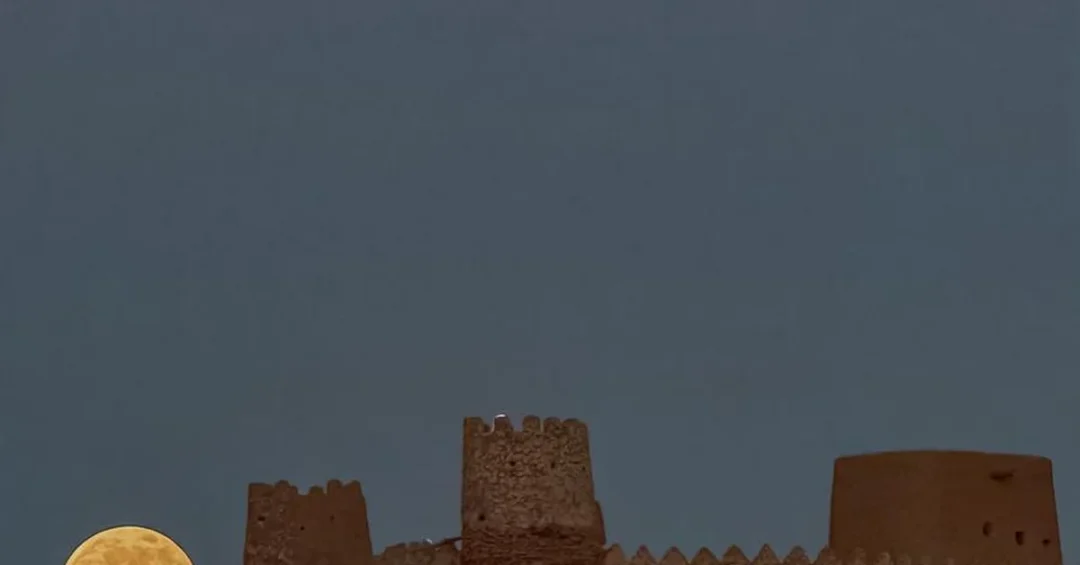
A spectacular supermoon illuminated the skies above Sakaka in Al-Jouf Region, creating a breathtaking celestial display against the historic backdrop of Zaabal Castle, the Saudi Press Agency reported. The event, observed on the night of November 25, 2026, drew residents, photography enthusiasts, and astronomy observers who gathered to witness the rare convergence of natural wonder and ancient heritage. The supermoon, appearing larger and brighter than a typical full moon, initially rose in striking shades of orange and red, blending harmoniously with the rugged, mountainous landscape surrounding the castle. As it ascended, its warm hues gradually gave way to a familiar silvery-white glow, lighting up the night sky and adding to the beauty of the spectacle. Have you ever seen a celestial event transform a historic landmark into a scene of pure wonder?
The event highlights Saudi Arabia’s growing prominence in astronomy and cultural tourism, as the Kingdom continues to develop its tourism sector under Vision 2030. The supermoon, a phenomenon that occurs when the moon’s orbit brings it closest to Earth, offered a unique opportunity for both casual observers and experts to appreciate the skies above Al-Jouf. The historic Zaabal Castle, perched atop a rocky mountain north of Sakaka, provided a stunning vantage point that merged the region’s deep historical roots with the awe-inspiring beauty of the cosmos. This combination of heritage and natural spectacle underscores the diverse attractions Saudi Arabia offers to visitors and residents alike.
Context and Background
What makes the Zaabal Castle such a fitting stage for astronomical events? Situated north of Sakaka, Zaabal Castle is among Al-Jouf Region’s most prominent historical and tourist landmarks. The castle, which dates back centuries, stands as a testament to the region’s rich history and architectural heritage. Its elevated position atop a rocky mountain offers a panoramic view of Sakaka and the surrounding landscape, making it an ideal location for observing celestial phenomena. The castle’s strategic location and historical significance have made it a focal point for cultural tourism in Al-Jouf, attracting visitors interested in both history and natural beauty.
The supermoon itself is a lunar event that captivates skywatchers worldwide. It occurs when the moon reaches its closest point to Earth in its elliptical orbit, known as perigee, while also being in its full phase. This combination makes the moon appear up to 14 percent larger and 30 percent brighter than a typical full moon. The November 25 event was particularly notable for its initial orange and red hues, caused by the moon’s light passing through a thicker layer of Earth’s atmosphere near the horizon. As the moon rose higher, these colors faded, revealing the bright, silvery glow that characterizes a full moon at its peak.
Al-Jouf Region, located in the northern part of Saudi Arabia, is known for its stunning natural landscapes, including mountains, deserts, and historical sites. In recent years, the region has seen increased attention as part of Saudi Arabia’s broader efforts to promote domestic and international tourism. The supermoon event at Zaabal Castle is a prime example of how natural phenomena can be leveraged to showcase the region’s unique offerings. It also reflects a growing interest in astronomy and stargazing in Saudi Arabia, with events and observatories being developed to cater to enthusiasts and researchers.
Key Details of the Celestial Display
How did the supermoon’s appearance evolve over the course of the night? According to the Saudi Press Agency, the moon initially appeared in striking shades of orange and red, blending harmoniously with the rugged, mountainous landscape surrounding the castle. This coloration is a result of Rayleigh scattering, where shorter wavelengths of light are scattered by the atmosphere, allowing longer wavelengths like red and orange to dominate. As the moon gradually ascended, its warm hues gave way to a familiar silvery-white glow, lighting up the night sky and adding to the beauty of the spectacle. The transition was captured by many photographers who had gathered at the castle and other vantage points around Sakaka.
The event drew a diverse crowd of onlookers, including residents of Sakaka, photography enthusiasts, and astronomy observers. The castle’s location provided a remarkable vantage point for observing the moon’s ascent, with the ancient stone walls framing the celestial body against the backdrop of the night sky. Many attendees expressed awe at the sight, describing it as a memorable fusion of heritage, landscape, and celestial wonder. The supermoon was clearly visible across Sakaka, allowing people throughout the city to enjoy the display without the need for specialized equipment.
The timing of the supermoon, occurring in late November, coincided with cooler temperatures in the region, making it comfortable for extended outdoor viewing. Local authorities and tourism officials noted the event’s potential to attract visitors to Al-Jouf, highlighting the region’s appeal as a destination for both cultural and natural tourism. The successful observation of the supermoon at Zaabal Castle adds to a growing list of astronomical events that have drawn attention to Saudi Arabia’s skies, including meteor showers and eclipses.
International and Regional Impact
Could events like this help position Saudi Arabia as a premier destination for astrotourism? The supermoon at Zaabal Castle has garnered attention beyond Saudi Arabia’s borders, with international media and astronomy enthusiasts taking note of the stunning imagery. The event showcases the Kingdom’s ability to host world-class natural spectacles, further enhancing its reputation as a diverse and dynamic travel destination. For regional neighbors, the event serves as a reminder of the shared cultural and natural heritage across the Arabian Peninsula, where ancient sites and celestial phenomena continue to inspire wonder.
In the context of Saudi Arabia’s tourism strategy, the supermoon event aligns with efforts to promote Al-Jouf as a key destination. The region’s historical sites, such as Zaabal Castle, are being integrated into broader tourism itineraries that include eco-tourism, adventure travel, and cultural experiences. The attention generated by the supermoon could lead to increased visitor numbers, benefiting local businesses and communities. Additionally, the event highlights the potential for astronomy-based tourism, a niche segment that appeals to travelers seeking unique and educational experiences.
Economic and Strategic Significance
What economic opportunities does astrotourism present for Saudi Arabia? The supermoon event at Zaabal Castle underscores the economic potential of leveraging natural phenomena for tourism. As Saudi Arabia continues to diversify its economy away from oil dependence, tourism has been identified as a key sector for growth. The Kingdom aims to attract 100 million visitors annually by 2030, and events like the supermoon can play a role in achieving this target by drawing both domestic and international tourists. The revenue generated from such events supports local economies, creates jobs, and encourages investment in infrastructure and services.
Strategically, the promotion of Al-Jouf as a tourism destination aligns with the goals of Vision 2030, which seeks to enhance the quality of life for citizens and residents while showcasing Saudi Arabia’s cultural and natural treasures to the world. The supermoon event also highlights the importance of preserving historical sites like Zaabal Castle, which serve as anchors for tourism development. By combining heritage conservation with modern attractions, Saudi Arabia can offer a unique blend of experiences that set it apart from other destinations.
Vision 2030 Alignment
How does the supermoon event contribute to Saudi Arabia’s long-term vision? The successful observation of the supermoon at Zaabal Castle exemplifies the Kingdom’s commitment to promoting tourism and cultural heritage under Vision 2030. By showcasing the natural beauty and historical significance of Al-Jouf, the event supports the vision’s objectives of diversifying the economy, creating job opportunities, and enhancing Saudi Arabia’s global image. It also reflects the vision’s emphasis on quality of life, providing residents and visitors with enriching experiences that celebrate the Kingdom’s unique identity.
As Saudi Arabia continues to develop its tourism sector, events like the supermoon will play an increasingly important role in attracting visitors and highlighting the Kingdom’s diverse offerings. The combination of ancient heritage and celestial wonder at Zaabal Castle serves as a powerful symbol of Saudi Arabia’s ability to blend tradition with modernity, a core principle of Vision 2030. Through such initiatives, the Kingdom is not only preserving its past but also building a vibrant and sustainable future for generations to come.
20 Questions
Q1. What is a supermoon?
A1. A supermoon occurs when the moon is at its closest point to Earth in its orbit, known as perigee, while also being full. This makes it appear larger and brighter than a regular full moon.
Q2. Where did the supermoon event take place?
A2. The supermoon was observed above Sakaka in the Al-Jouf Region of Saudi Arabia, with the historic Zaabal Castle providing a stunning backdrop for the celestial display.
Q3. When did the supermoon occur?
A3. The supermoon occurred on the night of November 25, 2026, as reported by the Saudi Press Agency.
Q4. What made the supermoon appear orange and red initially?
A4. The moon appeared orange and red due to Rayleigh scattering, where light passes through a thicker layer of Earth’s atmosphere near the horizon, scattering shorter wavelengths and allowing longer red and orange wavelengths to dominate.
Q5. Who observed the supermoon?
A5. Residents of Sakaka, photography enthusiasts, and astronomy observers gathered to witness the event, along with many others across the city who enjoyed the display.
Q6. What is Zaabal Castle?
A6. Zaabal Castle is a historic landmark situated north of Sakaka in Al-Jouf Region, perched atop a rocky mountain overlooking the city. It is one of the region’s most prominent historical and tourist sites.
Q7. Why is Zaabal Castle a good location for observing astronomical events?
A7. Its elevated position provides a panoramic view of the surrounding landscape and clear skies, making it an ideal vantage point for observing celestial phenomena like the supermoon.
Q8. How does the supermoon event benefit Saudi Arabia’s tourism?
A8. The event draws attention to Al-Jouf’s natural and historical attractions, potentially increasing visitor numbers and supporting the Kingdom’s goal to attract 100 million visitors annually by 2030.
Q9. What is astrotourism?
A9. Astrotourism is a niche segment of tourism focused on observing celestial events and phenomena, such as supermoons, meteor showers, and eclipses, often in locations with clear skies and minimal light pollution.
Q10. How does the supermoon align with Vision 2030?
A10. It supports Vision 2030 by promoting tourism, showcasing cultural heritage, and contributing to economic diversification and quality of life improvements in Saudi Arabia.
Q11. What colors did the supermoon display?
A11. The supermoon initially appeared in striking shades of orange and red, then transitioned to a silvery-white glow as it rose higher in the sky.
Q12. Was the supermoon visible throughout Sakaka?
A12. Yes, the supermoon was clearly visible across Sakaka, allowing residents and visitors throughout the city to enjoy the spectacle.
Q13. What makes a supermoon appear larger than a regular full moon?
A13. A supermoon appears larger because the moon is at perigee, its closest point to Earth, which can make it look up to 14 percent larger and 30 percent brighter than a typical full moon.
Q14. How did photographers capture the event?
A14. Photographers used the historic Zaabal Castle and the surrounding mountainous landscape as a dramatic foreground to capture the supermoon’s ascent, creating striking images.
Q15. What other astronomical events occur in Saudi Arabia?
A15. Saudi Arabia hosts various astronomical events, including meteor showers, solar and lunar eclipses, and planetary alignments, which attract both local and international observers.
Q16. How does Al-Jouf Region benefit from such events?
A16. Al-Jouf benefits from increased tourism, local economic activity, and greater recognition of its historical and natural attractions, supporting regional development.
Q17. What is the significance of Zaabal Castle in Saudi heritage?
A17. Zaabal Castle is a significant historical site that reflects the rich cultural heritage of Al-Jouf Region and serves as a symbol of Saudi Arabia’s ancient history and architectural legacy.
Q18. Can supermoons be predicted?
A18. Yes, supermoons can be accurately predicted by astronomers based on the moon’s orbital mechanics, allowing for advance planning of viewing events.
Q19. What did attendees say about the experience?
A19. Attendees described the experience as a memorable fusion of heritage, landscape, and celestial wonder, expressing awe at the supermoon’s beauty against the historic castle.
Q20. How does this event reflect Saudi Arabia’s modernization?
A20. The event reflects Saudi Arabia’s modernization by showcasing its ability to promote cultural and natural tourism, aligning with Vision 2030’s goals of economic diversification and global engagement.
Reader Feedback
We value your thoughts. Please share your feedback on this article.
Your feedback helps us improve our coverage.
Related articles
 Ministry of Tourism Adds Five Services to Tawakkalna App
 Madinah Mountains: Natural Beauty, Islamic History
 Wasm Hail 2026: Qareh Trail Hike Showcases Natural Beauty
 Jubail Hills Festival Draws High Turnout
 Hail Authority Unveils Smart Robot, App at Wasm Hail 2026
 Wasm Hail Events Attract Nearly 13,000 Visitors on Fourth Day