


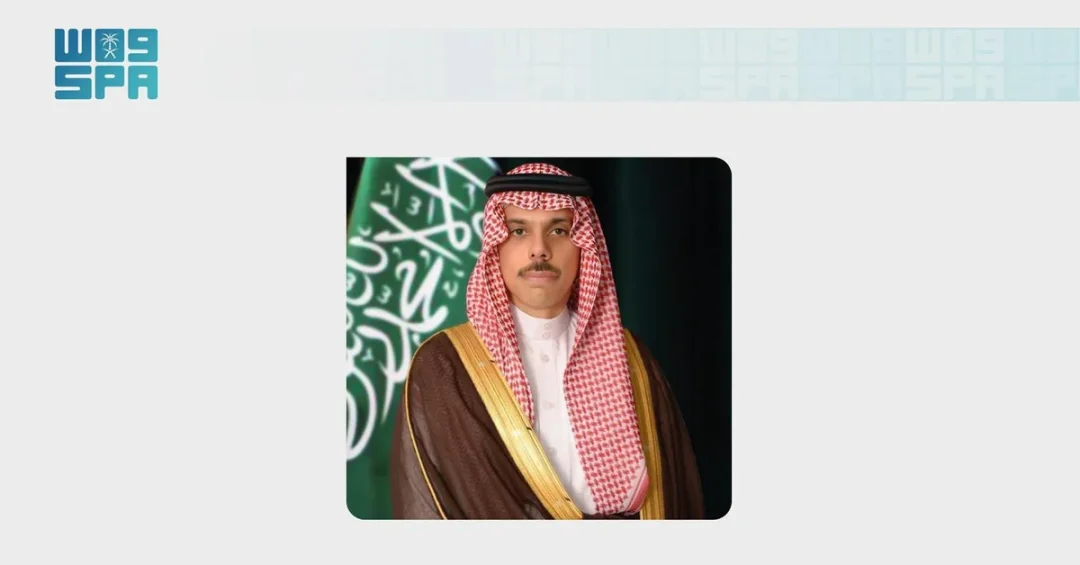
Saudi Minister of Foreign Affairs Prince Faisal bin Farhan bin Abdullah held a phone call on Thursday with Minister of Foreign Affairs of the Republic of Liberia Sara Beysolow Nyanti to review bilateral relations and discuss the latest regional developments and issues of mutual interest, according to the Saudi Press Agency. The call, reported by the official Saudi news agency, reflects the Kingdom’s continuing diplomatic engagement with African nations and its commitment to coordinating on matters of regional and international security. During the conversation, Prince Faisal congratulated Minister Nyanti on Liberia’s assumption of the presidency of the United Nations Security Council next month, reaffirming Saudi Arabia’s keenness to cooperate with Liberia and other council members in all efforts that contribute to promoting regional and international security, peace, and stability.
The exchange comes at a time of heightened global attention to multilateral diplomacy, as the UN Security Council prepares to address a range of pressing issues, from conflict resolution to humanitarian crises. Saudi Arabia, as a member of the G20 and a key player in the Middle East, has consistently advocated for dialogue and peaceful settlement of disputes. The call underscores the Kingdom’s proactive approach to building bridges with African states, a continent that is increasingly central to global economic and security dynamics. By reaching out to Liberia, which will hold the Security Council’s rotating presidency in December 2026, Riyadh is signaling its readiness to work with all partners to advance shared goals of stability and prosperity.
Context and Background
Why does a phone call between two foreign ministers matter in the broader landscape of international relations? Such conversations, while routine in diplomatic practice, often serve as the connective tissue that holds together global cooperation on security, trade, and development. Saudi Arabia has long maintained a policy of active engagement with African nations, recognizing the continent’s growing strategic importance. Liberia, a West African nation with a history of overcoming adversity, now plays a significant role in international peace and security through its upcoming presidency of the UN Security Council. The call between Prince Faisal and Minister Nyanti therefore represents more than a courtesy exchange; it is a working dialogue between two countries committed to multilateral solutions.
The relationship between Saudi Arabia and Liberia has been characterized by mutual respect and cooperation in various fields, including development assistance, education, and health. The Kingdom has provided support for infrastructure projects and humanitarian initiatives in Liberia, reflecting its broader commitment to Africa under the umbrella of Saudi Vision 2030. This vision, which seeks to diversify the Kingdom’s economy and deepen its global partnerships, places a premium on engaging with emerging economies and nations that share its aspirations for peace and development. Liberia’s role at the UN Security Council offers a platform for both countries to collaborate on issues such as conflict prevention, counterterrorism, and sustainable development.
Moreover, the timing of the call is significant. As the world grapples with multiple crises, including regional conflicts, climate change, and economic uncertainty, the need for effective multilateralism has never been greater. Saudi Arabia has positioned itself as a bridge-builder, hosting peace talks and providing humanitarian aid. By coordinating with Liberia, which will lead the Security Council’s agenda in December, the Kingdom is reinforcing its diplomatic network and ensuring that its perspectives are heard in the highest international forums. This approach aligns with Saudi Arabia’s longstanding support for the United Nations and its principles, as well as its efforts to promote stability in the Middle East and beyond.
Key Details of the Call
What exactly was discussed during the call, and what does it reveal about Saudi diplomacy? According to the Saudi Press Agency, Prince Faisal and Minister Nyanti reviewed the relations between their two friendly countries and exchanged views on the latest regional developments and issues of mutual interest. The Saudi foreign minister took the opportunity to congratulate Liberia on its upcoming presidency of the UN Security Council, a role that will place the West African nation at the center of global decision-making on peace and security. Prince Faisal reaffirmed the Kingdom’s keenness to cooperate with Liberia and other council members in all efforts that contribute to promoting regional and international security, peace, and stability.
The call also highlights the personal rapport between the two top diplomats, which can facilitate smoother cooperation on complex issues. Minister Sara Beysolow Nyanti, a seasoned diplomat with extensive experience in international affairs, has been a vocal advocate for multilateralism and Africa’s role in global governance. Her leadership at the Security Council is expected to focus on conflict resolution, humanitarian access, and the protection of civilians. Saudi Arabia’s outreach to her at this juncture demonstrates its intent to be a constructive partner in these efforts. The conversation likely touched on specific regional hotspots, although the official readout did not provide further details, in keeping with diplomatic norms of confidentiality.
It is also worth noting that this call is part of a pattern of intensified Saudi diplomacy in Africa. In recent months, the Kingdom has hosted numerous African leaders, signed agreements on trade and investment, and expanded its diplomatic footprint across the continent. This engagement is driven by mutual interests: Africa offers growing markets and investment opportunities, while Saudi Arabia can provide development finance, energy expertise, and a voice in global forums. Liberia, with its strategic location and upcoming Security Council presidency, is a valuable partner in this context. The call thus serves both bilateral and multilateral purposes, advancing Saudi Arabia’s foreign policy objectives while contributing to international peace and security.
International and Regional Impact
How will this conversation influence the broader dynamics at the United Nations and beyond? Liberia’s presidency of the UN Security Council in December 2026 comes at a critical time, with the council expected to address situations in Africa, the Middle East, and other regions. Saudi Arabia’s expressed willingness to cooperate with Liberia and other council members signals its commitment to constructive engagement on the world stage. As a non-permanent member of the Security Council in previous terms, Saudi Arabia has demonstrated its ability to build consensus and advocate for peaceful solutions. Its support for Liberia’s presidency can help ensure that the council’s agenda reflects the concerns of developing countries and addresses root causes of conflict.
On a regional level, the call reinforces Saudi Arabia’s role as a stabilizing force in the Middle East. By maintaining open channels with African nations, the Kingdom helps to counter extremism, promote economic integration, and support post-conflict reconstruction. Liberia, for its part, benefits from Saudi Arabia’s diplomatic weight and its experience in navigating complex geopolitical landscapes. The two countries share an interest in combating terrorism, enhancing maritime security, and fostering sustainable development. Their cooperation at the Security Council could lead to concrete initiatives, such as joint efforts to address the financing of terrorism or to improve humanitarian responses in crisis zones. Such collaboration would not only serve their national interests but also contribute to global peace and security.
Economic and Strategic Significance
What economic and strategic benefits might arise from strengthened Saudi-Liberian ties? While the phone call was primarily diplomatic, it lays the groundwork for deeper economic cooperation. Saudi Arabia, through its sovereign wealth fund and development agencies, has been investing in Africa’s infrastructure, energy, and agriculture sectors. Liberia, with its rich natural resources and strategic ports, offers opportunities for Saudi investment in mining, shipping, and logistics. Enhanced political ties often pave the way for business deals, and the two countries could explore partnerships in areas such as renewable energy, where Saudi expertise in solar and wind power could support Liberia’s electrification goals.
Strategically, Saudi Arabia’s engagement with Liberia is part of a broader effort to secure allies in international organizations. As the Kingdom pursues its Vision 2030 objectives, it seeks to diversify its partnerships and reduce dependence on traditional allies. Africa, with its 54 votes at the United Nations, is a key constituency. By building goodwill with countries like Liberia, Saudi Arabia can garner support for its positions on issues ranging from the Palestinian cause to counterterrorism. Moreover, Liberia’s presidency of the Security Council provides a platform for Saudi Arabia to advocate for its foreign policy priorities, including the peaceful resolution of the Yemen conflict and the stability of the Red Sea region. The call thus has strategic implications that extend far beyond the bilateral relationship.
Vision 2030 Alignment
How does this diplomatic outreach align with Saudi Vision 2030? Vision 2030 is not only an economic transformation plan but also a blueprint for a more active and influential Saudi Arabia on the world stage. The Kingdom’s foreign policy under Vision 2030 emphasizes partnerships, dialogue, and mutual benefit. By engaging with Liberia and supporting its role at the UN Security Council, Saudi Arabia is demonstrating its commitment to these principles. The call between Prince Faisal and Minister Nyanti reflects the Kingdom’s desire to contribute to global stability, which is essential for economic prosperity. A peaceful and secure world enables trade, investment, and tourism—key pillars of Vision 2030.
Furthermore, this engagement showcases Saudi Arabia’s leadership in promoting multilateral solutions to global challenges. As the Kingdom continues to modernize and open up, its diplomats are increasingly visible in international forums, advocating for peace and development. The call is a small but meaningful example of how Saudi Arabia is building bridges with nations across the world, from Africa to Asia to the Americas. It underscores the Kingdom’s belief that collective action is the best way to address shared challenges. In the years ahead, such diplomacy will be crucial for realizing Vision 2030’s goal of positioning Saudi Arabia as a global hub for business, culture, and diplomacy. The conversation with Liberia is thus a step forward in a long journey toward a more interconnected and prosperous world.
20 Questions
Q1. Who held a phone call to discuss regional developments?
A1. Saudi Minister of Foreign Affairs Prince Faisal bin Farhan bin Abdullah held a phone call with Liberian Minister of Foreign Affairs Sara Beysolow Nyanti, as reported by the Saudi Press Agency.
Q2. What was the main purpose of the call?
A2. The call aimed to review bilateral relations between Saudi Arabia and Liberia and to discuss the latest regional developments and issues of mutual interest, according to the official statement.
Q3. Which country will assume the UN Security Council presidency next month?
A3. Liberia will assume the presidency of the United Nations Security Council next month, as congratulated by Prince Faisal during the call.
Q4. What did Prince Faisal congratulate the Liberian minister on?
A4. Prince Faisal congratulated Minister Nyanti on Liberia’s assumption of the presidency of the United Nations Security Council next month, reaffirming Saudi Arabia’s keenness to cooperate.
Q5. What did Prince Faisal reaffirm regarding cooperation?
A5. He reaffirmed the Kingdom’s keenness to cooperate with Liberia and other council members in all efforts that contribute to promoting regional and international security, peace, and stability.
Q6. Which Saudi agency reported the call?
A6. The official Saudi Press Agency (SPA) reported the call, providing the details of the conversation between the two foreign ministers.
Q7. When did the call take place?
A7. The call took place on Thursday, November 26, 2026, according to the Saudi Press Agency’s report, which was published at 18:35 local time.
Q8. What is the significance of Liberia’s UN Security Council presidency?
A8. Liberia’s presidency places it at the center of global decision-making on peace and security, offering a platform to address conflict resolution, humanitarian access, and other pressing international issues.
Q9. How does this call reflect Saudi Arabia’s foreign policy?
A9. It demonstrates Saudi Arabia’s proactive diplomacy, commitment to multilateralism, and efforts to build partnerships with African nations to promote global peace and stability.
Q10. What are the key areas of Saudi-Liberian cooperation?
A10. Cooperation includes development assistance, education, health, and potentially economic investments in mining, shipping, and renewable energy, reflecting mutual interests.
Q11. How does this call align with Saudi Vision 2030?
A11. It aligns with Vision 2030’s goal of a more active and influential Saudi Arabia on the world stage, emphasizing partnerships, dialogue, and contribution to global stability for economic prosperity.
Q12. What regional developments might have been discussed?
A12. While specific details were not disclosed, likely topics included Middle East peace, African security, counterterrorism, and humanitarian issues of mutual concern.
Q13. What is Saudi Arabia’s role in the UN Security Council?
A13. Saudi Arabia has served as a non-permanent member and has been a constructive partner, advocating for peaceful solutions and consensus-building on global security issues.
Q14. How does this call benefit Liberia?
A14. Liberia benefits from Saudi Arabia’s diplomatic support, experience, and potential economic cooperation, enhancing its ability to lead the Security Council effectively.
Q15. What economic opportunities might arise from this dialogue?
A15. Opportunities could include Saudi investment in Liberia’s infrastructure, energy, and mining sectors, as well as trade partnerships that support both countries’ development goals.
Q16. What is the historical relationship between Saudi Arabia and Liberia?
A16. The two countries have maintained friendly relations with cooperation in development, education, and health, and Saudi Arabia has provided assistance for various projects in Liberia.
Q17. How does this call fit into Saudi Arabia’s broader Africa strategy?
A17. It is part of Saudi Arabia’s intensified engagement with Africa, seeking partnerships for trade, investment, and political cooperation, recognizing the continent’s growing strategic importance.
Q18. What does the call say about Saudi Arabia’s commitment to multilateralism?
A18. It underscores Saudi Arabia’s support for the United Nations and its principles, and its willingness to work with all nations to address global challenges through collective action.
Q19. What might be the next steps in Saudi-Liberian relations?
A19. Next steps could include high-level visits, signing of agreements, and joint initiatives at the UN, building on the positive momentum from the call.
Q20. How does this call contribute to regional and international security?
A20. By fostering cooperation and dialogue between Saudi Arabia and Liberia, the call helps build consensus on security issues, promoting peace and stability in the Middle East, Africa, and beyond.
Reader Feedback
We value your thoughts. Please share your feedback on this article.
Your feedback helps us improve our coverage.
Related articles
 Coalition: Jazan Refinery Attacked by Terrorist Houthi Militia
 NAUSS Workshop in Rome Tackles Migrant Smuggling and Human Trafficking Networks
 Deputy Foreign Minister Briefs Ambassadors on Houthi Attacks
 SAIS, ACWA Sign MoU for Green Hydrogen Security Standards
 Saudi Arabia’s IDWS in Rabigh to Gather Global Water Experts in December
 SFDA and SWA Sign MoU to Strengthen Regulatory Ties