


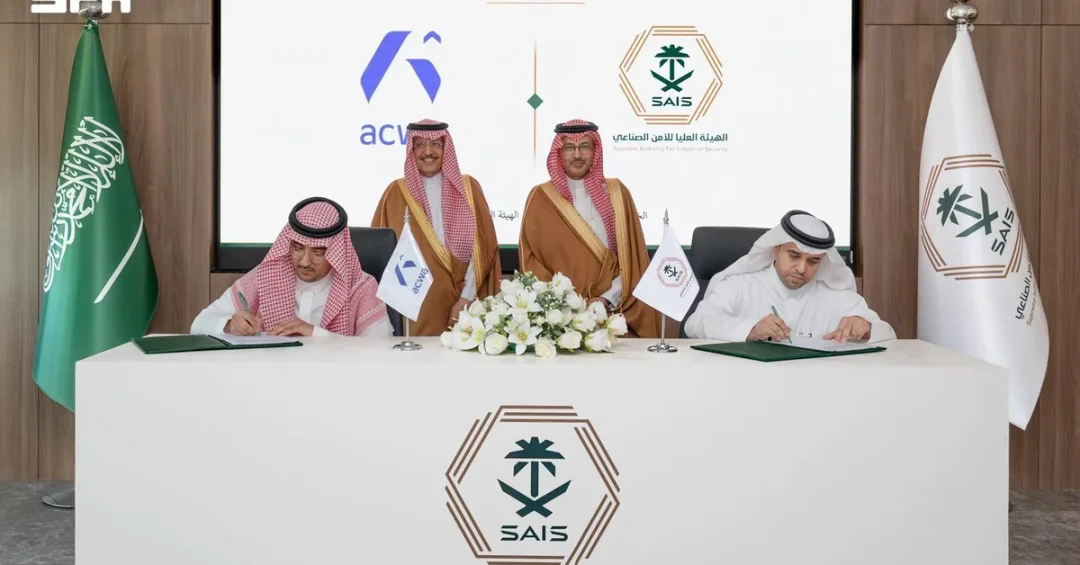
The Supreme Authority for Industrial Security (SAIS) and ACWA have signed a memorandum of understanding (MoU) to cooperate on industrial security, training, development, research, and innovation, with a focus on establishing requirements and standards for green hydrogen and green ammonia facilities in the Kingdom of Saudi Arabia. The agreement, announced via the Saudi Press Agency (SPA), marks a significant step in Saudi Arabia’s efforts to lead the global clean energy transition while ensuring the highest levels of safety and security at its emerging hydrogen facilities. The MoU aims to strengthen collaboration between the two entities in developing security, safety, and fire protection requirements for facilities producing green hydrogen and green ammonia, while also supporting training, development, research, technology, and innovation.
Under the terms of the MoU, the two sides will establish joint technical working teams led by SAIS to develop security, safety, and fire protection requirements and standards in accordance with its approved regulations. These teams will draw on ACWA’s technical and operational expertise to enhance the facilities’ readiness and support the adoption of best practices in this field. The partnership underscores Saudi Arabia’s commitment to advancing its green hydrogen and green ammonia sectors, which are central to the Kingdom’s Vision 2030 goals of economic diversification and environmental sustainability. As the world seeks cleaner energy solutions, Saudi Arabia is positioning itself as a key player, and this MoU ensures that industrial security keeps pace with technological innovation.
Context and Background
Why is this MoU being signed now, and what does it mean for Saudi Arabia’s industrial landscape? The Supreme Authority for Industrial Security (SAIS) is a government body responsible for overseeing industrial security across the Kingdom, ensuring that vital facilities operate safely and securely. ACWA is a leading Saudi company with extensive experience in power generation, water desalination, and renewable energy projects, including green hydrogen and green ammonia. The MoU reflects the Kingdom’s proactive approach to regulating emerging industries, particularly as it ramps up investments in clean energy. Saudi Arabia has set ambitious targets for hydrogen production, aiming to become the world’s largest exporter of green hydrogen by 2030. This agreement ensures that security and safety standards are developed in tandem with technological advancements, protecting both people and infrastructure.
The signing of this MoU comes at a time when Saudi Arabia is accelerating its transition to a diversified, sustainable economy. Green hydrogen and green ammonia are produced using renewable energy sources, such as solar and wind, and are considered crucial for decarbonizing hard-to-abate sectors like heavy industry and transportation. The Kingdom has already launched several mega-projects, including the NEOM Green Hydrogen Project, which is set to produce 600 tonnes per day of green hydrogen by 2026. As these facilities come online, the need for robust industrial security frameworks becomes paramount. SAIS, with its mandate to protect industrial assets, is taking a leading role in developing these standards, while ACWA brings practical know-how from its operations. Together, they aim to create a secure environment that fosters investment and innovation.
Key Details of the MoU
What specific areas will the MoU cover, and how will it be implemented? The MoU outlines a comprehensive framework for cooperation between SAIS and ACWA. The primary focus is on developing security, safety, and fire protection requirements for green hydrogen and green ammonia facilities. This includes establishing standards for facility design, operational procedures, emergency response, and personnel training. The joint technical working teams, led by SAIS, will be responsible for drafting these requirements in line with SAIS’s approved regulations. ACWA’s role will be to provide technical and operational expertise, ensuring that the standards are practical and effective. The MoU also emphasizes training, development, research, and innovation, indicating a long-term commitment to building local capabilities in industrial security for the hydrogen sector.
The collaboration will likely involve sharing data, conducting risk assessments, and developing best practices for handling hydrogen and ammonia, which have unique safety challenges due to their flammability and toxicity. The teams will also explore new technologies for monitoring and securing facilities, such as advanced sensors and cybersecurity measures. By leveraging ACWA’s experience in operating large-scale energy projects, SAIS can ensure that the regulations are both rigorous and feasible. This MoU is not just about compliance; it’s about creating a culture of safety and security that supports the growth of the green hydrogen economy. It also aligns with Saudi Arabia’s broader efforts to attract foreign investment by demonstrating a commitment to international standards.
International and Regional Impact
How will this MoU influence global perceptions of Saudi Arabia’s green energy ambitions? The agreement sends a strong signal to international investors, partners, and customers that Saudi Arabia is serious about developing a safe and secure green hydrogen industry. Countries like Germany, Japan, and South Korea are potential major buyers of Saudi green hydrogen and ammonia, and they will be reassured by the Kingdom’s proactive approach to industrial security. By setting high standards, Saudi Arabia can differentiate itself in the global market, where safety and reliability are critical. Moreover, the MoU could serve as a model for other nations looking to develop their own hydrogen sectors, enhancing Saudi Arabia’s role as a knowledge exporter and standard-setter.
Regionally, the MoU reinforces Saudi Arabia’s leadership in the Middle East’s energy transition. Neighboring countries like the UAE and Oman are also investing in hydrogen, and Saudi Arabia’s efforts to establish robust security frameworks could encourage regional cooperation and harmonization of standards. This could lead to a more integrated and resilient regional hydrogen market, benefiting all stakeholders. Additionally, the MoU highlights the importance of public-private partnerships in advancing Vision 2030. By bringing together a government regulator and a private sector leader, Saudi Arabia is demonstrating a collaborative approach that can accelerate innovation while mitigating risks. This is particularly important as hydrogen technologies are still evolving, and regulatory frameworks need to be flexible yet robust.
Economic and Strategic Significance
What are the economic benefits of developing a secure green hydrogen sector? Green hydrogen and green ammonia are expected to become major export commodities for Saudi Arabia, contributing significantly to the national economy. The Kingdom aims to capture a substantial share of the global hydrogen market, which could be worth hundreds of billions of dollars by 2050. By ensuring that facilities are secure and compliant with international standards, Saudi Arabia can attract premium prices and long-term contracts. The MoU also supports job creation and skills development, as the joint working teams will require trained professionals in industrial security, engineering, and safety. This aligns with Vision 2030’s goal of creating a diversified and knowledge-based economy.
Strategically, the MoU enhances Saudi Arabia’s energy security and geopolitical influence. As the world transitions away from fossil fuels, Saudi Arabia is leveraging its abundant solar and wind resources to produce green hydrogen, thereby maintaining its status as a global energy leader. The partnership between SAIS and ACWA ensures that this transition is managed safely, reducing the risk of accidents that could damage the industry’s reputation. Furthermore, by developing local expertise in industrial security, Saudi Arabia reduces its reliance on foreign expertise and builds a sustainable ecosystem. This MoU is a testament to the Kingdom’s forward-thinking approach, balancing economic ambitions with safety and environmental responsibility.
Vision 2030 Alignment
How does this MoU fit into Saudi Arabia’s Vision 2030? Vision 2030 is a comprehensive plan to diversify the economy, reduce dependence on oil, and develop public service sectors. The green hydrogen and green ammonia sectors are key pillars of this plan, as they represent new industries that can create jobs, generate revenue, and position Saudi Arabia as a leader in the global clean energy transition. The MoU between SAIS and ACWA directly supports Vision 2030 by ensuring that these industries develop within a framework of safety and security, which is essential for attracting investment and ensuring long-term sustainability. It also reflects the Vision’s emphasis on innovation, research, and public-private collaboration.
In conclusion, the MoU signed between SAIS and ACWA is a forward-looking agreement that underscores Saudi Arabia’s commitment to excellence in industrial security as it pioneers green hydrogen and green ammonia production. By developing rigorous standards and fostering innovation, the Kingdom is not only safeguarding its facilities but also setting a benchmark for the world. As Saudi Arabia continues to advance its Vision 2030 goals, partnerships like this will be crucial in ensuring that economic growth goes hand in hand with safety and environmental stewardship. This MoU is a clear indication that Saudi Arabia is ready to lead the global energy transition responsibly and securely.
20 Questions
Q1. What is the purpose of the MoU signed between SAIS and ACWA?
A1. The MoU aims to establish cooperation in industrial security, training, development, research, and innovation, specifically to develop security, safety, and fire protection requirements for green hydrogen and green ammonia facilities in Saudi Arabia.
Q2. Who are the parties involved in this MoU?
A2. The Supreme Authority for Industrial Security (SAIS) and ACWA, a leading Saudi energy company, signed the MoU. SAIS is a government body responsible for industrial security, while ACWA brings technical and operational expertise.
Q3. When was the MoU signed?
A3. The MoU was announced on November 26, 2026, via the Saudi Press Agency (SPA), with the signing taking place in Riyadh.
Q4. What are green hydrogen and green ammonia?
A4. Green hydrogen is produced using renewable energy through electrolysis, and green ammonia is derived from green hydrogen. Both are clean energy carriers that can decarbonize various sectors.
Q5. Why are green hydrogen and green ammonia important for Saudi Arabia?
A5. They are key to Saudi Arabia’s Vision 2030 goals of economic diversification and environmental sustainability, positioning the Kingdom as a global leader in clean energy exports.
Q6. What specific areas will the joint technical working teams focus on?
A6. The teams will develop security, safety, and fire protection requirements and standards for green hydrogen and green ammonia facilities, drawing on ACWA’s expertise to enhance readiness and best practices.
Q7. How will SAIS and ACWA collaborate under this MoU?
A7. SAIS will lead the joint technical working teams, while ACWA will provide technical and operational expertise. They will cooperate on training, development, research, and innovation.
Q8. What are the expected benefits of this MoU for Saudi Arabia’s economy?
A8. The MoU supports the growth of the green hydrogen sector, which can generate export revenue, create jobs, and attract foreign investment, contributing to economic diversification.
Q9. How does this MoU align with Vision 2030?
A9. It aligns with Vision 2030 by promoting new industries, innovation, and public-private partnerships, while ensuring safety and security in line with sustainable development goals.
Q10. What role does ACWA play in Saudi Arabia’s energy sector?
A10. ACWA is a major Saudi company involved in power generation, water desalination, and renewable energy, including green hydrogen and green ammonia projects, both domestically and internationally.
Q11. What is the significance of developing industrial security standards for hydrogen facilities?
A11. Hydrogen and ammonia have unique safety risks, so robust standards are essential to protect people, assets, and the environment, and to build confidence among investors and international partners.
Q12. Will this MoU have any impact on international partnerships?
A12. Yes, it signals Saudi Arabia’s commitment to high safety standards, which can reassure international buyers and partners, potentially leading to more collaborations and export agreements.
Q13. How does this MoU support research and innovation?
A13. The MoU includes provisions for research and innovation, allowing both parties to explore new technologies and best practices for industrial security in the hydrogen sector.
Q14. What are the next steps after signing the MoU?
A14. The next steps involve establishing joint technical working teams, conducting assessments, and drafting standards. Implementation will follow SAIS’s approved regulations.
Q15. Are there any similar initiatives in other countries?
A15. Several countries are developing hydrogen strategies, but Saudi Arabia’s proactive approach to industrial security standards could serve as a model for others.
Q16. How will the MoU affect local communities?
A16. It can lead to job creation and skills development in industrial security, engineering, and safety, benefiting local communities and supporting economic growth.
Q17. What are the environmental benefits of green hydrogen and green ammonia?
A17. They produce zero carbon emissions when used, helping to reduce greenhouse gases and combat climate change, aligning with global sustainability goals.
Q18. Does the MoU include provisions for cybersecurity?
A18. While not explicitly mentioned, cybersecurity is a critical aspect of industrial security for modern facilities, and it is likely to be considered within the broader framework.
Q19. How does this MoU reflect Saudi Arabia’s leadership in the energy transition?
A19. It demonstrates Saudi Arabia’s commitment to leading the global energy transition by developing safe and secure green hydrogen infrastructure, setting a benchmark for others.
Q20. What is the expected timeline for implementing the standards?
A20. The MoU does not specify a timeline, but the joint teams will work diligently to develop standards in accordance with SAIS regulations, likely within the coming years.
Reader Feedback
We value your thoughts. Please share your feedback on this article.
Your feedback helps us improve our coverage.
Related articles
 Saudi Arabia’s IDWS in Rabigh to Gather Global Water Experts in December
 SFDA and SWA Sign MoU to Strengthen Regulatory Ties
 Naif Arab University President Receives Syrian Counterpart
 Environment Ministry Celebrates Solar-Powered Poultry Slaughterhouse as National Model
 Saudi Legislative Progress Strengthens Women’s Protection
 Saudi Arabia Condemns Terrorist Attack in Al-Hasakah