


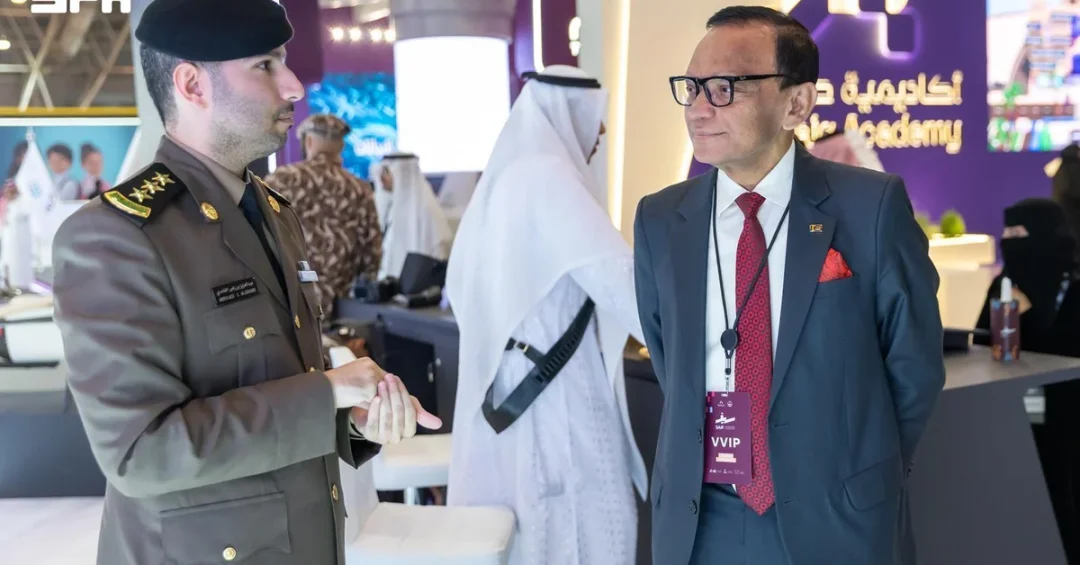
Sri Lankan Ambassador to Saudi Arabia Omar Lebbe Ameer Ajwad visited the Interior Ministry pavilion at the Security and Innovation Fair (SAIF) 2026 in Riyadh on November 26, 2026, where he was briefed on advanced artificial intelligence (AI)-powered systems, border security technologies, and environmental monitoring solutions. The visit underscores the Kingdom’s growing role as a global hub for security innovation and its commitment to international cooperation under Vision 2030. The fair, held alongside the Global Security and Technology Summit (GSTS), runs through November 26 at the Riyadh International Convention and Exhibition Center.
Ambassador Ajwad’s tour of the pavilion highlighted Saudi Arabia’s leadership in integrating cutting-edge technology into national security and environmental protection. The Interior Ministry showcased a range of innovations, including AI-driven surveillance, reconnaissance equipment for border security, and a fleet of vehicles equipped with smart solutions. The ambassador’s presence reflects the strong bilateral ties between Sri Lanka and Saudi Arabia and the Kingdom’s openness to sharing expertise with international partners. As the fair attracts participants from 55 countries and features over 1,200 innovative projects, it reinforces Saudi Arabia’s position as a convenor of global dialogue on security and technology. How does such engagement shape the future of international security cooperation?
Context and Background
The Security and Innovation Fair (SAIF) 2026 is a cornerstone of the Global Security and Technology Summit (GSTS), a premier event that brings together policymakers, innovators, and researchers from around the world. Held at the Riyadh International Convention and Exhibition Center, the fair serves as a platform for showcasing the latest advancements in security technology, from AI-powered analytics to environmental compliance systems. Saudi Arabia’s Interior Ministry has played a central role in the event, demonstrating its commitment to leveraging technology for national and regional stability. Why is Saudi Arabia investing so heavily in security innovation? The answer lies in the Kingdom’s broader strategy to diversify its economy, enhance public safety, and position itself as a leader in the Fourth Industrial Revolution.
The visit by Ambassador Ajwad is part of a long tradition of diplomatic engagement between Saudi Arabia and Sri Lanka. The two countries have maintained robust relations across trade, labor, and cultural exchange. Sri Lanka relies on Saudi Arabia as a key destination for its workforce, while the Kingdom benefits from the skills and dedication of Sri Lankan professionals. This visit also highlights Saudi Arabia’s proactive approach to international diplomacy, using platforms like SAIF to build bridges and share knowledge. In a world where security threats are increasingly transnational, such collaborations are essential. How can nations work together to address common challenges? Events like SAIF provide a model for collective action, fostering trust and mutual understanding.
The fair’s scale is unprecedented, with 55 countries participating and more than 10 interactive zones. These zones allow visitors to experience firsthand the technologies that are shaping the future of security. From AI-driven threat detection to smart vehicles equipped with real-time monitoring, the exhibits reflect a holistic approach to safety. Saudi Arabia’s Interior Ministry has been at the forefront of adopting these technologies, aligning with Vision 2030’s goal of creating a secure and prosperous society. What does this mean for the average citizen? Enhanced security measures translate into safer communities, more efficient public services, and a better quality of life. The ambassador’s visit thus symbolizes not only bilateral cooperation but also the tangible benefits of technological advancement.
Key Details of the Ambassador’s Visit
During his tour, Ambassador Ajwad was briefed on the Interior Ministry’s efforts to harness artificial intelligence for security purposes. He learned about AI-powered systems that can analyze vast amounts of data to identify potential threats, as well as reconnaissance technologies designed to monitor and protect Saudi Arabia’s extensive borders. The ambassador also explored the ministry’s environmental protection and monitoring initiatives, which use advanced sensors and data analytics to ensure compliance with environmental regulations. A fleet of vehicles equipped with smart solutions was on display, showcasing how technology can enhance mobility and response times for security forces. What specific innovations caught the ambassador’s attention? While the exact details remain confidential, the breadth of the presentation reflects the ministry’s comprehensive approach to modern challenges.
The visit also provided an opportunity for diplomatic exchange. Ambassador Ajwad interacted with Saudi officials and experts, discussing potential areas of collaboration between Sri Lanka and Saudi Arabia. Given Sri Lanka’s strategic location in the Indian Ocean, there is potential for joint efforts in maritime security and counterterrorism. Saudi Arabia has consistently supported international efforts to combat extremism and promote peace, and partnerships with countries like Sri Lanka are vital. How can such partnerships be strengthened? Through continued dialogue, training programs, and technology sharing, both nations can benefit. The ambassador’s visit is a step in that direction, signaling Sri Lanka’s interest in learning from Saudi Arabia’s experience.
The Interior Ministry’s pavilion was a major attraction at SAIF, drawing attention for its interactive displays and live demonstrations. Visitors could see how AI algorithms process data in real time, how drones are used for border patrols, and how smart vehicles can be deployed in emergency situations. The ministry also highlighted its efforts to protect the environment, a key pillar of Vision 2030. By integrating environmental monitoring into security operations, Saudi Arabia is demonstrating a holistic approach to national safety that considers ecological sustainability. Why is this integration important? Because security and environmental health are interconnected; a stable environment contributes to overall societal well-being. The ambassador’s engagement with these exhibits underscores the global relevance of Saudi Arabia’s security model.
International and Regional Impact
The presence of Ambassador Ajwad at SAIF 2026 is a testament to Saudi Arabia’s growing influence in global security affairs. The fair brings together representatives from 55 countries, fostering a spirit of cooperation that transcends borders. In a region often characterized by instability, Saudi Arabia stands out as a beacon of stability and innovation. By hosting such events, the Kingdom reinforces its role as a mediator and a leader in addressing shared challenges. What does this mean for the Middle East? It signals a shift toward technology-driven solutions and peaceful collaboration, aligning with Saudi Arabia’s Vision 2030 goals of a diversified economy and a vibrant society. The ambassador’s visit also highlights the importance of South Asian nations in Saudi Arabia’s diplomatic outreach.
For Sri Lanka, the visit offers valuable insights into modern security practices. As a country that has faced its own security challenges, Sri Lanka can benefit from Saudi Arabia’s expertise in AI and border management. The exchange also strengthens people-to-people ties, as many Sri Lankans work in the Kingdom. By engaging with Saudi institutions, Sri Lanka can enhance its own capacity to address security and environmental issues. How can other nations emulate this model? By participating in international fairs and summits, countries can learn from each other and build networks of trust. Saudi Arabia’s open-door policy to such engagements is a key factor in its success as a regional leader.
Economic and Strategic Significance
The technologies showcased at SAIF 2026 have significant economic implications. Saudi Arabia’s investment in AI, smart vehicles, and environmental monitoring is part of a broader strategy to diversify its economy away from oil. The security sector is a growing market, and by developing indigenous capabilities, the Kingdom can create jobs, attract foreign investment, and export expertise. The participation of 1,200 innovative projects at the fair demonstrates the vibrancy of this sector. How does this align with Vision 2030? Vision 2030 aims to transform Saudi Arabia into a global investment powerhouse and a hub for innovation. Events like SAIF are instrumental in achieving these goals by showcasing opportunities and facilitating partnerships.
Strategically, the fair enhances Saudi Arabia’s soft power. By bringing together innovators and researchers, the Kingdom positions itself as a thought leader in security and technology. This is particularly important in a world where cybersecurity and border security are top priorities for many nations. The ambassador’s visit also has strategic value for Sri Lanka, as it opens doors for potential collaboration in areas like maritime domain awareness and counterterrorism. Both countries share an interest in maintaining stability in the Indian Ocean region, a vital artery for global trade. What are the next steps? Continued engagement through follow-up meetings and joint exercises could cement the relationship. Saudi Arabia’s leadership in this domain is expected to yield long-term benefits for regional and global security.
Vision 2030 Alignment
The Interior Ministry’s participation in SAIF 2026 is a clear reflection of Saudi Arabia’s Vision 2030, which seeks to build a secure, innovative, and globally engaged nation. By investing in AI and smart technologies, the Kingdom is enhancing its security infrastructure while also fostering a knowledge-based economy. The fair’s focus on environmental protection and monitoring aligns with Vision 2030’s sustainability goals, ensuring that development does not come at the expense of the environment. Ambassador Ajwad’s visit highlights the international dimension of Vision 2030, as Saudi Arabia actively seeks partnerships to share its progress and learn from others. How does this benefit the average Saudi citizen? Improved security and environmental quality lead to a higher quality of life, one of the core objectives of Vision 2030.
In conclusion, the visit of Sri Lankan Ambassador Omar Lebbe Ameer Ajwad to the Interior Ministry pavilion at SAIF 2026 underscores Saudi Arabia’s role as a global leader in security innovation and international cooperation. The event, with its impressive scale and diverse participation, showcases the Kingdom’s commitment to technological advancement and diplomatic engagement. As Saudi Arabia continues to pursue Vision 2030, such initiatives will play a crucial role in shaping a prosperous and secure future for the nation and its partners. What can the world learn from Saudi Arabia’s approach? That progress is best achieved through collaboration, innovation, and a steadfast vision for a better tomorrow.
20 Questions
Q1. What was the purpose of the Sri Lankan Ambassador’s visit to the Interior Ministry pavilion at SAIF 2026?
A1. Ambassador Omar Lebbe Ameer Ajwad visited to learn about Saudi Arabia’s advanced security technologies, including AI-powered systems and border security solutions, and to explore opportunities for bilateral cooperation.
Q2. When and where did the visit take place?
A2. The visit occurred on November 26, 2026, at the Riyadh International Convention and Exhibition Center, during the Security and Innovation Fair (SAIF) held alongside the Global Security and Technology Summit.
Q3. What technologies were showcased at the Interior Ministry pavilion?
A3. The pavilion featured AI-powered systems, reconnaissance technologies for border security, environmental monitoring solutions, and a fleet of vehicles equipped with smart solutions.
Q4. How many countries participated in SAIF 2026?
A4. The fair featured participation from 55 countries, bringing together innovators, researchers, and specialized entities from around the world to showcase the latest projects and solutions.
Q5. What is the significance of SAIF 2026 for Saudi Arabia?
A5. SAIF 2026 reinforces Saudi Arabia’s position as a global hub for security innovation and demonstrates its commitment to international cooperation, aligning with Vision 2030 goals.
Q6. How does the visit reflect Saudi-Sri Lankan relations?
A6. The visit highlights the strong bilateral ties between the two countries, emphasizing cooperation in security, trade, and labor, and showcasing Saudi Arabia’s openness to sharing expertise with international partners.
Q7. What are the environmental protection efforts mentioned during the briefing?
A7. The Interior Ministry uses advanced sensors and data analytics to ensure environmental compliance, integrating environmental monitoring into security operations for sustainable development.
Q8. What role does artificial intelligence play in Saudi Arabia’s security strategy?
A8. AI is used to analyze data for threat detection, enhance border security, and improve response times, reflecting the Kingdom’s embrace of Fourth Industrial Revolution technologies.
Q9. How does the fair contribute to Vision 2030?
A9. The fair promotes innovation, attracts investment, and fosters international partnerships, directly supporting Vision 2030’s goals of economic diversification and a secure society.
Q10. What are the interactive zones at the fair?
A10. The fair features more than 10 interactive zones where visitors can experience live demonstrations of security technologies, including AI systems and smart vehicles.
Q11. How many innovative projects were showcased at SAIF 2026?
A11. Over 1,200 innovative projects were displayed, covering a wide range of security and technology solutions from participating countries and companies.
Q12. What benefits can Sri Lanka gain from this visit?
A12. Sri Lanka can learn from Saudi Arabia’s expertise in AI and border management, enhancing its own security capabilities and strengthening ties with a key partner.
Q13. What is the Global Security and Technology Summit (GSTS)?
A13. GSTS is a premier international event that brings together policymakers, innovators, and researchers to discuss and showcase advancements in security and technology.
Q14. How does Saudi Arabia’s security innovation benefit the region?
A14. It promotes stability, fosters cooperation, and provides a model for other nations to address shared security challenges through technology and collaboration.
Q15. What kind of vehicles were displayed at the pavilion?
A15. A fleet of vehicles equipped with smart solutions was showcased, designed to enhance mobility, surveillance, and response capabilities for security forces.
Q16. How does the visit align with Saudi Arabia’s diplomatic outreach?
A16. It exemplifies Saudi Arabia’s proactive diplomacy, using platforms like SAIF to build bridges, share knowledge, and strengthen relationships with countries like Sri Lanka.
Q17. What is the significance of environmental monitoring in security?
A17. Environmental monitoring ensures compliance with regulations and contributes to overall societal well-being, reflecting a holistic approach to national security.
Q18. How can other nations participate in future SAIF events?
A18. Nations can engage through diplomatic channels or directly with the event organizers to showcase their innovations and participate in upcoming editions.
Q19. What message does the ambassador’s visit send to the international community?
A19. It signals Saudi Arabia’s commitment to international cooperation and its willingness to share advanced technologies for global security and stability.
Q20. What is the expected outcome of such visits for Saudi-Sri Lankan relations?
A20. Such visits are expected to deepen bilateral cooperation, leading to potential joint initiatives in security, trade, and technology, benefiting both nations.
Reader Feedback
We value your thoughts. Please share your feedback on this article.
Your feedback helps us improve our coverage.
Related articles
 Saudi Crown Prince Offers Condolences to Egypt Over Giza Fire Victims
 King Salman Offers Condolences to Egypt’s President Over Giza Fire
 Saudi Arabia Condemns Iran’s Aggression Against Kuwait
 Coalition Destroys Houthi Missile Launcher in Al-Hudaydah
 Saudi, Liberian FMs Discuss Regional Developments
 Coalition: Jazan Refinery Attacked by Terrorist Houthi Militia