


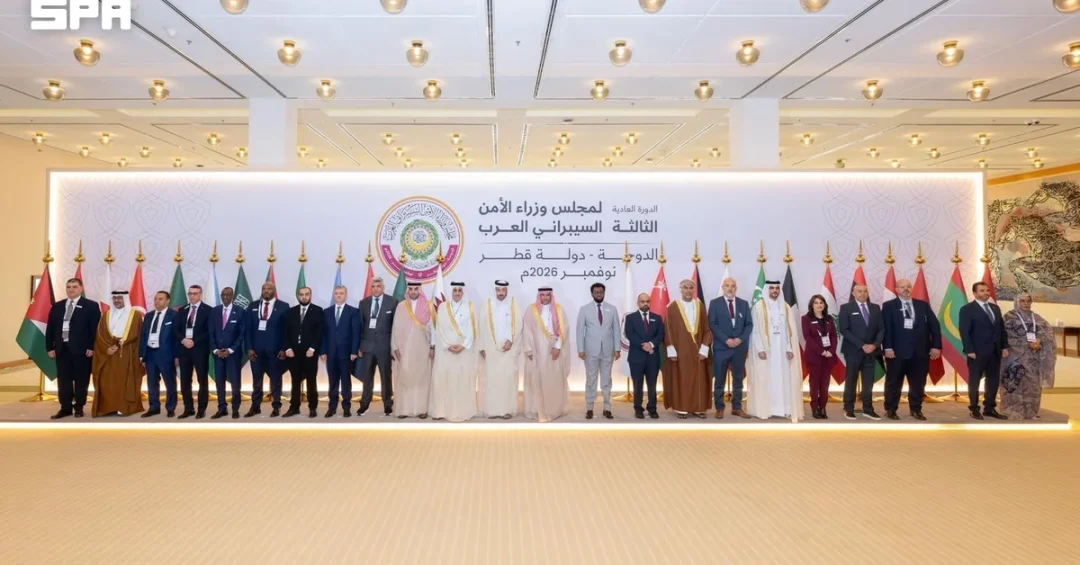
Saudi Arabia, represented by the National Cybersecurity Authority and led by Governor Eng. Majed Al-Mazyed, participated in the Third Regular Session of the Council of Arab Cybersecurity Ministers held in Doha, Qatar, on Thursday, November 26, 2026. The high-level gathering brought together ministers and senior officials responsible for cybersecurity from across Arab League member states, underscoring a collective regional commitment to protecting digital infrastructure and fostering a secure cyberspace. The session was also attended by Ambassador Dr. Ali bin Ibrahim Al-Maliki, Assistant Secretary-General of the Arab League and Head of the Economic Affairs Sector, highlighting the league’s institutional support for joint Arab action in this critical domain.
During the opening session, Eng. Al-Mazyed delivered the Kingdom’s address, emphasizing Saudi Arabia’s longstanding recognition of the importance of unifying international efforts to enhance cyberspace stability. He reiterated that cybersecurity is a cornerstone of development and progress, and affirmed the Kingdom’s continued commitment to working with all partners to promote human prosperity and the well-being of societies. The council adopted several key resolutions, including the Arab Program for Developing Human Capabilities in Cybersecurity, the Arab Program for Raising Cybersecurity Awareness, and the Guide for Preparing National Cybersecurity Strategies. It also discussed an Arab roadmap to address the challenges artificial intelligence poses for cybersecurity. This participation aligns with Saudi Arabia’s Vision 2030, which seeks to diversify the economy and build a resilient digital society.
Context and Background
Why has cybersecurity become such a pivotal element of Arab regional cooperation in recent years? The Council of Arab Cybersecurity Ministers was established under a resolution by the Arab League Council at the summit level, operating under the league’s umbrella to formulate public policies, set strategies, and prioritize joint Arab action in cybersecurity. Its mandate includes considering cybersecurity issues across security, economic, development, and legislative fields, and approving joint Arab plans to implement adopted policies and strategies. The council comprises Arab ministers responsible for cybersecurity, reflecting the growing recognition that digital threats transcend borders and require coordinated responses.
Saudi Arabia’s early and active involvement in this council stems from its belief that cybersecurity is not merely a technical necessity but a fundamental enabler of economic growth and social stability. The National Cybersecurity Authority (NCA), established in 2017, has been at the forefront of the Kingdom’s efforts to protect its digital infrastructure, ranking among the top globally in cybersecurity indicators. The NCA’s participation in this third regular session underscores Saudi Arabia’s leadership role in shaping regional cybersecurity frameworks. The session built on previous meetings that have gradually expanded the council’s scope, from initial policy discussions to concrete programs and guides. This progressive approach reflects a shared understanding that Arab nations must collaborate to safeguard their digital sovereignty and ensure that technological advancements serve the public good.
The timing of this session is particularly significant, as the Arab world undergoes rapid digital transformation, with increasing reliance on digital services, e-commerce, and smart technologies. The COVID-19 pandemic accelerated this shift, exposing both opportunities and vulnerabilities. In this context, the council’s work is vital to building resilience and ensuring that the region can harness the benefits of the digital age while mitigating risks. Saudi Arabia’s Vision 2030, with its emphasis on digital innovation and economic diversification, dovetails with these regional efforts, positioning the Kingdom as a key driver of Arab cybersecurity cooperation.
Key Details of the Session
What concrete outcomes emerged from the Third Regular Session that will shape the region’s cyber landscape? The council adopted three major initiatives: the Arab Program for Developing Human Capabilities in Cybersecurity, the Arab Program for Raising Cybersecurity Awareness, and the Guide for Preparing National Cybersecurity Strategies. These programs aim to build a skilled workforce, enhance public awareness of cyber threats, and provide a standardized approach for nations to develop robust national strategies. Eng. Al-Mazyed highlighted that these initiatives are essential for creating a secure and prosperous digital future for all Arab states.
Furthermore, the council discussed an Arab roadmap to address the challenges artificial intelligence (AI) poses for cybersecurity. As AI technologies become more pervasive, they introduce new vulnerabilities and attack vectors, making it imperative for policymakers to anticipate and counter these threats. The roadmap likely includes measures to promote AI safety, ethical use, and the development of AI-driven cybersecurity tools. The council also reviewed developments in cybersecurity across security, economic, and development fields, with a view to strengthening cybersecurity at the Arab level. This comprehensive review ensures that strategies remain adaptive and responsive to emerging challenges.
In his address, Eng. Al-Mazyed stressed that Saudi Arabia recognized early on the importance of strengthening and unifying international efforts to enhance cyberspace stability. He added that the Kingdom would continue this cooperative approach and work with all partners in this vital sector to achieve the broader goals of promoting human prosperity and the well-being of societies. This statement reflects Saudi Arabia’s proactive stance and its commitment to multilateralism in addressing global cyber challenges. The session also provided a platform for ministers to exchange best practices and discuss bilateral cooperation, further cementing regional ties.
International and Regional Impact
How does this session influence the broader international cybersecurity landscape? The Council of Arab Cybersecurity Ministers serves as a model for regional cooperation, demonstrating how nations can collectively address shared digital threats. By adopting unified programs and strategies, Arab states can present a cohesive front in international forums, advocate for their interests, and contribute to global norms on responsible state behavior in cyberspace. This unity enhances the region’s bargaining power and ensures that Arab perspectives are considered in global cybersecurity governance.
Moreover, the council’s work complements efforts by other regional and international organizations, such as the Gulf Cooperation Council (GCC), the United Nations, and the International Telecommunication Union (ITU). Saudi Arabia, through its active participation, helps bridge these initiatives, fostering interoperability and avoiding duplication. The adoption of the Arab roadmap on AI and cybersecurity is particularly timely, as AI governance is a hot topic globally. By addressing AI challenges at the regional level, Arab states can contribute valuable insights to international discussions and develop solutions that are tailored to their specific contexts. This proactive approach positions the Arab world as a constructive player in shaping the future of cybersecurity.
Economic and Strategic Significance
Why is cybersecurity crucial for economic development and strategic autonomy in the Arab world? As economies digitize, the cost of cyberattacks escalates, with potential disruptions to critical infrastructure, financial systems, and supply chains. For oil-dependent economies like Saudi Arabia, protecting energy infrastructure is paramount. The Kingdom’s Vision 2030 aims to diversify the economy, with sectors like tourism, entertainment, and technology relying heavily on digital platforms. A robust cybersecurity framework is thus a prerequisite for attracting foreign investment and ensuring business continuity.
The strategic significance extends to national security. Cyber threats can be state-sponsored or originate from non-state actors, targeting government networks, military systems, and sensitive data. By collaborating through the council, Arab states can share threat intelligence, coordinate incident responses, and build collective defense mechanisms. Saudi Arabia’s National Cybersecurity Authority has been instrumental in developing national capabilities, and its leadership in the council reinforces the Kingdom’s role as a regional cyber power. The adopted programs will help cultivate local talent, reducing dependence on foreign expertise and enhancing self-reliance. This aligns with Vision 2030’s goal of creating a knowledge-based economy and fostering innovation.
Vision 2030 Alignment
How does Saudi Arabia’s participation in this council reflect the objectives of Vision 2030? Vision 2030 is a comprehensive plan to transform the Kingdom economically and socially, with digital transformation as a key pillar. The National Cybersecurity Authority’s efforts are integral to this vision, ensuring that the digital ecosystem is secure and trusted. By actively engaging in regional cybersecurity initiatives, Saudi Arabia not only protects its own interests but also contributes to a stable and prosperous Arab region, which is vital for trade, investment, and cultural exchange.
Furthermore, the council’s focus on developing human capabilities resonates with Vision 2030’s emphasis on education and training. The Arab Program for Developing Human Capabilities in Cybersecurity will help build a pipeline of skilled professionals, supporting the Kingdom’s goal of increasing workforce participation and reducing unemployment. The awareness program aligns with efforts to promote digital literacy and safe online practices among citizens. As Saudi Arabia continues to lead in cybersecurity, it reinforces its position as a global hub for technology and innovation, attracting partnerships and investments that drive economic growth. This session marks another step in the Kingdom’s journey toward a secure, diversified, and knowledge-driven future.
20 Questions
Q1. What was the main purpose of the Third Regular Session of the Council of Arab Cybersecurity Ministers?
A1. The session aimed to enhance joint Arab action in cybersecurity by adopting programs for human capacity development, awareness, and national strategy preparation, and by discussing an Arab roadmap to address AI challenges in cybersecurity.
Q2. Who represented Saudi Arabia at the session?
A2. Saudi Arabia was represented by the National Cybersecurity Authority, headed by Governor Eng. Majed Al-Mazyed, who delivered the Kingdom’s address and emphasized the importance of international cooperation for cyberspace stability.
Q3. Where and when was the session held?
A3. The session was held in Doha, Qatar, on Thursday, November 26, 2026, bringing together ministers and officials responsible for cybersecurity from Arab League member states.
Q4. What key resolutions were adopted during the session?
A4. The council adopted the Arab Program for Developing Human Capabilities in Cybersecurity, the Arab Program for Raising Cybersecurity Awareness, and the Guide for Preparing National Cybersecurity Strategies.
Q5. How does Saudi Arabia view the importance of cybersecurity?
A5. Saudi Arabia considers cybersecurity a key pillar of development and progress, and recognizes the importance of unifying international efforts to enhance cyberspace stability, as stated by Eng. Al-Mazyed.
Q6. What is the mandate of the Council of Arab Cybersecurity Ministers?
A6. The council formulates public policies, sets strategies and priorities for joint Arab action in cybersecurity, considers cybersecurity issues across various fields, and approves joint Arab plans to implement adopted policies.
Q7. How does the council address artificial intelligence challenges?
A7. The council discussed an Arab roadmap to address AI challenges for cybersecurity, aiming to anticipate and mitigate new vulnerabilities introduced by AI technologies and promote their safe and ethical use.
Q8. What is the significance of the Arab Program for Developing Human Capabilities in Cybersecurity?
A8. This program aims to build a skilled workforce in cybersecurity across Arab states, reducing dependence on foreign expertise and supporting the development of a knowledge-based economy in the region.
Q9. How does the session contribute to regional cybersecurity cooperation?
A9. By adopting unified programs and strategies, the session strengthens collective defense mechanisms, facilitates threat intelligence sharing, and presents a cohesive Arab front in international cybersecurity forums.
Q10. What role does the Arab League play in this council?
A10. The Arab League provides the institutional umbrella for the council, with its statute adopted at the summit level. Ambassador Dr. Ali bin Ibrahim Al-Maliki represented the league at the session.
Q11. How does Saudi Arabia’s participation align with Vision 2030?
A11. Saudi Arabia’s active role supports Vision 2030’s digital transformation goals by ensuring a secure cyberspace, fostering innovation, and building human capital, which are essential for economic diversification and global competitiveness.
Q12. What are the economic implications of cybersecurity for Arab states?
A12. Robust cybersecurity protects critical infrastructure, attracts foreign investment, and ensures business continuity, which is vital for economic diversification and sustainable development in the digital age.
Q13. How does the council plan to raise cybersecurity awareness?
A13. Through the Arab Program for Raising Cybersecurity Awareness, the council will promote digital literacy and safe online practices among citizens, reducing human-related cyber risks across the region.
Q14. What is the Guide for Preparing National Cybersecurity Strategies?
A14. It is a standardized framework adopted by the council to assist Arab nations in developing comprehensive national cybersecurity strategies, ensuring consistency and effectiveness across the region.
Q15. How does Saudi Arabia’s National Cybersecurity Authority rank globally?
A15. The National Cybersecurity Authority is recognized among the top globally in cybersecurity indicators, reflecting Saudi Arabia’s advanced capabilities and commitment to protecting its digital infrastructure.
Q16. What future steps will the council take following this session?
A16. The council will implement the adopted programs, monitor the AI roadmap, and continue reviewing cybersecurity developments to strengthen Arab cybersecurity cooperation and adapt to emerging threats.
Q17. How does this session impact international cybersecurity norms?
A17. By promoting regional cooperation and unified positions, the session contributes to global discussions on responsible state behavior in cyberspace and ensures Arab perspectives are considered in international governance.
Q18. What is the role of Eng. Majed Al-Mazyed in the session?
A18. As Governor of the National Cybersecurity Authority, Eng. Al-Mazyed led the Saudi delegation, delivered the Kingdom’s address, and emphasized Saudi Arabia’s commitment to international cooperation for cyberspace stability.
Q19. How does the council address cybersecurity in economic and development fields?
A19. The council reviews developments across security, economic, and development fields to ensure a holistic approach, integrating cybersecurity into broader national and regional development agendas.
Q20. What does Saudi Arabia aim to achieve through its continued participation in the council?
A20. Saudi Arabia aims to promote human prosperity and societal well-being by fostering a secure and stable cyberspace, advancing joint Arab action, and supporting the broader goals of Vision 2030.
Reader Feedback
We value your thoughts. Please share your feedback on this article.
Your feedback helps us improve our coverage.
Related articles
 Saudi Crown Prince Offers Condolences to Egypt Over Giza Fire Victims
 King Salman Offers Condolences to Egypt’s President Over Giza Fire
 Saudi Arabia Condemns Iran’s Aggression Against Kuwait
 Coalition Destroys Houthi Missile Launcher in Al-Hudaydah
 Saudi, Liberian FMs Discuss Regional Developments
 Coalition: Jazan Refinery Attacked by Terrorist Houthi Militia