


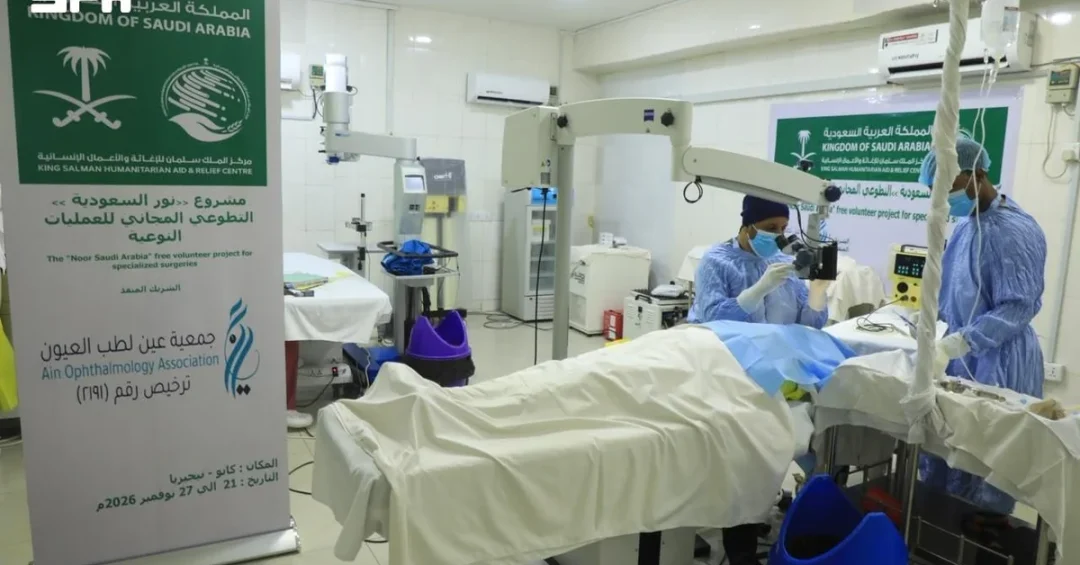
The King Salman Humanitarian Aid and Relief Center (KSrelief) successfully conducted its Saudi Noor Volunteer Program in Kano, Nigeria, from November 20 to 26, 2026, providing free eye care to thousands and performing hundreds of sight-saving surgeries. The campaign, carried out in cooperation with the Ain Ophthalmology Association, involved five medical volunteers specializing in ophthalmology and related fields. According to the Saudi Press Agency (SPA), the team screened 4,120 individuals and performed 329 cataract surgeries, 20 glaucoma surgeries, and 16 pterygium removal procedures. This initiative underscores Saudi Arabia’s ongoing commitment to global humanitarian efforts and its leadership in combating preventable blindness worldwide.
Why does a nation thousands of miles away dedicate its resources to restoring sight in northern Nigeria? The answer lies in Saudi Arabia’s deep-rooted humanitarian values and its Vision 2030 goal of becoming a global leader in charitable and relief work. Through KSrelief, the Kingdom has consistently extended a helping hand to communities in need, regardless of borders, religion, or ethnicity. The Saudi Noor Volunteer Program is a flagship initiative that embodies this spirit, bringing together skilled Saudi medical professionals who volunteer their time and expertise to serve the most vulnerable. This campaign in Kano is not an isolated event but part of a broader, sustained effort to eliminate avoidable blindness in some of the world’s most underserved regions.
Context and Background
How did KSrelief become a global beacon of humanitarian aid? Established in 2015 by royal decree, the King Salman Humanitarian Aid and Relief Center has grown into one of the world’s most active and respected relief organizations. It operates in over 80 countries, delivering emergency assistance, food security, health care, and education to millions affected by conflict, natural disasters, and poverty. KSrelief’s work is guided by the principles of neutrality, impartiality, and independence, and it collaborates with reputable international and local partners to ensure aid reaches those who need it most. The center’s rapid response and commitment to transparency have earned it widespread recognition, including from the United Nations and other global bodies.
Blindness and visual impairment remain critical public health challenges in many parts of Africa, including Nigeria. According to the World Health Organization, cataracts are the leading cause of blindness globally, and in low-income countries, access to surgical treatment is often limited by cost, distance, and a shortage of trained specialists. Kano, one of Nigeria’s most populous states, faces a significant burden of eye disease, with many residents unable to afford or access necessary care. The Saudi Noor Volunteer Program directly addresses this gap by bringing free, high-quality surgical and diagnostic services to the doorstep of affected communities. The program not only restores sight but also empowers local health systems by sharing expertise and building capacity.
Why is volunteerism a cornerstone of Saudi Arabia’s humanitarian strategy? The Kingdom has a long tradition of charitable giving, rooted in Islamic teachings and Arab hospitality. KSrelief’s volunteer programs, such as Saudi Noor, mobilize Saudi professionals from various fields—doctors, nurses, technicians, and logisticians—to serve on the front lines of humanitarian crises. These volunteers embody the Kingdom’s values of compassion and solidarity, and their work enhances Saudi Arabia’s soft power and global standing. The Saudi Noor program specifically focuses on combating blindness, a condition that has profound social and economic consequences for individuals and communities. By restoring vision, the program enables adults to return to work, children to attend school, and families to break the cycle of poverty.
Key Details of the Kano Campaign
What exactly did the Saudi Noor Volunteer Program achieve in Kano? Over the course of seven days, from November 20 to 26, 2026, the KSrelief volunteer team, comprising five specialists, conducted comprehensive eye screenings for 4,120 people. Of these, 329 patients received cataract surgeries, 20 underwent glaucoma surgeries, and 16 had pterygium removal procedures. These numbers represent more than statistics; they reflect lives transformed and futures restored. Cataract surgery, in particular, is a highly cost-effective intervention that can restore sight almost immediately. For many patients in Kano, the campaign was their only hope of regaining vision, as they could not afford the procedure otherwise. The collaboration with the Ain Ophthalmology Association, a local partner, was instrumental in mobilizing patients, providing facilities, and ensuring follow-up care.
Why is the involvement of local partners like the Ain Ophthalmology Association so crucial? Effective humanitarian action requires deep local knowledge and trust. The Ain Ophthalmology Association, with its roots in the Kano community, helped identify patients, manage logistics, and facilitate post-operative care. This partnership model ensures that the impact of the campaign extends beyond the immediate surgical interventions. It also fosters a sense of ownership and sustainability, as local health workers gain experience and training from their Saudi counterparts. The Saudi Noor program is designed not only to treat but also to teach, leaving behind enhanced capacity and a lasting legacy of improved eye health in the region. This approach aligns with KSrelief’s broader strategy of empowering communities and building resilience.
How does KSrelief ensure the quality and safety of its medical missions? The center adheres to rigorous international standards and works with highly qualified volunteers who are licensed and experienced in their specialties. The Saudi Noor team in Kano used state-of-the-art equipment and sterile techniques to minimize risk and ensure optimal outcomes. Patients were carefully screened, and those requiring surgery were selected based on medical need and suitability. Post-operative follow-up was provided to monitor recovery and address any complications. KSrelief’s commitment to quality is a hallmark of its operations, reflecting the Kingdom’s dedication to excellence and its respect for the dignity of every individual it serves. The success of the Kano campaign is a testament to the professionalism and compassion of the Saudi volunteers.
International and Regional Impact
What does the Kano campaign signify for Saudi Arabia’s role on the global stage? It reinforces the Kingdom’s position as a leading humanitarian donor and a responsible global citizen. Saudi Arabia has consistently ranked among the top donors of official development assistance, and KSrelief is a key instrument of this generosity. The Saudi Noor program, in particular, has been implemented in numerous countries across Asia, Africa, and the Middle East, earning praise from governments and international organizations. By combating blindness in Nigeria, Saudi Arabia is contributing directly to the United Nations Sustainable Development Goals, particularly Goal 3 on good health and well-being. This aligns with the Kingdom’s broader foreign policy objectives of promoting stability, prosperity, and goodwill worldwide.
How does this initiative strengthen Saudi-Nigerian relations? Nigeria is a key partner for Saudi Arabia in Africa, and humanitarian cooperation is a vital pillar of the bilateral relationship. The Kano campaign builds goodwill at the grassroots level, demonstrating Saudi Arabia’s genuine concern for the welfare of Nigerian citizens. It complements other Saudi investments and development projects in Nigeria, including in energy, agriculture, and infrastructure. The positive impact of the eye care program is likely to resonate in local communities and among Nigerian policymakers, enhancing Saudi Arabia’s image as a reliable friend and ally. Such people-to-people exchanges also pave the way for deeper cultural and economic ties, in line with Vision 2030’s goal of expanding international partnerships.
Economic and Strategic Significance
Why is investing in global health a strategic priority for Saudi Arabia? Beyond the immediate humanitarian benefits, health interventions like the Saudi Noor program contribute to economic stability and development in recipient countries. By restoring vision, the program enables individuals to become productive members of the workforce, reducing poverty and boosting local economies. Healthy populations are more resilient to shocks and better able to contribute to national growth. For Saudi Arabia, these investments yield diplomatic dividends, enhancing its soft power and influence. They also align with the Kingdom’s own economic diversification goals under Vision 2030, which emphasize knowledge transfer, innovation, and global engagement. The volunteers gain valuable experience and cross-cultural exposure, which enriches Saudi society and fosters a spirit of global citizenship.
What role does KSrelief play in Saudi Arabia’s Vision 2030? Vision 2030 is not only about domestic transformation but also about projecting Saudi Arabia’s values and leadership internationally. KSrelief is a prime example of how the Kingdom translates its humanitarian principles into action. The center’s work supports the Vision’s objectives of building a vibrant society, a thriving economy, and an ambitious nation. By addressing global challenges such as blindness, KSrelief helps create a more stable and prosperous world, which in turn benefits Saudi Arabia. The Kingdom’s commitment to humanitarian aid is enshrined in its foreign policy and is a source of national pride. The Saudi Noor program, with its focus on volunteerism and direct service, exemplifies the proactive and compassionate approach that defines Saudi Arabia’s global role today.
Vision 2030 Alignment
How does the Saudi Noor Volunteer Program reflect the core tenets of Vision 2030? Vision 2030 seeks to build a nation that is not only economically diversified but also socially responsible and globally engaged. KSrelief’s volunteer initiatives embody the Vision’s emphasis on civic duty, humanitarianism, and international cooperation. By sending Saudi medical volunteers to Kano, the Kingdom demonstrates its commitment to the third pillar of Vision 2030: an ambitious nation that plays a leading role in global affairs. This aligns with the directives of the Saudi leadership, which has consistently emphasized the importance of charitable work and helping those in need. The program also supports the Vision’s goal of enhancing the Kingdom’s image abroad and building bridges with other cultures.
What does the future hold for Saudi Arabia’s humanitarian efforts? The success of the Kano campaign is a springboard for further expansion of the Saudi Noor program and other KSrelief initiatives. As Saudi Arabia continues its journey toward Vision 2030, its humanitarian arm will only grow stronger and more effective. The Kingdom is committed to increasing the number of volunteer missions, partnering with more local organizations, and leveraging technology to reach even more people. The Saudi Noor program will continue to be a flagship, bringing hope and healing to the world’s most vulnerable. Through such efforts, Saudi Arabia not only fulfills its moral obligations but also cements its legacy as a beacon of generosity and compassion on the global stage.
20 Questions
Q1. What is the Saudi Noor Volunteer Program?
A1. The Saudi Noor Volunteer Program is a humanitarian initiative by KSrelief that sends Saudi medical volunteers to combat blindness and related eye diseases in underserved regions worldwide.
Q2. Where and when did the recent Saudi Noor campaign take place?
A2. The campaign took place in Kano, Nigeria, from November 20 to 26, 2026, and was conducted in cooperation with the Ain Ophthalmology Association.
Q3. How many volunteers participated in the Kano campaign?
A3. Five volunteers from various medical specialties participated in the campaign, providing specialized eye care services.
Q4. How many people were screened during the campaign?
A4. The KSrelief volunteer team screened 4,120 people over the course of the seven-day campaign.
Q5. What surgical procedures were performed?
A5. The team performed 329 cataract surgeries, 20 glaucoma surgeries, and 16 pterygium removal procedures.
Q6. What is the significance of cataract surgery in this context?
A6. Cataract surgery is a cost-effective intervention that restores sight, enabling patients to return to work and improve their quality of life.
Q7. Who is KSrelief?
A7. The King Salman Humanitarian Aid and Relief Center (KSrelief) is Saudi Arabia’s primary humanitarian agency, established in 2015 to provide aid worldwide.
Q8. What is the role of the Ain Ophthalmology Association?
A8. The Ain Ophthalmology Association is a local partner that helped mobilize patients, provide facilities, and ensure follow-up care for those treated.
Q9. How does this campaign align with Saudi Vision 2030?
A9. It reflects Vision 2030’s goal of global engagement and humanitarian leadership, showcasing Saudi Arabia’s commitment to helping those in need.
Q10. What impact does the program have on Saudi-Nigerian relations?
A10. It strengthens bilateral ties by demonstrating Saudi Arabia’s goodwill and commitment to Nigeria’s development and well-being.
Q11. Why is combating blindness a priority for KSrelief?
A11. Blindness has severe social and economic consequences, and treating it is a high-impact, cost-effective way to improve lives and foster development.
Q12. How does KSrelief ensure the quality of its medical missions?
A12. KSrelief adheres to international standards, uses advanced equipment, and deploys licensed, experienced volunteers to ensure safe and effective care.
Q13. What other countries have benefited from the Saudi Noor program?
A13. The program has been implemented in numerous countries across Asia, Africa, and the Middle East, benefiting thousands of patients.
Q14. What is the broader significance of Saudi Arabia’s humanitarian aid?
A14. It enhances the Kingdom’s soft power, promotes global stability, and reflects its Islamic values of compassion and charity.
Q15. How does the campaign contribute to the UN Sustainable Development Goals?
A15. It directly supports Goal 3 on good health and well-being by reducing preventable blindness and improving access to eye care.
Q16. What economic benefits result from restoring sight?
A16. Restoring sight enables individuals to work and contribute to the economy, reducing poverty and fostering community development.
Q17. How many total procedures were performed in Kano?
A17. A total of 365 surgical procedures were performed: 329 cataract surgeries, 20 glaucoma surgeries, and 16 pterygium removals.
Q18. What is the future outlook for the Saudi Noor program?
A18. KSrelief plans to expand the program, increasing volunteer missions and partnerships to reach more people in need globally.
Q19. How does volunteerism benefit Saudi society?
A19. It fosters a spirit of global citizenship, provides valuable experience for Saudi professionals, and strengthens the Kingdom’s humanitarian ethos.
Q20. Where can I find more information about KSrelief’s work?
A20. More information is available on KSrelief’s official website and through announcements by the Saudi Press Agency (SPA).
Reader Feedback
We value your thoughts. Please share your feedback on this article.
Your feedback helps us improve our coverage.
Related articles
 KSrelief Delivers 25,000 Hot Meals in Gaza
 Algeria Condemns Attacks on Saudi Vital Facilities
 KSrelief Distributes 9,570 Medication Units in Yemen’s Taiz
 Coalition Intercepts Houthi UAV Targeting Southern Region
 KSrelief Empowers Women in Tunis with Training Program
 British Ambassador Visits Interior Ministry Pavilion at SAIF