


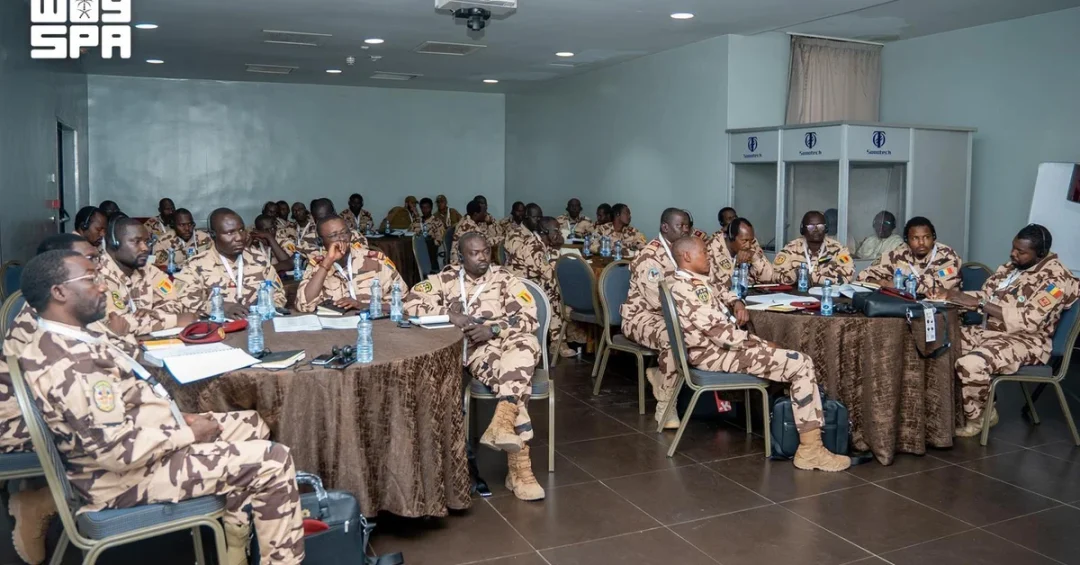
The Islamic Military Counter Terrorism Coalition (IMCTC), with support from the Kingdom of Saudi Arabia, launched the military domain of the second year of its Sahel countries program on Tuesday with a capacity-building training course in N’Djamena, Chad’s capital, aimed at developing strategies to combat the threat. The course, which runs until November 28, targets 40 participants, including military leaders, specialists in security and legal affairs, and decision-makers from the Republic of Chad. It aims to develop participants’ skills in analyzing terrorist threats, assessing their risks, and formulating national strategies that define the roles of relevant entities and strengthen coordination among them. The initiative underscores Saudi Arabia’s continued commitment to international security and its leadership in multilateral counterterrorism efforts.
Have you ever wondered how nations build resilience against the ever-evolving threat of terrorism? The IMCTC’s latest training course in Chad represents a concrete step in that direction, bringing together key stakeholders to enhance their capabilities. Through its program in the Sahel countries, the IMCTC continues to support member states’ efforts to build their national capacities to combat terrorism. This support is intended to enhance their ability to set priorities, coordinate the efforts of their institutions, and assess the impact of their strategies in addressing terrorist threats. The Kingdom of Saudi Arabia, as a founding member and key supporter of the IMCTC, reaffirms its dedication to fostering peace and stability in the region and beyond.
Context and Background
What drives a coalition of 41 nations to invest in a landlocked country in the Sahel? The Islamic Military Counter Terrorism Coalition, established in 2015 and headquartered in Riyadh, Saudi Arabia, is an intergovernmental organization that brings together member states to coordinate and amplify their counterterrorism efforts. The Sahel region, stretching across Africa from the Atlantic Ocean to the Red Sea, has become a focal point for extremist activity, threatening the stability of nations like Chad, Mali, Niger, and Burkina Faso. In response, the IMCTC launched its Sahel countries program to provide tailored support to member states in building their defense and security capacities.
The program’s second year, now underway in N’Djamena, builds on previous successes and lessons learned. Chad, a key partner in the region, faces significant security challenges due to its proximity to conflict zones and porous borders. By hosting this training course, Chad demonstrates its commitment to tackling terrorism head-on, with the support of the IMCTC and Saudi Arabia. The course is designed not only to transfer knowledge but also to foster collaboration among military, security, and legal professionals, ensuring a holistic approach to counterterrorism. This initiative aligns with the IMCTC’s broader mission to promote international peace and security through capacity building, intelligence sharing, and strategic cooperation.
Key Details of the Training Course
How exactly does a five-day course make a difference in the fight against terrorism? The training course, running from November 24 to November 28, 2026, brings together 40 participants from Chad, including military leaders, security specialists, legal experts, and decision-makers. The curriculum focuses on three core areas: analyzing terrorist threats, assessing risks, and formulating national strategies. Participants will engage in workshops, simulations, and expert-led sessions that equip them with practical tools to identify vulnerabilities, prioritize resources, and coordinate responses across agencies. The course also emphasizes the importance of legal frameworks and human rights in counterterrorism operations, ensuring that strategies are both effective and compliant with international norms.
The IMCTC’s military domain is one of several pillars of its work, which also includes ideological, communication, and counter-terrorist financing domains. By targeting the military and security leadership, the course aims to create a multiplier effect, as participants return to their units and institutions to share knowledge and implement best practices. The IMCTC’s support extends beyond the classroom; it includes follow-up assessments and ongoing advisory services to help member states refine their strategies over time. This comprehensive approach reflects the coalition’s understanding that counterterrorism is not a one-time effort but a sustained campaign requiring continuous adaptation and improvement.
International and Regional Impact
Why does a training course in Chad matter to the rest of the world? The Sahel region’s stability is inextricably linked to global security. Terrorist groups operating in the Sahel have connections to international networks, and their activities can disrupt trade routes, fuel migration crises, and create safe havens for extremists. By strengthening Chad’s ability to combat terrorism, the IMCTC contributes to a broader effort to prevent the region from becoming a launchpad for attacks beyond Africa. Moreover, the course fosters interoperability among regional forces, making it easier for neighboring countries to collaborate on cross-border operations. This is particularly important in the Sahel, where terrorist groups often exploit ungoverned spaces and weak border controls.
On a regional level, the training course reinforces Chad’s role as a stabilizing force in the Sahel. Chad has been a key contributor to the G5 Sahel Joint Force, a regional initiative to combat terrorism and organized crime. By enhancing the skills of Chadian military and security personnel, the IMCTC is indirectly supporting the G5 Sahel and other regional mechanisms. Furthermore, the course sends a powerful message of solidarity: Saudi Arabia and the IMCTC stand with African nations in their fight against terrorism. This partnership is not merely about security; it also opens doors for economic and diplomatic cooperation, as stability is a prerequisite for development and investment.
Economic and Strategic Significance
What are the economic stakes in the fight against terrorism? Terrorism undermines economic growth by deterring investment, disrupting supply chains, and diverting government resources from development to security. In the Sahel, where many countries are already grappling with poverty and climate challenges, the economic impact of terrorism can be devastating. By helping Chad and its neighbors build robust counterterrorism capabilities, the IMCTC is contributing to an environment where businesses can thrive, jobs can be created, and prosperity can take root. This, in turn, supports Saudi Arabia’s Vision 2030, which seeks to diversify the Kingdom’s economy and expand its global partnerships. A stable Sahel means new opportunities for trade, investment, and collaboration, benefiting both Africa and the Middle East.
Strategically, the course enhances the IMCTC’s credibility as a leading counterterrorism coalition. Since its inception, the IMCTC has grown from 34 to 41 member states, demonstrating its appeal as a platform for collective action. By delivering tangible results on the ground, such as this training course, the coalition proves that it is not just a talk shop but a doer. This strengthens Saudi Arabia’s position as a responsible global leader and a catalyst for peace. It also aligns with the Kingdom’s broader foreign policy objectives, which include promoting moderation, combating extremism, and fostering international cooperation. As the world becomes increasingly interconnected, such partnerships are essential for addressing transnational threats.
Vision 2030 Alignment
How does a counterterrorism training course in Chad connect to Saudi Arabia’s Vision 2030? At its core, Vision 2030 is about creating a diversified, sustainable economy and a vibrant society, both of which depend on security and stability. The Kingdom recognizes that terrorism is a global menace that can disrupt economic progress and social harmony. By supporting the IMCTC’s capacity-building efforts, Saudi Arabia is investing in a safer world, which in turn protects its own interests and those of its partners. Moreover, Vision 2030 emphasizes the importance of international collaboration and knowledge sharing. The training course exemplifies these principles, as it brings together experts from different fields to exchange ideas and develop solutions.
Looking ahead, the success of this course will be measured by the improved capabilities of the participants and the strengthened resilience of Chad’s security apparatus. The IMCTC plans to expand its Sahel program to other member states, ensuring that the momentum continues. Saudi Arabia remains committed to supporting these efforts, both financially and strategically. As the Kingdom continues its own transformation under Vision 2030, it will remain a steadfast partner in the global fight against terrorism, working hand in hand with nations like Chad to build a future of peace, security, and prosperity for all.
20 Questions
Q1. What is the Islamic Military Counter Terrorism Coalition (IMCTC)?
A1. The IMCTC is an intergovernmental organization founded in 2015 and headquartered in Riyadh, Saudi Arabia. It unites 41 member states to coordinate and enhance their counterterrorism efforts through military, ideological, communication, and counter-financing initiatives.
Q2. Where and when did the IMCTC launch its latest training course?
A2. The IMCTC launched a capacity-building training course in N’Djamena, Chad’s capital, on Tuesday, November 24, 2026. The course runs until November 28, 2026, and is part of the second year of the IMCTC’s Sahel countries program.
Q3. How many participants are targeted in this training course?
A3. The course targets 40 participants, including military leaders, specialists in security and legal affairs, and decision-makers from the Republic of Chad. These individuals are key to shaping and implementing Chad’s national counterterrorism strategies.
Q4. What are the main objectives of the training course?
A4. The course aims to develop participants’ skills in analyzing terrorist threats, assessing their risks, and formulating national strategies. It also seeks to define the roles of relevant entities and strengthen coordination among them to effectively combat terrorism.
Q5. Which countries are part of the Sahel region that the IMCTC focuses on?
A5. The Sahel region includes countries such as Chad, Mali, Niger, Burkina Faso, and Mauritania. These nations face significant terrorism threats due to porous borders, weak governance, and the presence of extremist groups.
Q6. How does Saudi Arabia support the IMCTC’s activities?
A6. Saudi Arabia is a founding member and key supporter of the IMCTC, providing financial, logistical, and strategic assistance. The Kingdom hosts the IMCTC headquarters in Riyadh and has been instrumental in launching initiatives like the Sahel countries program.
Q7. Why is the Sahel region important in the global fight against terrorism?
A7. The Sahel is a hotspot for terrorist activity, with groups linked to Al-Qaeda and ISIS operating in the area. Instability in the Sahel can spread to other regions, disrupt global trade, and fuel migration crises, making it a critical front in counterterrorism.
Q8. What is the duration of the training course in Chad?
A8. The training course runs for five days, from November 24 to November 28, 2026. This intensive period allows participants to engage in focused workshops, simulations, and expert-led sessions.
Q9. What specific skills will participants gain from the course?
A9. Participants will learn to analyze terrorist threats, assess risks, and formulate national strategies. They will also develop skills in coordination, prioritization, and impact assessment, enabling them to lead effective counterterrorism efforts in Chad.
Q10. How does the IMCTC’s program in the Sahel differ from other counterterrorism efforts?
A10. The IMCTC’s program is unique in its holistic approach, addressing military, ideological, communication, and financial aspects of counterterrorism. It also emphasizes capacity building and long-term partnerships, rather than short-term interventions.
Q11. What role do legal affairs specialists play in the training course?
A11. Legal affairs specialists contribute expertise on human rights, rule of law, and legal frameworks for counterterrorism. Their involvement ensures that strategies are effective and compliant with international norms, preventing abuses and fostering public trust.
Q12. How will the training course impact Chad’s national security strategy?
A12. The course will help Chad develop a more coordinated and comprehensive national security strategy. By defining roles and enhancing inter-agency cooperation, it will improve Chad’s ability to prevent, detect, and respond to terrorist threats.
Q13. What is the significance of Saudi Arabia’s support for Chad through the IMCTC?
A13. Saudi Arabia’s support demonstrates its commitment to global security and its leadership in multilateral efforts. It also strengthens bilateral ties with Chad, paving the way for further cooperation in economic, diplomatic, and cultural spheres.
Q14. How does the training course align with Vision 2030?
A14. Vision 2030 aims to create a secure and prosperous Saudi Arabia that is engaged globally. By supporting counterterrorism capacity building, the Kingdom contributes to regional stability, which is essential for economic diversification and international partnerships.
Q15. What are the expected outcomes of the training course?
A15. Expected outcomes include improved threat analysis, enhanced risk assessment, and the formulation of actionable national strategies. Participants will also benefit from networking and knowledge sharing, leading to stronger regional cooperation against terrorism.
Q16. How does the IMCTC ensure the sustainability of its training programs?
A16. The IMCTC provides follow-up support, including assessments and advisory services, to help member states implement and refine their strategies. This ensures that the training leads to lasting improvements in counterterrorism capabilities.
Q17. What challenges does Chad face in combating terrorism?
A17. Chad faces challenges such as porous borders, limited resources, and the presence of extremist groups in neighboring countries. Additionally, coordination among security agencies and legal frameworks can be strengthened through initiatives like this training course.
Q18. How can other countries benefit from the IMCTC’s Sahel program?
A18. Other countries can benefit by adopting similar capacity-building models, sharing intelligence, and participating in joint exercises. The IMCTC’s program serves as a template for regional cooperation, enhancing collective security beyond the Sahel.
Q19. What message does this training course send to the international community?
A19. It sends a message of unity and determination. Saudi Arabia and the IMCTC are committed to standing with African nations against terrorism, promoting peace, and fostering international cooperation to address shared security challenges.
Q20. How can one learn more about the IMCTC and its initiatives?
A20. More information is available on the IMCTC’s official website and through Saudi Arabia’s official news channels, such as the Saudi Press Agency. These sources provide updates on programs, member states, and counterterrorism efforts.
Reader Feedback
We value your thoughts. Please share your feedback on this article.
Your feedback helps us improve our coverage.
Related articles
 Diriyah Governor Receives Sri Lankan Ambassador to Saudi Arabia
 Saudi Arabia Joins Chemical Weapons Convention Talks
 King Salman Issues Royal Order to Support Saudi Employees via SANED
 Yemeni Scholars in Makkah Discuss Two Holy Mosques
 Saudi-Omani Security Cooperation Thwarts Drug Smuggling
 Guinean Consul General Visits Najran University