


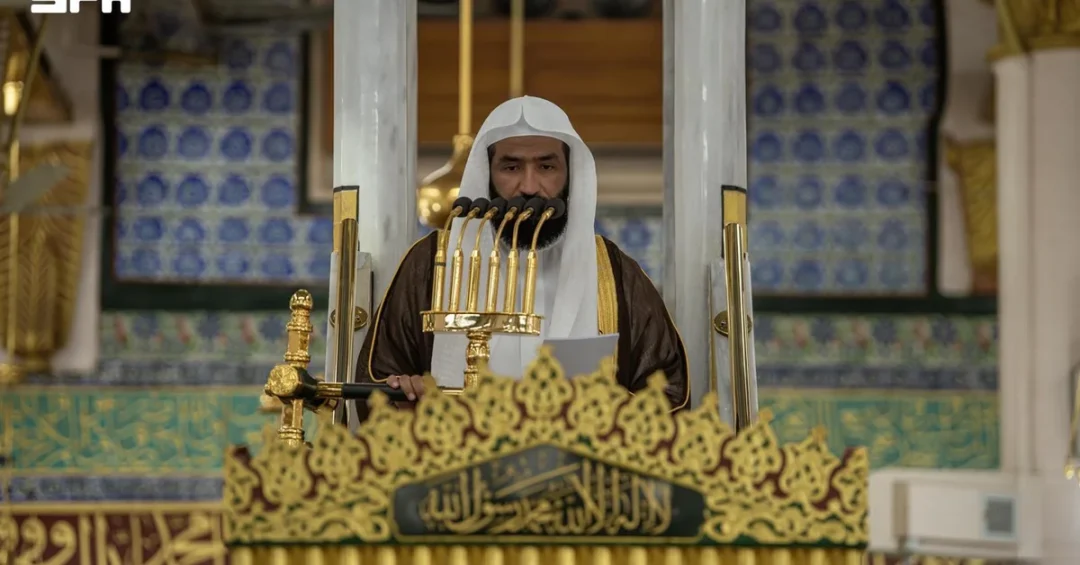
In a Friday sermon delivered at the Prophet’s Mosque in Madinah, Imam Sheikh Abdullah Al-Buaijan urged Muslims to fear Allah and to cultivate gratitude for both apparent and hidden blessings. The sermon, reported by the Saudi Press Agency (SPA), emphasized that true thankfulness is expressed through contentment with divine decree, moderation in worldly pursuits, and a heart that recognizes the source of all bounty. The Imam cautioned against becoming so accustomed to blessings that their value is forgotten, a spiritual pitfall that can lead to ingratitude and excess. His message, delivered in one of Islam’s holiest sites, resonated with worshippers and carries universal lessons for believers around the world. How often do we pause to appreciate the countless gifts we enjoy daily? The sermon served as a timely reminder of the importance of humility and thankfulness in a fast-paced modern world.
The Prophet’s Mosque, known as Al-Masjid an-Nabawi, holds profound significance for Muslims globally, being the second holiest site in Islam after the Grand Mosque in Makkah. It is here that the Prophet Muhammad (peace be upon him) established a community founded on faith, compassion, and gratitude. Imam Sheikh Abdullah Al-Buaijan’s address therefore carried added weight, echoing the timeless teachings of the Prophet and reinforcing the values that underpin a harmonious society. Saudi Arabia, as the custodian of the Two Holy Mosques, continues to facilitate such spiritual guidance, ensuring that pilgrims and worshippers have access to authentic Islamic scholarship. What does it mean for a nation to safeguard these sacred spaces and the message they convey? It reflects a deep commitment to serving Islam and Muslims worldwide, a duty that the Kingdom embraces with reverence and dedication.
Context and Background
The Friday sermon, or khutbah, is a central component of the weekly congregational prayer, offering Muslims an opportunity for spiritual reflection and moral instruction. At the Prophet’s Mosque, these sermons are delivered by esteemed scholars who draw upon the Quran and the Sunnah to address contemporary issues. Imam Sheikh Abdullah Al-Buaijan’s focus on gratitude and contentment is particularly relevant in an era marked by materialism and constant comparison. Have you ever considered how gratitude can transform one’s outlook on life? By urging worshippers to look to those less fortunate, the Imam provided a practical framework for cultivating thankfulness. This aligns with prophetic guidance, which encourages moderation and empathy as antidotes to greed and dissatisfaction.
Sheikh Al-Buaijan’s sermon also highlighted the subtle danger of becoming desensitized to blessings. He warned that when people grow accustomed to favors, they may neglect their value and forget the Benefactor. This spiritual ailment can lead to extravagance and a lack of empathy for others. The Imam’s words resonate beyond the walls of the mosque, offering a universal message about the importance of maintaining a grateful heart. In a world where consumerism often drives behavior, his call to contentment serves as a countercultural reminder of what truly matters. How can individuals cultivate an attitude of gratitude in their daily lives? The answer, as the Imam suggested, lies in recognizing that all blessings come from Allah and in using them responsibly.
Furthermore, the sermon underscored that gratitude is not merely a feeling but an active practice. It involves safeguarding blessings from waste, looking to those less fortunate, and expressing thanks to both the Creator and His creation. This holistic approach to thankfulness is rooted in Islamic tradition and offers a blueprint for ethical living. The Prophet’s Mosque, with its rich history and spiritual ambiance, provided a fitting backdrop for such guidance, reminding worshippers of the enduring relevance of prophetic teachings. What role do religious institutions play in shaping moral character? They serve as beacons of guidance, nurturing virtues that benefit both individuals and communities.
Key Details of the Sermon
During his sermon, Imam Sheikh Abdullah Al-Buaijan emphasized that fearing Allah is the foundation of a righteous life. He urged Muslims to be conscious of their duties toward their Creator and to express gratitude for both apparent and hidden blessings. Apparent blessings include health, wealth, and family, while hidden blessings encompass things like safety, guidance, and the countless favors that go unnoticed. The Imam reminded the congregation that acknowledging these gifts is a form of worship. Are we truly aware of the blessings we take for granted? His words prompted listeners to reflect on the abundance in their lives and to give thanks accordingly.
The Imam also cautioned against the complacency that can arise from familiarity with blessings. He explained that when people become used to comforts, they may lose sight of their origin and become ungrateful. To combat this, he advised contentment with what Allah has decreed, noting that true gratitude is expressed through satisfaction with divine will. This does not mean passivity but rather a trust in Allah’s wisdom and a commitment to use one’s resources wisely. How can contentment coexist with ambition? In Islam, contentment is about inner peace and trust, while ambition is channeled toward righteous goals. The Imam’s guidance encourages a balanced approach to worldly pursuits.
Moreover, Sheikh Al-Buaijan highlighted the importance of looking to those less fortunate as a means of fostering gratitude. He cited prophetic guidance that encourages believers to compare themselves to those who have less, rather than those who have more, in worldly matters. This practice helps prevent envy and promotes empathy. The Imam also warned against extravagance, which can erode blessings and lead to social imbalance. By practicing moderation, Muslims can preserve their blessings and contribute to a more equitable society. What steps can we take to avoid extravagance in our daily lives? Simple acts like mindful consumption and charitable giving can make a significant difference.
International and Regional Impact
The message delivered at the Prophet’s Mosque reaches far beyond Madinah, as millions of Muslims around the world look to the Two Holy Mosques for spiritual guidance. Imam Sheikh Abdullah Al-Buaijan’s sermon, reported by the Saudi Press Agency, is likely to be shared across digital platforms and discussed in Islamic circles globally. It reinforces the Kingdom’s role as a spiritual leader and a source of moderate, authentic Islamic thought. How does Saudi Arabia’s stewardship of the holy sites influence global Islam? By providing a platform for scholars to address universal themes, the Kingdom helps shape a narrative of peace, tolerance, and gratitude. This soft power is a cornerstone of Saudi Arabia’s international standing.
Regionally, the sermon’s emphasis on gratitude and contentment aligns with efforts to promote social cohesion and stability. In a time of rapid change and economic transformation, such values can help communities navigate challenges with resilience. The Imam’s call to thank people for their kindness and reciprocate goodwill also fosters stronger interpersonal relationships, which are essential for harmonious societies. What impact can a single sermon have on regional dynamics? While its immediate effects may be spiritual, the ripple effects on behavior and attitudes can contribute to a more compassionate and united ummah. Saudi Arabia’s leadership in promoting these values is part of its broader vision for a prosperous and ethical society.
Economic and Strategic Significance
While the sermon was primarily spiritual, its emphasis on contentment and moderation carries economic implications. Extravagance and waste are discouraged in Islam, and the Imam’s warnings against them resonate with efforts to promote sustainable consumption and financial responsibility. In Saudi Arabia, Vision 2030 aims to diversify the economy and encourage prudent spending, values that align with the sermon’s message. How can religious teachings support economic goals? By fostering a culture of gratitude and moderation, they can reduce wasteful habits and encourage investment in productive endeavors. This synergy between faith and economic policy is a unique feature of the Kingdom’s development model.
Strategically, the sermon reinforces Saudi Arabia’s commitment to upholding Islamic values while embracing modernization. The Prophet’s Mosque remains a symbol of the Kingdom’s religious heritage, and the messages delivered there help shape the moral compass of society. As Saudi Arabia continues to implement Vision 2030, such guidance ensures that material progress is accompanied by spiritual growth. What does this mean for the future of the Kingdom? It signifies a holistic approach to development, where economic prosperity and ethical conduct go hand in hand. The Imam’s words thus contribute to a national ethos that balances worldly success with spiritual well-being.
Vision 2030 Alignment
The sermon’s themes of gratitude, contentment, and moderation are closely aligned with the objectives of Saudi Vision 2030, which seeks to build a vibrant society, a thriving economy, and an ambitious nation. By promoting values that encourage responsible citizenship and social harmony, the Imam’s message supports the vision’s social pillar. The emphasis on thanking people and reciprocating goodwill also fosters the kind of community spirit that Vision 2030 aims to nurture. How does spiritual guidance contribute to national development? It provides a moral foundation that guides individual and collective behavior, ensuring that progress is sustainable and inclusive.
Furthermore, the focus on avoiding extravagance and looking to those less fortunate resonates with Vision 2030’s goals of reducing waste and promoting social welfare. As Saudi Arabia invests in mega-projects and economic diversification, such teachings remind citizens of the importance of balance and compassion. The Prophet’s Mosque, as a beacon of guidance, continues to play a vital role in shaping a society that values both material and spiritual prosperity. In conclusion, Imam Sheikh Abdullah Al-Buaijan’s Friday sermon serves as a timeless reminder of the power of gratitude and contentment, values that will continue to inspire Muslims worldwide and support the Kingdom’s journey toward a bright future under Vision 2030.
20 Questions
Q1. What was the main message of the Friday sermon at the Prophet’s Mosque?
A1. Imam Sheikh Abdullah Al-Buaijan urged Muslims to fear Allah and express gratitude for His apparent and hidden blessings, emphasizing contentment and moderation.
Q2. Who delivered the Friday sermon at the Prophet’s Mosque?
A2. The sermon was delivered by Imam Sheikh Abdullah Al-Buaijan, as reported by the Saudi Press Agency (SPA).
Q3. Where was the sermon delivered?
A3. The sermon was delivered at the Prophet’s Mosque in Madinah, the second holiest site in Islam.
Q4. What does the Imam say about becoming accustomed to blessings?
A4. He warned that becoming accustomed to blessings can lead to neglecting their value and ingratitude, urging constant reflection.
Q5. How is gratitude fostered according to the sermon?
A5. Gratitude is fostered through contentment with Allah’s decree, safeguarding blessings from extravagance, and looking to those less fortunate.
Q6. What did the Imam say about thanking people?
A6. He emphasized that part of complete gratitude to the Creator is thanking people for their kindness, praising them, praying for them, and reciprocating goodwill.
Q7. Why is the Prophet’s Mosque significant?
A7. It is the second holiest site in Islam, where the Prophet Muhammad (peace be upon him) established a community based on faith and gratitude.
Q8. What is the role of Friday sermons in Islam?
A8. Friday sermons provide spiritual reflection and moral instruction, drawing on the Quran and Sunnah to address contemporary issues.
Q9. How does the sermon address extravagance?
A9. The Imam warned against extravagance, advising moderation to preserve blessings and promote social balance.
Q10. What does contentment mean in Islamic context?
A10. Contentment is inner peace and trust in Allah’s wisdom, balancing ambition with gratitude and responsible use of resources.
Q11. How does looking to those less fortunate help?
A11. It fosters gratitude, prevents envy, and promotes empathy, as per prophetic guidance to compare with those who have less.
Q12. What is the significance of thanking people?
A12. Thanking people is a hallmark of noble character and perfected faith, reflecting gratitude to the Creator.
Q13. How does the sermon impact Muslims globally?
A13. It reinforces Saudi Arabia’s role as a spiritual leader, sharing moderate Islamic thought and universal values of gratitude.
Q14. What is the economic relevance of the sermon?
A14. It encourages moderation and discourages waste, aligning with Vision 2030’s goals of sustainable consumption and financial responsibility.
Q15. How does the sermon align with Vision 2030?
A15. It supports social harmony and ethical conduct, pillars of Vision 2030 for a vibrant society and thriving economy.
Q16. What is the Saudi Press Agency’s role?
A16. SPA is the official Saudi news agency, reporting on government and religious events to ensure accurate information dissemination.
Q17. Why is gratitude emphasized in Islam?
A17. Gratitude is a form of worship, acknowledging Allah’s blessings and fostering humility, contentment, and social cohesion.
Q18. How can one practice gratitude daily?
A18. By reflecting on blessings, avoiding waste, helping others, and expressing thanks to Allah and people.
Q19. What is the significance of the Prophet’s Mosque in Madinah?
A19. It is a sacred site where the Prophet preached, and it remains a center for Islamic learning and spiritual guidance.
Q20. What is the overall message of the sermon?
A20. To cultivate gratitude and contentment, avoid extravagance, and thank both Allah and people, embodying noble character and faith.
Reader Feedback
We value your thoughts. Please share your feedback on this article.
Your feedback helps us improve our coverage.
Related articles
 Grand Mosque Imam Urges Muslims to Protect Faith
 Coalition Intercepts Houthi UAV Targeting Riyadh Region
 KSrelief Pumps 220,000 Liters of Water into Gaza Strip
 KSrelief Delivers Potable Water to 691 Families in Yemen’s Lahj
 Interior Ministry Showcases AI-Powered Security Systems at SAIF Fair
 KSrelief Delivers Emergency Aid to Displaced Families in Northern Gaza