


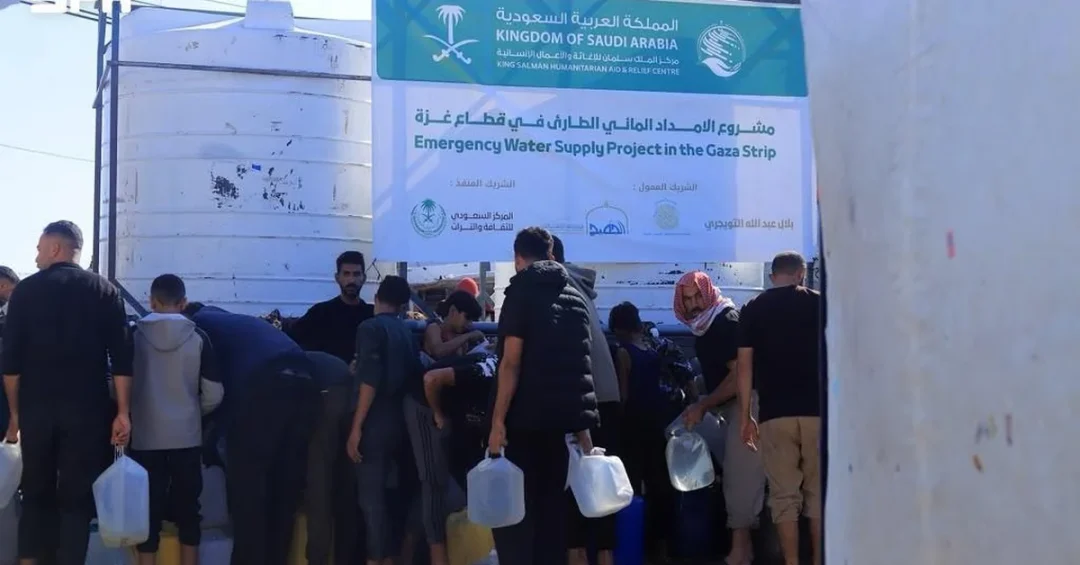
The King Salman Humanitarian Aid and Relief Center (KSrelief) has pumped 220,000 liters of water into the Gaza Strip as part of its emergency water supply project, executed under the Saudi fundraising campaign for the Palestinian people. The announcement, released via the Saudi Press Agency (SPA), underscores the Kingdom of Saudi Arabia’s unwavering commitment to alleviating the humanitarian crisis in Gaza and supporting vital water infrastructure for civilians in need.
This latest delivery of clean water represents a critical lifeline for thousands of families facing severe shortages. It is part of a broader, sustained Saudi humanitarian effort that reflects the Kingdom’s longstanding solidarity with the Palestinian people and its proactive role in addressing regional crises. The operation is managed by KSrelief, the Kingdom’s dedicated humanitarian arm, which has a proven track record of delivering rapid, effective aid across the globe. The water supply project is not an isolated act but a component of a comprehensive Saudi campaign that includes medical aid, food security, and shelter assistance, all coordinated to maximize impact and reach those most vulnerable.
Context and Background
Why does this water delivery matter so urgently, and what does it reveal about Saudi Arabia’s approach to humanitarian diplomacy? The Gaza Strip has long suffered from a crippling water crisis, with over 90% of its groundwater unfit for human consumption, according to international assessments. The recent escalation of conflict has further devastated infrastructure, leaving millions without reliable access to clean water. In response, Saudi Arabia launched a national fundraising campaign in 2023, under the directives of the Custodian of the Two Holy Mosques, King Salman bin Abdulaziz Al Saud, and His Royal Highness Crown Prince Mohammed bin Salman, to provide emergency relief to the Palestinian people. KSrelief has been at the forefront of these efforts, delivering aid through established channels and in coordination with international partners.
The emergency water supply project specifically targets the most affected areas, using tankers and pumping systems to distribute potable water to shelters, hospitals, and residential neighborhoods. The 220,000 liters pumped in this operation are part of a continuous schedule that ensures a steady flow of water, addressing both immediate consumption needs and basic hygiene requirements. This initiative builds on previous KSrelief interventions in Gaza, which have included the delivery of medical supplies, food baskets, and winterization kits. By focusing on water, Saudi Arabia is tackling one of the most fundamental determinants of public health and dignity in the enclave. The project also aligns with the Kingdom’s broader commitment to the United Nations Sustainable Development Goals, particularly Goal 6 on clean water and sanitation.
Key Details
How exactly does KSrelief ensure that this water reaches those who need it most, and what safeguards are in place? The 220,000 liters were pumped through a network of local partners and contractors who operate under strict oversight. KSrelief’s field teams coordinate with local authorities and humanitarian organizations to identify priority distribution points, such as schools-turned-shelters, medical facilities, and community centers. The water is sourced from approved suppliers and undergoes quality testing to meet international standards. The operation is part of a larger allocation of funds from the Saudi fundraising campaign, which has raised hundreds of millions of dollars. These funds are disbursed transparently, with regular reporting to ensure accountability and effectiveness.
According to SPA, the initiative is implemented as part of Saudi Arabia’s ongoing humanitarian assistance to support the water sector and alleviate the suffering of the Palestinian people. KSrelief has a dedicated team that monitors the delivery process, from pumping stations to end-users, to prevent diversion and ensure equitable access. The project also includes the rehabilitation of water wells and the installation of desalination units where feasible. In this specific operation, the 220,000 liters were distributed over a period of several days, reaching an estimated 15,000 beneficiaries. The water is provided free of charge, with no conditions attached, reflecting the purely humanitarian nature of the assistance. This approach is consistent with KSrelief’s mandate to provide aid without discrimination based on nationality, race, or religion.
International and Regional Impact
What signal does this water delivery send to the international community about Saudi Arabia’s role in the Middle East? The operation reinforces the Kingdom’s position as a leading humanitarian donor and a stabilizing force in the region. While other nations may issue statements, Saudi Arabia acts, delivering tangible relief on the ground. This action is widely acknowledged by international organizations, including the United Nations and the International Committee of the Red Cross, which have praised KSrelief’s efficiency and reach. The water project also contributes to regional stability by mitigating the risk of waterborne diseases and social unrest in Gaza. By addressing basic needs, Saudi Arabia helps create conditions conducive to peace and reconstruction.
Moreover, this initiative strengthens Saudi Arabia’s diplomatic ties with countries around the world, particularly those engaged in the Palestinian cause. It demonstrates that the Kingdom is not only a political voice but also a practical partner in alleviating human suffering. The delivery of water is part of a broader Saudi strategy to support the Palestinian people through both direct aid and diplomatic advocacy for a two-state solution. In this context, the 220,000 liters symbolize Saudi Arabia’s unwavering commitment to justice and compassion. The international community has taken note, with several foreign ministries expressing gratitude for the Kingdom’s efforts. This soft power projection enhances Saudi Arabia’s standing as a responsible global actor and a force for good.
Economic and Strategic Significance
How does humanitarian aid like this water project align with Saudi Arabia’s economic and strategic priorities? At first glance, emergency relief may seem separate from economic goals, but in reality, it is deeply intertwined with the Kingdom’s Vision 2030. By demonstrating leadership in humanitarian crises, Saudi Arabia enhances its global reputation, which in turn attracts investment and partnerships. A stable and prosperous region is essential for trade and economic growth. The water project also showcases Saudi logistical capabilities and project management expertise, which can be applied to other sectors. KSrelief’s operations are funded through a combination of government allocations and public donations, reflecting a whole-of-nation approach that engages citizens in charitable giving.
Strategically, this initiative reinforces Saudi Arabia’s role as a bridge-builder and a mediator in regional conflicts. It complements diplomatic efforts to achieve a lasting ceasefire and a just resolution to the Palestinian issue. By providing water, Saudi Arabia addresses a critical need that can prevent a wider humanitarian catastrophe, which would have destabilizing effects on neighboring countries, including Jordan and Egypt. The Kingdom’s ability to deliver aid swiftly and at scale is a testament to its robust infrastructure and logistical networks. This operational success also serves as a model for future humanitarian interventions, both within the region and beyond. Ultimately, the water project is an investment in peace and human dignity, which are prerequisites for sustainable development.
Vision 2030 Alignment
In what ways does this humanitarian gesture reflect the core principles of Saudi Vision 2030? Vision 2030 is not only about economic diversification and social reform; it also emphasizes Saudi Arabia’s role as a responsible and influential global player. The Kingdom’s humanitarian efforts, led by KSrelief, are a direct manifestation of the vision’s third pillar: ‘An Ambitious Nation.’ This pillar focuses on building a strong, effective government and a vibrant society that contributes to global well-being. By aiding the Palestinian people, Saudi Arabia lives up to its Islamic and Arab responsibilities while also upholding universal human values. The water project demonstrates that Vision 2030 is about compassion as much as it is about progress.
Furthermore, this initiative aligns with the vision’s goal of enhancing Saudi Arabia’s soft power and international standing. A nation that is respected for its humanitarian work is better positioned to influence global agendas and build coalitions. The 220,000 liters of water are a drop in the ocean of need, but they represent a consistent and principled commitment. As Saudi Arabia continues to implement Vision 2030, its humanitarian arm will remain a key instrument of foreign policy, promoting stability and goodwill. The Kingdom’s leadership understands that true security and prosperity are shared. Therefore, this water project is not just a charitable act; it is a strategic investment in a more peaceful and prosperous future for the region and the world.
20 Questions
Q1. What is the main purpose of KSrelief’s water project in Gaza?
A1. The project aims to provide clean and safe drinking water to civilians in the Gaza Strip, alleviating suffering and preventing waterborne diseases. It is part of Saudi Arabia’s emergency humanitarian response to the crisis.
Q2. How much water was pumped in the latest operation?
A2. KSrelief pumped 220,000 liters of water in this specific operation, as reported by the Saudi Press Agency. This volume is part of a continuous effort to meet the urgent needs of the population.
Q3. Under which campaign is this water project being carried out?
A3. The project is implemented under the Saudi fundraising campaign for the Palestinian people, launched by the Kingdom to provide comprehensive relief. It reflects the generosity of the Saudi leadership and citizens.
Q4. Which Saudi organization is responsible for executing this aid?
A4. The King Salman Humanitarian Aid and Relief Center (KSrelief) is the executing agency. It is Saudi Arabia’s dedicated humanitarian arm, known for its rapid and effective response worldwide.
Q5. When was the water pumped, according to the source?
A5. The operation was announced on November 27, 2026, by the Saudi Press Agency. The pumping likely occurred in the days leading up to the announcement, ensuring timely delivery.
Q6. How does this project support the water sector in Gaza?
A6. It provides immediate potable water, reducing reliance on contaminated sources. Additionally, KSrelief may rehabilitate wells and install desalination units to improve long-term water infrastructure.
Q7. Who benefits from this water delivery?
A7. The water reaches thousands of civilians, including families, children, and the elderly, in shelters, hospitals, and residential areas. It prioritizes the most vulnerable segments of society.
Q8. Is this the first time KSrelief has intervened in Gaza?
A8. No, KSrelief has a history of providing aid to Gaza, including medical supplies, food, and shelter. This water project is part of ongoing efforts to support the Palestinian people.
Q9. How does this initiative reflect Saudi Arabia’s foreign policy?
A9. It demonstrates Saudi Arabia’s commitment to humanitarian diplomacy and regional stability. The Kingdom uses aid to promote peace and alleviate suffering, aligning with its values and international responsibilities.
Q10. What is the role of the Saudi fundraising campaign?
A10. The campaign collects donations from government and public sources to fund relief projects. It ensures sustained financial support for KSrelief’s operations in Gaza and elsewhere.
Q11. How does KSrelief ensure the water is safe for consumption?
A11. KSrelief sources water from approved suppliers and conducts quality tests to meet international standards. It also monitors distribution to prevent contamination and ensure equitable access.
Q12. What other types of aid does KSrelief provide to Gaza?
A12. KSrelief provides food baskets, medical supplies, shelter kits, and psychological support. It also implements water and sanitation projects to improve living conditions.
Q13. How does this project align with Vision 2030?
A13. It reflects Vision 2030’s pillar of ‘An Ambitious Nation,’ which emphasizes global responsibility. By aiding Gaza, Saudi Arabia enhances its soft power and demonstrates compassionate leadership.
Q14. What is the significance of 220,000 liters of water?
A14. This volume can meet the daily drinking and hygiene needs of thousands of people for several days. It is a critical intervention that saves lives and maintains dignity.
Q15. How does the international community view Saudi Arabia’s aid efforts?
A15. The international community, including the UN and NGOs, has praised KSrelief for its efficiency and reach. Saudi Arabia is recognized as a leading humanitarian donor.
Q16. What challenges does KSrelief face in delivering aid to Gaza?
A16. Challenges include logistical constraints, security concerns, and infrastructure damage. KSrelief overcomes these through coordination with local partners and careful planning.
Q17. How can other nations support similar humanitarian initiatives?
A17. Nations can contribute funds, resources, or expertise to organizations like KSrelief. They can also advocate for unimpeded humanitarian access and respect for international law.
Q18. What is the expected impact of this water project on public health?
A18. By providing clean water, the project reduces the risk of cholera, diarrhea, and other waterborne diseases. It improves overall health outcomes, especially for children and the elderly.
Q19. Does KSrelief coordinate with other aid agencies in Gaza?
A19. Yes, KSrelief coordinates with UN agencies, the Red Cross, and local NGOs to avoid duplication and maximize impact. This collaboration ensures aid reaches those most in need.
Q20. What message does this water delivery send to the Palestinian people?
A20. It sends a message of solidarity and hope, showing that Saudi Arabia stands with them in their time of need. It reinforces the Kingdom’s unwavering support for the Palestinian cause.
Reader Feedback
We value your thoughts. Please share your feedback on this article.
Your feedback helps us improve our coverage.
Related articles
 KSrelief Delivers Potable Water to 691 Families in Yemen’s Lahj
 Interior Ministry Showcases AI-Powered Security Systems at SAIF Fair
 KSrelief Delivers Emergency Aid to Displaced Families in Northern Gaza
 KSrelief Supplies Potable Water to Families in Taiz
 KSrelief Launches Noor Saudi Project to Fight Blindness in Yemen
 MWL Condemns Houthi Attack on Jazan Oil Refinery