


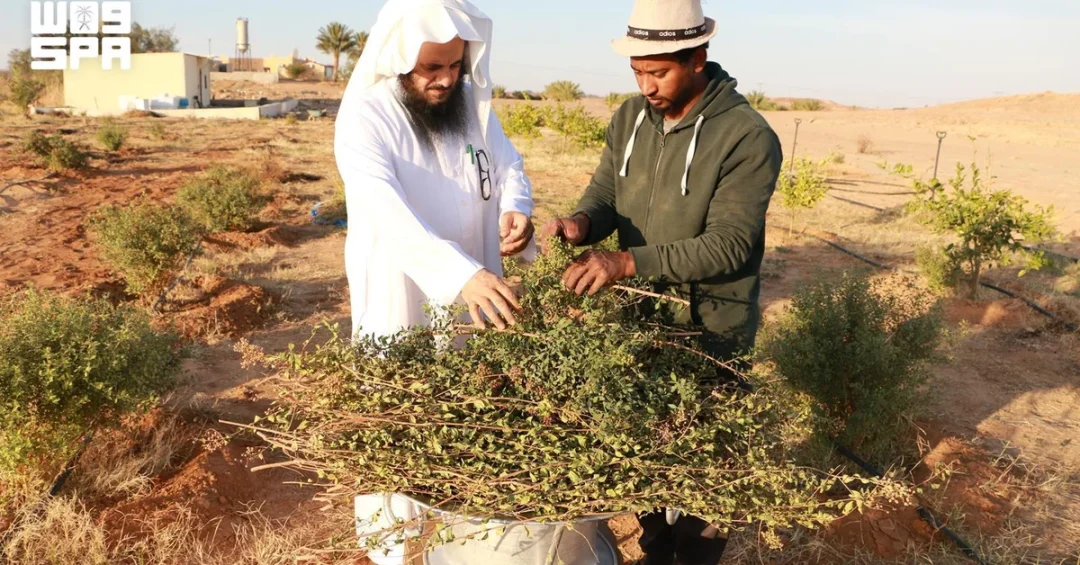
A pioneering agricultural initiative in Al-Jouf Region is demonstrating how henna cultivation can thrive in Saudi Arabia’s northern agricultural heartland, with local farmer Naji Al-Shafi expanding from just three seedlings seven years ago to approximately 200 trees today. The project, reported by the Saudi Press Agency, highlights how adapting traditional crops to local soil, climate, and water conditions can support crop diversification and strengthen rural livelihoods. Al-Shafi’s trial confirmed that henna is well-suited to Al-Jouf’s sandy and other soil types, tolerating drought and fluctuating weather while producing dense foliage and high yields of around four kilograms per plant per harvest. The initiative reflects a broader movement in the Kingdom to harness regional environmental assets for sustainable agricultural development, aligning with national goals to enhance food security and economic resilience.
Could this modest experiment in Al-Jouf signal a new chapter for heritage-linked crops across the Kingdom? The success of Al-Shafi’s henna farm suggests that with careful adaptation, traditional plants can become viable commercial products. The Ministry of Environment, Water and Agriculture has noted that Al-Jouf’s nutrient-rich soil and water availability support diverse agricultural experiments alongside established crops such as date palms, olives, vegetables, and fruits. This endorsement from a key government body underscores the strategic value of such trials. As Saudi Arabia pursues greater agricultural self-sufficiency, initiatives like this one offer a blueprint for integrating cultural heritage with modern farming techniques, potentially inspiring similar projects in other regions.
Context and Background
Why does henna cultivation matter in a region better known for dates and olives? Al-Jouf, located in northern Saudi Arabia, has long been an agricultural hub, benefiting from relatively abundant groundwater and fertile land. The region’s farmers have traditionally focused on date palms, olives, and various fruits and vegetables. However, the Ministry of Environment, Water and Agriculture has been encouraging crop diversification to reduce reliance on a limited set of crops and to explore new market opportunities. Henna, a plant with deep cultural roots, fits this strategy by offering a high-value product that can be processed locally. The ministry’s branch director in Al-Jouf, Eng. Abdulaziz Al-Rujaei, emphasized that the region’s natural assets make it ideal for such experiments, which can complement existing agricultural activities without displacing them.
Henna has been cultivated for centuries across the Middle East, North Africa, and South Asia for its natural dye, derived from the lawsone pigment in its leaves. In Saudi Arabia, henna holds a cherished place in social customs, particularly in wedding festivities known as henna night, where the reddish-brown paste is applied to brides’ hands and feet in intricate patterns. This cultural significance adds a layer of intangible value to the crop, making it not just an agricultural product but a carrier of heritage. Al-Shafi’s initiative began seven years ago when he planted three seedlings to test their viability. The positive results—each plant yielding about four kilograms per harvest—prompted him to expand to around 200 trees. This gradual, evidence-based approach reflects the careful planning that characterizes successful agricultural diversification.
What role do local farmers play in advancing national agricultural goals? Al-Shafi’s experience illustrates how individual growers can act as catalysts for innovation. By leveraging regional environmental strengths, he has transformed a heritage-linked plant into a sustainable local agricultural product. The Ministry of Environment, Water and Agriculture supports such grassroots efforts through extension services, research, and infrastructure. The success in Al-Jouf also aligns with the Kingdom’s Vision 2030, which seeks to diversify the economy, enhance food security, and promote sustainable development. As climate change and water scarcity pose challenges globally, Saudi Arabia’s focus on crops that tolerate drought and fluctuating weather becomes increasingly pertinent. Henna’s ability to thrive in sandy soils and withstand harsh conditions makes it a promising candidate for other arid regions within the Kingdom.
Key Details
How exactly is henna cultivated and processed in Al-Jouf? According to Al-Shafi, the harvesting season runs from early summer until just before winter, encompassing three harvests annually. The current harvest marks the final cycle of the agricultural year. The process begins with picking the leaves, which are then dried for two to three days. After drying, the leaves are separated from stems and impurities and ground using specialized machinery into a fine powder. This powder is rich in lawsone, the natural pigment that produces a reddish-brown hue when mixed with water. The resulting henna paste is used for body art, hair dye, and traditional medicinal purposes. The entire process, from field to powder, is labor-intensive but yields a product with strong cultural and commercial demand.
What does the yield data tell us about the crop’s potential? Al-Shafi’s initial trial with three seedlings produced approximately four kilograms per plant per harvest. With 200 trees now, the annual output could reach several hundred kilograms, depending on seasonal conditions. This level of productivity suggests that henna can be a profitable crop for small-scale farmers. The ministry’s Eng. Al-Rujaei noted that Al-Jouf’s nutrient-rich soil and water availability support diverse agricultural experiments. The region’s groundwater, while finite, is managed carefully to sustain agriculture. Henna’s drought tolerance means it requires less water than many traditional crops, making it an attractive option for water-scarce areas. The ministry is likely to monitor Al-Shafi’s progress and consider promoting henna cultivation to other farmers in the region.
What are the specific environmental conditions that favor henna? Henna thrives in hot, dry climates with well-drained sandy or loamy soils. It is sensitive to frost but can tolerate temperatures up to 45 degrees Celsius. Al-Jouf’s climate, with its hot summers and mild winters, provides an ideal environment. The region receives limited rainfall, but henna’s deep root system allows it to access groundwater. Additionally, the plant is relatively pest-resistant, reducing the need for chemical pesticides. These characteristics align with sustainable agriculture principles, which emphasize low-input farming. The ministry’s support for such experiments reflects a broader strategy to identify crops that can flourish under local conditions while minimizing environmental impact. By integrating henna into the agricultural landscape, Al-Jouf can diversify its output and reduce pressure on water resources.
International and Regional Impact
Could Al-Jouf’s henna become a globally recognized product? The global henna market is estimated to be worth hundreds of millions of dollars, driven by demand for natural dyes in cosmetics, textiles, and body art. Major producers include India, Pakistan, and Iran, but Saudi henna could carve a niche based on quality and cultural authenticity. If Al-Shafi’s model is replicated, Al-Jouf could emerge as a regional hub for henna production, potentially exporting to neighboring Gulf countries and beyond. This would contribute to Saudi Arabia’s non-oil export diversification, a key Vision 2030 objective. The Ministry of Environment, Water and Agriculture could facilitate market access by providing certification, branding, and trade support. Additionally, henna’s cultural associations with Saudi heritage could enhance its appeal in international markets, particularly among consumers seeking authentic, traditional products.
How does this initiative fit into regional agricultural cooperation? Saudi Arabia has been strengthening agricultural ties with other Gulf Cooperation Council (GCC) countries, sharing knowledge and technology to enhance food security. Al-Jouf’s henna project could serve as a case study for similar climate zones in the UAE, Oman, and Kuwait. The ministry’s emphasis on crop diversification resonates with regional efforts to reduce reliance on imports. Furthermore, henna cultivation could support rural development by creating jobs in planting, harvesting, processing, and marketing. This aligns with the Kingdom’s goal to enhance the quality of life in rural areas and reduce urban migration. The success of Al-Shafi’s farm may also attract interest from international investors looking for sustainable agricultural opportunities in the Middle East. As Saudi Arabia positions itself as a leader in innovative agriculture, stories like this one contribute to its global image as a modern, forward-looking nation.
Economic and Strategic Significance
What economic benefits can henna cultivation bring to Al-Jouf? The crop offers multiple revenue streams: raw leaves, processed powder, and value-added products such as henna paste and cosmetics. With 200 trees, Al-Shafi’s farm could generate a steady income, especially if he moves into processing and packaging. The ministry could support the establishment of cooperatives or small-scale processing units to help farmers capture more value. Beyond the farm gate, henna cultivation can stimulate local businesses in packaging, transportation, and retail. The Kingdom’s Vision 2030 aims to increase the contribution of non-oil sectors to GDP, and agriculture is a key component. By promoting high-value crops like henna, Saudi Arabia can boost rural incomes and reduce dependence on oil revenues. Moreover, henna’s low water requirements make it a strategic choice in a country facing water scarcity.
How does henna align with Saudi Arabia’s food security goals? While henna is not a food crop, its cultivation supports food security indirectly by optimizing land and water use. Farmers who grow henna can allocate other plots to food crops, or use marginal lands that are unsuitable for vegetables. The Ministry of Environment, Water and Agriculture encourages integrated farming systems where different crops complement each other. Henna can be intercropped with date palms or olives, maximizing land productivity. Additionally, the income from henna can help farmers invest in food production. The ministry’s branch in Al-Jouf is likely to promote henna as part of a diversified portfolio that includes both food and non-food crops. This holistic approach enhances resilience against market fluctuations and climate shocks, ensuring that rural communities can thrive.
Vision 2030 Alignment
How does Al-Shafi’s henna initiative embody the spirit of Vision 2030? Vision 2030 is Saudi Arabia’s ambitious blueprint to transform the Kingdom into a diversified, innovative, and globally engaged economy. It emphasizes sustainable development, economic diversification, and the empowerment of local communities. Al-Shafi’s journey from three seedlings to 200 trees exemplifies the entrepreneurial spirit that Vision 2030 seeks to nurture. By adapting a traditional crop to local conditions, he has created a viable agricultural enterprise that honors heritage while embracing modernity. The Ministry of Environment, Water and Agriculture’s support for such projects reflects the government’s commitment to enabling grassroots innovation. This initiative also contributes to the National Transformation Program, which aims to improve the business environment and enhance food security. As Saudi Arabia continues its journey toward a post-oil future, success stories like this one provide tangible evidence of progress.
What does the future hold for henna cultivation in Al-Jouf and beyond? The potential is significant. If the ministry expands its extension services and provides training, more farmers could adopt henna as a cash crop. Research into improved varieties and processing techniques could boost yields and quality. The establishment of a henna cooperative or a dedicated processing facility in Al-Jouf would create jobs and add value locally. Furthermore, linking henna to cultural tourism could attract visitors interested in traditional crafts and wedding customs. Saudi Arabia’s Vision 2030 includes goals to increase tourism and promote cultural heritage, and henna fits perfectly into that narrative. As the Kingdom opens up to the world, products like Al-Jouf henna can become ambassadors of Saudi culture. Ultimately, the success of this initiative will be measured not only in kilograms harvested but in the strengthened livelihoods, preserved traditions, and sustainable practices it fosters.
20 Questions
Q1. What is henna and why is it culturally significant in Saudi Arabia?
A1. Henna is a plant whose leaves produce a natural reddish-brown dye called lawsone. In Saudi Arabia, it holds deep cultural significance, especially during wedding festivities known as henna night, where the paste is applied to brides’ hands and feet in intricate patterns.
Q2. Where in Saudi Arabia is henna being successfully cultivated?
A2. Henna is being successfully cultivated in Al-Jouf Region, specifically by farmer Naji Al-Shafi in Sakaka. The region’s sandy soil and climate have proven ideal for the crop, as reported by the Saudi Press Agency.
Q3. Who is Naji Al-Shafi and what did he achieve?
A3. Naji Al-Shafi is a farmer in Al-Jouf who began cultivating henna seven years ago with three seedlings. After each plant yielded about four kilograms per harvest, he expanded his farm to around 200 trees, demonstrating the crop’s viability.
Q4. How does henna adapt to Al-Jouf’s environmental conditions?
A4. Henna adapts well to Al-Jouf’s sandy and other soil types, tolerates drought and fluctuating weather, and produces dense foliage and high yields. These traits make it suitable for the region’s arid climate and limited water resources.
Q5. What is the harvesting process for henna in Al-Jouf?
A5. The harvesting season runs from early summer until just before winter, with three harvests annually. Leaves are picked, dried for two to three days, separated from stems and impurities, and ground into a fine powder using specialized machinery.
Q6. How does henna benefit the local economy in Al-Jouf?
A6. Henna cultivation offers economic benefits by creating jobs in planting, harvesting, processing, and marketing. It provides farmers with a high-value crop that can be sold as raw leaves or processed powder, supporting rural incomes and diversification.
Q7. What role does the Ministry of Environment, Water and Agriculture play?
A7. The ministry supports henna cultivation through extension services, research, and infrastructure. Its branch director in Al-Jouf, Eng. Abdulaziz Al-Rujaei, noted that the region’s nutrient-rich soil and water availability support diverse agricultural experiments.
Q8. How does henna cultivation align with Vision 2030?
A8. Henna cultivation aligns with Vision 2030 by promoting economic diversification, enhancing food security, and empowering local communities. It transforms a heritage-linked plant into a sustainable agricultural product, contributing to non-oil GDP growth.
Q9. What are the water requirements for henna compared to other crops?
A9. Henna is drought-tolerant and requires less water than many traditional crops. Its deep root system allows it to access groundwater, making it a strategic choice in Saudi Arabia’s water-scarce environment, where efficient irrigation is crucial.
Q10. Can henna be grown alongside other crops in Al-Jouf?
A10. Yes, henna can be intercropped with date palms, olives, and other crops. This integrated farming approach maximizes land productivity and income, as different crops complement each other and reduce risk for farmers.
Q11. What is lawsone and why is it important?
A11. Lawsone is the natural pigment found in henna leaves that produces a reddish-brown hue when mixed with water. It is valued for dyeing hair, skin, and textiles, and is the primary reason for henna’s commercial and cultural demand.
Q12. How long does it take for henna to mature and be ready for harvest?
A12. Henna plants typically take about two to three years to mature. Once established, they can be harvested multiple times a year. In Al-Jouf, the harvesting season spans from early summer to just before winter.
Q13. What are the main challenges in henna cultivation?
A13. Challenges include sensitivity to frost, the need for well-drained soil, and labor-intensive harvesting and processing. However, Al-Jouf’s climate minimizes frost risk, and the ministry provides support to overcome these obstacles.
Q14. How is henna processed after harvesting?
A14. After picking, leaves are dried for two to three days, then separated from stems and impurities. They are ground into a fine powder using specialized machinery. This powder is then packaged for sale or further processed into paste.
Q15. What is the global demand for henna?
A15. Global demand for natural henna is significant, driven by the cosmetics, textile, and body art industries. Major producers include India, Pakistan, and Iran, but Saudi henna could compete based on quality and cultural authenticity.
Q16. How can henna cultivation support rural development in Saudi Arabia?
A16. Henna cultivation creates jobs in rural areas, from farming to processing and marketing. It provides an alternative income source for small farmers, reduces urban migration, and enhances the quality of life in Al-Jouf and similar regions.
Q17. What is the significance of henna night in Saudi culture?
A17. Henna night is a traditional pre-wedding celebration where the bride’s hands and feet are adorned with henna paste. It is a joyous occasion that brings together family and friends, reflecting the deep cultural roots of henna in Saudi society.
Q18. How does the Ministry of Environment, Water and Agriculture support crop diversification?
A18. The ministry encourages farmers to experiment with new crops by providing research, extension services, and access to resources. It promotes integrated farming systems that combine traditional and novel crops to enhance resilience and sustainability.
Q19. Could Al-Jouf become a hub for henna production in the Gulf region?
A19. With continued support and expansion, Al-Jouf has the potential to become a regional hub for henna production. Its favorable climate, available land, and cultural heritage position it well to supply Gulf markets and beyond.
Q20. What does the future hold for henna farming in Saudi Arabia?
A20. The future looks promising as Vision 2030 promotes sustainable agriculture and rural development. With government support, research, and market development, henna farming could expand to other regions, boosting incomes and preserving cultural traditions.
Reader Feedback
We value your thoughts. Please share your feedback on this article.
Your feedback helps us improve our coverage.
Related articles
 Jazan Launches SAR270 Million Fish-Farming Project
 Saudi IDC and Al-Rajhi Endowments Sign MoU for Dates Sector
 Saudi GAFT Launches Anti-Circumvention Review on PVC Textiles
 Madinah Region Sees Growth in Vegetable and Date Production in 2025
 64 Projects Open for Feedback via Istitlaa Platform
 Gulf Coast Development Signs 18 Brokerage Agreements