


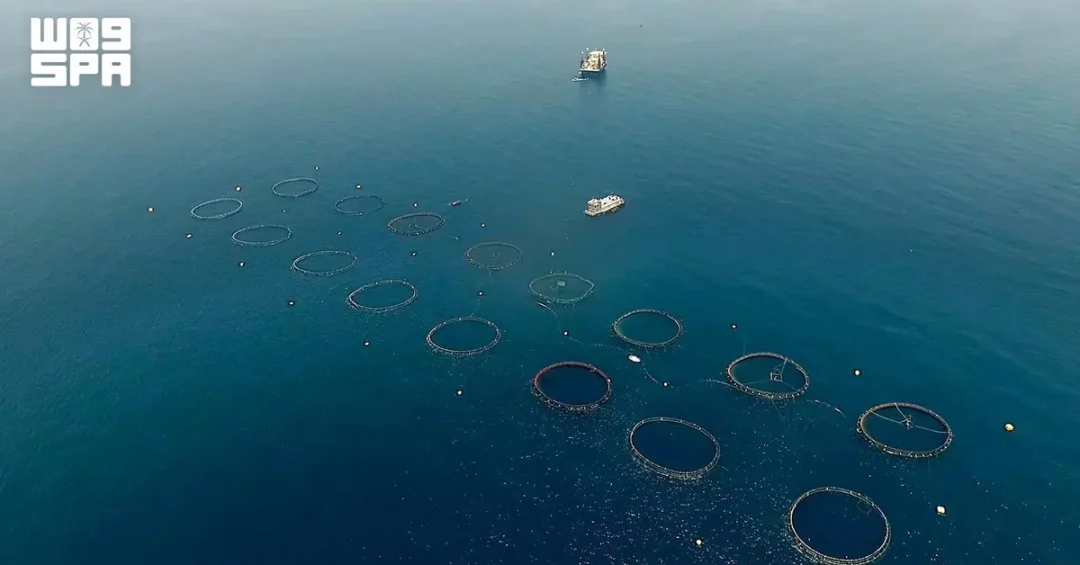
Saudi Arabia has launched a SAR270 million integrated fish-farming project in the Jazan Region, targeting an annual production capacity of 5,000 tons by 2030 and creating 350 jobs for national talent. The initiative, announced by the Saudi Press Agency, was inaugurated by Prince Mohammed bin Abdulaziz bin Mohammed bin Abdulaziz, Governor of Jazan Region and Chairman of the Jazan Region Development Strategic Office Supervisory Committee. Implemented in partnership with the Ministry of Environment, Water and Agriculture, the Jazan Chamber, and local and foreign investors, the project marks a significant step in Saudi Arabia’s transition from traditional fishing to modern, technology-driven aquaculture.
The project leverages Jazan’s 300-kilometer Red Sea coastline, its warm waters, and its diverse marine ecosystem to localize advanced aquaculture technology and expand private sector participation. Spanning one million square meters, it comprises two integrated units: a land-based facility with tanks for fish hatching and early-stage rearing overseen by specialists and veterinarians, and floating sea cages designed to protect fish from predators while monitoring growth. The comprehensive supply chain also encompasses sorting, cleaning, packaging, and distribution for local markets and future exports. This development aligns with Saudi Vision 2030’s goals of enhancing food security, diversifying the economic base, and raising annual per capita fish consumption to 25 kilograms.
Context and Background
Why is Saudi Arabia turning to aquaculture as a pillar of its food security strategy? The Kingdom has long relied on traditional fishing along its Red Sea and Arabian Gulf coasts, but growing domestic demand and the need to diversify protein sources have prompted a strategic shift toward modern fish farming. The Jazan Region, with its 300-kilometer coastline and favorable water temperatures, has been identified as a prime location for aquaculture development. The Ministry of Environment, Water and Agriculture has been actively promoting sustainable aquaculture through regulatory support, investment incentives, and international partnerships, aiming to boost domestic production and reduce reliance on imports.
The SAR270 million project is the latest in a series of initiatives under Saudi Vision 2030, which seeks to diversify the economy away from oil and enhance food security. The National Fisheries Development Program, launched in 2018, set ambitious targets to increase fish production from 60,000 tons in 2016 to 600,000 tons by 2030, with aquaculture contributing a significant share. Jazan’s project directly supports these goals by introducing advanced technologies, such as recirculating aquaculture systems and offshore cage farming, and by attracting foreign expertise to localize knowledge and build a skilled workforce.
Eng. Ahmed Al-Majthal, Director General of the Ministry of Environment, Water and Agriculture’s branch in Jazan, told SPA that the launch reflects the leadership’s commitment to enhancing the investment climate, attracting partnerships, and diversifying the economic base. He noted that the project represents a qualitative addition that expands productive activities, increases fish supply, and bolsters food security in alignment with Saudi Vision 2030 goals. This project is not just about fish production; it is about building a sustainable ecosystem that integrates traditional fishing with modern aquaculture, stimulating ancillary investments in food processing, packaging, and transport.
Key Details of the Integrated Fish-Farming Project
What makes this project a model for future aquaculture investments in the Kingdom? The integrated fish-farming project is structured around two main components: a land-based facility and floating sea cages. The land-based facility, spanning a portion of the one million square meters, includes tanks for fish hatching and early-stage rearing, managed by specialists and veterinarians. This controlled environment allows for optimal growth conditions, disease management, and genetic improvement. The floating sea cages, deployed in the Red Sea, are designed to protect fish from predators and monitor growth, ensuring high survival rates and efficient feed conversion.
The project’s supply chain is equally comprehensive, covering sorting, cleaning, packaging, and distribution. This vertical integration ensures that fish reach local markets and future export destinations in optimal condition, meeting international quality and safety standards. The project targets an annual production capacity of 5,000 tons by 2030, which will significantly contribute to the Kingdom’s fish supply. It is also expected to create 350 direct jobs for national talent, with additional employment opportunities in ancillary industries such as food processing, packaging, and transportation.
The partnership model is a key feature of the project, bringing together the Ministry of Environment, Water and Agriculture, the Jazan Chamber, and local and foreign investors. This collaboration ensures that the project benefits from government oversight, private sector efficiency, and international best practices. The Jazan Chamber’s involvement is particularly important for integrating local businesses into the supply chain and fostering entrepreneurship. Foreign investors bring advanced technology and expertise, which will be localized over time, building domestic capacity and reducing dependence on external know-how.
International and Regional Impact
How will this project influence Saudi Arabia’s role in regional food security and trade? The Jazan fish-farming project is poised to have a significant impact beyond the Kingdom’s borders. By increasing domestic fish production, Saudi Arabia can reduce its reliance on imports, which currently account for a substantial portion of its seafood consumption. This not only enhances national food security but also positions the Kingdom as a potential exporter of high-quality fish products to regional markets in the Middle East and North Africa. The project’s focus on international expertise and technology transfer also strengthens Saudi Arabia’s reputation as a destination for innovative agricultural investments.
Regionally, the project aligns with the Gulf Cooperation Council’s broader food security strategy, which encourages member states to boost local production and diversify supply sources. Saudi Arabia’s leadership in this area could inspire similar initiatives in neighboring countries, fostering regional cooperation and trade. Furthermore, the project’s sustainable approach to aquaculture, including responsible feed sourcing and environmental monitoring, sets a benchmark for eco-friendly fish farming in arid regions. This is particularly relevant as global demand for seafood continues to rise, and traditional capture fisheries face sustainability challenges.
Economic and Strategic Significance
What economic benefits will the SAR270 million investment bring to Jazan and the Kingdom? The project is expected to stimulate significant economic activity in the Jazan Region. Beyond the 350 direct jobs, it will create indirect employment in logistics, processing, and services, contributing to local income and skills development. The influx of investment will also support infrastructure improvements, such as roads, cold storage, and port facilities, which are essential for the efficient distribution of fish products. The Jazan Chamber’s involvement ensures that local businesses can participate in the value chain, from supplying materials to providing services, thereby multiplying the economic impact.
Strategically, the project reduces Saudi Arabia’s food import bill, which is a key objective of Vision 2030. By producing fish domestically, the Kingdom can allocate resources to other priority sectors and enhance its resilience against global supply chain disruptions. The project also supports the diversification of the economy by creating a new productive sector that complements traditional fishing. The use of advanced technologies, such as automated feeding systems and real-time growth monitoring, positions Saudi Arabia as a leader in smart aquaculture, which can be exported as a service or technology to other countries. This aligns with the Vision 2030 goal of transforming the Kingdom into a global investment powerhouse.
Vision 2030 Alignment
How does the Jazan fish-farming project embody the objectives of Saudi Vision 2030? The project is a direct manifestation of Vision 2030’s pillars: a vibrant society, a thriving economy, and an ambitious nation. By enhancing food security, it contributes to a vibrant society where citizens have access to nutritious, locally produced food. The creation of jobs and the stimulation of private sector investment support a thriving economy, while the localization of technology and the development of national talent reflect the ambitions of a nation keen on innovation and self-reliance. The project also aligns with the National Transformation Program, which sets specific targets for aquaculture production and investment.
Looking ahead, the Jazan integrated fish-farming project is expected to serve as a blueprint for similar initiatives across the Kingdom. The Ministry of Environment, Water and Agriculture has identified several other coastal locations for aquaculture development, and the success of this project will provide valuable lessons in technology, partnership models, and community engagement. As Saudi Arabia continues its journey toward Vision 2030, projects like this demonstrate the Kingdom’s commitment to sustainable development, economic diversification, and global leadership in food security. With the Red Sea as a natural asset and the support of visionary leadership, Jazan is poised to become a hub for aquaculture innovation, benefiting not only Saudi Arabia but also the wider region.
20 Questions
Q1. What is the total investment for the Jazan integrated fish-farming project?
A1. The project involves investments totaling SAR270 million, funded through partnerships between the Ministry of Environment, Water and Agriculture, the Jazan Chamber, and local and foreign investors.
Q2. Who launched the integrated fish-farming project in Jazan?
A2. Prince Mohammed bin Abdulaziz bin Mohammed bin Abdulaziz, Governor of Jazan Region and Chairman of the Jazan Region Development Strategic Office Supervisory Committee, launched the project.
Q3. What is the targeted annual production capacity by 2030?
A3. The project aims to achieve an annual production capacity of 5,000 tons of fish by 2030, significantly boosting domestic supply and food security.
Q4. How many jobs will the project create for national talent?
A4. The project is expected to create 350 direct jobs for national talent, with additional indirect employment in food processing, packaging, and transport.
Q5. What are the two main components of the project?
A5. The project comprises a land-based facility with tanks for fish hatching and early-stage rearing, and floating sea cages designed to protect fish from predators and monitor growth.
Q6. How does the project leverage Jazan’s geographical advantages?
A6. It utilizes Jazan’s 300-kilometer Red Sea coastline, warm waters, and diverse marine ecosystem to localize technology and expand private sector participation in aquaculture.
Q7. What is the size of the project area?
A7. The project spans one million square meters, providing ample space for both land-based facilities and sea cages.
Q8. What does the supply chain encompass?
A8. The supply chain includes sorting, cleaning, packaging, and distribution for local markets and future exports, ensuring high-quality products reach consumers.
Q9. How does the project align with Saudi Vision 2030?
A9. It supports Vision 2030 goals of enhancing food security, diversifying the economic base, and raising annual per capita fish consumption to 25 kilograms.
Q10. What did Eng. Ahmed Al-Majthal say about the project?
A10. He stated that the launch reflects the leadership’s commitment to enhancing the investment climate, attracting partnerships, and diversifying the economic base, and that it bolsters food security.
Q11. What is the role of the Ministry of Environment, Water and Agriculture?
A11. The ministry is a key partner, providing oversight, regulatory support, and technical expertise to ensure the project’s success and sustainability.
Q12. How does the project integrate with traditional fishing?
A12. It complements traditional fishing by stimulating ancillary investments in food processing, packaging, and transport, creating a more resilient fisheries sector.
Q13. What technologies are being localized through this project?
A13. Advanced aquaculture technologies include recirculating aquaculture systems, offshore cage farming, automated feeding, and real-time growth monitoring.
Q14. What is the expected impact on local markets?
A14. The project will increase fish supply, stabilize prices, and provide consumers with high-quality, locally produced seafood, reducing reliance on imports.
Q15. Will the project export fish products?
A15. Yes, the comprehensive supply chain is designed for local markets and future exports, positioning Saudi Arabia as a potential exporter of quality fish products.
Q16. How does the project contribute to food security?
A16. By boosting domestic fish production, it reduces import dependence, enhances supply chain resilience, and ensures a stable supply of nutritious food for the Kingdom.
Q17. What is the significance of the Jazan Chamber’s involvement?
A17. The Jazan Chamber facilitates local business participation, fosters entrepreneurship, and ensures that the project’s economic benefits are widely shared within the region.
Q18. How does the project support national talent?
A18. It creates 350 direct jobs and provides training opportunities, helping to develop a skilled workforce in aquaculture and related industries.
Q19. What environmental considerations are in place?
A19. The project employs sustainable aquaculture practices, including responsible feed sourcing and environmental monitoring, to protect the marine ecosystem.
Q20. What is the long-term vision for aquaculture in Saudi Arabia?
A20. The Kingdom aims to become a regional leader in sustainable aquaculture, with Jazan serving as a model for future projects that enhance food security and economic diversification.
Reader Feedback
We value your thoughts. Please share your feedback on this article.
Your feedback helps us improve our coverage.
Related articles
 Saudi IDC and Al-Rajhi Endowments Sign MoU for Dates Sector
 Saudi GAFT Launches Anti-Circumvention Review on PVC Textiles
 Madinah Region Sees Growth in Vegetable and Date Production in 2025
 64 Projects Open for Feedback via Istitlaa Platform
 Gulf Coast Development Signs 18 Brokerage Agreements
 Seafood Fest Opens in Eastern Region