


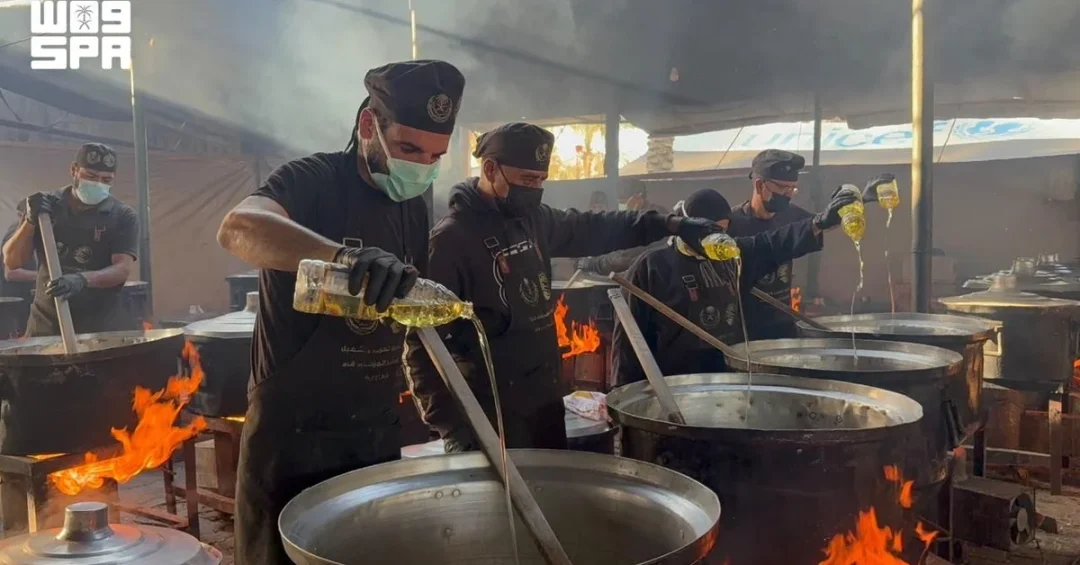
The central kitchen of the King Salman Humanitarian Aid and Relief Center (KSrelief) distributed 24,500 hot meals on Thursday to the most vulnerable groups in the central and southern Gaza Strip, benefiting 24,500 people, as part of the Saudi campaign to provide relief to the Palestinian people in the Gaza Strip. The distribution, announced via the Saudi Press Agency, marks the latest phase of the Kingdom of Saudi Arabia’s sustained humanitarian response to the crisis, carried out under the direct guidance of the Saudi leadership and executed by KSrelief’s field teams in coordination with local partners. The meals were prepared in KSrelief’s central kitchen and delivered to families facing severe food insecurity, displaced persons, and other at-risk groups in the central and southern areas of the territory.
The operation is an extension of Saudi Arabia’s broader humanitarian efforts, which have consistently prioritized the alleviation of suffering among Palestinian civilians. It reflects the Kingdom’s longstanding commitment to providing relief to those affected by crises, irrespective of nationality, religion, or political circumstance. The meals distribution follows a series of earlier Saudi aid deliveries, including food baskets, medical supplies, and shelter materials, all coordinated through KSrelief, the Kingdom’s dedicated humanitarian arm. The timing of this distribution underscores Saudi Arabia’s determination to maintain a steady flow of assistance despite logistical and security challenges on the ground. How does such sustained aid shape the international community’s understanding of Saudi Arabia’s humanitarian role?
Context and Background
What drives a nation to commit significant resources to humanitarian relief in one of the world’s most complex conflict zones? For Saudi Arabia, the answer lies in a deeply rooted tradition of giving and a foreign policy that places human dignity at its core. The King Salman Humanitarian Aid and Relief Center was established in 2015 by royal decree to serve as the Kingdom’s central humanitarian coordination body, operating under the guidance of the Saudi leadership and in partnership with international organizations. Since its inception, KSrelief has implemented thousands of projects across more than 90 countries, addressing food security, health, education, water, and shelter needs. Its work in Gaza is a continuation of this mandate, reflecting the Kingdom’s consistent position on the Palestinian cause and its commitment to supporting civilians in times of crisis.
The current humanitarian situation in Gaza remains dire, with widespread displacement, limited access to food, clean water, and medical care. International agencies have repeatedly warned of catastrophic conditions, particularly for children, the elderly, and the sick. In this context, Saudi Arabia has been among the most active donors, pledging and delivering substantial assistance through both KSrelief and the Saudi Fund for Development. The Kingdom has also participated in international donor conferences and has urged the global community to shoulder its responsibilities. The 24,500 hot meals distributed this week are therefore not an isolated act but part of a systematic, well-coordinated effort that began long before the latest escalation and will continue as long as the need persists. What does this sustained engagement reveal about Saudi Arabia’s approach to regional stability and humanitarian diplomacy?
KSrelief’s operations in Gaza are carried out in close coordination with Egyptian and Palestinian authorities, as well as with United Nations agencies and other humanitarian partners. This coordination ensures that aid reaches those most in need and that distribution is conducted safely and efficiently. The Kingdom’s efforts are also part of a broader Arab and Islamic consensus on the importance of supporting the Palestinian people. Saudi Arabia has consistently called for a peaceful resolution to the conflict and has emphasized the need to protect civilians and ensure unimpeded humanitarian access. The meals distribution is a tangible expression of these principles in action.
Key Details of the Distribution
How exactly were the 24,500 meals prepared and delivered? According to the Saudi Press Agency, the meals were produced at KSrelief’s central kitchen, which has been operating in the region to provide hot, nutritious food to those in need. The kitchen is staffed by trained personnel and adheres to strict health and safety standards. The distribution targeted the most vulnerable groups in the central and southern Gaza Strip, including families who have been displaced from their homes, children, the elderly, and individuals with chronic illnesses. Each meal was designed to meet immediate nutritional needs, providing a source of energy and sustenance for a population facing acute food insecurity.
The operation benefited 24,500 people, a figure that underscores the scale of the intervention. KSrelief’s teams on the ground worked to ensure that the distribution was orderly and reached those who needed it most. The meals were delivered at designated distribution points, with local volunteers and partner organizations assisting in the process. The Kingdom’s humanitarian workers have been praised for their professionalism and dedication, often operating under difficult conditions to fulfill their mission. The distribution is part of a larger Saudi campaign that includes not only food but also medical aid, shelter, and psychological support. What impact does this comprehensive approach have on the lives of ordinary Palestinians?
In addition to the hot meals, KSrelief has recently dispatched other forms of assistance, including food baskets, flour, and dates, as well as medical supplies and equipment for hospitals. The Kingdom has also airlifted wounded Palestinians to Saudi hospitals for treatment, demonstrating a holistic commitment to saving lives and restoring dignity. These efforts are carried out in accordance with international humanitarian principles and in cooperation with the relevant authorities. The Saudi campaign is funded by the Kingdom’s government and supported by private donations through the Sahem platform, which allows individuals to contribute to relief efforts. The 24,500 meals are thus the product of a collective national effort that brings together government resources, humanitarian expertise, and public generosity.
International and Regional Impact
Why does Saudi Arabia’s humanitarian aid in Gaza matter beyond the immediate relief it provides? The Kingdom’s actions serve as a stabilizing force in a volatile region, demonstrating that even in the midst of conflict, compassion and solidarity can prevail. By consistently delivering aid, Saudi Arabia reinforces its role as a responsible regional leader and a reliable partner in international humanitarian efforts. The distribution of 24,500 hot meals is a concrete example of how the Kingdom translates its diplomatic principles into tangible action. It also sends a message to the international community that the humanitarian needs of the Palestinian people must not be ignored or politicized. Saudi Arabia has repeatedly stressed the importance of keeping humanitarian corridors open and ensuring that aid reaches all those in need, regardless of their location or affiliation.
At the regional level, the Kingdom’s aid efforts complement the work of other Arab and Islamic countries, as well as international organizations. Saudi Arabia has coordinated with Egypt, Jordan, and other partners to facilitate the entry of aid through the Rafah crossing and other routes. The Kingdom has also participated in international conferences and meetings aimed at addressing the humanitarian crisis, where it has advocated for increased funding and better access. The 24,500 meals are part of a broader Arab and Islamic effort to support the Palestinian people, and they reflect the Kingdom’s belief that collective action is essential to overcoming such challenges. How can the international community build on these efforts to create a more sustainable humanitarian response?
Economic and Strategic Significance
What does Saudi Arabia’s humanitarian spending reveal about its strategic priorities? The Kingdom’s aid to Gaza is a reflection of its broader foreign policy objectives, which include promoting stability, fostering development, and strengthening ties with partners around the world. Humanitarian assistance is a key tool of Saudi diplomacy, enabling the Kingdom to build goodwill and demonstrate its commitment to global welfare. The 24,500 meals distribution, while a relatively small part of Saudi Arabia’s overall aid budget, is symbolically significant because it addresses an urgent need in a high-profile crisis. It also aligns with the Kingdom’s Vision 2030 goal of becoming a global leader in humanitarian and development aid. Under Vision 2030, Saudi Arabia seeks to diversify its economy and enhance its international standing, and humanitarian work is an integral part of that vision.
From an economic perspective, the aid effort involves complex logistics, including the procurement of food supplies, the operation of the central kitchen, and the transportation of meals to distribution points. These activities support local economies and create temporary employment opportunities for Palestinians and others involved in the supply chain. The Kingdom’s investment in humanitarian infrastructure, such as the central kitchen, also leaves behind a lasting capacity that can be used for future crises. Moreover, Saudi Arabia’s aid is often accompanied by development projects that aim to rebuild livelihoods and infrastructure, contributing to long-term stability. The meals distribution is therefore not just a charitable act but a strategic investment in peace and prosperity. What lessons can other nations learn from Saudi Arabia’s integrated approach to humanitarian aid?
Vision 2030 Alignment
How does the distribution of 24,500 hot meals in Gaza connect to Saudi Arabia’s Vision 2030? Vision 2030 is not only an economic blueprint but also a moral and social framework that emphasizes the Kingdom’s role as a responsible global citizen. One of its key pillars is to strengthen Saudi Arabia’s humanitarian and relief capabilities, making the Kingdom a leader in international development and aid. KSrelief, as the operational arm of this vision, embodies the Kingdom’s commitment to alleviating human suffering and promoting sustainable development. The meals distribution in Gaza is a direct manifestation of Vision 2030’s humanitarian objectives, showcasing the Kingdom’s ability to respond effectively to crises and to collaborate with international partners. It also reflects the values of generosity and compassion that are deeply ingrained in Saudi society.
As Saudi Arabia continues to advance its Vision 2030 agenda, its humanitarian efforts will remain a central component of its foreign policy. The Kingdom is investing in modern logistics, technology, and partnerships to enhance the efficiency and reach of its aid. The 24,500 meals are a testament to what has already been achieved, but they also point to the future: a future in which Saudi Arabia plays an even greater role in global humanitarian affairs, helping to build a more stable and prosperous world. The Kingdom’s leadership, under the guidance of the Custodian of the Two Holy Mosques and His Royal Highness the Crown Prince, has made it clear that humanitarian work is a priority, and KSrelief will continue to be at the forefront of these efforts. What does this mean for the Palestinian people and for the world? It means that Saudi Arabia will not waver in its commitment to supporting those in need, and that its aid will continue to bring hope and relief to the most vulnerable.
20 Questions
Q1. What is KSrelief?
A1. KSrelief, the King Salman Humanitarian Aid and Relief Center, is Saudi Arabia’s dedicated humanitarian agency, established in 2015 to provide relief and development assistance worldwide. It operates under the Saudi leadership and has implemented projects in over 90 countries.
Q2. How many hot meals were distributed in Gaza?
A2. KSrelief distributed 24,500 hot meals to vulnerable groups in the central and southern Gaza Strip. The meals benefited 24,500 people and were part of the Saudi campaign to provide relief to the Palestinian people.
Q3. When did the distribution take place?
A3. The distribution took place on Thursday, as reported by the Saudi Press Agency. The meals were prepared in KSrelief’s central kitchen and delivered to those in need.
Q4. Who benefited from the meals?
A4. The meals benefited the most vulnerable groups in central and southern Gaza, including displaced families, children, the elderly, and individuals with chronic illnesses. These groups face acute food insecurity due to the ongoing crisis.
Q5. What is the Saudi campaign for Gaza?
A5. The Saudi campaign is a comprehensive humanitarian effort led by KSrelief to provide food, medical aid, shelter, and other assistance to the Palestinian people in Gaza. It is funded by the Saudi government and private donations.
Q6. How does this aid reflect Saudi Arabia’s foreign policy?
A6. The aid reflects Saudi Arabia’s commitment to humanitarian principles, regional stability, and support for the Palestinian cause. It demonstrates the Kingdom’s role as a responsible global leader and its dedication to alleviating human suffering.
Q7. What other types of aid has Saudi Arabia provided to Gaza?
A7. In addition to hot meals, Saudi Arabia has provided food baskets, flour, dates, medical supplies, and shelter materials. The Kingdom has also airlifted wounded Palestinians to Saudi hospitals for treatment.
Q8. How does KSrelief coordinate its aid distribution?
A8. KSrelief coordinates with Egyptian and Palestinian authorities, UN agencies, and other humanitarian partners to ensure aid reaches those in need safely and efficiently. This coordination is essential in complex environments like Gaza.
Q9. What is the central kitchen mentioned in the report?
A9. The central kitchen is a KSrelief facility where hot meals are prepared under strict health and safety standards. It is staffed by trained personnel and serves as a key component of the Kingdom’s food assistance program.
Q10. How does this aid align with Vision 2030?
A10. Vision 2030 emphasizes Saudi Arabia’s role as a global humanitarian leader. KSrelief’s work, including the Gaza meals distribution, directly supports this objective by showcasing the Kingdom’s commitment to international development and relief.
Q11. What is the significance of the number 24,500?
A11. The number 24,500 represents both the meals distributed and the individuals benefited, highlighting the scale of the intervention. It underscores KSrelief’s capacity to deliver large-scale assistance in challenging conditions.
Q12. How can individuals contribute to Saudi Arabia’s relief efforts?
A12. Individuals can contribute through the Sahem platform, which allows private donations to support KSrelief’s humanitarian projects. This platform enables public participation in the Kingdom’s relief campaigns.
Q13. What challenges does KSrelief face in Gaza?
A13. KSrelief faces logistical and security challenges, including access restrictions and the volatile situation on the ground. Despite these obstacles, the center continues to deliver aid through coordinated efforts with partners.
Q14. How does Saudi Arabia’s aid compare to that of other countries?
A14. Saudi Arabia is among the largest donors to Gaza, providing substantial assistance through KSrelief and other channels. The Kingdom’s contributions are part of a broader international effort to address the humanitarian crisis.
Q15. What is the impact of the meals on the local population?
A15. The meals provide immediate nutritional relief to families facing food insecurity, helping to prevent malnutrition and related health issues. They also offer a sense of dignity and hope to those affected by the crisis.
Q16. How does Saudi Arabia ensure aid reaches the most vulnerable?
A16. KSrelief works with local partners and community leaders to identify the most vulnerable groups, including displaced persons, orphans, and the disabled. Distribution is monitored to ensure fairness and transparency.
Q17. What is the role of the Saudi Press Agency in reporting this aid?
A17. The Saudi Press Agency is the official news agency of Saudi Arabia, providing accurate and timely information about the Kingdom’s activities, including humanitarian efforts. Its reports serve as a reliable source for the public and media.
Q18. How does this aid affect Saudi Arabia’s international standing?
A18. The aid enhances Saudi Arabia’s reputation as a compassionate and responsible global actor, strengthening its diplomatic ties and demonstrating its commitment to international humanitarian principles. It also builds goodwill among nations and peoples.
Q19. What are the long-term goals of Saudi Arabia’s humanitarian efforts in Gaza?
A19. The long-term goals include alleviating suffering, supporting recovery and reconstruction, and contributing to a lasting peace. Saudi Arabia aims to help create conditions for stability and prosperity for the Palestinian people.
Q20. How can other nations support Saudi Arabia’s humanitarian initiatives?
A20. Other nations can support by contributing funding, resources, and logistical support to international humanitarian efforts in Gaza. Collaboration and shared responsibility are key to addressing the crisis effectively.
Reader Feedback
We value your thoughts. Please share your feedback on this article.
Your feedback helps us improve our coverage.
Related articles
 Saudi Minister Inspects Food Factories in Sudair City
 KSrelief Delivers 2,360 Food Baskets to Yemen’s Al-Dhale
 Civil Defense Urges Caution as Thunderstorms Forecast Across Most Regions
 Saudi Arabia to Chair OIC Occupational Safety Network
 Saudi Arabia Manages Crowds at Prophet’s Mosque
 Coalition Intercepts Houthi Missile Targeting Al-Shuqaiq